

Are adjustable straps necessary for a professional salon apron?
Quick Answer: Adjustable apron straps for salon professionals aren't just convenient—they're essential for preventing chronic neck and shoulder pain during 8–12 hour shifts. Fixed-strap aprons force your neck to bear 5–8 pounds of constant downward pull, while adjustable cross-back designs redistribute that weight across the shoulders and upper back, eliminating strain and allowing a custom fit across all body types.
Why Adjustable Straps Matter More for Salon Work Than Most Professions
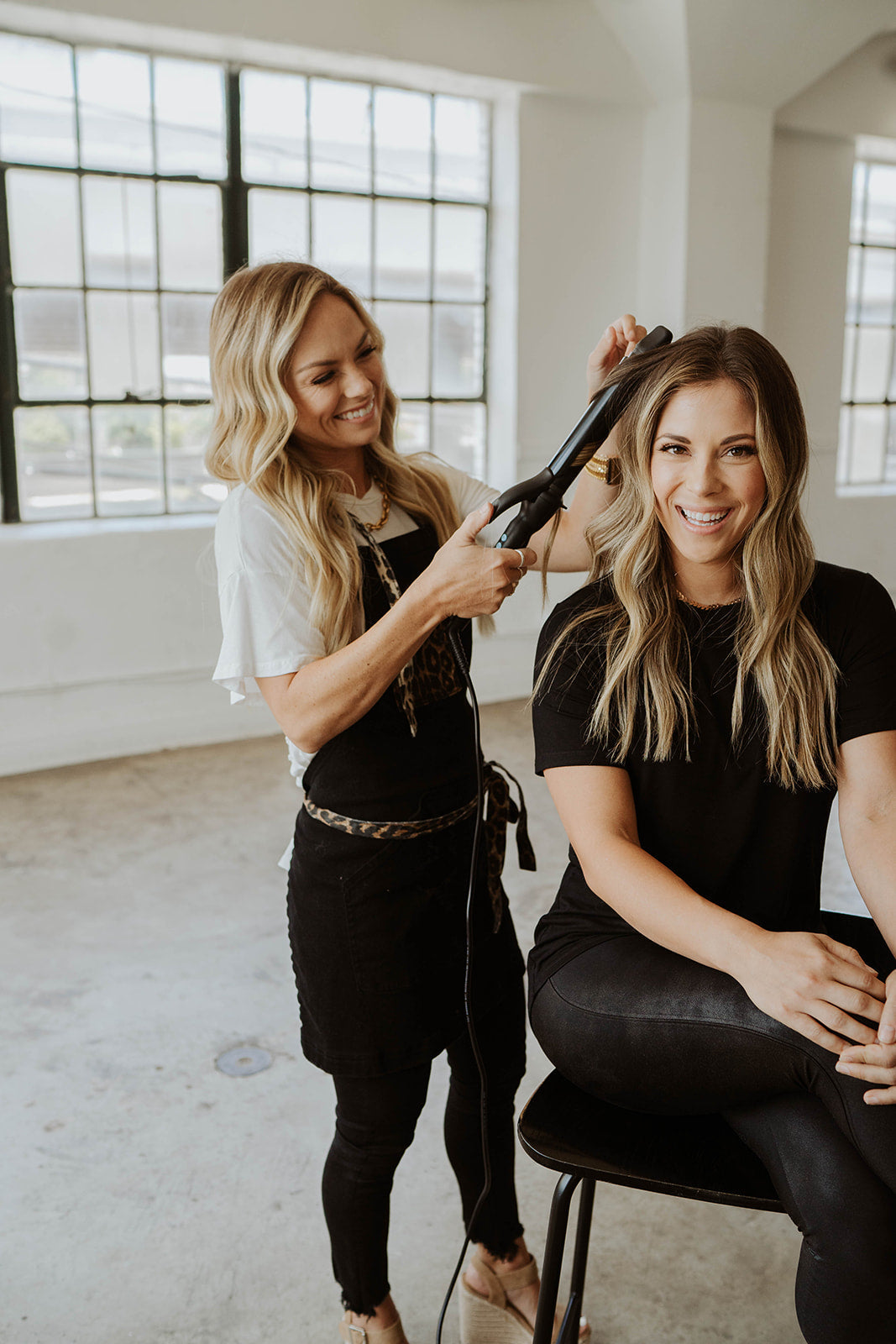
Salon professionals face a repetition-of-motion problem most other industries don't: arms lifted, head tilted, body twisted—often while standing on hard flooring for hours without a break. A poorly fitted apron adds 5–8 pounds of dead weight pulling straight down on your cervical spine. Over weeks and months, that persistent strain becomes tendonitis, tension headaches, and chronic upper-back pain.
Fixed-length neck straps can't account for torso length, shoulder width, or posture differences. They either choke high on your collarbone or hang so low the pockets sit at your hips (useless for quick tool access). Adjustable apron straps for salon professionals solve both problems: they let you dial in the exact height and tension that keeps tools at waist level while keeping pressure off your neck entirely.
This isn't about comfort as a luxury—it's about career longevity. The stylists and colorists still thriving after 20+ years behind the chair didn't get there by ignoring ergonomics.
Cross-Back vs. Around-the-Neck: The Biomechanics
Two dominant strap styles exist in professional aprons: around-the-neck (traditional) and cross-back. The difference isn't aesthetic—it's biomechanical.

| Feature | Around-the-Neck | Cross-Back (Adjustable) |
|---|---|---|
| Weight distribution | Concentrated on cervical vertebrae and trapezius muscles | Spread across shoulder blades and upper back |
| Pressure points | Neck base—worsens with tool weight in pockets | None; straps sit on muscle groups designed to bear load |
| Fit flexibility | Fixed or minimal adjustment; one-size-fits-few | Fully adjustable; true one-size-fits-all across body types |
| Range of motion | Restricted; strap tightens when reaching overhead or bending | Unrestricted; X-shape allows full shoulder rotation |
Cross-back straps treat your body like a suspension bridge: the load hangs from multiple anchor points, not a single overstressed cable. That's why climbers, construction workers, and anyone wearing gear for extended shifts defaults to cross-back harness designs.
What "Adjustable" Actually Means in a Professional Salon Apron
Not all "adjustable" straps are created equal. Cheap implementations use flimsy sliders that slip under load or require you to remove the apron entirely to make changes. Professional-grade adjustable apron straps for salon use need three features:
- Tool-free adjustment: You should be able to lengthen or shorten straps in seconds without undressing or fumbling with knots.
- No-slip hardware: Metal or reinforced resin sliders that lock tension under 10+ pounds of load (shears, spray bottles, phone, color bowls).
- Sufficient range: At least 6–8 inches of adjustment travel to fit a 5'2" stylist and a 6'4" barber equally well.
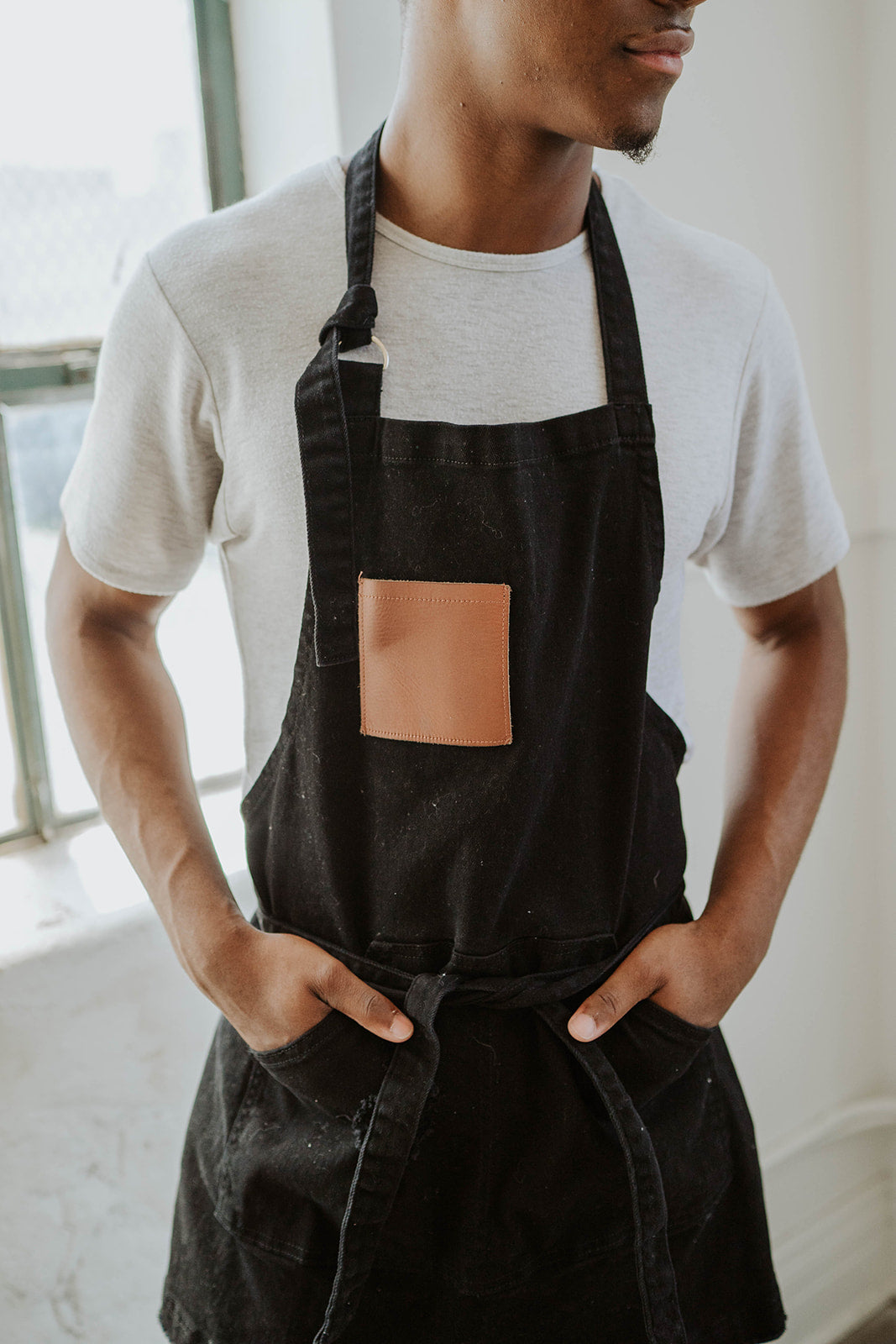
J. Clark Designed aprons use heavy-duty adjustable sliders on both shoulder straps plus a tie waist, giving you three points of customization. That means every stylist in a salon can share the same apron style without compromising fit—critical for businesses outfitting teams or offering loaner aprons to assistants and booth renters.

How Adjustable Straps Extend the Life of Your Apron
Fixed straps fail because they can't adapt. A neck strap sewn at a fixed 22 inches fits perfectly on day one, but six months later—after you've gained muscle, changed your posture, or simply worn different shoes—it's either cutting in or hanging loose. You compensate by tying the waist tighter or letting the apron ride up, which pulls seams, stresses stitching, and wears fabric unevenly.
Adjustable straps let the apron evolve with you. Wore your clogs today instead of sneakers? Tighten the straps half an inch. Layered a hoodie under your apron in winter? Loosen them. The apron maintains proper weight distribution and pocket placement, which means tools don't bounce, fabric doesn't bunch, and seams don't tear prematurely.
Aprons with adjustable cross-back straps also resist the "neck-strap death spiral": that cycle where discomfort makes you wear the apron less, so it doesn't break in properly, so it stays uncomfortable. Cross-back designs feel better from day one, so you actually wear them consistently—and both denim and leather aprons improve with regular use.
Material Choices That Work With Adjustable Designs
Adjustable straps solve the fit problem, but material choice determines whether your apron survives the salon environment. Two materials dominate professional-grade aprons:
- 100% organic cotton stretch denim: Stain-resistant, breathable, machine washable. Softens and molds to your body with wear. Ideal for hairstylists, barbers, and anyone prioritizing all-day breathability. The stretch element (2–4% elastane woven in) prevents binding when you crouch or reach.
- 100% bleach-proof vegan leather: Toner, bleach, and color literally wipe off with a damp cloth—no staining, ever. The surface is sealed and non-porous. Ideal for colorists, balayage specialists, and anyone working with aggressive chemicals daily. Heavier than denim but worth it if you're tired of replacing aprons every three months.
Both materials pair with adjustable cross-back straps, but the weight difference matters. Denim aprons (roughly 12–14 oz) feel lighter and break in faster. Vegan leather aprons (18–20 oz) carry more heft, which makes the cross-back design even more critical—you don't want that weight hanging from your neck.
Real-World Scenarios Where Adjustability Prevents Problems
Walk through a typical salon or barbershop week, and you'll spot a dozen moments where fixed straps fail:
- Team environments: Three stylists share a station across morning, afternoon, and evening shifts. One apron fits all three only if it's truly adjustable.
- Pregnancy and postpartum: Body shape changes month to month. Adjustable waist ties and shoulder straps accommodate without requiring a new apron every trimester.
- Seasonal layering: A fitted apron over a T-shirt in July needs 2–3 inches more slack in December when you're wearing a long-sleeve base layer.
- Tool load variation: A barber carrying clippers, guards, a phone, and a spray bottle needs the apron to sit slightly higher than when working with just shears and a comb—adjustable straps let you optimize pocket access on the fly.
Fixed-strap aprons force you to choose: buy multiple aprons for different scenarios, or live with a mediocre fit most of the time. Adjustable designs give you one apron that works in all of them.
Recommended Apron Styles Based on Adjustability and Use Case
For hairstylists prioritizing breathability and daily machine washing: Navy Pinstripe or Olive Green
Both styles use 100% organic cotton stretch denim with adjustable cross-back straps. The stretch denim breathes during long cuts and blowouts, and you can toss it in the washing machine after every shift. The Navy Pinstripe brings a tailored, professional look; the Olive Green works for stylists who want something earthy and distinct. Deep front pockets hold shears, a phone, clips, and a rattail comb without sagging.
Shop the full salon apron collection.
For colorists and balayage specialists: Full Black Leather or Cocoa Brown Leather
Both are 100% bleach-proof vegan leather. Bleach, toner, and vivid color wipe clean in seconds—no ghost stains, no fabric breakdown. The adjustable cross-back straps are mandatory here; the leather's weight (18–20 oz fully loaded) would be brutal on a neck strap. Full Black Leather is sleek and versatile; Cocoa Brown Leather adds warmth and hides wear patterns over years of use.

For barbers and stylists who want edge without sacrificing function: Black Acid Washed Denim or The Outlaw
The Black Acid Washed Denim has a distressed, lived-in look straight out of the package—adjustable cross-back straps keep it functional. The Outlaw brings vintage Western detailing while maintaining the same ergonomic cross-back design and reinforced tool pockets. Both work well in barbershops, men's grooming lounges, and any environment where aesthetics matter as much as durability.
For booth renters, salon owners outfitting teams, or multi-use spaces: any J. Clark Designed apron with cross-back straps
The true one-size-fits-all design (adjustable straps + tie waist) means you can buy six Terracotta aprons for your salon and every stylist—regardless of height, build, or gender—gets a perfect fit. That's a massive cost and logistics win over brands that require you to stock S, M, L, XL, and XXL.
The Bottom Line
Adjustable apron straps for salon professionals aren't a nice-to-have—they're the difference between an apron you tolerate and one that actively supports your body through a decade-long career. Cross-back designs eliminate neck strain, accommodate every body type, and adapt to seasonal layering, tool load changes, and team sharing. Fixed-strap aprons might cost $10 less, but they'll cost you far more in chiropractor visits, early replacement, and daily discomfort.
If you're spending 40+ hours a week behind the chair, your apron should work with your body, not against it. That requires adjustability, quality materials (stretch denim or bleach-proof leather), and a design that distributes weight properly. J. Clark Designed aprons—with adjustable cross-back straps, reinforced pockets, and 4.8/5 stars from 1,444+ professionals—deliver on all three.
The apron you wear every day is part of your toolkit. Treat it like one.
FAQ
Can you adjust J. Clark Designed apron straps while wearing the apron?
Yes. The metal sliders on the shoulder straps allow tool-free adjustment—you can reach back and lengthen or shorten each strap in seconds without removing the apron. The tie waist adjusts even faster. This makes it easy to fine-tune fit between clients or when switching from cutting to color work.
Do cross-back aprons work for plus-size salon professionals?
Absolutely. The adjustable cross-back straps extend across a 6–8 inch range, and the tie waist adds another layer of customization. J. Clark Designed aprons fit men and women from size XS through 3XL+ without requiring separate sizing categories. The cross-back design actually works better on larger frames because it spreads load across a wider surface area.
Are adjustable straps durable enough for daily professional use?
Yes, if the hardware is quality. J. Clark Designed uses heavy-duty metal sliders and reinforced stitching at every stress point. The straps are rated to hold 10+ pounds of tool load without slipping or stretching. Cheap aprons use plastic sliders that crack or fabric loops that fray—that's where adjustable designs fail. Invest in professional-grade hardware and the adjustability lasts as long as the apron itself.
What's better for a new stylist: adjustable cross-back or around-the-neck straps?
Cross-back, no question. New stylists are still building endurance and muscle memory—the last thing you need is neck strain compounding the learning curve. Adjustable cross-back straps let you dial in a perfect fit from day one, prevent bad postural habits, and grow with you as you add tools and refine your workflow. Around-the-neck styles make sense only if you already own one and it fits perfectly (rare).
Explore the full collection at J. Clark Designed.
```

Leave a comment
This site is protected by hCaptcha and the hCaptcha Privacy Policy and Terms of Service apply.