
Do aprons with reinforced stitching last longer in a professional setting?
Quick Answer: Yes — reinforced stitching aprons last significantly longer in professional settings, often 3–5 times the lifespan of standard aprons. The difference comes down to engineering: reinforced stitching at stress points (pockets, straps, side seams) prevents tearing under the repetitive strain of daily tool use, washing, and movement. For hairstylists, barbers, colorists, and other professionals who rely on aprons 8–10 hours a day, this isn't about aesthetics — it's about whether your apron survives six months or three years.
Why Most Salon Aprons Fail After Six Months
Standard aprons tear at three predictable points: pocket corners (where shears and clippers drop in hundreds of times a week), strap attachment zones (which carry 2–5 pounds of tools all day), and side seams (which flex with every reach, squat, and pivot). The culprit isn't the fabric — it's the thread and stitch pattern.
Single-line stitching uses one pass of thread. When that thread breaks — from a tool catch, a snag on a salon chair, or simple friction — the entire seam unravels. You'll see it first at pocket tops, where the weight of a phone or shear case pulls downward every time you bend. Within weeks, a small tear becomes a gaping hole.
Professionals in high-volume environments (colorists mixing 15+ bowls a day, barbers doing 20+ cuts, bartenders pulling hundreds of pours) accelerate this failure. The apron doesn't get a break, and neither does the stitching.
What "Reinforced Stitching" Actually Means (and What It Doesn't)
Reinforced stitching isn't a single technique — it's a category. The term gets misused in cheap apron marketing, so here's what separates real reinforcement from cosmetic claims:
- Bar-tack stitching: Dense, back-and-forth zigzag stitching at high-stress anchor points (top of pockets, strap joints). Acts like a mini steel plate — distributes force across a wider area instead of a single thread line.
- Double-needle or triple-needle seams: Two or three parallel rows of stitching along side seams and hems. If one line fails, the others hold. Common in denim workwear and quality salon aprons.
- Reinforced thread: Thicker, polyester-core thread (rather than cotton) that resists abrasion and doesn't rot when exposed to bleach, toner, or sanitizer residue. Critical for colorists and barbers using chemical products daily.
- Stress-point backing: Extra fabric layers or interfacing behind pocket corners and strap attachment zones before stitching. The stitching goes through multiple layers, creating a composite structure that won't rip out.
Marketing fluff like "heavy-duty stitching" or "professional-grade seams" without specifics usually means standard construction with slightly thicker thread — not true reinforcement.

How Long Do Reinforced Stitching Aprons Actually Last?
Lifespan depends on three variables: construction quality, material choice, and usage intensity. Here's what the data shows across professional settings:
| Apron Type | Average Lifespan (Daily Use) | Primary Failure Point |
|---|---|---|
| Standard cotton apron (single-stitch) | 4–8 months | Pocket corners, neck strap fraying |
| Canvas apron (double-stitch, no bar-tacks) | 8–14 months | Strap attachment points |
| Reinforced denim apron (bar-tacks, triple-needle seams) | 2–3+ years | Fabric wear before stitching (if ever) |
| Reinforced vegan leather (welded seams + stitching) | 3–5+ years | Surface scuffing (cosmetic only) |
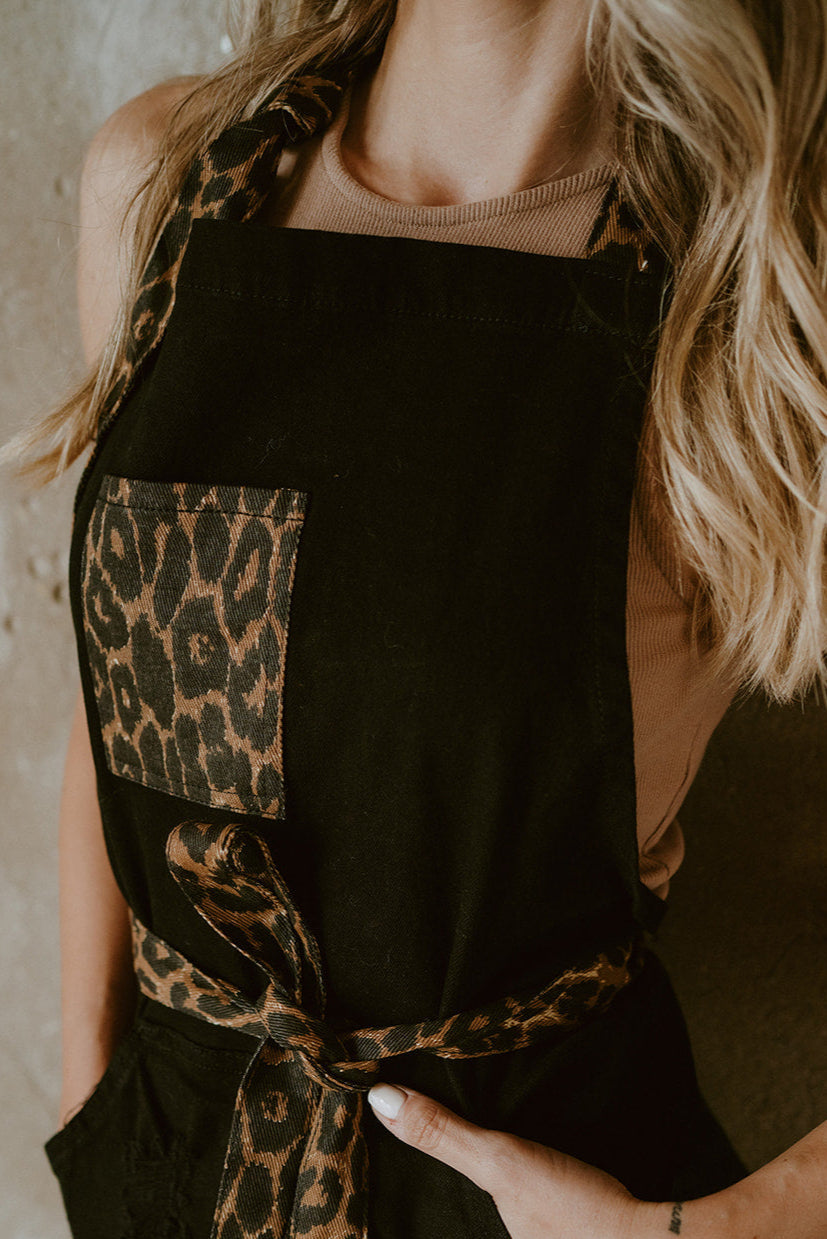
J. Clark Designed aprons use bar-tack reinforcement at every pocket corner and strap joint, plus triple-needle side seams on denim models. Stylists and barbers report 2+ years of daily use without pocket separation or strap failure — the stitching outlasts the fabric breakdown, which is the benchmark of proper reinforcement.
Material Matters as Much as Stitching
Reinforced stitching on weak fabric is like bolting steel doors onto a cardboard house. The stitching holds, but the fabric tears around it. Two materials dominate professional aprons for good reason:
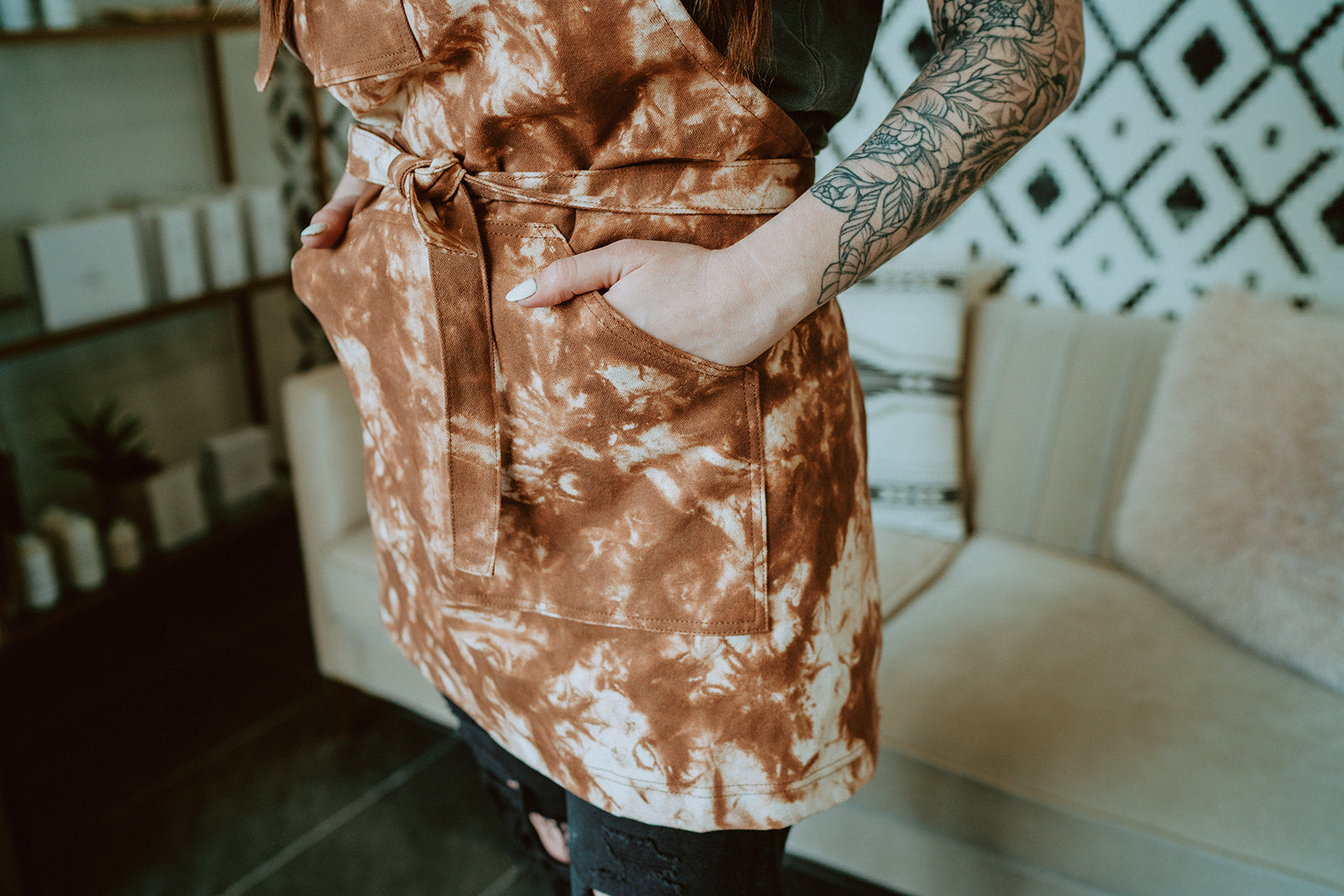
- 100% organic cotton stretch denim: The J. Clark denim line uses a tight weave that resists snags and punctures from shears, clippers, and styling tools. The stretch component (2–4% elastane) allows the fabric to flex under strain instead of tearing — especially critical around pockets when you crouch or reach. Stain-resistant treatment means color and toner wipe off during washing rather than bonding to fibers. Machine washable, softens with age, breathable for all-day wear.
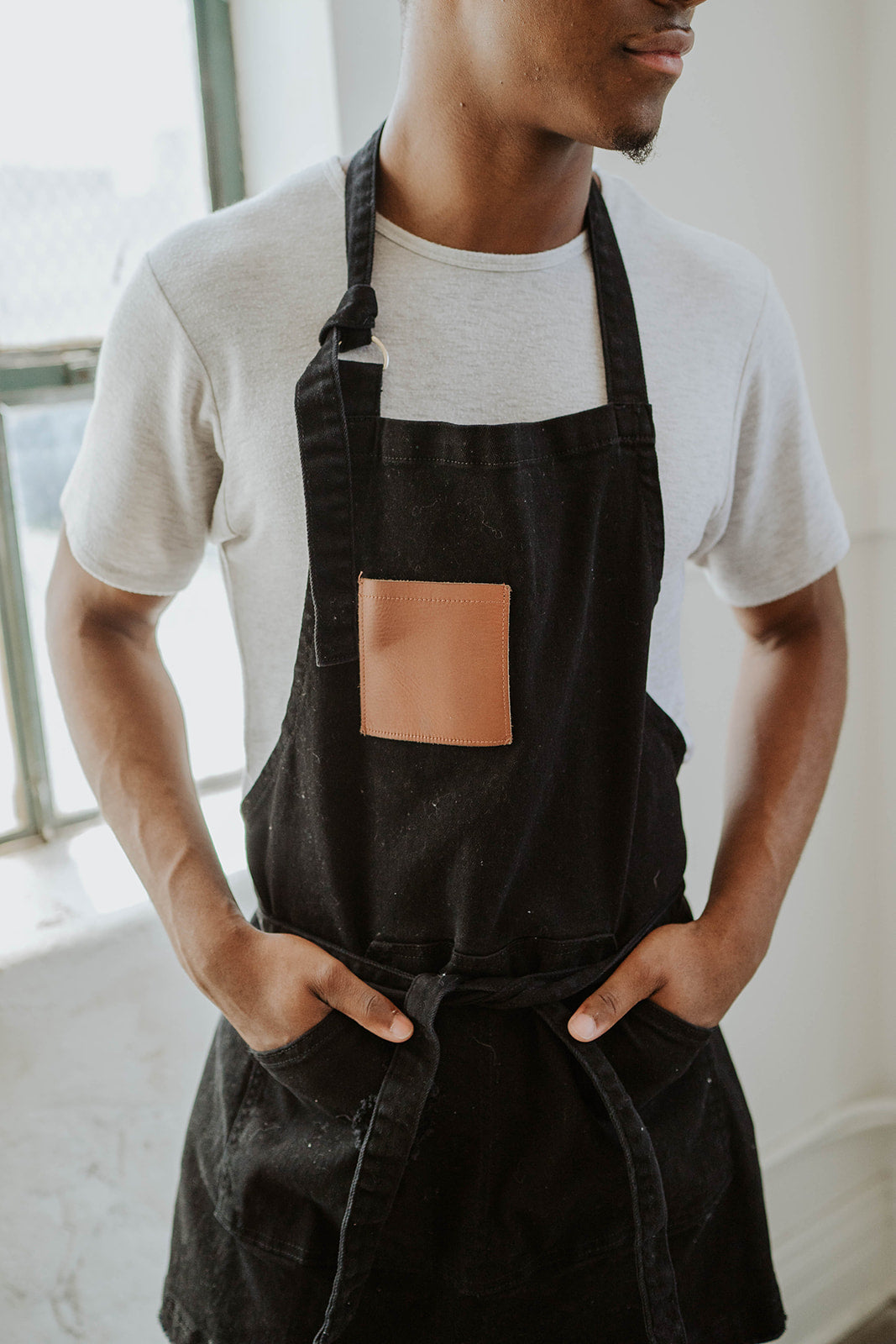
- 100% bleach-proof vegan leather: This is the workhorse for colorists and barbers. Bleach, toner, hydrogen peroxide, and vivid color literally wipe off the surface in seconds — no staining, ever. The material is non-porous, so liquids don't soak in. Reinforced stitching here uses coated polyester thread that won't degrade on contact with chemicals. J. Clark's Full Black Leather and Cocoa Brown Leather aprons are the go-to for high-volume color work and barbicide exposure.
Avoid: thin cotton blends (pill and fray within weeks), untreated canvas (stains permanently), and PVC "leather" (cracks at stress points after 6–8 months of flexing).

The Cross-Back Advantage: Longevity Through Ergonomics
Reinforced stitching extends apron lifespan, but cross-back strap design extends your professional lifespan. Around-the-neck straps concentrate 3–7 pounds of tool weight on your cervical spine and trapezius muscles. Over months, this creates chronic neck strain, headaches, and shoulder tightness — occupational hazards stylists and barbers accept as normal.
Cross-back straps distribute that same weight across your upper back and shoulders (a much larger, stronger muscle group). The mechanical advantage is measurable: less fatigue per shift, better posture during precision work, and significantly reduced end-of-day soreness.
From a durability standpoint, cross-back designs also reduce strap stress. Around-the-neck straps create a single load-bearing point that pulls vertically and twists with every head turn. Cross-back straps anchor at four points (two shoulders, waist tie), spreading force and eliminating the twist-and-pull motion that frays neck straps within months.
J. Clark's adjustable cross-back system uses reinforced slider hardware and bar-tacked attachment loops. Stylists report the straps outlasting multiple apron bodies — you'll retire the apron because the fabric finally wore out, not because the straps gave up.
Which Reinforced Apron for Your Profession?
Matching apron construction to your daily routine prevents premature failure. Here's what works:
For Colorists and High-Chemical Environments: Full Black Leather
The 100% bleach-proof vegan leather apron ($99) eliminates staining as a failure mode entirely. Reinforced stitching with chemical-resistant thread, deep front pockets for color brushes and foils, cross-back or over-shoulder strap options. Wipe clean between clients — no washing required. Colorists doing 10+ highlight appointments daily report 3+ years of use.
For Barbers and Tool-Heavy Work: Navy Pinstripe or Black Acid Washed Denim
The stretch denim holds up to constant clipper weight, comb pulls, and shear pockets. Triple-needle side seams and bar-tacked pockets handle 20+ cuts a day without separation. The Navy Pinstripe and Black Acid Washed styles ($59–$79) are barbershop staples — professional look, machine washable, softens over time instead of stiffening.
For Multi-Disciplinary Salons (Color + Cuts): The Envy or Cabernet
Stain-resistant denim in rich tones that hide minor discoloration from years of use. Cross-back adjustability fits your entire team (one size fits all — men and women, all body types). Reinforced construction means you outfit the salon once and replace aprons every 2–3 years, not every season.

The Bottom Line
Reinforced stitching aprons last 3–5 times longer than standard aprons in professional settings because they're engineered for repetitive stress, not occasional home use. Bar-tack stitching at pockets and straps, triple-needle seams, and chemical-resistant thread prevent the catastrophic failures (torn pockets, separated straps) that retire most aprons within months.
Pair that reinforcement with durable, stain-resistant materials — stretch denim or bleach-proof vegan leather — and you'll replace your apron because you want a new style, not because it fell apart. Cross-back designs add ergonomic longevity, reducing the neck and shoulder strain that ends careers early.
J. Clark Designed builds every apron with reinforced stitching at stress points, adjustable cross-back straps, and materials proven across 10,000+ salons and barbershops. The construction isn't marketing — it's measurable in the 2–3+ year lifespan professionals report and the 4.8/5-star rating from 1,444+ verified reviews.
FAQ
How do I know if an apron has real reinforced stitching?
Look for bar-tack stitching (dense zigzag squares) at the top corners of pockets and where straps attach to the body. Check side seams for double or triple parallel stitch lines. If the product page only says "durable" or "heavy-duty" without naming specific reinforcement techniques, it's likely standard construction with marketing language. Quality brands specify bar-tacks, double-needle seams, and stress-point backing.
Do reinforced aprons cost more upfront but save money long-term?
Absolutely. A $25 standard apron replaced every 6 months costs $50/year and requires constant reordering. A $79 reinforced denim apron lasting 3 years costs $26/year — half the annual expense, zero mid-shift failures, and no time wasted shopping for replacements. For salon and barbershop owners outfitting a team, the ROI is even clearer.
Can I machine wash a reinforced stitching apron without damaging it?
Yes — if it's built correctly. Reinforced polyester-core thread resists heat and agitation better than cotton thread. J. Clark stretch denim aprons are machine washable (cold water, tumble dry low); the reinforced stitching and stain-resistant fabric treatment hold up through hundreds of wash cycles. Bleach-proof leather aprons don't need washing — wipe clean with a damp cloth. Avoid aprons with decorative embroidery or glued-on embellishments, which fail in the wash regardless of stitching quality.
Do cross-back aprons with reinforced stitching fit all body types?
Yes. Adjustable cross-back straps plus a tie waist create a fit range that works for men and women across all sizes. The reinforced slider hardware on quality aprons (like J. Clark's system) won't slip or bend under tension, so the adjustment holds all day. This makes reinforced cross-back aprons ideal for salons and barbershops — one style fits your entire team, and the durability means you're not constantly restocking different sizes.
Explore the full collection at J. Clark Designed.
```

Leave a comment
This site is protected by hCaptcha and the hCaptcha Privacy Policy and Terms of Service apply.