



How do I choose an apron if I have back problems or chronic pain from standing all day?
Quick Answer: The best ergonomic apron for back pain professionals features cross-back straps that distribute weight across your shoulders and upper back instead of pulling on your neck, adjustable sizing that eliminates pressure points, and breathable materials that won't trap heat during long shifts. Look for designs with reinforced waist ties and deep front pockets positioned to maintain natural posture rather than dragging forward.
If you've ever finished a twelve-hour salon day with burning shoulders, a stiff neck, or that deep ache between your shoulder blades, your apron is probably making it worse. The around-the-neck style that still dominates most salon and barbershop supply catalogs creates a mechanical disadvantage: all the weight of your tools, plus the fabric itself, hangs from the smallest bones in your spine. Add forward-leaning work—cutting, coloring, shaving—and you're compressing those cervical vertebrae for hours at a time.
This isn't about toughing it out. It's about choosing gear that works with your body instead of against it.
Why Around-the-Neck Aprons Cause Back and Shoulder Pain
Standard neck-loop aprons create three biomechanical problems. First, they concentrate all weight—fabric, tools, even the pull of a wet apron after a color service—onto the C7 vertebra and surrounding soft tissue. That's roughly five to seven pounds of constant downward force on structures designed for mobility, not load-bearing.
Second, they pull your head and shoulders forward, especially when pockets are loaded. This forward head posture adds ten pounds of effective weight for every inch your head moves past neutral alignment. By midday, you're fighting gravity and muscle fatigue just to stay upright.
Third, they don't adjust. A neck loop is a fixed circle. If it's tight, it digs in. If it's loose, it slides and bunches, creating new pressure points every time you move.
How Cross-Back Straps Solve the Ergonomic Problem

Cross-back apron straps distribute load across the trapezius, rhomboids, and latissimus dorsi—large muscle groups built to carry weight all day. Instead of a single pressure point at your neck, the load spreads across your entire upper back and shoulders. The difference is immediate and measurable.
The mechanics matter. When straps cross between your shoulder blades, they:
- Keep your shoulders back: The X-pattern naturally opens your chest and prevents the rounded-forward posture that compresses your thoracic spine.
- Stay in place: Crossed straps don't slide off your shoulders when you lean forward over a client or reach across a bar.
- Adjust independently: You can tighten or loosen each side to accommodate asymmetries—most people carry their dominant shoulder slightly higher.
- Eliminate neck contact: Nothing touches your cervical spine. The entire weight path bypasses the area where most professionals experience chronic pain.
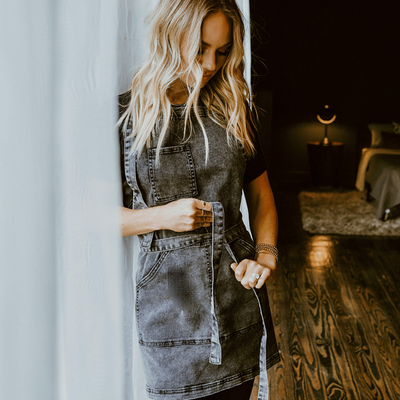
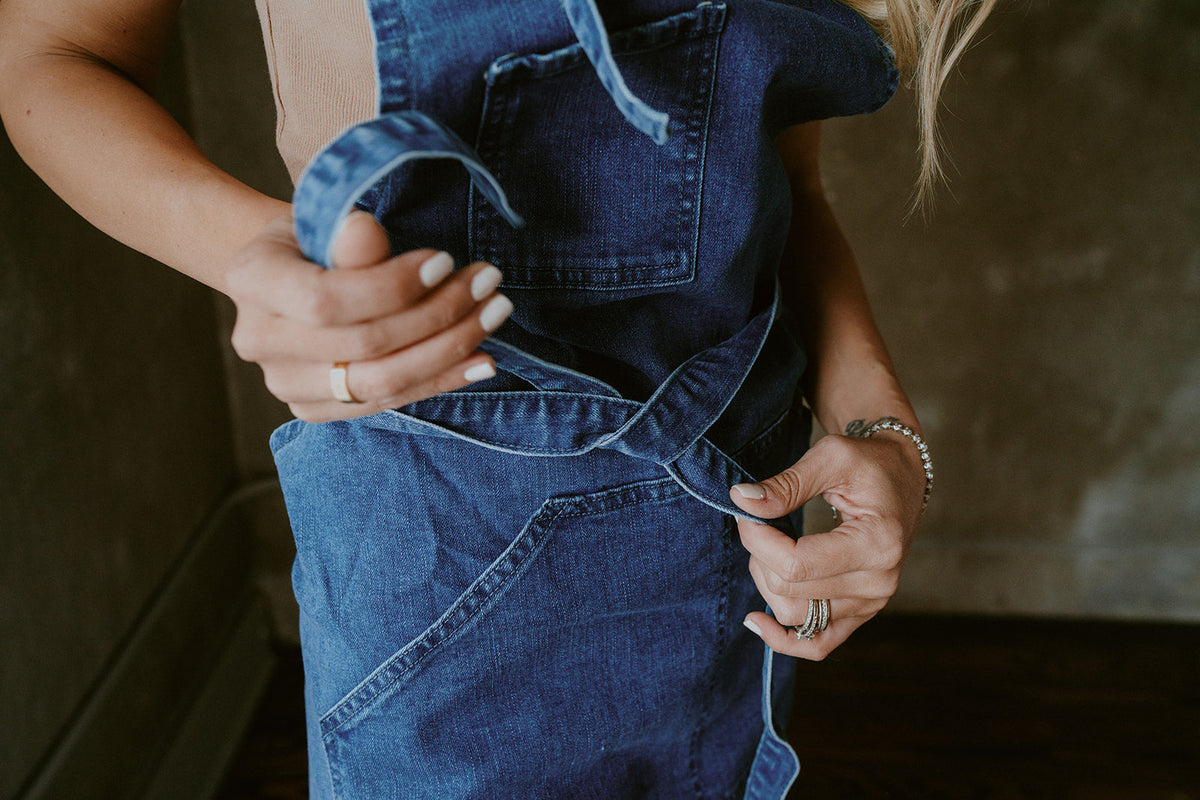
J. Clark Designed aprons use this cross-back system as standard on most styles. The straps are wide—one and a half inches—so they don't dig in, and they adjust via metal sliders that hold tension without slipping. Every denim and vegan leather apron in the salon and barber collections includes this feature because it's the single most effective way to prevent pain during long shifts.
Material Weight and Breathability: Why It Matters for All-Day Wear
An ergonomic apron for back pain professionals isn't just about strap design. Material weight, drape, and breathability directly affect how your body compensates throughout the day.
| Material | Weight | Best For | Pain Considerations |
|---|---|---|---|
| 100% organic cotton stretch denim | Medium (8–10 oz) | Barbers, stylists, tattoo artists, bartenders | Breathable, softens with wear, moves with your body |
| 100% bleach-proof vegan leather | Light (6–8 oz) | Colorists, salon owners, estheticians | Wipes clean instantly, no wet fabric weight, stays dry all day |
| Heavy canvas or treated poly blends | Heavy (12–14 oz) | Industrial/workshop use | Traps heat, adds unnecessary load, stiffens over time |
The stretch denim used in J. Clark styles like the Navy Pinstripe and Black Acid Washed Denim has mechanical give. When you bend, crouch, or twist, the fabric moves with you instead of pulling against your core and lower back. That elasticity reduces the micro-adjustments your body makes to compensate for a rigid apron—adjustments that add up to fatigue and pain by the end of a shift.
The 100% bleach-proof vegan leather aprons—Full Black Leather and Cocoa Brown Leather—solve a different problem: weight from absorbed liquids. Traditional fabric aprons soak up water, toner, and color, gaining two to three pounds over the course of a busy color day. That's extra load pulling on your back. Bleach-proof leather doesn't absorb anything. Liquids wipe off in seconds, so the apron weighs the same at 6 PM as it did at 9 AM.
Pocket Placement and Tool Weight Distribution

Deep front pockets are a selling point on every apron. But placement determines whether those pockets help or hurt your posture.
Pockets that sit too low—below your hip bones—create a pendulum effect. Every time you load them with shears, clippers, or a phone, the weight pulls your pelvis forward and exaggerates lumbar curve. Over hours, that anterior pelvic tilt strains your lower back and hip flexors.
Pockets positioned at or just below your natural waistline keep tool weight close to your center of gravity. J. Clark aprons place reinforced pockets in this zone, sized to hold professional tools vertically so they don't flop or shift. When your shears sit upright instead of horizontal, the load stays compact and predictable. Your core doesn't have to work as hard to stabilize against shifting weight.
The reinforced stitching also matters for durability, but it serves an ergonomic function: preventing sagging. A pocket that stretches and droops after six months will sit lower and throw off your posture all over again.
Adjustability: Why One-Size-Fits-All Actually Works for Pain Relief
One-size-fits-all sounds like a marketing compromise, but for an ergonomic apron for back pain professionals, it's a mechanical advantage. Fixed sizing locks you into predetermined proportions that may or may not align with your torso length, shoulder width, or waist. Adjustable straps and tie waists let you dial in the exact fit that keeps weight balanced and pressure distributed.
J. Clark aprons adjust in three places:
- Cross-back strap sliders: Control how high the bib sits on your chest and how much tension pulls across your shoulders. If you have a longer torso, you lengthen the straps so the waist tie hits your natural waist instead of riding up. Shorter torso? Tighten them down.
- Waist ties: Long enough to wrap and tie in front or back, accommodating everyone from size XS to 3XL without strain. The tie acts as a second anchor point, taking load off the shoulder straps.
- Optional over-shoulder styles: Designs like the Over-Shoulder Black Acid Washed offer a hybrid option—one strap over the shoulder, one across the back—for professionals who prefer asymmetric weight distribution or have existing shoulder injuries on one side.
This adjustability also means you can outfit an entire salon or barbershop with the same apron style and every team member can customize the fit. That's cost-effective and eliminates the guesswork of ordering multiple sizes.
Specific Apron Recommendations by Professional Use Case

For Hairstylists and Barbers: Olive Green or Black Acid Washed Denim
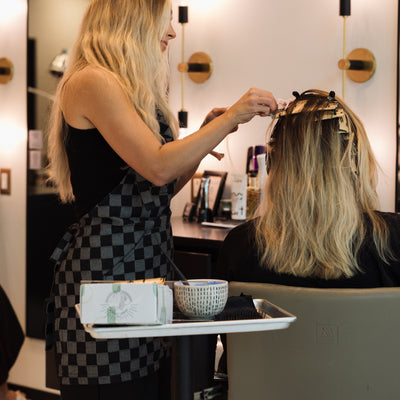
If you're on your feet cutting and styling all day, the Olive Green or Black Acid Washed Denim deliver the ergonomic cross-back design in breathable, machine-washable organic cotton. The stretch denim moves with you during low squats for kids' cuts or when you're leaning over a shampoo bowl. Pockets hold shears, combs, and clips without adding bulk. At $59–$69, these are workhorse aprons that soften and improve with every wash.
For Colorists and Salon Owners: Full Black Leather or Cocoa Brown Leather
High-volume color work means constant exposure to bleach, toner, and permanent dye. The Full Black Leather and Cocoa Brown Leather aprons are 100% bleach-proof—color and chemicals wipe off with a damp cloth, no staining, no absorbed liquid weight. The vegan leather is lighter than denim, so there's less baseline load on your shoulders. At $99, they're an investment that pays off in reduced laundry time and zero weight gain from wet fabric during back-to-back balayage appointments.
For Estheticians and Spa Professionals: The Whitmore or Terracotta
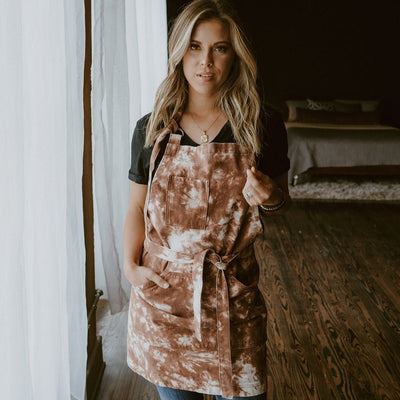
Spa environments call for softer colors and a refined look. The Whitmore and Terracotta offer the same cross-back ergonomics in muted, on-brand tones. The organic cotton denim is stain-resistant and machine washable, so oils, serums, and waxes come out cleanly. The one-size adjustability works well for rotating staff or solo practitioners who need gear that adapts to different body types across the week.
For Tattoo Artists: Pure Black Distressed or The Envy
Tattoo work demands precision while leaning forward for hours. The Pure Black Distressed and The Envy provide cross-back support with a darker, edge-forward aesthetic. The denim's stretch prevents restriction when you're seated and bent over a client's arm or back. Deep pockets keep tools and a phone within reach without interrupting your flow.
What 10,000+ Professionals Say About Pain Reduction
J. Clark Designed aprons hold a 4.8/5-star rating from 1,444+ verified reviews. The most common feedback from professionals with chronic pain: immediate relief in the neck and shoulders, ability to work longer shifts without needing breaks, and reduced tension headaches at the end of the day.
Salon owners report lower turnover when they outfit teams with ergonomic aprons—stylists stay comfortable, so they stay productive. Barbers with existing cervical disc issues note they can work full books again without flare-ups. Colorists appreciate the zero-weight-gain benefit of bleach-proof leather during high-volume weeks.
This isn't subjective comfort. It's measurable impact on how your body handles repetitive strain.
The Bottom Line
An ergonomic apron for back pain professionals must do three things: distribute weight across large muscle groups using cross-back straps, adjust to your exact proportions, and use materials that stay light and breathable throughout the day. Around-the-neck styles concentrate load on your cervical spine and pull you into forward posture—two mechanisms proven to cause chronic pain.
J. Clark Designed aprons solve this with cross-back geometry, wide adjustable straps, and a choice between breathable stretch denim ($59–$79) and 100% bleach-proof vegan leather ($99). One size fits all, from XS to 3XL, so you can dial in the fit that eliminates pressure points. Deep, reinforced pockets keep tools positioned near your center of gravity instead of dragging at your hips.
If you've been tolerating pain as part of the job, the problem isn't your body. It's the gear you've been wearing.
FAQ
Can cross-back aprons really reduce neck and shoulder pain?
Yes. Cross-back straps shift weight from the small bones and soft tissue of your neck onto the trapezius, rhomboids, and lats—muscle groups designed for load-bearing. This eliminates the concentrated pressure that causes nerve compression, tension headaches, and chronic shoulder pain. Professionals switching from neck-loop to cross-back designs typically report relief within the first shift.
What's the difference between denim and vegan leather aprons for back pain?
Both offer the same cross-back ergonomic design. Denim is breathable, machine washable, and softens over time—ideal for barbers, stylists, and tattoo artists. Vegan leather is 100% bleach-proof and stays dry all day because liquids wipe off instead of soaking in. Colorists and salon pros doing high-volume color prefer leather because it never gains weight from absorbed chemicals, reducing load on your shoulders throughout the day.
Will an adjustable apron actually fit me if I'm petite or plus-size?
Yes. J. Clark aprons adjust via strap sliders and long waist ties that accommodate sizes XS through 3XL. The cross-back straps lengthen or shorten to match your torso, and the waist tie wraps to fit your exact measurement without strain. This adjustability is why one-size-fits-all works—you're customizing the fit to your body, not guessing at a fixed size.
How do I know if my current apron is causing my back pain?
If you finish shifts with neck stiffness, burning between your shoulder blades, tension headaches, or lower back pain that improves when you take the apron off, the apron is likely a contributing factor. Around-the-neck styles, heavy materials, and low-slung pockets all create mechanical stress that adds up over hours. Switching to a cross-back design with proper pocket placement typically reduces or eliminates these symptoms within a week.
Explore the full collection at J. Clark Designed.
```

Leave a comment
This site is protected by hCaptcha and the hCaptcha Privacy Policy and Terms of Service apply.