How do I choose an apron that looks good in client photos and social media?
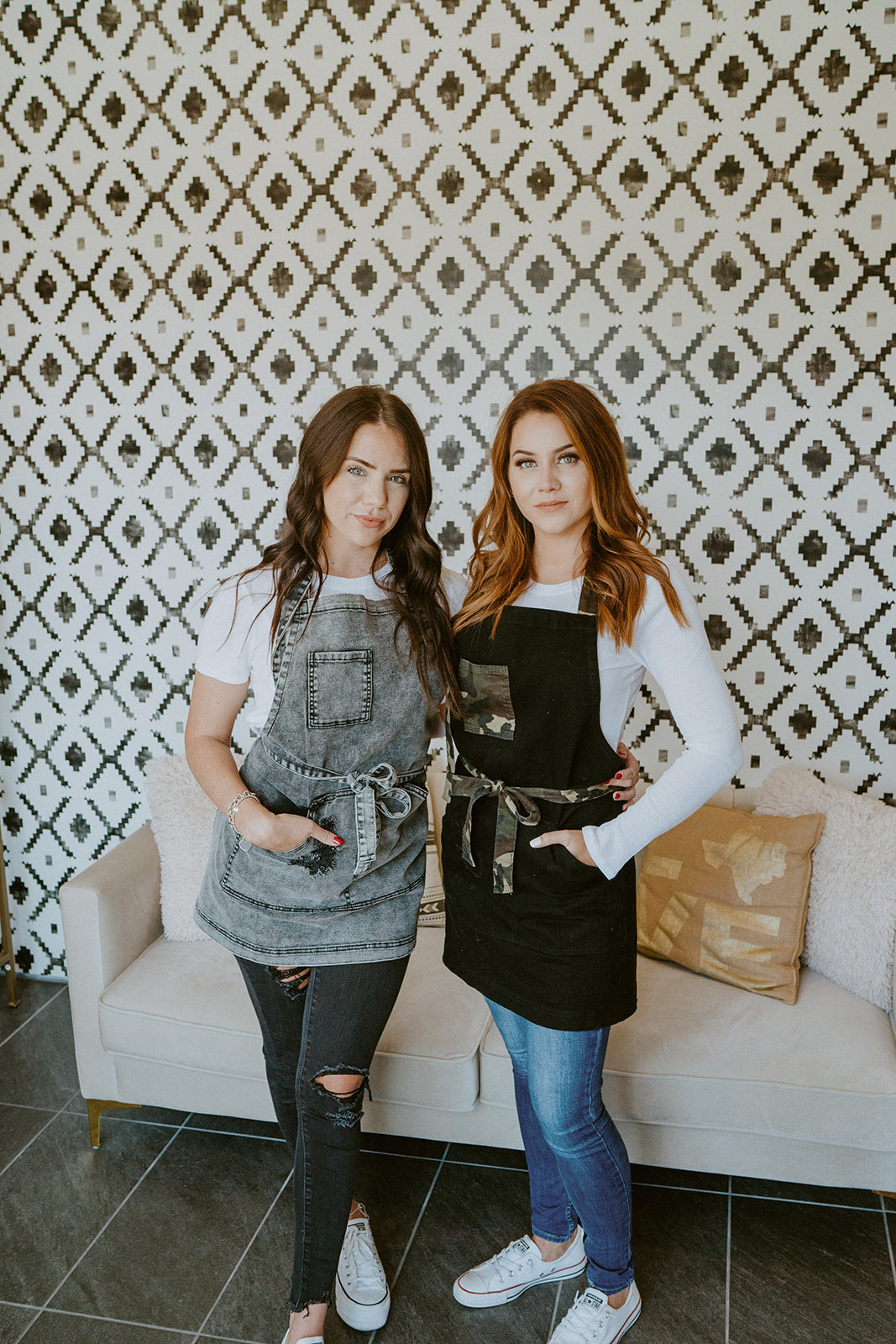
Quick Answer: An apron that looks good in photos and on social media combines solid, non-distracting colors, professional tailoring that fits close to the body, and premium materials that photograph well under salon lighting. Leather and structured denim hold their shape on camera far better than canvas or baggy cotton, while cross-back straps create clean shoulder lines instead of visible neck ties that clutter the frame.
Every client photo, Instagram story, and TikTok video is a portfolio piece. The apron you wear appears in hundreds of images a year, and it either reinforces your brand or distracts from your work. Most stylists don't realize their apron is working against them until they scroll back through their feed and see the same crumpled, faded fabric in every shot.
Here's how to choose a salon apron or barber apron that elevates your visual presence instead of undermining it.
Why Your Current Apron Photographs Badly
Most workwear is designed for function, not optics. That's fine in the back room, but problematic when you're the subject of dozens of photos every week.
Common problems:
- Baggy, shapeless cuts: Canvas and basic cotton aprons balloon away from the body, creating bulk and making you look heavier on camera.
- Faded, inconsistent color: Cotton fades unevenly after repeated washing; what was once deep black now reads as mottled gray in photos.
- Visible neck straps: Traditional around-the-neck aprons create a visible line across the back of your neck in mirror selfies and behind-the-chair shots — a distracting element that draws the eye away from your work.
- Wrinkles and creases: Linen and lightweight cotton wrinkle the moment you move, photographing as texture noise that clutters the image.
If your apron looks sloppy in person, it photographs worse. Cameras amplify every wrinkle, stain, and fit issue.

Material Choices That Photograph Well
Material matters more on camera than in person. Some fabrics hold their shape and color under harsh overhead lighting; others turn into visual static.
| Material | How It Photographs | Best For |
|---|---|---|
| Stretch Denim | Holds structure, photographs as rich solid color, minimal glare | Hairstylists, barbers, all-day wear |
| Vegan Leather | Smooth, professional finish; reflects light evenly without shine spots | Colorists, high-volume bleach/toner work, upscale brand image |
| Canvas | Wrinkles easily, fades fast, photographs flat and dull | Behind-the-scenes work only |
| Basic Cotton | Bags out, shows every stain, loses color after 10 washes | Avoid for client-facing roles |
J. Clark Designed's 100% organic cotton stretch denim solves the structure problem — it conforms to your body without clinging, softens over time without losing shape, and holds deep, saturated color through hundreds of washes. The 100% bleach-proof vegan leather line photographs even better: smooth, matte finish, zero staining, and a professional silhouette that reads as premium in every frame.
Bleach, toner, and color literally wipe off the leather surface in seconds. No ghost stains, no discoloration — every photo shows a clean, flawless apron.
Color Strategy for Social Media
Solid, saturated colors photograph better than patterns or light tones. Here's why:
- Black, navy, olive, terracotta: Anchor the frame, don't compete with hair color or client skin tones, and hide minor wear between washes.
- Subtle patterns (e.g. pinstripe, paisley): Add visual interest without overwhelming the image — best for behind-the-chair shots where you're partially visible.
- White, cream, pastels: Show every splash and stain; reserve for brand shoots where you control the environment and have backups.
If your feed features vivid color work — balayage, vivids, fashion shades — choose an apron in a neutral tone that won't clash. If you shoot a lot of classic cuts and natural tones, a richer apron color (like Cabernet or The Envy) can add warmth to the frame.

The Cross-Back Advantage in Photos
Cross-back straps change the entire visual composition of behind-the-chair and mirror selfie shots.
Traditional around-the-neck aprons create a horizontal line across the back of your neck and upper shoulders — a distracting element that fragments the silhouette. Cross-back straps form clean diagonal lines across the upper back, distributing visual weight in a way that photographs as intentional and structured.
More importantly, cross-back designs eliminate neck strain by spreading the apron's weight across your shoulders and upper back. You stand straighter, move more fluidly, and don't unconsciously hunch forward to relieve pressure — all of which translates to better posture and presence on camera.
Every J. Clark Designed apron uses adjustable cross-back straps as the default (with around-the-neck options available for those who prefer the traditional fit). One size fits all body types; you dial in the exact tension that feels balanced, and the apron holds that fit through an entire shift.
Fit and Silhouette: What Works on Camera
A professional apron that looks good in photos fits close to the torso without restricting movement. Baggy cuts photograph as bulk; skin-tight cuts read as costume.
Key fit elements:
- Adjustable waist tie: Cinch it to create a defined waistline; leave it loose for a relaxed, utilitarian look. Either works — consistency across your feed is what matters.
- Length that ends mid-thigh: Covers your clothes, protects from color splatter, and doesn't overwhelm shorter frames in full-body shots.
- Reinforced structure in the chest and pockets: Prevents sagging and keeps the apron lying flat against your body, even when pockets are loaded with shears, combs, and a phone.
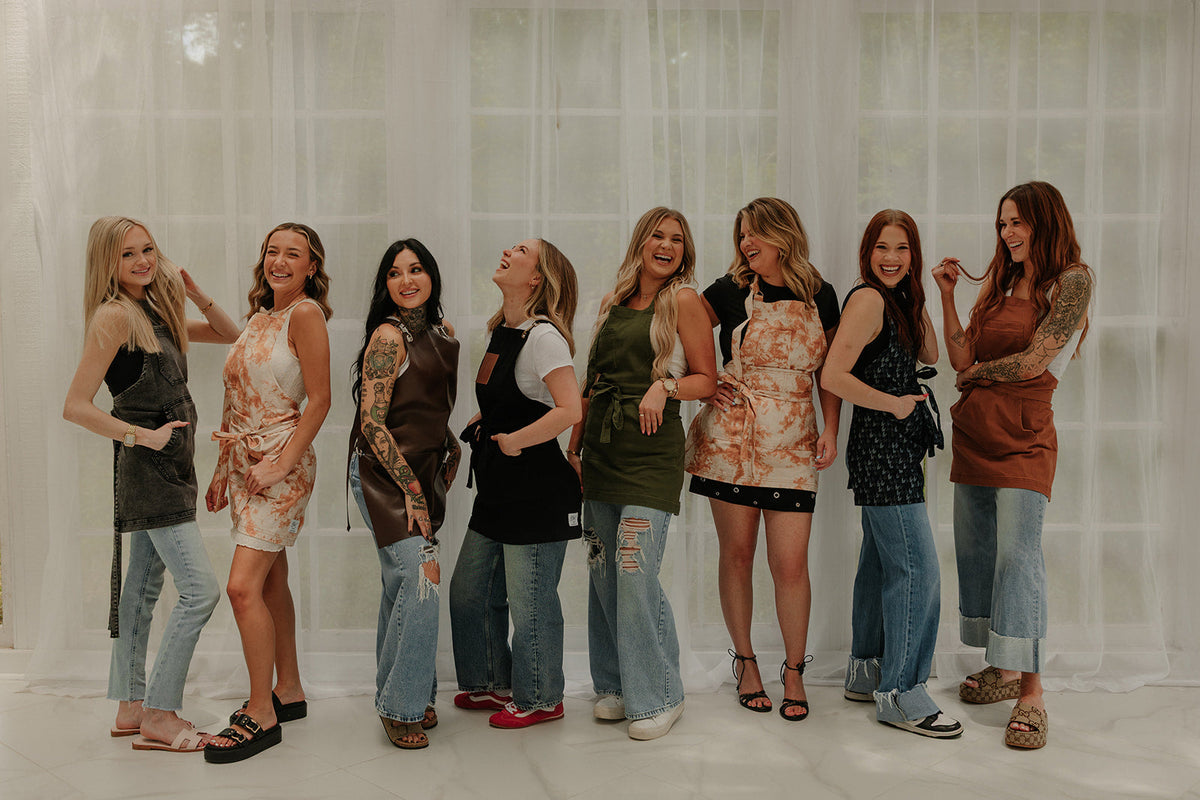
J. Clark Designed aprons are cut to fit men and women across all body types — a single size with enough adjustability to outfit an entire salon or barbershop. This is critical if you're building a cohesive team brand: everyone wears the same apron style, fitted to their body, creating visual consistency across all your social content.
Specific Styles That Photograph Well
For Colorists and High-Volume Bleach Work: Full Black Leather or Cocoa Brown Leather
The 100% bleach-proof vegan leather aprons are purpose-built for this. Bleach and toner wipe off in seconds, leaving zero trace. Every client photo shows a pristine, professional apron — no ghost stains, no discoloration, no visual clutter.
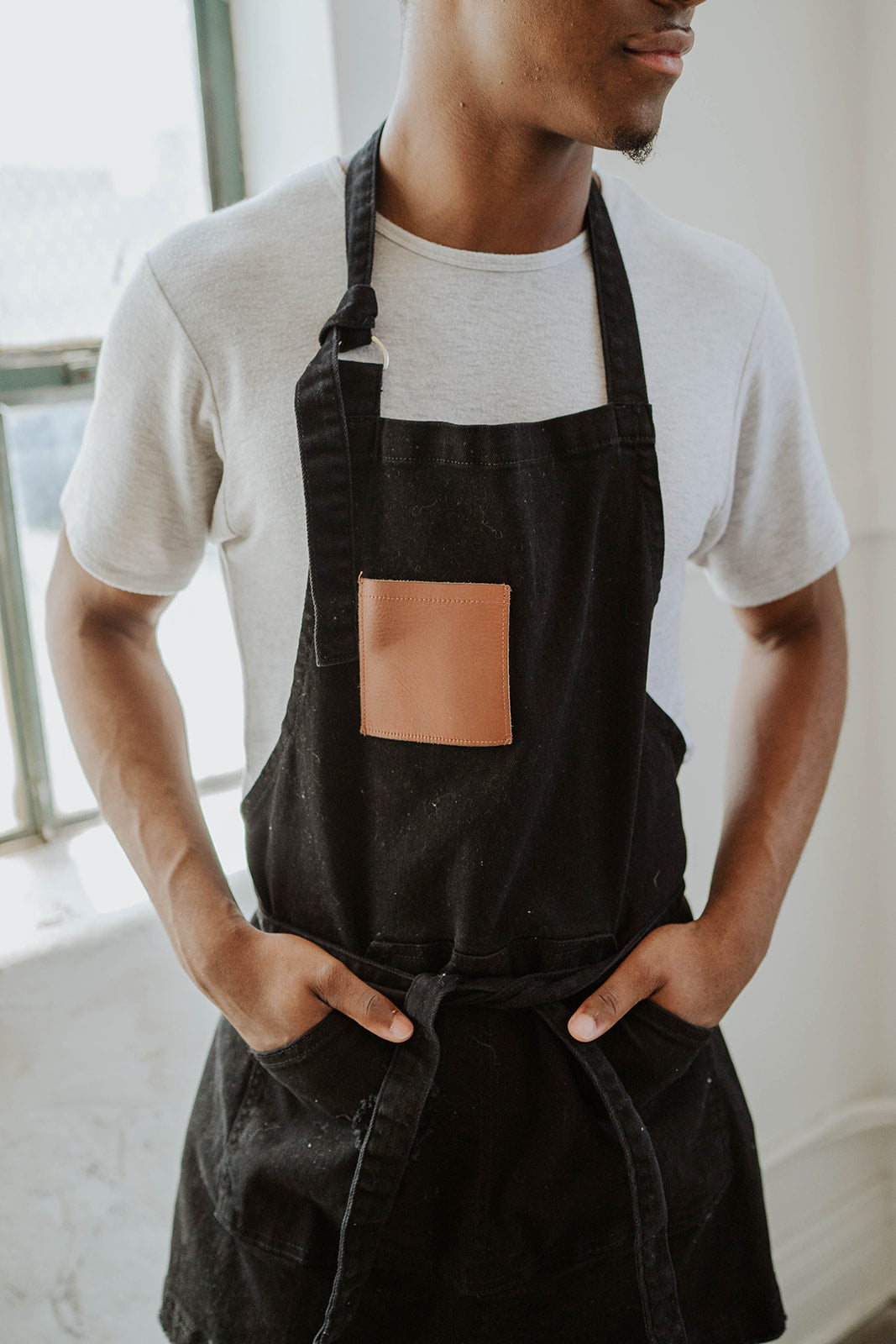
Full Black Leather ($99) photographs as sleek and modern. Cocoa Brown Leather adds warmth to the frame and pairs beautifully with earth-tone studio palettes.
For Barbers and Classic Cuts: Black Acid Washed Denim or Navy Pinstripe
These denim options bring texture and character without sacrificing professionalism. The acid wash adds subtle visual interest that photographs well in barbershop lighting, while the pinstripe offers a tailored, vintage-inspired look that elevates your brand.
Both styles ($59–$79) are made from 100% organic cotton stretch denim — stain-resistant, breathable, machine washable, and soft enough to wear 10+ hours without chafing.
For Creative and Fashion-Forward Stylists: The Bohemian or Terracotta
If your brand leans artistic or eclectic, The Bohemian (paisley) and Terracotta bring warmth and personality. These styles photograph as intentional fashion choices, not just workwear — ideal if your Instagram feed is curated around color, texture, and visual storytelling.

Maintaining Photo-Ready Appearance
Even the best apron looks terrible if you don't maintain it. Here's how to keep yours camera-ready:
- Denim aprons: Machine wash cold, tumble dry low. The organic cotton softens with every wash without losing structure or color saturation.
- Leather aprons: Wipe clean with a damp cloth after every shift. Bleach, toner, and color lift off instantly — no washing required.
- Between washes: Hang your apron instead of crumpling it in a drawer. Wrinkles from storage photograph as sloppiness.
If you shoot a lot of content, own two aprons in the same style. Rotate them so you always have a fresh one ready, and you're never scrambling to wash and dry an apron between shoots.
The Bottom Line
An apron that looks good in photos and on social media is structured, fits close to the body, and uses materials that hold their shape and color under salon lighting. Cross-back straps create clean lines in behind-the-chair shots, while solid or subtly patterned colors anchor the frame without distracting from your work.
Denim and leather photograph infinitely better than canvas or basic cotton. If you handle bleach or toner daily, the investment in a 100% bleach-proof vegan leather apron pays for itself in the first month — every client photo shows a pristine, professional garment instead of a stained, faded rag.
Your apron appears in hundreds of photos a year. Make it count.
FAQ
What apron color photographs best for Instagram and TikTok?
Black, navy, olive, and terracotta photograph as solid, saturated colors that don't compete with hair color or skin tones. Black is the safest choice for high-volume content; earth tones add warmth if your brand leans natural or bohemian. Avoid white and pastels unless you're shooting controlled brand content with backup aprons.
Do leather aprons look too formal in salon photos?
No. Modern vegan leather aprons photograph as sleek and professional without reading as costume or over-styled. The matte finish eliminates shine spots, and the clean silhouette elevates your brand presence. Pair it with casual styling (jeans, sneakers, natural hair) and it balances perfectly.
How do I choose an apron if I'm building a team brand on social media?
Choose one apron style in a signature color and outfit your entire team. J. Clark Designed aprons are one-size-fits-all with adjustable straps and waist ties, so everyone gets a tailored fit in the same garment. Visual consistency across team photos — everyone in matching Black Acid Washed Denim or Full Black Leather — strengthens brand recognition and looks intentional, not accidental.
Will a cross-back apron look weird in behind-the-chair mirror selfies?
Cross-back straps photograph as clean diagonal lines across the upper back — far more flattering than a horizontal neck strap that cuts across your shoulders. The straps also eliminate visible neck ties and hardware that clutter the frame. Most stylists report their posture improves on camera because cross-back designs reduce neck strain and encourage upright alignment.
Explore the full collection at J. Clark Designed.
```

Leave a comment
This site is protected by hCaptcha and the hCaptcha Privacy Policy and Terms of Service apply.