
Article: How do I choose an apron that won't absorb chemical smells from salon services?
How do I choose an apron that won't absorb chemical smells from salon services?
Quick Answer: An apron that doesn't absorb chemical smells from salon services needs a non-porous surface. 100% bleach-proof vegan leather eliminates odor absorption entirely because bleach, toner, ammonia, and color wipe off instead of soaking in. If you prefer fabric, tightly woven stretch denim with stain-resistant treatment reduces absorption far better than standard cotton—but leather is the only material that truly won't hold salon smells.
Why Traditional Salon Aprons Absorb Chemical Smells
Most salon aprons use untreated cotton, canvas, or polyester blends. These materials are woven from fibers with natural pores and gaps. When you mix color, spray toner, or apply bleach, microscopic particles settle into those fibers and bond with the fabric structure. Rinsing removes surface residue, but the embedded molecules remain—and they carry the smell.
Ammonia-based color and peroxide don't just stain. They oxidize fabric fibers, chemically altering the material itself. That's why your apron still smells like bleach three washes later. The scent isn't sitting on the fabric—it's baked into it.
Heat makes it worse. Tumble drying an apron exposed to salon chemicals sets the odor permanently. Even air-drying won't fully eliminate smells once they've penetrated the weave.
Material Science: What Actually Blocks Odor Absorption
To prevent an apron from absorbing chemical smells, you need a material with a closed surface structure—one that repels liquids instead of wicking them inward. Here's how the two best options compare:
| Material | Odor Resistance | Cleaning Method | Lifespan Under Daily Chemical Exposure |
|---|---|---|---|
| 100% Bleach-Proof Vegan Leather | Complete barrier—no absorption | Wipe with damp cloth; bleach dissolves on contact | 2–3+ years (tested by colorists) |
| Stretch Denim (Stain-Resistant) | Minimal absorption; releases most odors after washing | Machine wash cold, air dry | 18–24 months (fabric softens with age) |
| Standard Cotton/Canvas | High absorption; retains smells permanently after 3–6 months | Machine wash (limited effectiveness) | 6–12 months before replacement needed |
Vegan leather formulated for salon use creates a waterproof membrane. Bleach, toner, and ammonia bead up on the surface. You wipe them off mid-shift—no washing required, no lingering smell. Stretch denim treated with stain-resistant coatings works differently: the tight weave and surface treatment slow penetration, so most chemicals rinse out before they bond to fibers. It's not perfect, but it's vastly better than untreated fabric.

Why Hairstylist Aprons Need Different Materials Than Chef Aprons
Chef aprons handle food oils, wine, and heat. Salon aprons face an entirely different chemistry challenge. Bleach has a pH of 12–13—it's a corrosive oxidizer. Ammonia-based color sits around pH 9–10. Toner contains peroxide. These aren't food stains; they're active chemicals that break down organic fibers.
A canvas apron designed for a kitchen will absorb salon chemicals on contact and degrade within months. Hairdresser aprons need materials engineered to resist oxidation and repel alkaline compounds. That's why professional colorists and balayage specialists gravitate toward leather or technical fabrics, not repurposed workwear.
The Cross-Back Advantage for All-Day Chemical Work
Material matters most for odor resistance, but ergonomics matter for longevity. Aprons with traditional neck straps force you to lean forward to relieve pressure—which puts your chest and shoulders directly over your color bowl, increasing chemical splash exposure.
Cross-back straps distribute weight across your upper back and shoulders. You stand upright naturally, keeping your apron's surface slightly angled away from your workspace. Less direct splash means fewer chemicals hitting the fabric in the first place—and less opportunity for absorption, even with the best materials.
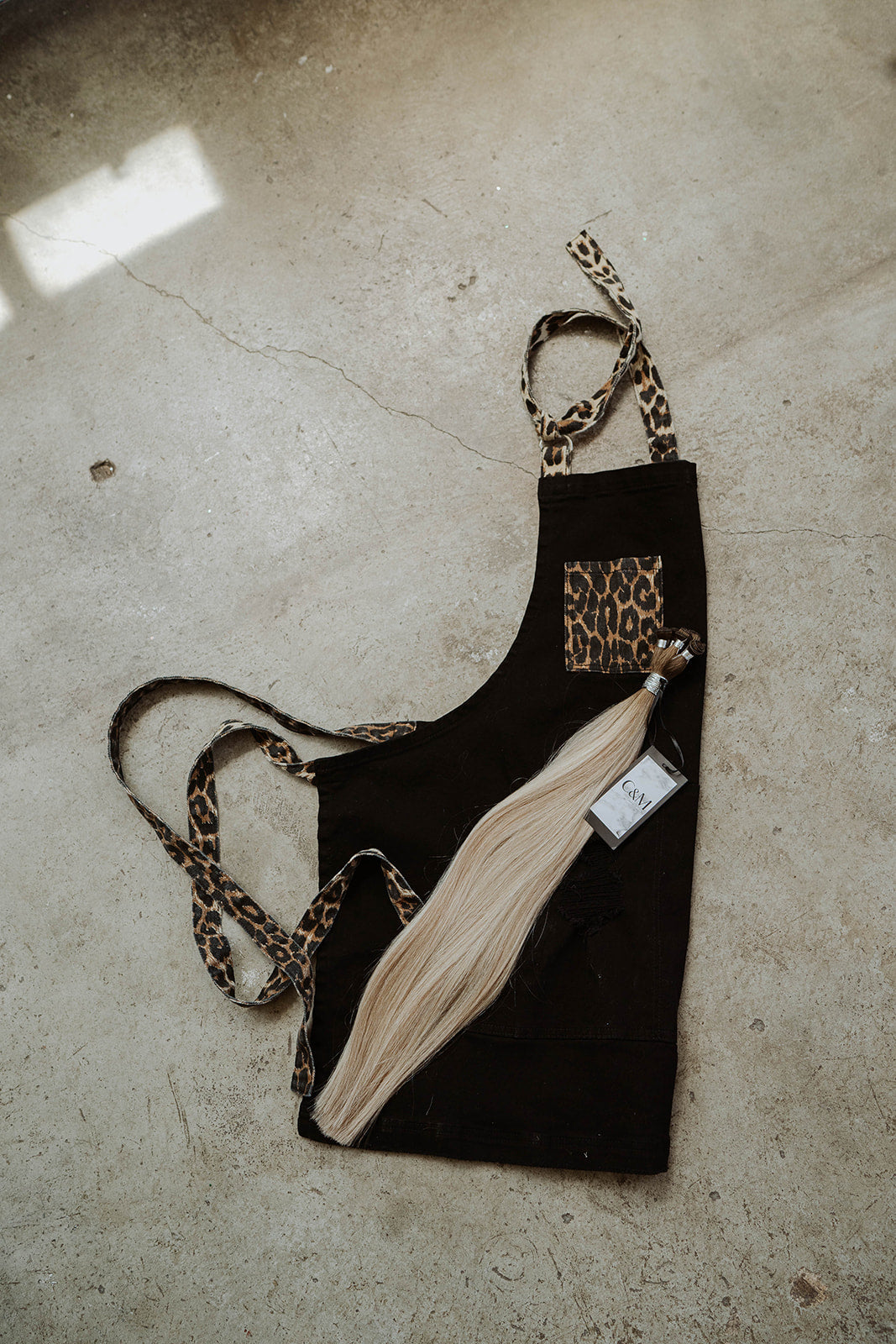
J. Clark Designed salon aprons use adjustable cross-back straps as standard. The fit works across all body types (one size fits all, men and women), so you're not compromising coverage for comfort. Deep reinforced pockets hold shears, brushes, and a phone without sagging, keeping tools accessible while your hands stay free to work.
Best Apron Styles for Chemical-Heavy Services
For High-Volume Color Work: Full Black Leather
The Full Black Leather apron is 100% bleach-proof vegan leather. Bleach, toner, and color literally wipe off with a damp cloth mid-shift. No smell, no staining, no washing. Colorists doing 6–8 balayage appointments daily report the apron looks nearly new after a year of use. It's priced at $99—which pencils out to pennies per shift compared to replacing a $40 cotton apron every four months.

For Mixed Salon Services: Black & Leather (Over-Shoulder)
If you rotate between cuts, color, and blowouts, the Black & Leather apron combines a bleach-proof leather bib (where chemicals splash most) with stretch denim lower panels (breathable for all-day wear). Wipe the leather clean between color clients; toss the whole apron in the wash weekly. It's the best of both materials in one garment.
For Stylists Who Prefer Fabric: Navy Pinstripe or Olive Green Stretch Denim
The Navy Pinstripe and Olive Green denim aprons are 100% organic cotton with stain-resistant treatment. They're machine washable, breathable, and soften with age. Chemical smells release after a cold-water wash and air dry—not completely odor-proof like leather, but far better than standard cotton. Priced at $59–$79, they're the go-to for stylists who don't do color daily but want an apron that won't absorb chemical smells from occasional balayage or toner work.
How to Extend Any Salon Apron's Odor Resistance
Even the best materials benefit from smart care. These habits keep your apron fresher, longer:
- Wipe spills immediately: Bleach and toner cause less damage when removed within seconds. Keep a microfiber cloth in your back pocket.
- Wash denim aprons in cold water only: Heat sets chemical stains and smells. Air-dry flat or hang—never tumble dry.
- For leather, use damp (not wet) cloths: Excess water can weaken stitching over time. A quick wipe removes 99% of residue.
- Rotate two aprons if you work 5+ days weekly: Alternating gives each apron a full 24 hours to off-gas between shifts, reducing cumulative smell buildup.
These steps double the effective lifespan of any hairdresser apron, whether you choose leather or denim.
Why One Size Fits All Matters for Salon Teams
If you're outfitting a salon, barbershop, or studio, inconsistent sizing creates waste. Order three small, two medium, two large—then half your staff can't find a clean apron in their size mid-shift.
J. Clark Designed aprons use adjustable straps and a tie waist that fit men and women across all body types. One SKU stocks the whole team. You order 10 Navy Pinstripe aprons, and every stylist, colorist, and assistant has a fresh one daily. That simplicity cuts inventory costs and eliminates the "my apron's dirty, I'll just wear nothing" problem that shortens garment life and increases chemical exposure.

The Bottom Line
An apron that doesn't absorb chemical smells from salon services needs a non-porous surface or a stain-resistant weave. 100% bleach-proof vegan leather eliminates odor entirely—bleach, toner, and color wipe off in seconds, no washing required. Stretch denim with stain-resistant treatment reduces absorption significantly and releases most smells after a cold-water wash. Standard cotton and canvas absorb chemicals on contact and retain smells permanently within months.
Cross-back straps improve odor resistance indirectly by keeping you upright and reducing splash exposure. One size fits all sizing simplifies salon restocking and ensures every team member has access to a fresh, smell-free apron daily.
For colorists doing chemical services daily, leather is the long-term investment. For stylists mixing cuts and occasional color, treated denim balances breathability with chemical resistance. Both options outlast and outperform traditional salon aprons by 2–3x.
FAQ
Can you remove bleach smell from a cotton apron?
Bleach smell in cotton aprons comes from oxidized fibers, not surface residue. Baking soda soaks and white vinegar rinses can reduce the smell temporarily, but once bleach penetrates cotton, the odor reactivates with heat and humidity. Switching to a bleach-proof leather apron or stain-resistant denim eliminates the problem at the source.
What's the best apron for colorists who work with bleach all day?
The best apron for colorists working with bleach all day is 100% bleach-proof vegan leather. Bleach wipes off the surface without staining or leaving odor. J. Clark Designed's Full Black Leather and Cocoa Brown Leather aprons are formulated specifically for this—colorists report no smell, no discoloration, and minimal wear after a year of daily use. Stretch denim works for occasional bleach exposure but won't hold up to all-day, every-day chemical contact the way leather does.
Do barber aprons and hairstylist aprons need different materials?
Barber aprons face less chemical exposure (mostly water, clipper oil, and occasional hair dye), so breathable stretch denim works well. Hairstylist aprons—especially for colorists—need materials that resist bleach, toner, and ammonia-based color. If you do both cutting and color, a leather-bib hybrid apron (like the Black & Leather style) gives you wipeable protection where chemicals splash most and breathable fabric everywhere else.
How often should you replace a salon apron?
Leather salon aprons last 2–3+ years with daily chemical exposure. Stain-resistant stretch denim aprons last 18–24 months. Standard cotton or canvas aprons absorb smells and stains within 6–12 months and need replacement. If your apron smells like bleach even after washing, or if stains no longer lift, it's time to upgrade to a material designed for salon chemistry.
Explore the full collection at J. Clark Designed.
```

Leave a comment
This site is protected by hCaptcha and the hCaptcha Privacy Policy and Terms of Service apply.