

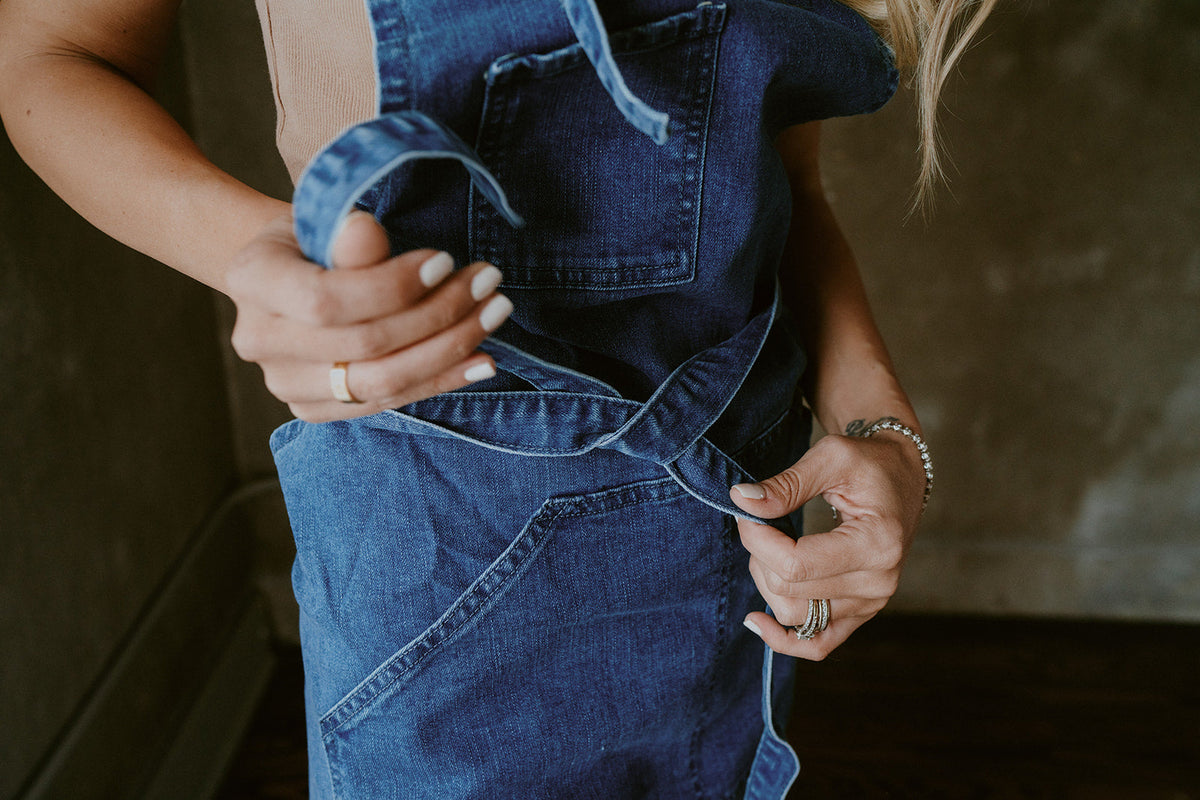
How do I choose an apron that won't get damaged by acetone and nail products?
Quick Answer: An apron resistant to acetone and nail products must have a non-porous surface that repels solvents instead of absorbing them. 100% bleach-proof vegan leather aprons wipe clean in seconds—acetone, nail polish remover, dyes, and chemical treatments bead up on the surface and remove with a damp cloth, while fabric aprons absorb, stain, and degrade. For nail technicians, estheticians, and salon professionals handling acetone daily, material choice determines whether your apron lasts six months or six years.
Why Acetone Destroys Most Salon Aprons Within Weeks
Acetone is a solvent designed to break down molecular bonds. That's why it dissolves nail polish, adhesives, and gel finishes—and why it rapidly degrades cotton, polyester, blended denim, and untreated canvas.
When acetone contacts fabric, it penetrates the fiber structure, breaking down the weave integrity and leaving permanent discoloration. Repeated exposure weakens the material until pockets tear, seams fray, and the apron becomes stiff or brittle. Most "stain-resistant" treatments are surface coatings that wear off after 10–15 wash cycles, leaving the fabric vulnerable.
If you're working with acrylics, gel removers, monomer, or acetone-based prep solutions multiple times per day, fabric aprons fail fast. The only durable solution is a material that doesn't absorb solvents in the first place.
The One Material That Actually Resists Acetone and Nail Chemicals
100% vegan leather with a sealed, non-porous finish repels acetone, nail polish remover, monomer, alcohol prep solutions, and dye pigments on contact. The liquid sits on the surface instead of soaking in. You wipe it off—done.

J. Clark Designed's 100% bleach-proof vegan leather aprons are formulated specifically for chemical exposure. Acetone doesn't discolor, roughen, or degrade the surface. Nail technicians working 8-hour days report the apron looking identical after a year of daily acetone contact—no ghost stains, no fiber breakdown.
The leather is also bleach-proof, which matters if you work in a multi-service salon where hair color, toners, and bleach are handled at the next station. One apron handles the full spectrum of salon chemistry.
| Material | Acetone Resistance | Cleanup Time | Lifespan (heavy use) |
|---|---|---|---|
| Cotton/Poly Blend | Absorbs immediately; permanent stains | Machine wash (rarely removes stains) | 3–6 months |
| 100% Stretch Denim | Stain-resistant coating delays absorption | Machine wash; most stains lift | 1–2 years |
| 100% Bleach-Proof Vegan Leather | Non-porous; liquids bead on surface | Wipe with damp cloth (10 seconds) | 4–6+ years |
What About "Stain-Resistant" Denim for Nail Technicians?
Organic cotton stretch denim with a stain-resistant treatment—like the core J. Clark Designed denim line—works well for moderate acetone exposure. The coating prevents most solvents from soaking into the weave immediately, and machine washing removes surface residue. Denim aprons soften and improve with age, breathe better than leather in hot salons, and cost significantly less ($59–$79 versus $99 for leather).
The limitation: repeated, direct acetone contact will eventually penetrate the treatment. If you're removing gel extensions back-to-back for six hours, or if you routinely spill acetone on your lap while opening bottles, denim will show wear faster than leather. For nail techs doing 2–4 sets per day with moderate splash exposure, denim performs well for 1–2 years before visible staining.

If you prefer the softer feel and breathability of fabric and your acetone exposure is light to moderate, a high-quality stretch denim apron resistant to acetone and nail products will serve you better than a $20 disposable canvas apron that disintegrates in weeks.
Why Cross-Back Straps Matter When You Work Long Shifts
Material is half the equation. Strap design determines whether you finish a 10-hour day with neck pain and shoulder tension or walk out feeling neutral.
Traditional around-the-neck aprons hang all weight—apron fabric, tools in pockets, the pull of your arms reaching forward—from your cervical spine. That's 3–5 pounds of constant downward traction on the neck and upper traps. By hour six, you feel it.
J. Clark Designed aprons use adjustable cross-back straps that distribute load across the shoulders and upper back, the way a backpack spreads weight instead of a messenger bag digging into one side. The straps adjust to fit all body types—men and women, petite to plus-size—and the apron ties at the waist for a secure, custom fit. One size fits the entire team, which simplifies ordering for salon owners outfitting multiple techs.
For nail technicians seated at a station all day, this matters more than most realize. Forward-leaning posture plus neck-strap weight compounds into chronic upper-back fatigue. Cross-back aprons remove that variable.
Pocket Design for Nail Tools and Client Consultations
A nail tech apron resistant to acetone and nail products also needs functional storage for:
- E-files and drill bits: deep, reinforced pockets keep handpieces secure without sagging.
- Cuticle nippers, pushers, and scissors: sharp tools stay separated and accessible without tearing the pocket lining.
- Phone and payment terminal: clients pay tableside; your phone needs a clean, protected spot.
- Nail files, buffers, and brushes: quick-access side pockets keep workflow smooth.
J. Clark Designed aprons include front pockets sized and reinforced for professional tool loads. Denim pockets are double-stitched; leather pockets are heat-sealed at stress points. Both hold weight without sagging or ripping after a year of daily use.

Specific Apron Recommendations for Acetone-Heavy Environments
For daily gel removal and acrylic work: Full Black Leather (100% bleach-proof)
If acetone is part of every client service, the Full Black Leather apron is the most cost-effective long-term choice. It wipes clean between clients, never stains, and lasts 4–6+ years under heavy chemical exposure. At $99, the per-year cost is lower than replacing fabric aprons annually.
For moderate acetone use in a multi-service salon: Cocoa Brown Leather (100% bleach-proof)
The Cocoa Brown Leather offers the same solvent resistance in a warmer tone that pairs well with earthy salon aesthetics. It's also bleach-proof, so estheticians who occasionally assist with color services or work near hair stations stay protected from cross-contamination.
For nail techs who prefer breathable fabric: Black Acid Washed Denim or Navy Pinstripe
The Black Acid Washed Denim and Navy Pinstripe denim aprons handle light to moderate acetone exposure, machine wash clean, and soften with age. They breathe better than leather in non-air-conditioned studios and cost $59–$79. Expect 1–2 years of solid performance before visible staining from heavy solvent use.
The Bottom Line
An apron resistant to acetone and nail products must be made from a non-porous material that repels solvents instead of absorbing them. 100% bleach-proof vegan leather wipes clean and lasts years under daily chemical exposure. High-quality stretch denim with stain-resistant treatment works well for moderate use and offers better breathability at a lower price point.
Cross-back straps, reinforced pockets, and adjustable sizing make the difference between an apron you tolerate and one that actively supports a 10-hour workday. Nail technicians, estheticians, and multi-service salon pros handling acetone, monomer, bleach, and dyes daily need gear that holds up—not gear that looks trashed in three months.
J. Clark Designed aprons are trusted by 10,000+ salons, barbershops, and studios, with 4.8/5 stars from 1,444+ verified reviews and free shipping on every order.
FAQ
Can I machine wash a leather apron after acetone exposure?
No—and you don't need to. 100% bleach-proof vegan leather aprons wipe clean with a damp cloth or disinfectant wipe in seconds. Acetone, nail polish, and solvents sit on the surface and remove without laundering. Machine washing leather isn't recommended and isn't necessary.
Will acetone eventually damage even a bleach-proof apron?
No. J. Clark Designed's 100% bleach-proof vegan leather is formulated to resist acetone, bleach, toner, hair dye, and alcohol-based solvents indefinitely. The non-porous surface doesn't degrade, crack, or discolor from repeated chemical contact. Professionals report identical appearance after years of daily use.
Do stain-resistant denim aprons work for nail salons?
Yes, for light to moderate acetone exposure. Organic cotton stretch denim with stain-resistant coating handles occasional splashes and washes clean in most cases. Heavy, daily acetone contact will eventually penetrate the treatment, so nail techs doing high-volume gel removal should choose leather for maximum longevity.
What's the best apron for estheticians who use both acetone and facial products?
100% bleach-proof vegan leather handles acetone, toners, chemical peels, oils, and serums without staining or absorbing odors. It wipes clean between clients and doesn't require laundry between every shift. The Full Black Leather or Cocoa Brown Leather aprons are ideal for multi-service esthetic work.
Explore the full collection at J. Clark Designed.
```


Leave a comment
This site is protected by hCaptcha and the hCaptcha Privacy Policy and Terms of Service apply.