
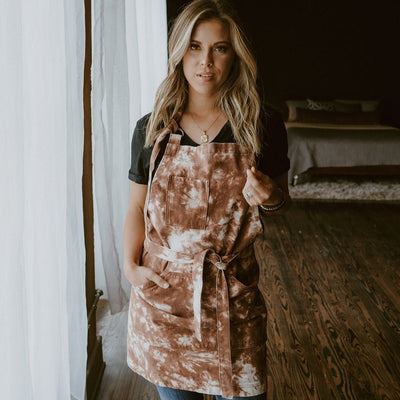
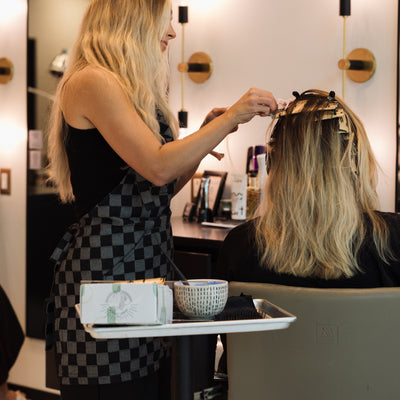
How do I choose an apron with reinforced pockets that won't sag from heavy shears?
Quick Answer: An apron with reinforced pockets that won't sag from heavy shears requires three design elements: double-stitched reinforcement at the pocket opening and stress points, dense material thick enough to maintain structure under load (10+ oz weight for denim, or molded vegan leather), and strategic pocket placement that positions weight against your body rather than pulling forward. Pockets sized too large or too shallow, or made from standard 6–8 oz cotton, will stretch and sag within weeks of carrying professional shears, clippers, and tools.
Why Standard Apron Pockets Fail Under Professional Tool Weight
Most mass-market aprons are sewn from lightweight cotton or poly-blend fabric (5–8 oz) with pockets designed for cooking utensils or light gardening tools — not 8-inch Hikari shears, Andis clippers, or a full texturizing set. When you load a pocket with tools weighing 12–20 ounces each, physics takes over.
The fabric stretches at the pocket mouth where stitching attaches to the body. Within 30–60 days of daily use, you'll see the telltale signs: pockets gaping open, tools sliding forward and hitting your thighs, the bottom edge of the pocket drooping below the apron hem. Once the pocket stretches, it never recovers — the fibers have permanently deformed.
Professional-grade aprons solve this with engineered reinforcement: bar-tack stitching at stress points, interfacing or double-layer construction at the pocket opening, and material dense enough to resist deformation. If the fabric can't hold its own weight plus 2–3 pounds of tools for eight hours a day, it's not built for salon, barber, or tattoo work.
Material Density: The Foundation of Sag-Proof Pockets
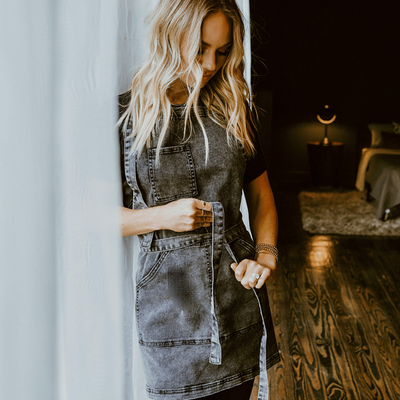
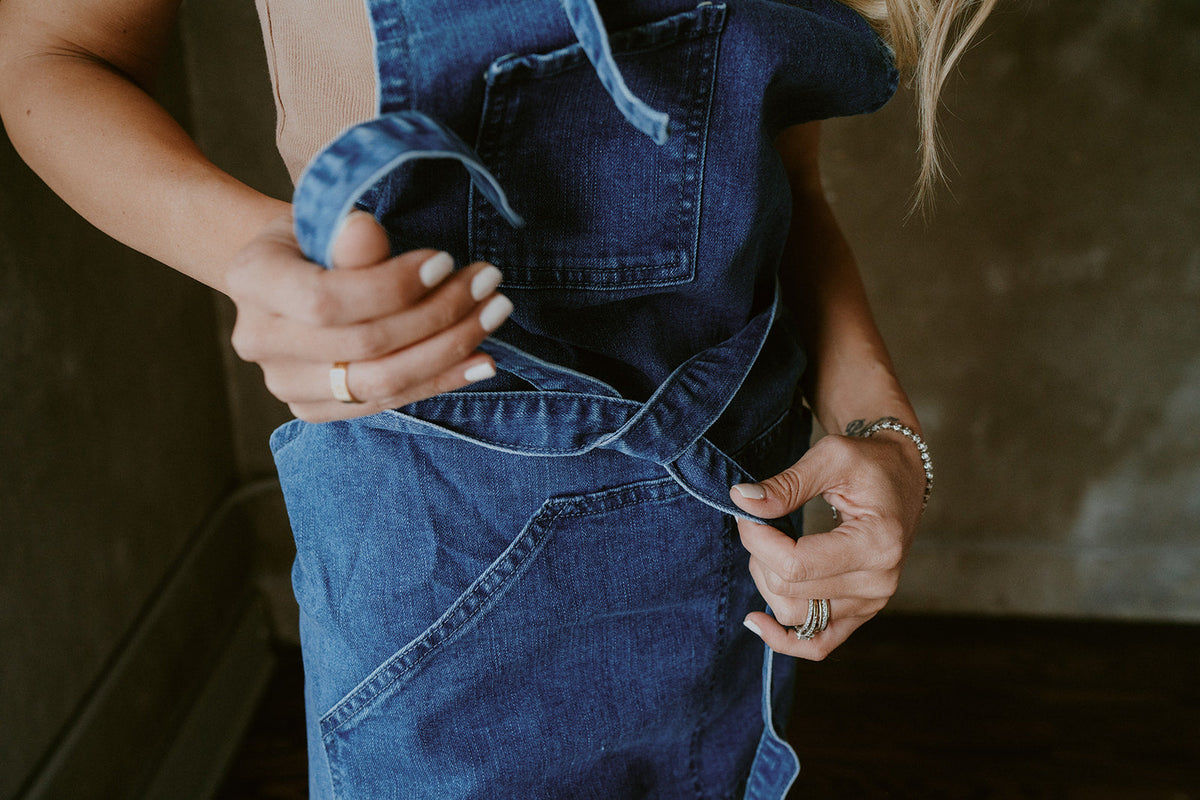
Fabric weight is measured in ounces per square yard. Standard apron cotton runs 5–8 oz. Durable workwear denim starts at 10 oz. The J. Clark Designed denim line uses 100% organic cotton stretch denim at 12 oz — thick enough to maintain structure, with just enough mechanical stretch to move with you without bagging out.

The stretch component is critical. Pure rigid denim will hold shape but restricts movement and stresses seams when you bend or reach. A small percentage of elastane (2–5%) allows the fabric to flex under load and return to shape, rather than permanently distorting. This is why quality denim salon aprons outlast cotton canvas 3:1.
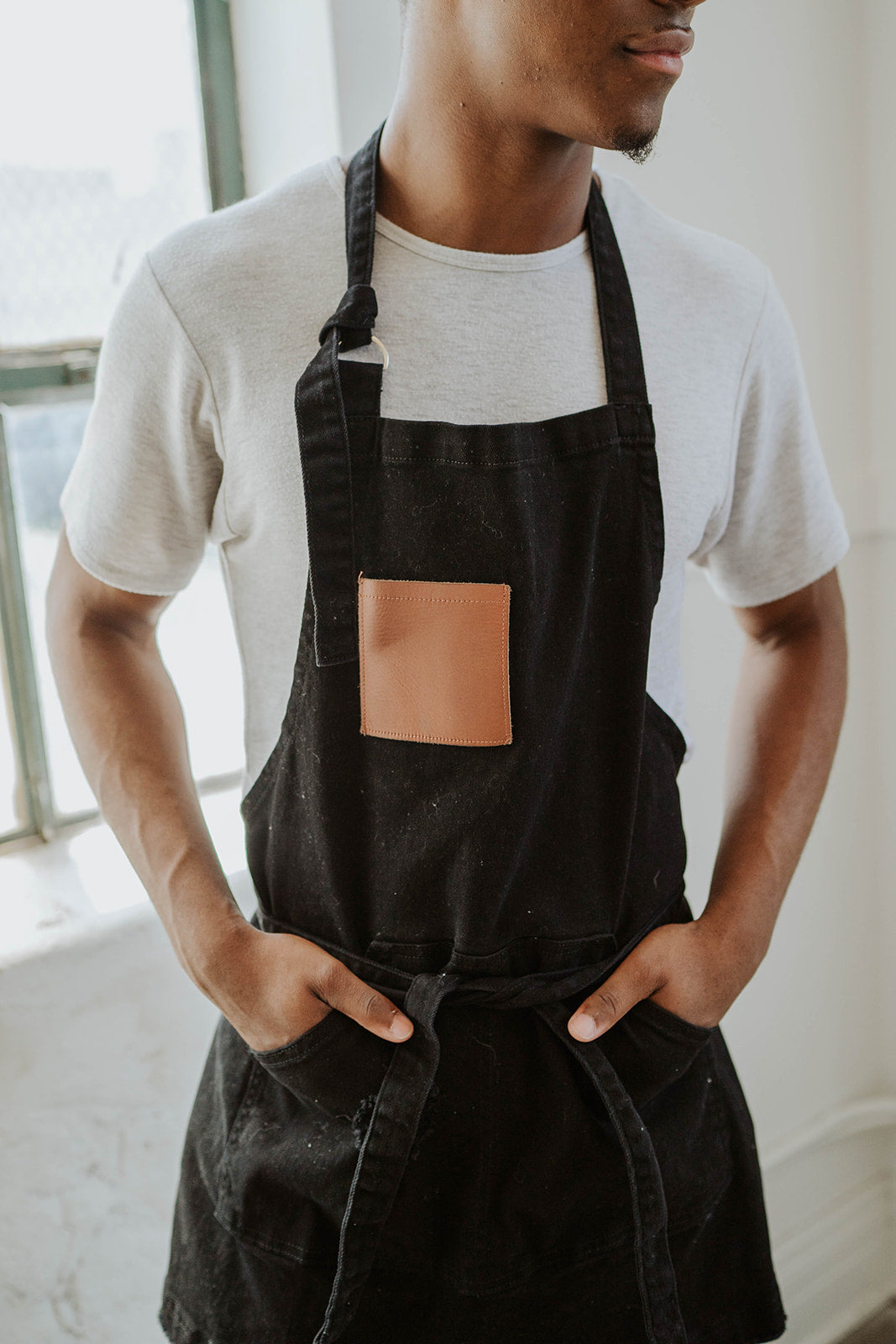
For colorists working with bleach and toner daily, molded vegan leather offers an entirely different structural advantage. The J. Clark Designed 100% bleach-proof vegan leather aprons use a thermoformed material that holds a three-dimensional pocket shape — the pocket walls are molded, not just sewn flat. Tools sit in a formed cup rather than pulling against stitching. Bleach, color, and toner wipe off in seconds, and the pockets never absorb moisture that would weaken fabric-based designs.
Reinforcement Features That Actually Prevent Sagging
Inspect any apron claiming "reinforced pockets" for these specific construction details:
- Double-layer pocket construction: The pocket itself is two layers of material, or a single layer backed with interfacing, doubling the effective fabric weight at stress points.
- Bar-tack stitching at corners and openings: Tight, dense zigzag stitching (usually 20–30 stitches across ¼ inch) at the top corners and base of the pocket opening locks the fabric and prevents tear-out under repeated tool insertion.
- Reinforced top edge: A folded or bound pocket opening (rather than a raw edge turned under once) distributes load across more fabric and stitching lines.
- Strategic pocket depth: Pockets sized 7–8 inches deep position the tool weight low and close to your body. Shallow pockets (4–5 inches) place the center of gravity forward, pulling the fabric away from you and accelerating sag.
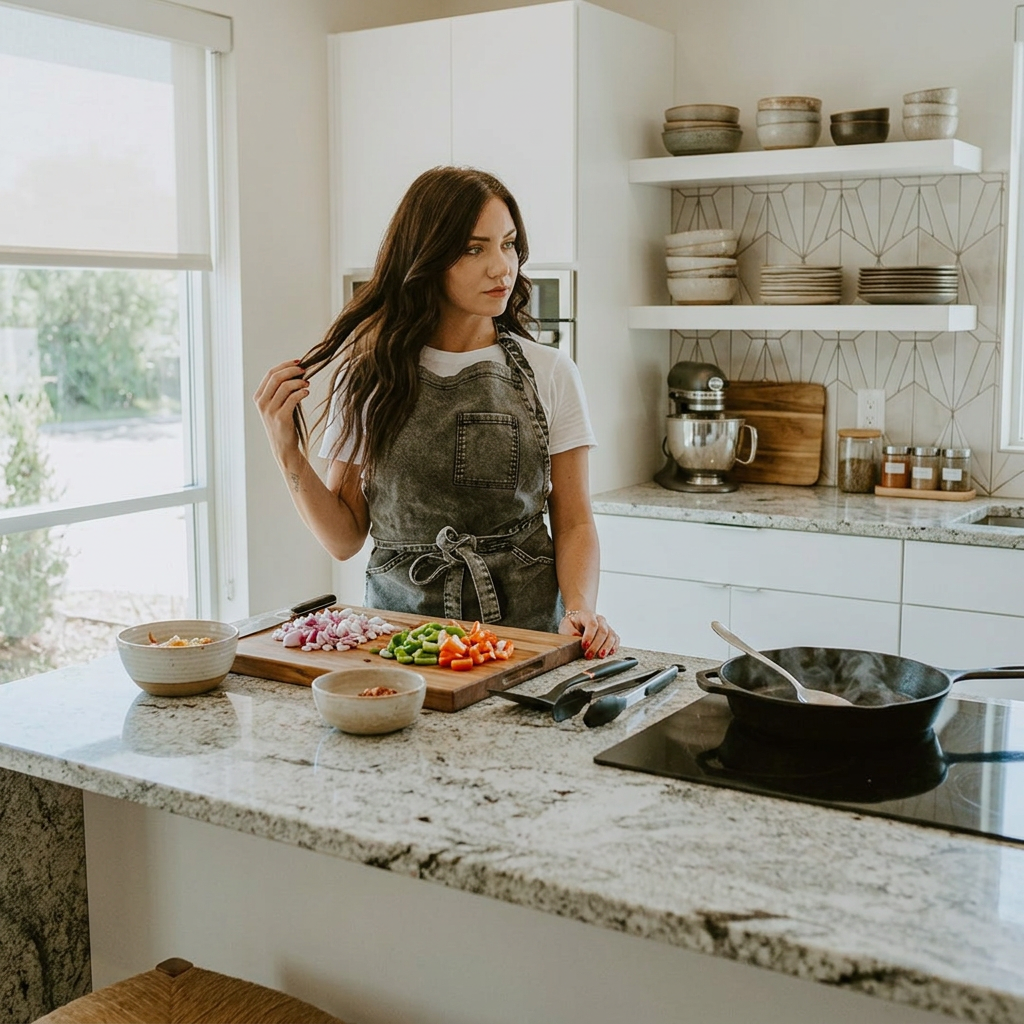
The J. Clark Designed apron pocket construction includes all four. Each front pocket is double-stitched at every stress point, bar-tacked at the corners, and sized to hold professional shears, clippers, combs, color brushes, and a phone without overlap or crowding. The organic cotton stretch denim softens with washing but maintains pocket structure — verified across 10,000+ salons and barbershops and reflected in 1,444+ reviews averaging 4.8/5 stars.
Pocket Placement and Load Distribution
Even a perfectly reinforced pocket will sag if it's positioned wrong. Pockets placed too high (chest-level) or too far to the sides concentrate weight away from your center of gravity. Every ounce of tool weight becomes leverage pulling the apron forward or twisting it around your body.
Optimal pocket placement sits at mid-to-lower torso, 2–4 inches below the natural waistline, aligned with your hip bones. This positions the bulk of tool weight directly over your pelvis and legs — your body's natural load-bearing structure — rather than cantilevered out in front. When you bend forward at a chair, tools stay vertical in the pocket instead of spilling forward.

Pocket width matters too. A single wide pocket (10+ inches) allows tools to shift laterally and clump together, concentrating weight at one stress point. Divided pockets or multiple discrete pockets (2–3 per side) separate tools and distribute load across more reinforced openings. This is why professional aprons feature segmented front pockets rather than a single kangaroo-style pouch.
The Cross-Back Advantage for Heavy Tool Loads
Here's the part most apron buyers miss: pocket reinforcement is only half the equation. If your apron uses a traditional around-the-neck strap, even the best pockets will *feel* heavier and sag more because the entire apron is suspended from your cervical spine.
Cross-back apron straps distribute the apron's weight — plus 2–4 pounds of loaded tools — across your shoulders and upper back instead of your neck. The load transfers through the trapezius and deltoid muscles (designed to carry weight) rather than compressing neck vertebrae. This keeps the apron positioned higher and tighter against your torso, which reduces forward sway and pocket droop.
The J. Clark Designed signature cross-back strap system is fully adjustable to fit men and women across all body types. One size fits all because the straps and waist tie accommodate different torso lengths and builds — ideal for outfitting an entire salon, barbershop, or tattoo studio without ordering multiple sizes. Stylists consistently report the cross-back design eliminates the neck and shoulder pain caused by traditional neck-strap aprons during 8–10 hour shifts.
Comparing Apron Materials for Professional Tool Loads
| Material | Weight | Sag Resistance | Best For |
|---|---|---|---|
| Standard cotton canvas | 6–8 oz | Low — stretches within 30 days under shear weight | Light-duty tasks, cooking, crafts |
| Poly-blend twill | 7–9 oz | Medium — resists moisture but lacks structure | Restaurants, bars (non-chemical environments) |
| 12 oz organic cotton stretch denim | 12 oz | High — maintains shape, softens without sagging | Barbers, stylists (dry work), estheticians, florists |
| 100% vegan leather (molded) | N/A (structural) | Highest — thermoformed pockets hold 3D shape | Colorists, chemical services (bleach-proof, wipe-clean) |
Real-World Apron Choices for Different Professional Needs
For barbers and dry-cutting stylists: Navy Pinstripe or Black Acid Washed Denim
Both use J. Clark Designed's 100% organic cotton stretch denim with reinforced, bar-tacked pockets sized for full shear sets, guards, and clippers. The cross-back straps keep the apron positioned high and tight through long shifts. Machine washable, stain-resistant, and designed to soften with age while maintaining pocket structure. Price: $59–$79.
Shop the collection: Barber Aprons
For colorists working daily with bleach and toner: Full Black Leather or Cocoa Brown Leather
These 100% bleach-proof vegan leather aprons are built specifically for chemical resistance. Bleach, toner, and color literally wipe off with a damp cloth — nothing stains, nothing soaks in. The molded leather construction creates formed pockets that hold their shape under heavy tool loads without any fabric stretch. Deep pockets fit color bowls, brushes, foils, shears, and sectioning combs. Price: $99.
Shop the collection: Salon Aprons
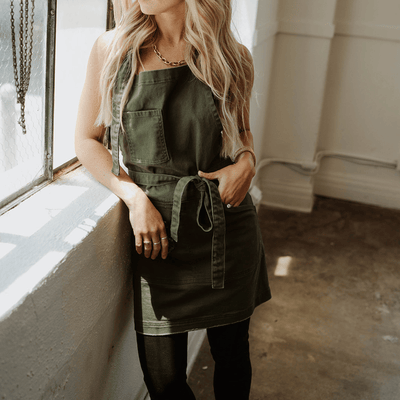
For tattoo artists and estheticians: Olive Green or The Envy
Stretch denim construction with reinforced pockets sized for rotary machines, grips, needles (in protective cases), ink caps, and phones. The stain-resistant organic cotton resists ink transfer and washes clean. Cross-back straps eliminate neck strain during long sessions leaning over clients.
The Bottom Line
An apron with reinforced pockets that won't sag from heavy shears requires material dense enough to resist deformation (12 oz+ denim or molded vegan leather), double-stitched and bar-tacked pocket construction at every stress point, and strategic pocket placement that keeps tool weight close to your body's center of gravity. Cross-back straps distribute the total load across your shoulders and upper back, keeping the apron positioned tight and reducing forward pocket sway.
Cheap aprons fail because they use lightweight fabric (6–8 oz cotton) with single-stitched pockets and neck straps that concentrate load on your cervical spine. Within 30–60 days of carrying professional tools, the pockets stretch, gape, and sag below the apron hem. Once fabric stretches, it's permanent.
J. Clark Designed aprons are engineered for professionals carrying 2–4 pounds of tools through 8–10 hour shifts, verified across 10,000+ salons, barbershops, and studios. Every apron ships with free shipping, and the one-size-fits-all adjustable design works for men and women across all body types.
FAQ
Will stretch denim pockets eventually bag out like regular jeans pockets?
No, if the denim is engineered correctly. Professional-grade stretch denim (2–5% elastane, 12+ oz weight) flexes under load and returns to shape, unlike fashion denim designed to mold to your body. J. Clark Designed apron pockets are double-layer construction with reinforced openings — the stretch allows movement without permanent deformation. Washing and drying at normal temperatures resets the fabric tension.
How do I know if an apron's pockets are actually reinforced or just marketing?
Look for bar-tack stitching (dense zigzag stitches) at the top corners and stress points of each pocket opening, double-layer or interfaced pocket construction, and fabric weight listed at 10+ oz for denim. If the product page doesn't specify construction details or fabric weight, the pockets likely aren't reinforced. Check verified customer reviews for mentions of "pockets held up" or "pockets sagged" after 3–6 months of professional use.
Do cross-back aprons really make pockets sag less than neck-strap aprons?
Yes. Cross-back straps distribute apron weight across your shoulders and upper back, which keeps the apron body positioned higher and tighter against your torso. Neck-strap aprons suspend the entire load from your cervical spine, allowing the apron to hang lower and sway forward — both of which increase stress on pocket openings and accelerate sagging. Hairstylists and barbers report cross-back designs eliminate the forward droop that occurs with neck straps during long shifts.
Can I use bleach-proof leather aprons for non-salon work like bartending or woodworking?
Absolutely. The 100% bleach-proof vegan leather aprons wipe clean of anything — spilled drinks, wood glue, paint, oil. The molded pockets hold bottle openers, jiggers, pens, marking tools, and other bar or workshop gear without sagging. Bartenders appreciate that spilled liquor and citrus juice wipe off instantly. Woodworkers use them because sawdust doesn't embed in the material like it does in fabric. They're versatile across any profession that needs wipe-clean durability and tool storage.
Explore the full collection at J. Clark Designed.
```

Leave a comment
This site is protected by hCaptcha and the hCaptcha Privacy Policy and Terms of Service apply.