

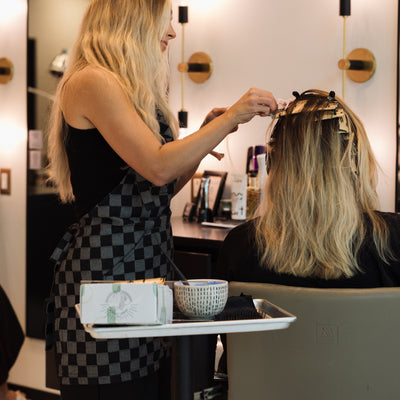

How do professional aprons with weight distribution features reduce fatigue during long shifts?
Quick Answer: Professional aprons with weight distribution features reduce fatigue during long shifts by shifting strain from the neck to the shoulders and upper back through cross-back strap designs. Instead of hanging from a single neck loop—which compresses cervical vertebrae and cuts circulation—cross-back aprons spread load across the trapezius and scapular muscles, maintaining neutral spine alignment and preventing the forward head posture that causes tension headaches and upper back pain after 8–12 hour days.
Why Traditional Neck-Loop Aprons Cause Cumulative Damage
Most salon, barber, and restaurant aprons hang from a single strap looped around the neck. Over a six-hour shift, this creates 10–15 pounds of sustained downward pressure on the cervical spine—equivalent to wearing a weighted vest that pulls your head forward.
The biomechanical consequences stack up:
- Forward head posture: For every inch your head tilts forward, perceived weight on the neck increases by roughly 10 pounds. By mid-shift, you're compensating with hunched shoulders.
- Restricted blood flow: Narrow straps compress the carotid arteries and jugular veins, reducing oxygen to the brain—hello, afternoon brain fog.
- Trigger point formation: Constant tension in the upper trapezius creates knots that refer pain into the temples and base of the skull.
- Cumulative soft-tissue strain: Micro-tears in neck ligaments don't heal between shifts, leading to chronic stiffness that most stylists, barbers, and bartenders assume is "just part of the job."
It's not. The apron design is the problem.
How Cross-Back Aprons Redistribute Load Across Stronger Muscle Groups

Cross-back aprons reroute the load path. Instead of a vertical pull on the neck, adjustable straps cross between the shoulder blades and distribute weight bilaterally across the shoulders and upper back—muscle groups designed to bear sustained loads.
Here's the mechanical advantage:
- Bilateral symmetry: Weight splits evenly left and right, eliminating the asymmetric strain that causes one shoulder to ride higher than the other.
- Scapular stabilization: The crossing point sits between the shoulder blades, engaging the rhomboids and mid-trapezius—postural muscles built for endurance.
- No neck contact: Zero pressure on the cervical spine means you maintain a neutral head position even during precision work (detailed color application, beard sculpting, cocktail garnishing).
- Adjustability: Straps lengthen or shorten to fit different torso lengths and allow micro-adjustments as you move—bending to mix color, reaching for high shelves, pivoting between clients.
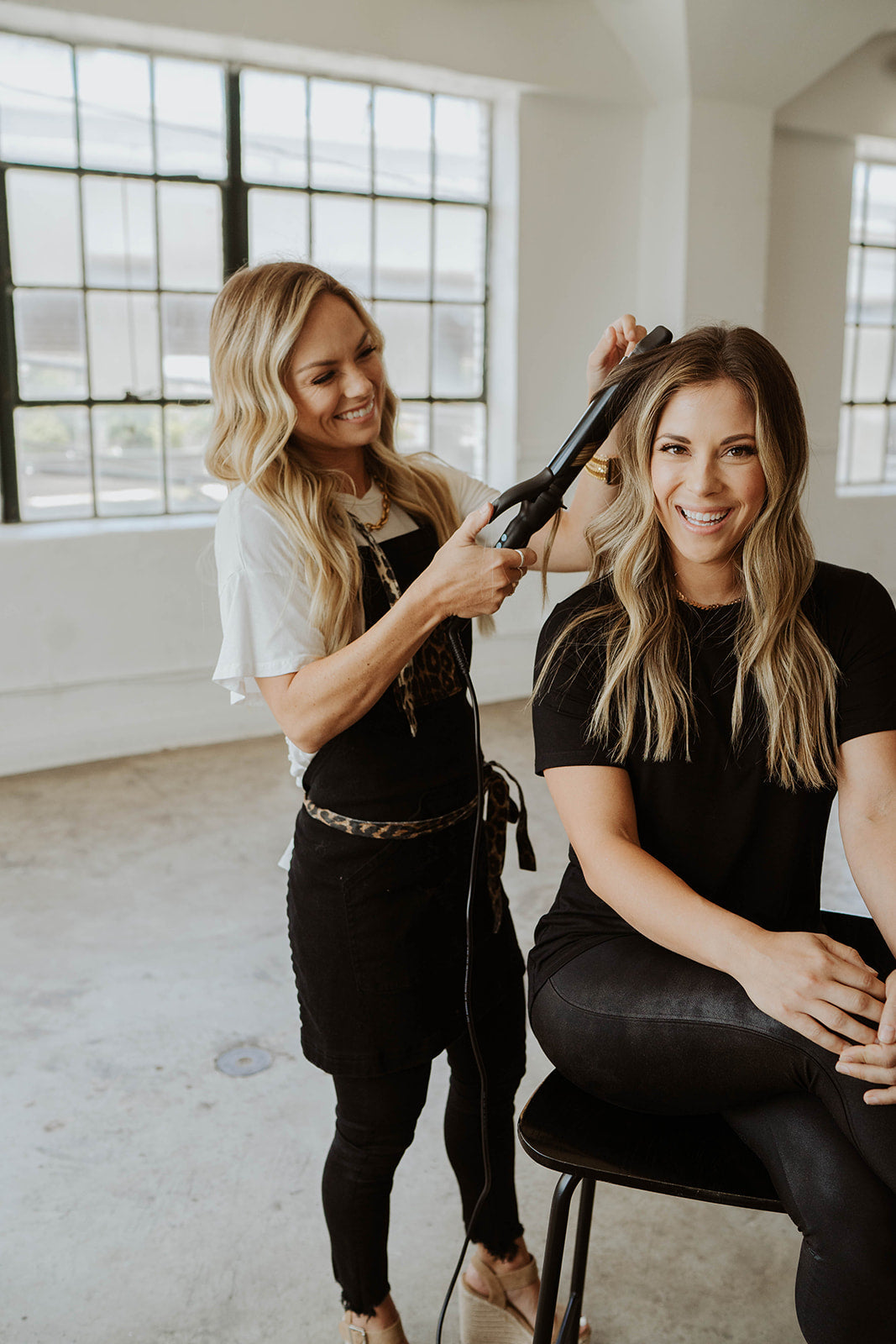
This isn't theoretical. Hairstylists and barbers wearing cross-back salon aprons report measurably less end-of-day neck tension and fewer midweek headaches compared to traditional bib styles.
Material Matters: How Fabric Weight and Drape Affect Fatigue
A poorly designed cross-back apron can still cause fatigue if the material is too stiff, too heavy, or traps heat. Two factors matter most: weight-to-durability ratio and breathability.
| Material | Weight | Breathability | Best For |
|---|---|---|---|
| 100% organic cotton stretch denim | Medium (softens with age) | High—wicks moisture, allows airflow | All-day wear in salons, barbershops, tattoo studios |
| Vegan leather (bleach-proof) | Light to medium | Moderate—smooth, non-porous surface | High-volume color work, chemical services |
| Polyester blends | Light but rigid | Low—traps heat, sticks to skin | Short shifts only |
| Waxed canvas | Heavy (stiff until broken in) | Low—waxy coating seals fabric | Outdoor/industrial use, not all-day indoor wear |
Why this matters for fatigue: A heavy, non-breathable apron forces your body to work harder to thermoregulate. You'll sweat more, hydrate less (busy shifts = no time for water breaks), and fatigue faster. A breathable denim apron moves with you and keeps core temperature stable.
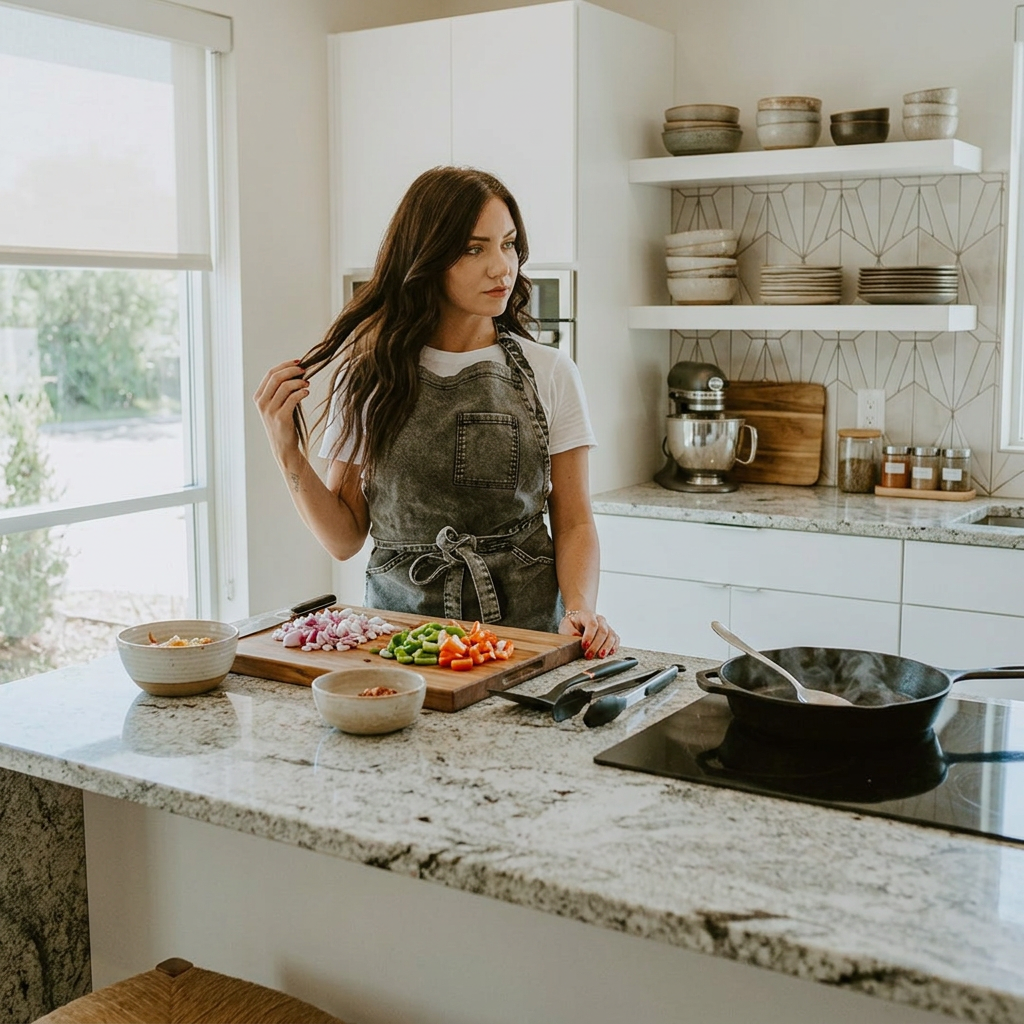
J. Clark Designed uses 100% organic cotton stretch denim—the four-way stretch means the fabric yields when you bend, squat, or reach overhead, reducing the muscular effort required to move. Over a twelve-hour shift, that small mechanical advantage compounds into noticeably less lower back and hip fatigue.
The Pocket Paradox: Tool Access vs. Hip Strain
Deep front pockets are non-negotiable for hairstylists, barbers, and colorists—you need shears, combs, clips, sectioning tools, and a phone within arm's reach. But poorly designed pockets create a new fatigue problem: asymmetric hip loading.
When tools pile into a single side pocket, the apron pulls laterally, forcing your pelvis to compensate. Over hours, this creates:
- Uneven weight distribution: One hip bears 2–4 extra pounds, tilting the pelvis and straining the quadratus lumborum (the deep lower back muscle that stabilizes your spine).
- Gait changes: You unconsciously shift your stance to rebalance, which fatigues the glutes and hamstrings.
- Tool-retrieval strain: Shallow pockets mean you're constantly re-adjusting tools mid-service, breaking focus and adding micro-movements that stack into fatigue.
Solution: Reinforced, symmetrically placed pockets sized for professional tools. J. Clark aprons feature deep front pockets (8+ inches) with reinforced stitching that hold shears vertically without sagging. When you load both pockets evenly—shears left, combs and clips right—the apron maintains center-of-mass balance.

Adjustability: Why One-Size-Fits-All Actually Works (When Done Right)
Most "one size fits all" aprons fit nobody well. But when cross-back straps are fully adjustable and the waist tie is long enough to wrap and double-knot, a single apron design can fit a 5'2" colorist and a 6'4" barber equally well.
Key design elements that make universal sizing viable:
- Slider-adjustable back straps: Lengthen or shorten the cross-back by 6–8 inches to accommodate different torso heights and shoulder widths.
- Long waist ties (40+ inches): Wrap around any waist size, tie in front or back, and still have enough length to double-knot securely.
- Pre-washed, pre-shrunk fabric: No guessing whether the apron will shrink two sizes after the first wash.
This matters for salon and barbershop owners outfitting a team. You can stock one style—say, Navy Pinstripe or Olive Green—and every team member adjusts it to fit. No size charts, no special orders, no returned inventory.
Chemical Resistance and the Hidden Fatigue Cost of Stain Anxiety
Cognitive load contributes to fatigue. When you're constantly worried about bleach splatter, toner drips, or cocktail spills ruining a $60 apron, you're burning mental energy on vigilance instead of focusing on the client in your chair.
This is where material science directly impacts fatigue:
- Stain-resistant organic cotton denim: Tight weave and natural fiber structure resist absorption. Most stains wash out in a standard machine cycle. You stop micromanaging every color bowl placement.
- 100% bleach-proof vegan leather: Bleach, toner, permanent color, and cocktail mixers literally wipe off with a damp cloth. Zero staining, zero anxiety. Colorists working with high-lift bleach and violet toners report this alone cuts end-of-day mental fatigue.
The Full Black Leather and Cocoa Brown Leather aprons are both 100% bleach-proof. You can work an eight-client balayage day, wipe the apron clean between each guest, and walk out looking exactly as sharp as you did at opening.
Real-World Fatigue Reduction: What 10,000+ Professionals Report
J. Clark Designed aprons carry a 4.8/5-star rating from 1,444+ verified reviews, trusted across 10,000+ salons, barbershops, and creative studios. The most common fatigue-related feedback:
- "No more neck pain after double-booked Saturdays." Cross-back hairstylist aprons eliminate the end-of-day tension headache that used to be inevitable.
- "I forget I'm wearing it." Proper weight distribution plus breathable stretch denim means the apron disappears into your workflow instead of reminding you it's there every time you bend or reach.
- "My lower back feels better." Balanced pocket loading and adjustable fit reduce compensatory postural shifts that strain the lumbar spine.
- "I don't change aprons mid-shift anymore." Bleach-proof leather means one apron handles color, cuts, and styling without staining—fewer trips to the back room, more time on the floor.

Choosing the Right Apron for Your Fatigue Profile
Match the apron to the specific fatigue sources in your workday:
For high-volume color work: Full Black Leather
100% bleach-proof vegan leather, cross-back straps, wipe-clean in seconds. Zero stain anxiety, maximum durability. Shop the Full Black Leather apron at $99.
For all-day comfort across cutting, styling, and color: Olive Green or Navy Pinstripe
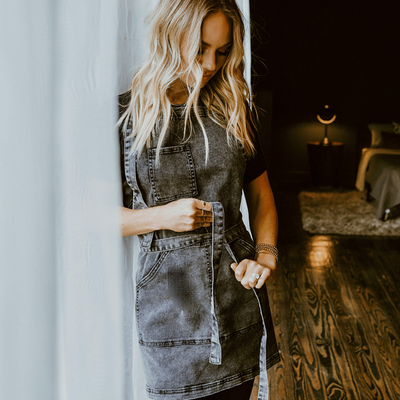
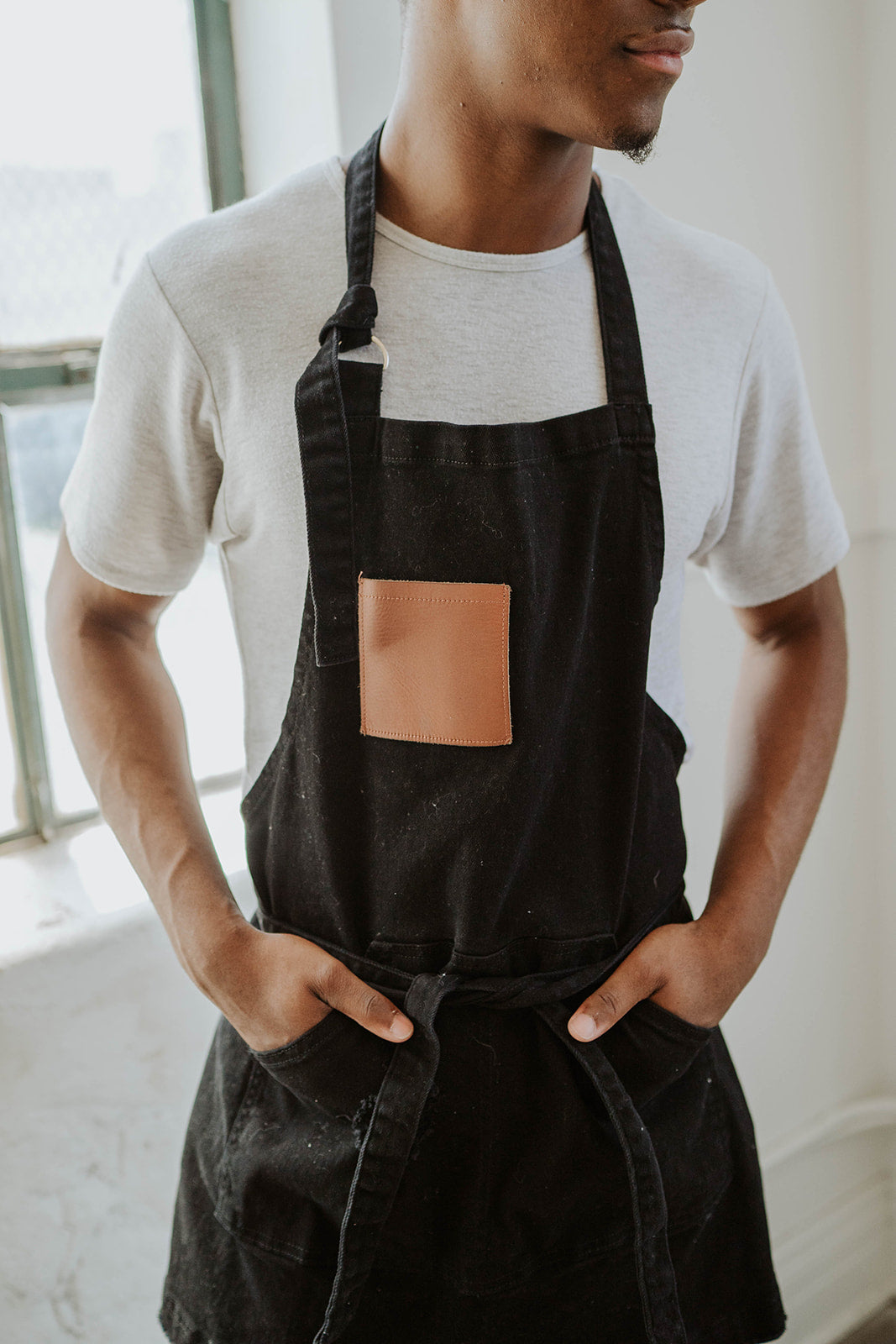
100% organic cotton stretch denim, machine washable, softens with every wash. Breathable enough for 10+ hour shifts. Both feature cross-back straps and deep reinforced pockets. Denim aprons range $59–$79.
For barbershops with heavy clipper and trimmer use: Black Acid Washed Denim
The distressed finish hides hair clippings and product buildup between washes. Cross-back design keeps your neck free during detailed fade work. Available in standard and over-shoulder styles.
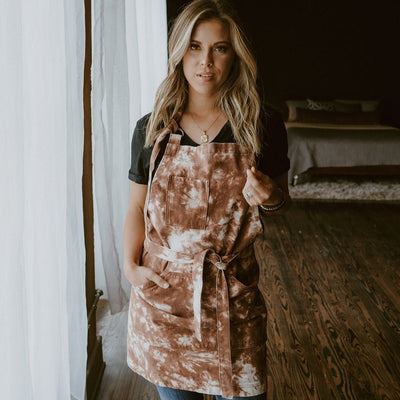
For bartenders and baristas who lean over counters all shift: The Envy or Terracotta
Stretch denim moves with you during repetitive bending and reaching. Deep pockets hold bar tools, a phone, and order pads without sagging. Cross-back keeps shoulders relaxed during back-to-back service.
The Bottom Line
Professional aprons with weight distribution features reduce fatigue during long shifts by eliminating neck strain, balancing load across stronger muscle groups, and allowing unrestricted movement. Cross-back strap designs—especially when paired with breathable, stain-resistant materials and deep, reinforced pockets—address the root biomechanical causes of cumulative fatigue that traditional neck-loop aprons create.
If you finish a shift with neck pain, tension headaches, or lower back stiffness, the apron is a variable you can control. Switching to a cross-back design won't eliminate every source of physical strain in salon, barber, or bar work—but it will remove one major, unnecessary load from your body's daily stress budget.
Over weeks and months, that compounds into measurably less fatigue, fewer compensatory movement patterns, and a longer, healthier career doing the work you love.
FAQ
Do cross-back aprons work for people with larger chest sizes?
Yes. Adjustable cross-back straps sit between the shoulder blades, not across the chest, so they accommodate all body types without binding or cutting into tissue. The waist tie adjusts independently, allowing you to customize fit at two points. J. Clark aprons are worn comfortably by professionals across all sizes—verified in thousands of reviews.
Can you machine wash stretch denim aprons without losing the fit?
Yes. J. Clark's organic cotton stretch denim is pre-washed and pre-shrunk. Machine wash cold, tumble dry low, and the apron maintains its shape and stretch. In fact, it softens and molds to your body over the first few washes, improving comfort without losing structure.
How much weight can the reinforced pockets hold before sagging?
The deep front pockets are reinforced with bartack stitching at stress points and hold a full set of professional tools—shears, thinning shears, multiple combs, clips, sectioning tools, and a phone—without sagging or pulling the apron off-center. Expect 2–3 pounds per pocket with zero structural compromise.
Is bleach-proof leather actually wipe-clean, or does it still absorb some stain?
It's genuinely wipe-clean. The 100% vegan leather used in the Full Black Leather and Cocoa Brown Leather aprons is engineered to repel bleach, toner, permanent color, and liquid chemicals. A damp cloth removes residue in seconds with zero discoloration or texture change. Colorists working with high-volume bleach services report zero staining after months of daily use.
Explore the full collection at J. Clark Designed.
```

Leave a comment
This site is protected by hCaptcha and the hCaptcha Privacy Policy and Terms of Service apply.