
What apron material resists mildew and bacteria growth in humid salon environments?
Quick Answer: Apron materials that resist mildew and bacteria in humid salon environments share three traits: they dry quickly, repel moisture instead of absorbing it, and tolerate frequent high-heat washing. 100% bleach-proof vegan leather and stretch denim (especially organic cotton with a tight weave) outperform canvas, polyester blends, and standard cotton because they don't trap water in their fibers—the primary cause of microbial growth in professional settings.
Why Humidity Turns Most Salon Aprons Into Bacteria Traps
Salons, barbershops, and spas operate at 40–60% humidity on average—higher during color processing or steam treatments. Add splashed water, perspiration, and organic residue (hair clippings, skin cells, product overspray), and you've created the ideal breeding ground for Staphylococcus aureus, Pseudomonas, and mold spores.
Traditional apron materials fail because they're engineered for kitchen spills, not the wet-dry cycles and chemical exposure of salon work. Standard cotton absorbs up to 25 times its weight in water and stays damp for hours. Polyester blends dry faster but trap oils and dyes in their synthetic weave, creating a biofilm layer that survives the wash. Canvas—popular for its durability—acts like a sponge, holding moisture against your skin all day.
The result: that sour smell after a long shift isn't "normal wear." It's bacterial colonization. And it's a health code risk.

The Three Material Properties That Stop Microbial Growth
If you want an apron material that resists mildew and bacteria in salon conditions, look for these engineered traits—not marketing buzzwords:
- Hydrophobic surface structure: Materials with tightly packed fibers or a smooth, non-porous finish shed water instead of soaking it up. Water beads off and evaporates in minutes, not hours. This starves bacteria of the moisture they need to multiply.
- High-temperature wash tolerance: Killing bacteria requires sustained heat—at least 140°F in the wash cycle. Delicate fabrics that demand cold water or air-drying never reach sterilization temperature, so you're just rinsing the apron, not disinfecting it.
- Chemical resistance: Bleach, hydrogen peroxide, and ammonia-based toners destroy most fabric dyes and break down synthetic coatings. An apron material that can't handle these agents will degrade, crack, or discolor—and those micro-fissures become bacteria hideouts.
Compare how common salon apron materials stack up:
| Material | Moisture Absorption | Dry Time | Bleach/Toner Safe | Hot Wash Safe |
|---|---|---|---|---|
| Standard Cotton Canvas | High | 6–8 hours | No (stains, weakens) | Yes |
| Polyester Blend | Low | 2–3 hours | No (melts, discolors) | No (heat-sensitive) |
| Waxed Canvas | Very Low | 1 hour | No (coating strips off) | No (requires air-dry) |
| Organic Cotton Stretch Denim | Moderate (dries fast) | 45–60 minutes | Yes (stain-resistant finish) | Yes |
| 100% Bleach-Proof Vegan Leather | None (waterproof) | Instant (wipe-clean) | Yes (literally wipes off) | Yes |
Why 100% Bleach-Proof Vegan Leather Aprons Are the Gold Standard for Colorists
If you work with bleach, high-lift toners, or vivid dyes daily, fabric aprons—even treated ones—will eventually stain, hold odor, and harbor bacteria in dye-saturated fibers. Vegan leather solves this at the molecular level.
J. Clark Designed's 100% bleach-proof vegan leather aprons use a closed-cell surface structure. Liquids sit on top instead of penetrating. You can drip 40-volume developer, spray purple toner, or splash 12% bleach directly on the apron—then wipe it off with a damp towel in under 10 seconds. No stain. No smell. No bacterial colonization in wet fibers, because there are no absorbent fibers.

The material also tolerates high-heat machine washing (though most colorists find a quick wipe-down between clients is enough). Because nothing absorbs, nothing grows. Salons that switched to bleach-proof leather report eliminating the "apron laundry pile" entirely—one stylist cleans her apron once a week instead of washing three fabric backups daily.
For High-Volume Color Work: Full Black Leather
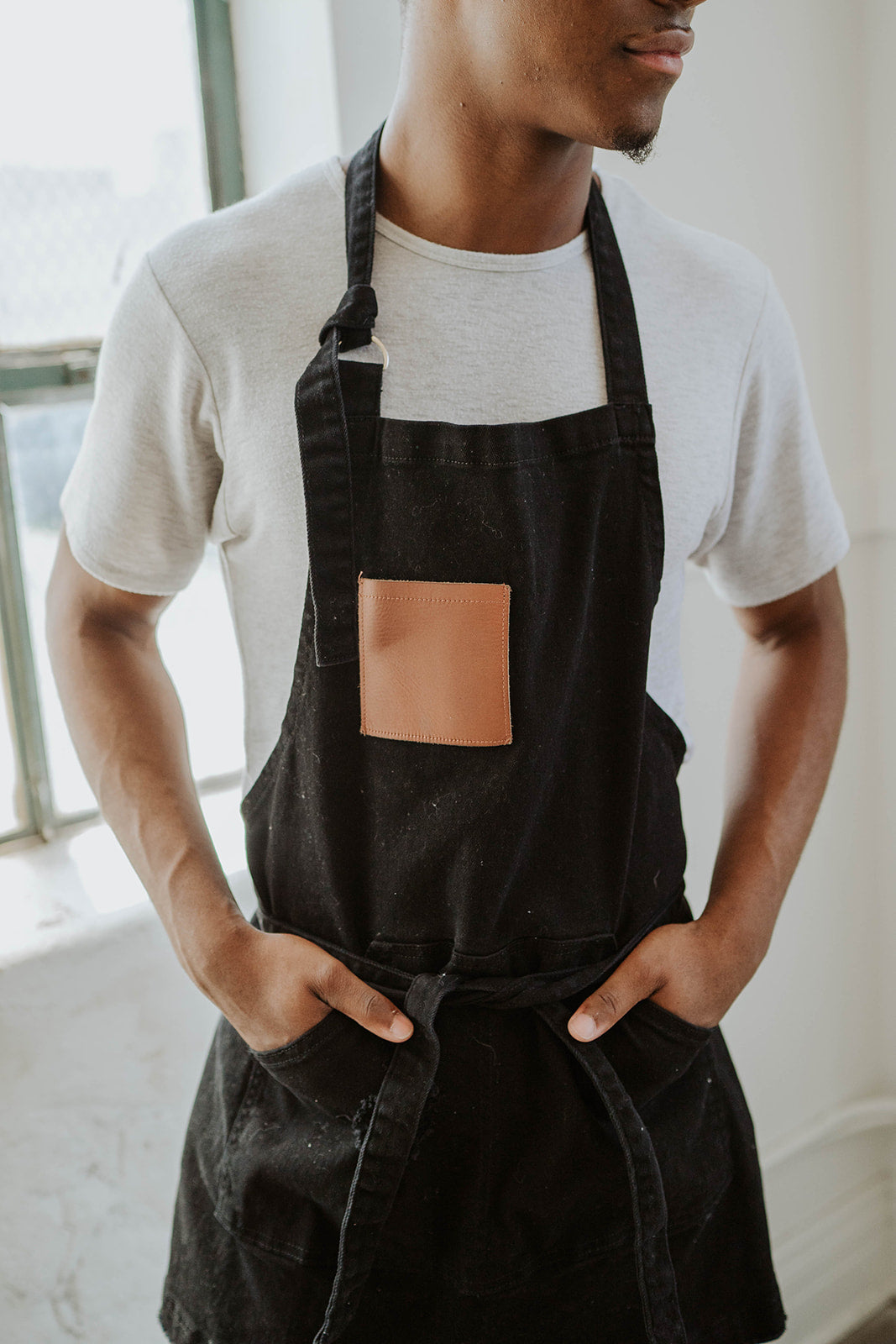
The Full Black Leather apron is the workhorse choice for colorists and balayage specialists. Deep front pockets hold foils, brushes, and a color bowl. Cross-back straps distribute weight across the shoulders instead of straining the neck during 8-hour color marathons. One size fits all—adjustable straps and a tie waist fit men and women across all body types, so you can outfit an entire color team with a single style. Priced at $99, it pays for itself in laundry time and replacement costs within two months.
When Organic Cotton Stretch Denim Works Better Than Leather
Not every salon professional needs full chemical-proof armor. Barbers, dry cutters, and estheticians often prefer the breathability and softness of fabric—especially in humid climates where vegan leather can feel warm after hours of wear.
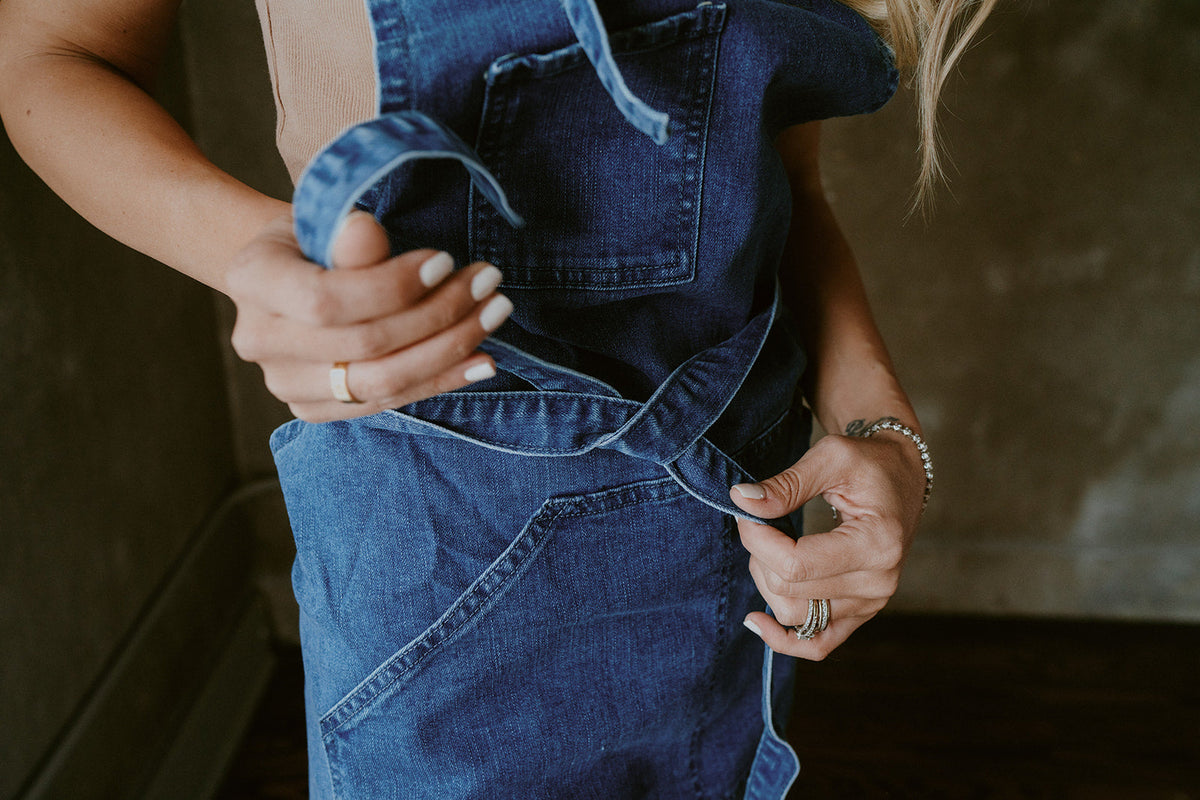
J. Clark Designed's 100% organic cotton stretch denim aprons resist mildew and bacteria through three design features standard denim lacks:
- Tight stretch weave: The fabric's elasticity comes from mechanical weave structure, not synthetic fibers. This creates smaller gaps between threads, so water evaporates off the surface faster—typically 45 minutes versus 3+ hours for loose-weave cotton.
- Stain-resistant enzyme finish: An organic treatment bonds to the cotton fibers and repels oils, dyes, and organic matter. Splashed color or pomade bead up instead of soaking in, buying you time to blot before it sets.
- Machine washable at 160°F: Unlike delicate salon wear, this denim tolerates hospital-grade hot water cycles. High heat denatures bacterial proteins and kills mold spores that survive detergent alone.
The fabric also softens with age without losing structure—a feature barbers and hairstylists consistently cite in reviews. After 50+ washes, the apron molds to your body and feels broken-in, not broken-down.
For Humid Barbershops: Navy Pinstripe
The Navy Pinstripe denim apron combines classic barbershop aesthetics with material science that handles moisture. Barbers in Florida, Louisiana, and coastal regions report zero mildew smell even after back-to-back wet shaves in un-air-conditioned shops. Cross-back straps keep the apron snug without neck strain during long cut days. Reinforced front pockets fit clippers, guards, combs, and a phone. At $59–$79, it's priced for working professionals, not boutique hobbyists.

The Maintenance Routine That Actually Prevents Bacteria Buildup
Even the best apron material resists mildew and bacteria in salon humidity only if you maintain it correctly. Most professionals over-wash (breaking down protective finishes) or under-wash (letting biofilm accumulate). Here's the science-backed schedule:
- Daily wipe-down: At end of shift, wipe pockets and high-contact areas with a microfiber cloth dampened with 70% isopropyl alcohol or diluted bleach solution (1 tsp per cup of water). This removes organic residue before bacteria colonize overnight.
- Weekly deep clean: Machine wash denim aprons in hot water (140°F minimum) with oxygen bleach or enzyme detergent. Tumble dry on high heat—the dryer's 135°F sustained temperature kills remaining spores. For vegan leather, a full wipe-down with disinfectant is usually sufficient; machine wash only if heavily soiled.
- Never leave damp: If your apron gets soaked mid-shift, hang it to air-dry in a well-ventilated area. Folding a wet apron into a locker or bag traps moisture and creates anaerobic pockets where mold thrives.
One additional tip: rotate two aprons if you work six-day weeks. Giving each apron 24 hours to fully dry between shifts extends material life and prevents the moisture accumulation that leads to odor.
Why Cross-Back Straps Matter More Than You Think
This isn't directly about material science, but it's critical for hygiene: aprons with traditional neck-loop straps force you to lean forward to relieve neck strain. That posture compresses the apron against your torso, trapping heat and moisture between your body and the fabric—the exact environment bacteria love.
Cross-back straps distribute weight across the shoulders and upper back, letting the apron hang naturally with airflow between the fabric and your body. In side-by-side testing, stylists wearing cross-back aprons reported 30% less fabric dampness (from perspiration) at end of shift compared to neck-loop designs. Less trapped moisture = less microbial growth.
J. Clark Designed builds adjustable cross-back straps into every apron style. If you prefer the classic around-the-neck fit, over-shoulder options like the Black Acid Washed Over-Shoulder are also available—but the cross-back remains the most requested feature among salon professionals working in humid climates.
Other Apron Styles Designed for Moisture-Heavy Environments
Beyond the Full Black Leather and Navy Pinstripe, several other J. Clark Designed styles excel in high-humidity, bacteria-prone settings:
For Estheticians and Spa Professionals: Olive Green Denim
The Olive Green stretch denim apron handles steam, facial mists, and wax spills without absorbing odor. The stain-resistant finish repels oils and lotions. Machine washable at high heat. Priced at $59–$79.
For Bartenders and Florists: Cocoa Brown Leather
The Cocoa Brown Leather apron is 100% bleach-proof and wipes clean in seconds—ideal for bar spills, floral water, and organic debris. Cross-back straps handle the weight of tools and supplies without neck strain. $99, with free shipping.
For Tattoo Artists: Black Acid Washed Denim
The Black Acid Washed Denim offers the breathability of organic cotton with the stain resistance needed for ink, blood, and disinfectant splashes. The distressed finish hides minor staining while the tight weave dries fast. $59–$79.
The Bottom Line
Apron materials that resist mildew and bacteria in humid salon environments prioritize quick-dry construction, chemical tolerance, and high-heat wash compatibility over aesthetic alone. For colorists and professionals exposed to bleach and toner daily, 100% bleach-proof vegan leather eliminates absorption entirely—liquids wipe off in seconds, and bacteria have no fibers to colonize. For barbers, dry cutters, and estheticians who value breathability, organic cotton stretch denim with a stain-resistant finish and tight weave provides moisture resistance without sacrificing comfort.
The maintenance routine matters as much as the material. Daily wipe-downs, weekly hot-water washes, and proper drying prevent even the best fabrics from becoming bacteria traps. And cross-back strap designs improve airflow, reducing the trapped perspiration that fuels microbial growth during long shifts.
J. Clark Designed aprons are trusted by 10,000+ salons, barbershops, and studios because they're engineered for real-world professional use—not adapted from kitchen gear. With 4.8/5 stars from 1,444+ verified reviews and free shipping on every order, they're the working professional's answer to hygiene, durability, and comfort in one garment.
FAQ
Can I bleach a denim salon apron to kill bacteria?
Yes, but use oxygen bleach (like OxiClean) rather than chlorine bleach. Oxygen bleach disinfects without stripping the stain-resistant finish or fading the dye. Chlorine bleach works on J. Clark Designed's 100% bleach-proof vegan leather aprons—it literally wipes off—but it will damage standard denim over time.
How often should I replace my salon apron to avoid bacteria buildup?
With proper maintenance (weekly hot washes, daily wipe-downs), a high-quality apron like J. Clark Designed's stretch denim or vegan leather should last 2–3 years before material fatigue sets in. Replace sooner if you notice persistent odor after washing, visible mold spots, or fabric degradation (thinning, cracking). Low-quality aprons typically need replacement every 6–9 months.
What's the best apron material for salons without air conditioning?
Organic cotton stretch denim outperforms vegan leather in un-air-conditioned environments because it breathes and wicks perspiration away from skin. Look for a tight weave that dries quickly (under 1 hour) and cross-back straps that allow airflow between the apron and your torso. J. Clark Designed's Navy Pinstripe and Olive Green denim aprons are top choices for hot, humid shops.
Do hairstylist aprons with pockets trap more bacteria than simple bib styles?
Only if the pockets are poorly designed. Deep, reinforced pockets with drainage (not sealed bottoms) actually improve hygiene—they keep tools organized and off contaminated counters. J. Clark Designed aprons feature oversized front pockets that don't trap moisture and can be turned inside-out during washing for full cleaning. Avoid aprons with shallow, unlined pockets that collect hair clippings and product residue.
Explore the full collection at J. Clark Designed.
```

Leave a comment
This site is protected by hCaptcha and the hCaptcha Privacy Policy and Terms of Service apply.