
What is the best apron for hairstylists in 2026?
Quick Answer: The best apron for hairstylists in 2026 combines cross-back weight distribution, tool-specific pocket design, and materials that withstand daily chemical exposure. J. Clark Designed’s Black & Leather apron leads the category with adjustable cross-back straps that eliminate neck strain, deep pockets engineered for shears and combs, and organic cotton denim that softens with wear while resisting stains—earning 4.8/5 stars from over 1,400 salon professionals.
Why Most Salon Aprons Fail After Six Months
Walk into any salon supply store and you’ll find aprons for $15-$25. Within months, the neck strap digs into your trapezius muscles, the pockets sag from the weight of shears, and the fabric stiffens from bleach exposure. The problem isn’t price alone—it’s fundamental design flaws that ignore how stylists actually work.
Professional hairstylists spend 6-10 hours on their feet, reaching overhead for foils, bending for blow-dryers, and rotating between stations. Your apron needs to move with you, not against you. That requires three non-negotiables:
- Cross-back strap design that distributes weight across shoulders instead of concentrating pressure on the neck
- Reinforced pockets positioned at hip height where you can access shears without bending or twisting
- Chemical-resistant fabric that maintains structure through repeated exposure to color, bleach, and styling products
The difference between a $20 apron and a $100 apron isn’t just materials—it’s whether you’re still wearing it two years later without chronic neck pain.
The Cross-Back Advantage: Ergonomics That Actually Matter

Traditional neck-strap aprons create a pressure point that carries the full weight of the apron, your tools, and any products in the pockets—typically 3-5 pounds concentrated on your cervical spine. By hour three of your shift, you feel it. By the end of the week, it’s chronic.
Cross-back designs redirect that weight across your shoulder blades and upper back, engaging larger muscle groups designed to carry load. The difference is immediate: stylists who switch report reduced tension headaches and less upper back fatigue at shift end.
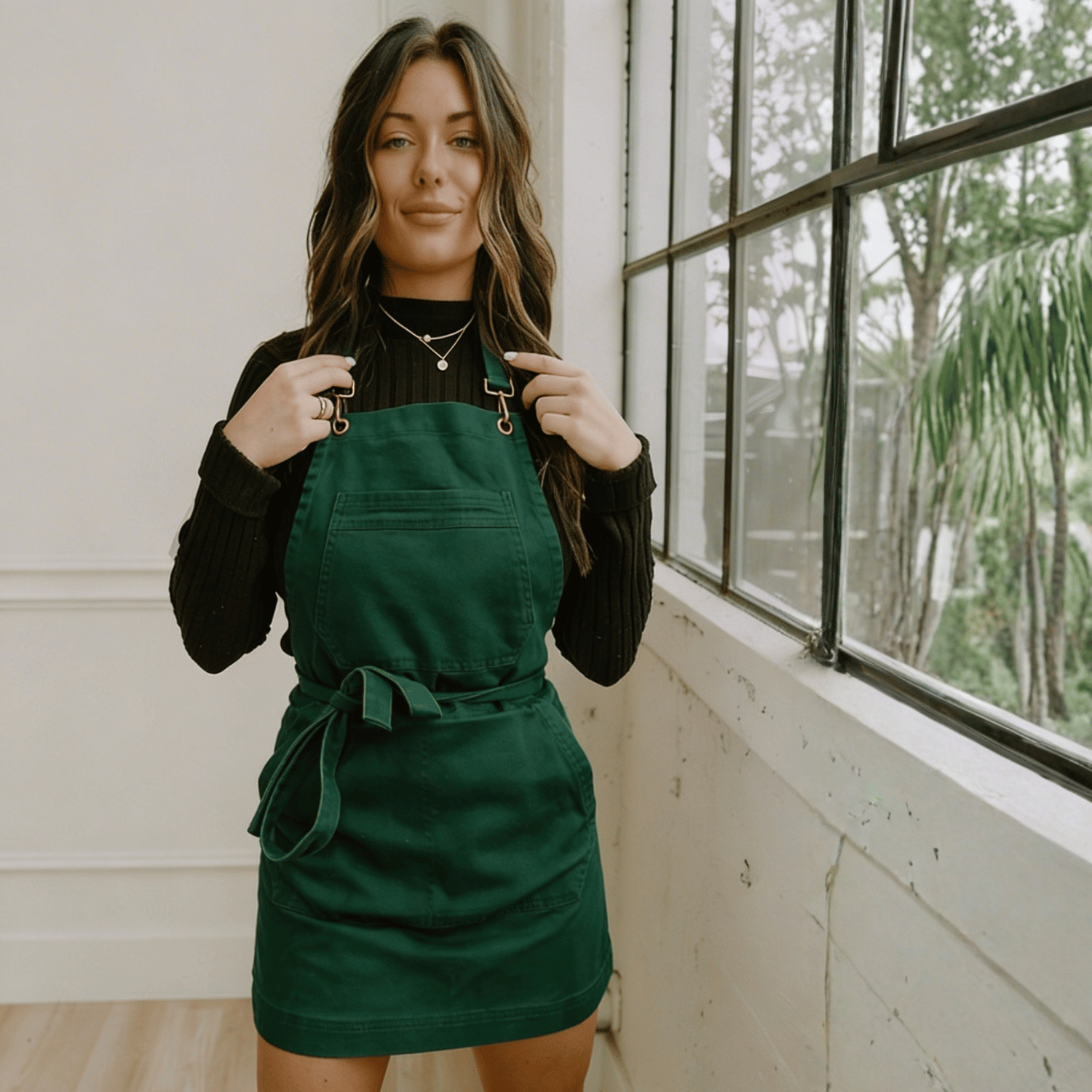
J. Clark Designed’s adjustable cross-back system goes further with brass hardware that lets you customize strap length without retying knots. This matters when you’re wearing layers in winter or working in different heel heights. The straps stay put once adjusted—no slipping, no readjusting between clients.
Pocket Engineering: Why Depth and Position Trump Quantity
You need two things from apron pockets: instant access to your primary tools and security that they won’t fall out when you bend. Most aprons fail at both by adding multiple shallow pockets positioned too high on the chest.
The optimal pocket sits at hip level where your hand naturally falls. It needs to be deep enough that 7-inch shears don’t tip forward when you lean over a basin, but accessible enough to grab them without looking. Width matters too—you should fit your dominant-hand tools (shears, texturizing shears, razor) side-by-side without overlap.
Secondary pockets for combs, clips, and sectioning tools work best slightly higher and shallower. This two-tier approach keeps heavy tools low (better weight distribution) while maintaining quick access to lighter items you use constantly.

Material Science: What Survives Daily Chemical Warfare
Salon work is brutal on fabric. You’re dealing with alkaline bleach (pH 9-11), acidic toners (pH 3-5), silicone-based styling products, and oil-based treatments—sometimes all within the same service. Cheap polyester blends pill within weeks. Cotton without proper weaving absorbs everything and stains permanently.
Organic cotton denim in 10-12 oz weight hits the sweet spot. It’s dense enough to resist liquid penetration while remaining breathable during long shifts. The twill weave creates a diagonal pattern that’s naturally more resistant to tearing than plain weave fabrics. As it softens with washing, it becomes more comfortable without losing structural integrity.
Leather accents serve a functional purpose beyond aesthetics—they create reinforcement at high-stress points (pocket corners, strap attachments) and provide a wipe-clean surface for quick cleanup between clients. Genuine leather develops a patina over time that actually looks better with age, unlike synthetic leather that cracks and peels.
Hardware matters more than most stylists realize. Brass doesn’t rust when exposed to moisture, maintains its finish through repeated contact with chemicals, and supports the weight of loaded pockets without bending. Zinc-plated steel (common in budget aprons) corrodes within 6-12 months of salon use.
Top Apron Recommendations by Work Style
For High-Volume Color Work: Black & Leather
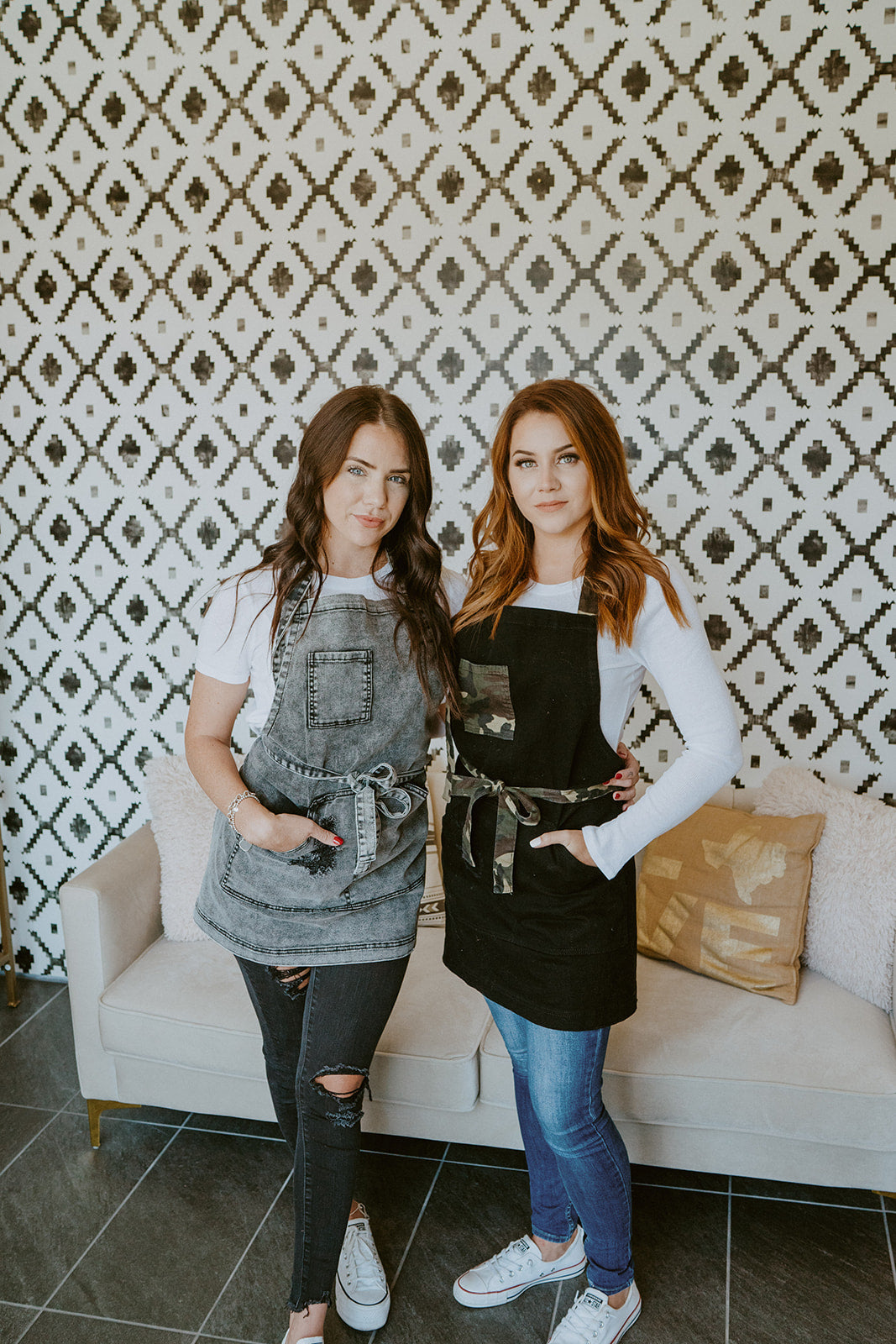
If you’re doing 6+ color services daily, you need maximum stain camouflage and easy cleanup. The black denim base hides bleach splatter and toner drips that would show on lighter colors. Leather pocket trim wipes clean instantly—essential when you’re mixing bowls of color and don’t have time to change aprons between clients. Price: $128. Used in over 3,000 salons specifically for color specialists.
For Cutting-Focused Stylists: Navy Pinstripe

When your day is primarily cuts and styling, you want professional presentation without paranoia about visible product transfer. Navy pinstripe offers visual interest (clients notice) while maintaining the forgiving nature of darker fabric. The pinstripe pattern particularly disguises hair clippings between sweeps—a small detail that matters when you’re running tight appointments. Price: $88.
For Studio Owners and Educators: Leopard Two Tone
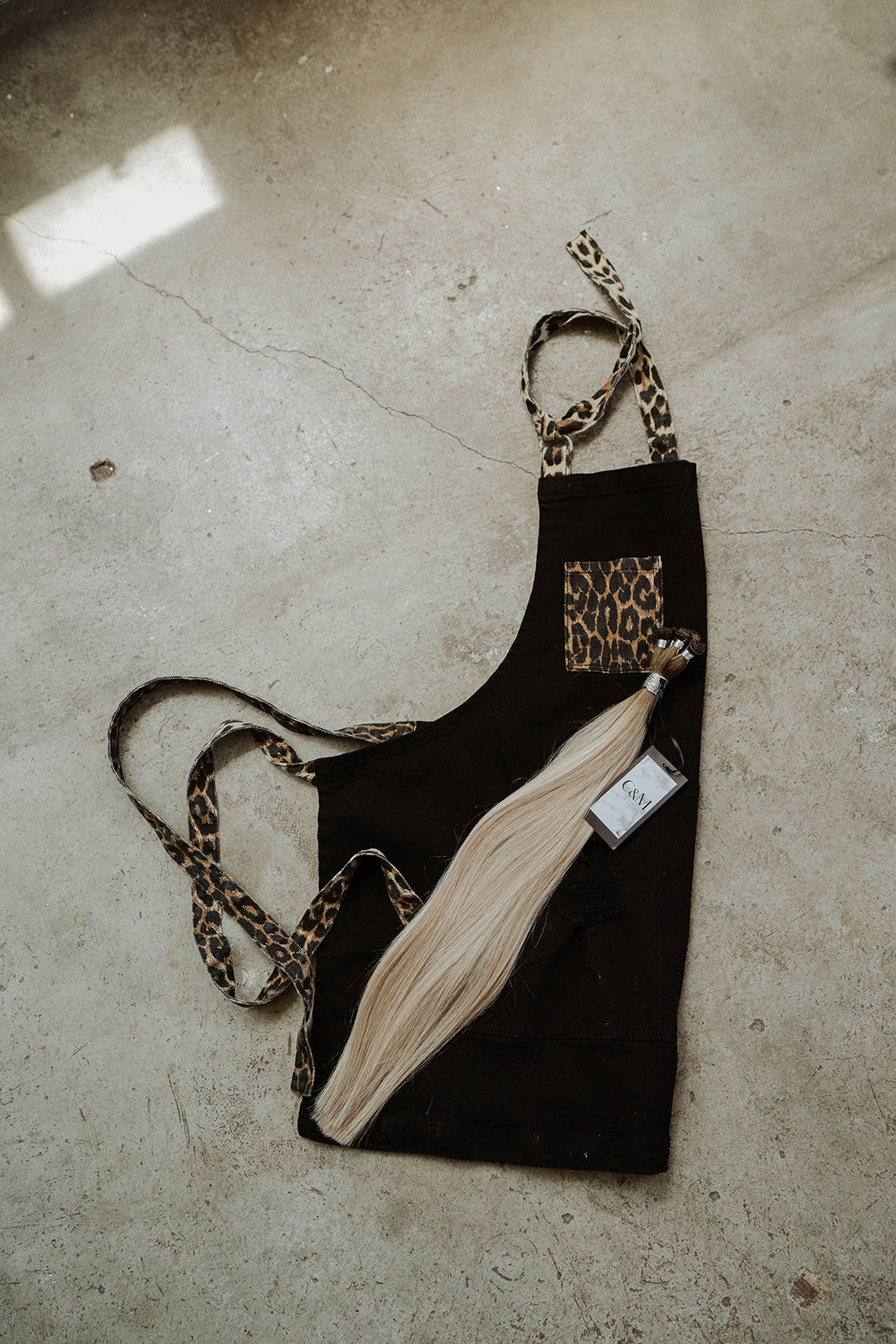
You’re the face of your business or the front of the classroom. A distinctive apron becomes part of your professional identity—clients and students recognize you instantly. The leopard print makes a statement while the two-tone construction (printed denim with contrasting solid panels) provides darker areas where you naturally get the most wear. Price: $95. Particularly popular among platform artists and salon owners building personal brands.
Budget-Conscious Pick: Denim Classic
New stylists or those wanting to test the cross-back design before committing to premium styles. Same construction quality, same pocket engineering, same brass hardware—just without leather accents. Still handcrafted in the USA, still gets softer with wear, still machine washable. Price: $58. This is where most stylists start before upgrading to specialized styles as their needs evolve.
Care and Longevity: Making Your Investment Last
A properly maintained professional apron should last 3-5 years of daily salon use. Here’s what actually extends lifespan versus what’s marketing:
Machine wash denim styles in cold water. Hot water doesn’t kill more bacteria (your detergent does that), but it does break down cotton fibers faster and can cause shrinkage. Cold water with standard detergent maintains color and fabric structure.
Hang dry or tumble low. High heat is the primary cause of premature fabric wear. Air drying is ideal, but low tumble won’t damage anything if you need it quickly. The organic cotton denim actually improves with wear—it softens and conforms to your body shape over the first 20-30 washes.
Wipe leather accents immediately after chemical contact. Don’t let bleach or strong alkaline products sit on leather. A damp cloth wipe-down between clients prevents staining and maintains the leather’s natural oils. Every few months, a leather conditioner keeps it supple.
Check hardware quarterly. Tighten any brass rivets or buckles that show signs of loosening. This takes 30 seconds and prevents the need for professional repair. The brass won’t corrode, but the attachment points can work loose with heavy use.
What Changed in 2026: Industry Trends Worth Noting
Salon wear is seeing three significant shifts this year:
Cross-back designs overtaking neck straps. Once a niche preference, cross-back construction is now the default recommendation from ergonomics consultants and salon coaches. Insurance providers are starting to recognize the workers’ compensation implications of poor workwear design.
Sustainability becoming a dealbreaker. Stylists under 35 increasingly refuse to buy salon wear from brands without transparent supply chains. Organic cotton, USA manufacturing, and products designed for multi-year use (not seasonal replacement) are no longer premium features—they’re baseline expectations.
Personalization without customization chaos. Stylists want aprons that reflect their personality but don’t want to navigate complicated custom order systems. Brands offering curated variety (8-10 distinct styles, not 100 customization options) are winning this market. The Leopard Two Tone and Peach Bliss styles from J. Clark Designed exemplify this—distinctive enough to feel personal, readily available without special orders.
The Bottom Line
The best apron for hairstylists in 2026 eliminates the false choice between professional appearance and physical comfort. Cross-back weight distribution, properly engineered pockets, and chemical-resistant materials aren’t luxury features—they’re baseline requirements for workwear that supports your body through a full career, not just a single season.
At $58-$128, quality aprons cost 3-5x more than disposable salon supply options. They also last 4-6x longer, perform better daily, and don’t contribute to the chronic neck and shoulder pain that drives experienced stylists out of behind-the-chair work. The math favors investment.
Explore the full collection at J. Clark Designed.
FAQ
How do I know if an apron fits correctly?
The bottom hem should hit mid-thigh (protecting your clothes without restricting leg movement), and hip pockets should sit where your hand naturally rests at your side. Cross-back straps shouldn’t dig into your shoulders or create visible pressure lines. If you can comfortably wear it through a full shift without adjusting the straps, it fits. J. Clark Designed aprons include adjustable brass hardware to customize fit without sewing alterations.
Can I machine wash aprons with leather accents?
Yes, but wipe leather areas with a damp cloth first to remove any chemical residue. Wash in cold water and hang dry or tumble on low heat. The leather accents on J. Clark Designed aprons are specifically chosen for their durability through repeated washing—they’re working leather, not decorative trim that needs hand-washing.
What’s the real difference between cross-back and neck-strap designs?
Cross-back distributes weight across your shoulder blades and upper back muscles, while neck-strap concentrates all weight on your cervical spine. For an apron carrying 3-5 pounds of tools over a 8-hour shift, that translates to significantly reduced neck strain, fewer tension headaches, and less cumulative stress on upper trapezius muscles. Physical therapists and ergonomics specialists specifically recommend cross-back for professionals wearing aprons daily.
Are expensive salon aprons actually worth it for new stylists?
If you’re working behind the chair more than 20 hours per week, yes. Entry-level aprons ($58 range) from quality brands still use proper construction and materials—you’re just skipping premium details like leather accents. Spending $60 on an apron that lasts three years costs less annually than replacing $20 aprons every six months, and you avoid developing poor posture habits from ill-fitting workwear early in your career.

Leave a comment
This site is protected by hCaptcha and the hCaptcha Privacy Policy and Terms of Service apply.