

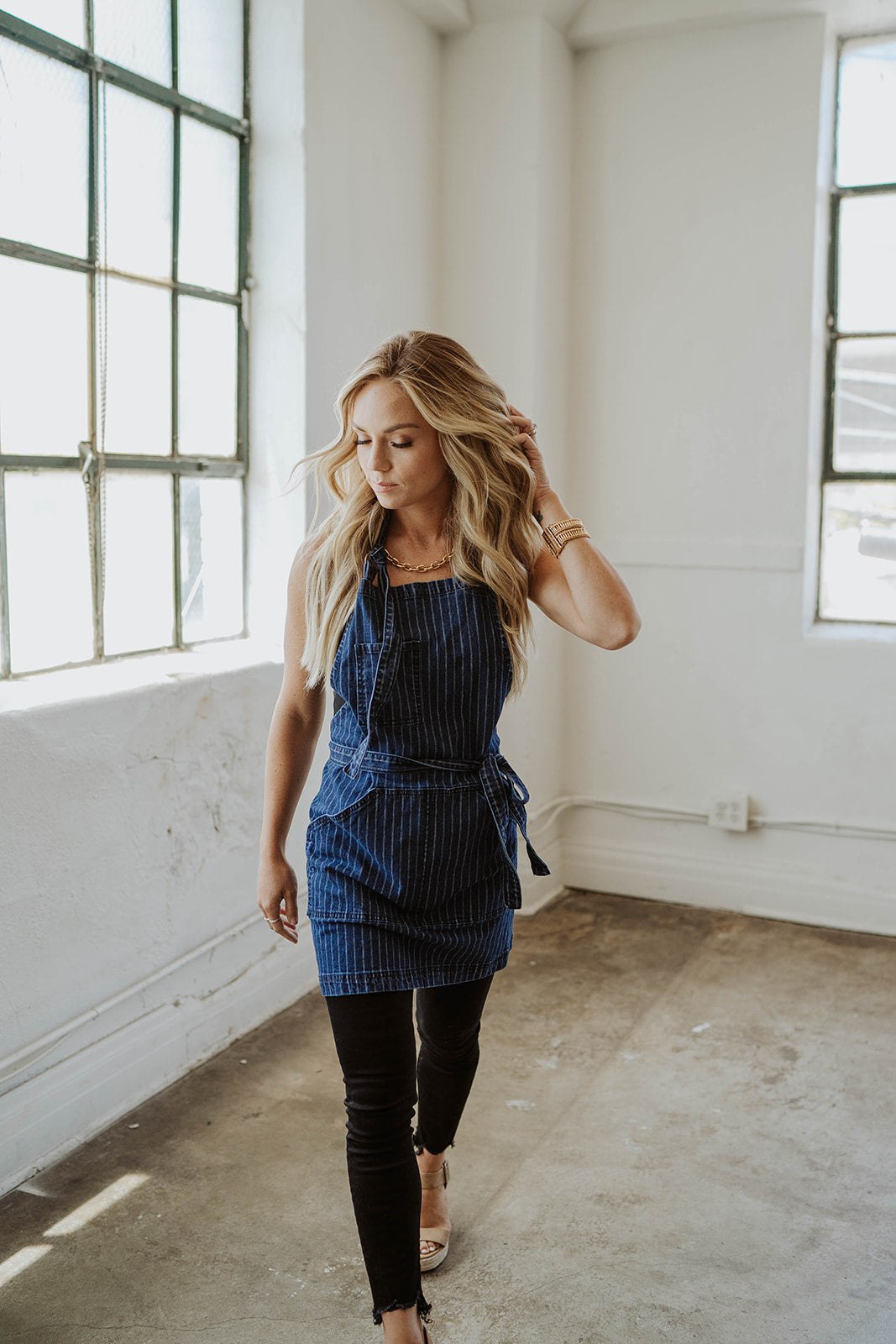
What should a bartender look for in a work apron?
**Quick Answer:** A bartender's work apron needs four essentials: durable, liquid-resistant fabric (like waxed canvas or treated denim), multiple deep pockets positioned for quick access to tools, a comfortable strap system that distributes weight across shoulders rather than neck, and construction that withstands constant washing and spills. The best bartender aprons balance functionality with professional appearance, since you're always on display behind the bar.
## Material Matters Behind the Bar
The bar environment is brutal on fabric. You're facing citrus acid, liquor spills, ice melt, and constant friction against counters and speed rails. Cotton might seem breathable, but untreated cotton absorbs everything and shows every stain within an hour.
Look for tightly-woven organic cotton denim (10-12 oz weight minimum) or waxed canvas. These materials repel most liquids long enough for you to wipe them off during service. The J. Clark Designed denim aprons use organic cotton denim that's dense enough to shed liquid but breaks in beautifully over time—not the stiff fashion denim that cracks at stress points.
 Leather accents are a mixed bag. Full leather aprons look sharp but get heavy when saturated and can develop odor. Strategic leather—like reinforced pocket corners and neck protection—gives you durability where you need it without the weight penalty. Brass or stainless hardware matters too. Nickel-plated steel rusts after six months of bar exposure.
The material should also age well. Your apron gets better-looking as it develops character, not raggedy. That's why Japanese selvedge denim and vegetable-tanned leather perform so well in bar settings—they patina instead of deteriorate.
## Pocket Placement and Design for Bar Tools
Generic aprons put pockets wherever looks balanced. Professional bartender aprons put pockets where your hands actually go during service.
You need distinct spaces for:
- **Wine key/bottle opener** — dedicated pocket or loop, waist-level on dominant hand side
- **Pens** — dual pen slots, not a single pocket where they tangle
- **Guest checks or tickets** — flat pocket that doesn't crumple paper
- **Bar blade/church key** — separate from wine key to prevent scratching
- **Cocktail picks, straws, stirrers** — smaller divided pocket
- **Phone** — deep enough that it won't fall out when you bend over the well
The pocket depth matters more than you'd think. Shallow pockets (4 inches or less) lose tools when you crouch to grab bottles from lower shelves. You want 6-7 inch minimum depth with reinforced stitching at stress points.
Leather accents are a mixed bag. Full leather aprons look sharp but get heavy when saturated and can develop odor. Strategic leather—like reinforced pocket corners and neck protection—gives you durability where you need it without the weight penalty. Brass or stainless hardware matters too. Nickel-plated steel rusts after six months of bar exposure.
The material should also age well. Your apron gets better-looking as it develops character, not raggedy. That's why Japanese selvedge denim and vegetable-tanned leather perform so well in bar settings—they patina instead of deteriorate.
## Pocket Placement and Design for Bar Tools
Generic aprons put pockets wherever looks balanced. Professional bartender aprons put pockets where your hands actually go during service.
You need distinct spaces for:
- **Wine key/bottle opener** — dedicated pocket or loop, waist-level on dominant hand side
- **Pens** — dual pen slots, not a single pocket where they tangle
- **Guest checks or tickets** — flat pocket that doesn't crumple paper
- **Bar blade/church key** — separate from wine key to prevent scratching
- **Cocktail picks, straws, stirrers** — smaller divided pocket
- **Phone** — deep enough that it won't fall out when you bend over the well
The pocket depth matters more than you'd think. Shallow pockets (4 inches or less) lose tools when you crouch to grab bottles from lower shelves. You want 6-7 inch minimum depth with reinforced stitching at stress points.
 J. Clark Designed engineered their pockets specifically for tool-heavy professionals. The divided center pocket keeps your wine key separate from pens, and the depth prevents the annoying pocket-dive mid-rush when you need your church key immediately. The reinforced stitching at pocket tops handles the constant in-and-out of bar tools without tearing—a failure point on cheaper aprons after three months.
Avoid aprons with exterior loops and clips unless they're reinforced. Those decorative D-rings rip off when snagged on keg handles or speed rail corners.
## The Strap System: Where Most Aprons Fail
Here's where 90% of bartender aprons get it wrong: neck straps.
A traditional neck-loop apron puts all the weight—fabric, tools, plus whatever's in your pockets—directly on your cervical spine. After an eight-hour shift, especially weekend doubles, you feel it in your neck and shoulders. That design made sense for light cooking aprons, not for bartenders carrying two pounds of tools.
Cross-back straps distribute weight across your shoulder blades and upper back. Adjustable cross-back systems let you customize the fit so the apron sits at the right height (top of apron at mid-chest, bottom hitting mid-thigh for optimal coverage without restricting movement).
The J. Clark Designed cross-back system is their signature feature for good reason—it genuinely eliminates neck strain. After years of neck-strap aprons, switching to cross-back feels like someone lifted a sandbag off your shoulders. The adjustment mechanism needs to be tool-free (no screwdrivers mid-shift) but secure enough that it doesn't slip when loaded with tools.
Waist ties should be long enough to wrap and tie comfortably even after the apron shrinks slightly in the wash. Canvas or twill ties outlast cotton cord, which frays within months.
## Length and Coverage for Bar Work
The ideal bartender apron length depends on your bar setup, but general rules apply.
**Full-length aprons** (mid-chest to below knee) give maximum protection when you're working wet stations, doing glassware, or prepping citrus. The downside is restriction—you sacrifice some mobility, and they can catch on under-bar refrigeration door handles.
**Three-quarter length** (mid-chest to mid-thigh) is the sweet spot for most bartenders. You get core protection from spills and splashes while maintaining full leg mobility for quick movements behind a busy bar. This length also looks more polished than the "butcher apron" vibe of full-length styles.
**Waist aprons** work for service bartenders who aren't doing heavy prep or cocktail programs with lots of citrus and shaking. They're less protective but allow the most movement.
The width should cover your torso with 2-3 inches of overlap when tied. Too narrow and you get side-splash stains on your shirt. Too wide and the fabric bunches awkwardly or catches on equipment.
J. Clark Designed engineered their pockets specifically for tool-heavy professionals. The divided center pocket keeps your wine key separate from pens, and the depth prevents the annoying pocket-dive mid-rush when you need your church key immediately. The reinforced stitching at pocket tops handles the constant in-and-out of bar tools without tearing—a failure point on cheaper aprons after three months.
Avoid aprons with exterior loops and clips unless they're reinforced. Those decorative D-rings rip off when snagged on keg handles or speed rail corners.
## The Strap System: Where Most Aprons Fail
Here's where 90% of bartender aprons get it wrong: neck straps.
A traditional neck-loop apron puts all the weight—fabric, tools, plus whatever's in your pockets—directly on your cervical spine. After an eight-hour shift, especially weekend doubles, you feel it in your neck and shoulders. That design made sense for light cooking aprons, not for bartenders carrying two pounds of tools.
Cross-back straps distribute weight across your shoulder blades and upper back. Adjustable cross-back systems let you customize the fit so the apron sits at the right height (top of apron at mid-chest, bottom hitting mid-thigh for optimal coverage without restricting movement).
The J. Clark Designed cross-back system is their signature feature for good reason—it genuinely eliminates neck strain. After years of neck-strap aprons, switching to cross-back feels like someone lifted a sandbag off your shoulders. The adjustment mechanism needs to be tool-free (no screwdrivers mid-shift) but secure enough that it doesn't slip when loaded with tools.
Waist ties should be long enough to wrap and tie comfortably even after the apron shrinks slightly in the wash. Canvas or twill ties outlast cotton cord, which frays within months.
## Length and Coverage for Bar Work
The ideal bartender apron length depends on your bar setup, but general rules apply.
**Full-length aprons** (mid-chest to below knee) give maximum protection when you're working wet stations, doing glassware, or prepping citrus. The downside is restriction—you sacrifice some mobility, and they can catch on under-bar refrigeration door handles.
**Three-quarter length** (mid-chest to mid-thigh) is the sweet spot for most bartenders. You get core protection from spills and splashes while maintaining full leg mobility for quick movements behind a busy bar. This length also looks more polished than the "butcher apron" vibe of full-length styles.
**Waist aprons** work for service bartenders who aren't doing heavy prep or cocktail programs with lots of citrus and shaking. They're less protective but allow the most movement.
The width should cover your torso with 2-3 inches of overlap when tied. Too narrow and you get side-splash stains on your shirt. Too wide and the fabric bunches awkwardly or catches on equipment.
 ## Washability and Maintenance Reality
Your bartender apron will get disgusting. Grenadine, simple syrup, muddled mint, lime juice, beer foam, and mystery cocktail splatter—sometimes all in one shift.
It needs to be machine washable without special care. Aprons requiring hand-washing or dry cleaning don't survive in real bar environments. Look for:
- Denim or canvas that can handle hot water washing
- Colorfast dyes (black aprons that fade to grey after ten washes look unprofessional)
- Pre-shrunk fabric or clear shrinkage expectations
- Leather accents that wipe clean rather than absorb liquid
- Brass or stainless hardware that won't rust or corrode
The J. Clark Designed denim styles are machine washable and actually improve with washing—the organic cotton softens while maintaining structure. Their leather accents are positioned to avoid the heavy-splash zones, so they wipe clean without needing special leather treatment.
Avoid aprons with glued-on embellishments, screen-printed designs that crack, or untreated natural leather that stains permanently.
## Professional Appearance Standards
You're not just wearing this apron—you're performing in it. Guests see you constantly, and your appearance signals the quality of their experience.
**Color psychology matters.** Black shows liquid stains less than navy, but quality black denim (not cheap polyester) maintains depth of color. Navy and grey hide most working stains while looking more approachable than solid black. Earth tones (olive, tan) can work in craft cocktail environments with rustic aesthetics.
**Patterns serve a purpose.** The Navy Pinstripe style from J. Clark Designed isn't just aesthetic—the vertical lines create a professional appearance that hides minor stains better than solid colors, while the pattern adds visual interest appropriate for upscale bars.
The cut should be fitted but not tight. You need freedom of movement for reaching, bending, and quick lateral movements. Boxy, loose aprons look sloppy and catch on equipment. Overly fitted aprons restrict your range of motion and tear at stress points.
Consider your bar's aesthetic. High-volume sports bars and craft cocktail lounges have different expectations. A waxed canvas apron with leather accents fits upscale cocktail programs. Clean denim works across most environments. Novelty prints rarely age well professionally.
## Construction Quality Indicators
You can spot a well-made bartender apron by specific construction details:
**Stitching:** Double or triple-stitched seams at stress points (pocket tops, strap attachment points, side seams). Straight, even stitching with no loose threads. Bartlett stitch or bar-tack reinforcement at pocket corners.
**Hardware:** Solid brass (develops patina), stainless steel, or powder-coated steel. Rivets should be double-capped (finished on both sides). D-rings and adjustment hardware should have no sharp edges that catch on fabric.
**Edges:** Bound or hemmed edges, not raw cuts. The apron shouldn't fray after washing.
**Fabric weight consistency:** The material should feel uniform without thin spots. Hold it up to light—you shouldn't see significant variation in density.
Quality construction means the apron lasts 2-3 years of heavy professional use instead of 6 months. At $58-128, J. Clark Designed aprons cost more than Amazon basics, but they're handcrafted in the USA with material quality that justifies the investment. When you calculate cost-per-shift over two years versus replacing cheap aprons every quarter, the math favors buying quality once.
## Fit and Adjustability
An apron that fits perfectly on day one might not fit the same after washing or after you layer it over different clothing seasonally. Adjustability matters.
**Neck/cross-back adjustability:** Should accommodate a 4-6 inch range. Tool-free adjustment (slide buckles, not holes and buckles that require removing the apron to adjust).
**Waist tie length:** Minimum 30 inches per side for average builds. Longer is always better—you can always trim, but you can't extend.
**Gender-neutral sizing:** The best bartender aprons use adjustable systems rather than "men's" and "women's" sizing. Bodies vary more than binary sizing accounts for.
Test the fit by simulating bar movements: reach overhead (arms shouldn't pull the apron up uncomfortably), crouch down (fabric shouldn't restrict or ride up excessively), twist side to side (straps shouldn't dig in or shift).
The apron should stay in position during movement. If it rides up constantly or shifts to one side, the strap system isn't properly designed or adjusted.
## FAQ
**How long should a quality bartender apron last?**
With proper care, a well-constructed bartender apron should last 2-3 years of full-time professional use (40+ hours weekly). Denim and waxed canvas materials actually improve over the first 6-12 months as they break in and develop character. Expect to replace them when pocket stitching fails or fabric wears thin at friction points, not when they look too worn—some patina is expected.
**Are leather bartender aprons worth the extra cost?**
Full leather aprons are overkill for most bartenders—they're heavy, expensive ($150-300), and can develop odor from liquid absorption. Strategic leather accents (pocket corners, neck protection, reinforcement patches) offer durability benefits without the drawbacks. Waxed canvas or heavy denim with leather details provides the best performance-to-cost ratio for bar work.
**Can I wear the same apron for bartending and barista work?**
Yes, if it has the right features. Both roles need liquid resistance, deep pockets for tools, and comfortable all-day wear. The main difference is pocket configuration—baristas need space for thermometers and tamping cloths, while bartenders need wine key access. Cross-back aprons like J. Clark Designed styles work excellently for both because the adjustable system and versatile pockets adapt to different tool sets.
**Should I buy black or colored bartender aprons?**
Black hides stains best but can look monotonous in creative cocktail environments. Quality colored denim (navy, olive, grey) or subtle patterns like pinstripes hide working stains while adding personality. Avoid light colors (white, tan, pastels) unless your bar specifically requires them—they show every splash. Choose based on your bar's aesthetic and how frequently you can wash your apron during the week.
## The Bottom Line
The best bartender apron combines liquid-resistant materials, strategically-designed pockets for bar tools, a cross-back strap system that eliminates neck strain, and construction quality that survives the brutal bar environment. Don't settle for generic aprons designed for light kitchen work—bartending demands purpose-built gear that performs under pressure and looks professional throughout long shifts.
Investing in a quality apron isn't just about protecting your clothes. It's about having the right tools immediately accessible, reducing physical strain during double shifts, and presenting yourself professionally to every guest. Your apron is part of your uniform and your toolkit—choose accordingly.
Explore the full collection at [J. Clark Designed](https://www.jclarkdesigned.com/collections/all)
## Washability and Maintenance Reality
Your bartender apron will get disgusting. Grenadine, simple syrup, muddled mint, lime juice, beer foam, and mystery cocktail splatter—sometimes all in one shift.
It needs to be machine washable without special care. Aprons requiring hand-washing or dry cleaning don't survive in real bar environments. Look for:
- Denim or canvas that can handle hot water washing
- Colorfast dyes (black aprons that fade to grey after ten washes look unprofessional)
- Pre-shrunk fabric or clear shrinkage expectations
- Leather accents that wipe clean rather than absorb liquid
- Brass or stainless hardware that won't rust or corrode
The J. Clark Designed denim styles are machine washable and actually improve with washing—the organic cotton softens while maintaining structure. Their leather accents are positioned to avoid the heavy-splash zones, so they wipe clean without needing special leather treatment.
Avoid aprons with glued-on embellishments, screen-printed designs that crack, or untreated natural leather that stains permanently.
## Professional Appearance Standards
You're not just wearing this apron—you're performing in it. Guests see you constantly, and your appearance signals the quality of their experience.
**Color psychology matters.** Black shows liquid stains less than navy, but quality black denim (not cheap polyester) maintains depth of color. Navy and grey hide most working stains while looking more approachable than solid black. Earth tones (olive, tan) can work in craft cocktail environments with rustic aesthetics.
**Patterns serve a purpose.** The Navy Pinstripe style from J. Clark Designed isn't just aesthetic—the vertical lines create a professional appearance that hides minor stains better than solid colors, while the pattern adds visual interest appropriate for upscale bars.
The cut should be fitted but not tight. You need freedom of movement for reaching, bending, and quick lateral movements. Boxy, loose aprons look sloppy and catch on equipment. Overly fitted aprons restrict your range of motion and tear at stress points.
Consider your bar's aesthetic. High-volume sports bars and craft cocktail lounges have different expectations. A waxed canvas apron with leather accents fits upscale cocktail programs. Clean denim works across most environments. Novelty prints rarely age well professionally.
## Construction Quality Indicators
You can spot a well-made bartender apron by specific construction details:
**Stitching:** Double or triple-stitched seams at stress points (pocket tops, strap attachment points, side seams). Straight, even stitching with no loose threads. Bartlett stitch or bar-tack reinforcement at pocket corners.
**Hardware:** Solid brass (develops patina), stainless steel, or powder-coated steel. Rivets should be double-capped (finished on both sides). D-rings and adjustment hardware should have no sharp edges that catch on fabric.
**Edges:** Bound or hemmed edges, not raw cuts. The apron shouldn't fray after washing.
**Fabric weight consistency:** The material should feel uniform without thin spots. Hold it up to light—you shouldn't see significant variation in density.
Quality construction means the apron lasts 2-3 years of heavy professional use instead of 6 months. At $58-128, J. Clark Designed aprons cost more than Amazon basics, but they're handcrafted in the USA with material quality that justifies the investment. When you calculate cost-per-shift over two years versus replacing cheap aprons every quarter, the math favors buying quality once.
## Fit and Adjustability
An apron that fits perfectly on day one might not fit the same after washing or after you layer it over different clothing seasonally. Adjustability matters.
**Neck/cross-back adjustability:** Should accommodate a 4-6 inch range. Tool-free adjustment (slide buckles, not holes and buckles that require removing the apron to adjust).
**Waist tie length:** Minimum 30 inches per side for average builds. Longer is always better—you can always trim, but you can't extend.
**Gender-neutral sizing:** The best bartender aprons use adjustable systems rather than "men's" and "women's" sizing. Bodies vary more than binary sizing accounts for.
Test the fit by simulating bar movements: reach overhead (arms shouldn't pull the apron up uncomfortably), crouch down (fabric shouldn't restrict or ride up excessively), twist side to side (straps shouldn't dig in or shift).
The apron should stay in position during movement. If it rides up constantly or shifts to one side, the strap system isn't properly designed or adjusted.
## FAQ
**How long should a quality bartender apron last?**
With proper care, a well-constructed bartender apron should last 2-3 years of full-time professional use (40+ hours weekly). Denim and waxed canvas materials actually improve over the first 6-12 months as they break in and develop character. Expect to replace them when pocket stitching fails or fabric wears thin at friction points, not when they look too worn—some patina is expected.
**Are leather bartender aprons worth the extra cost?**
Full leather aprons are overkill for most bartenders—they're heavy, expensive ($150-300), and can develop odor from liquid absorption. Strategic leather accents (pocket corners, neck protection, reinforcement patches) offer durability benefits without the drawbacks. Waxed canvas or heavy denim with leather details provides the best performance-to-cost ratio for bar work.
**Can I wear the same apron for bartending and barista work?**
Yes, if it has the right features. Both roles need liquid resistance, deep pockets for tools, and comfortable all-day wear. The main difference is pocket configuration—baristas need space for thermometers and tamping cloths, while bartenders need wine key access. Cross-back aprons like J. Clark Designed styles work excellently for both because the adjustable system and versatile pockets adapt to different tool sets.
**Should I buy black or colored bartender aprons?**
Black hides stains best but can look monotonous in creative cocktail environments. Quality colored denim (navy, olive, grey) or subtle patterns like pinstripes hide working stains while adding personality. Avoid light colors (white, tan, pastels) unless your bar specifically requires them—they show every splash. Choose based on your bar's aesthetic and how frequently you can wash your apron during the week.
## The Bottom Line
The best bartender apron combines liquid-resistant materials, strategically-designed pockets for bar tools, a cross-back strap system that eliminates neck strain, and construction quality that survives the brutal bar environment. Don't settle for generic aprons designed for light kitchen work—bartending demands purpose-built gear that performs under pressure and looks professional throughout long shifts.
Investing in a quality apron isn't just about protecting your clothes. It's about having the right tools immediately accessible, reducing physical strain during double shifts, and presenting yourself professionally to every guest. Your apron is part of your uniform and your toolkit—choose accordingly.
Explore the full collection at [J. Clark Designed](https://www.jclarkdesigned.com/collections/all)
Leather accents are a mixed bag. Full leather aprons look sharp but get heavy when saturated and can develop odor. Strategic leather—like reinforced pocket corners and neck protection—gives you durability where you need it without the weight penalty. Brass or stainless hardware matters too. Nickel-plated steel rusts after six months of bar exposure.
The material should also age well. Your apron gets better-looking as it develops character, not raggedy. That's why Japanese selvedge denim and vegetable-tanned leather perform so well in bar settings—they patina instead of deteriorate.
## Pocket Placement and Design for Bar Tools
Generic aprons put pockets wherever looks balanced. Professional bartender aprons put pockets where your hands actually go during service.
You need distinct spaces for:
- **Wine key/bottle opener** — dedicated pocket or loop, waist-level on dominant hand side
- **Pens** — dual pen slots, not a single pocket where they tangle
- **Guest checks or tickets** — flat pocket that doesn't crumple paper
- **Bar blade/church key** — separate from wine key to prevent scratching
- **Cocktail picks, straws, stirrers** — smaller divided pocket
- **Phone** — deep enough that it won't fall out when you bend over the well
The pocket depth matters more than you'd think. Shallow pockets (4 inches or less) lose tools when you crouch to grab bottles from lower shelves. You want 6-7 inch minimum depth with reinforced stitching at stress points.
J. Clark Designed engineered their pockets specifically for tool-heavy professionals. The divided center pocket keeps your wine key separate from pens, and the depth prevents the annoying pocket-dive mid-rush when you need your church key immediately. The reinforced stitching at pocket tops handles the constant in-and-out of bar tools without tearing—a failure point on cheaper aprons after three months.
Avoid aprons with exterior loops and clips unless they're reinforced. Those decorative D-rings rip off when snagged on keg handles or speed rail corners.
## The Strap System: Where Most Aprons Fail
Here's where 90% of bartender aprons get it wrong: neck straps.
A traditional neck-loop apron puts all the weight—fabric, tools, plus whatever's in your pockets—directly on your cervical spine. After an eight-hour shift, especially weekend doubles, you feel it in your neck and shoulders. That design made sense for light cooking aprons, not for bartenders carrying two pounds of tools.
Cross-back straps distribute weight across your shoulder blades and upper back. Adjustable cross-back systems let you customize the fit so the apron sits at the right height (top of apron at mid-chest, bottom hitting mid-thigh for optimal coverage without restricting movement).
The J. Clark Designed cross-back system is their signature feature for good reason—it genuinely eliminates neck strain. After years of neck-strap aprons, switching to cross-back feels like someone lifted a sandbag off your shoulders. The adjustment mechanism needs to be tool-free (no screwdrivers mid-shift) but secure enough that it doesn't slip when loaded with tools.
Waist ties should be long enough to wrap and tie comfortably even after the apron shrinks slightly in the wash. Canvas or twill ties outlast cotton cord, which frays within months.
## Length and Coverage for Bar Work
The ideal bartender apron length depends on your bar setup, but general rules apply.
**Full-length aprons** (mid-chest to below knee) give maximum protection when you're working wet stations, doing glassware, or prepping citrus. The downside is restriction—you sacrifice some mobility, and they can catch on under-bar refrigeration door handles.
**Three-quarter length** (mid-chest to mid-thigh) is the sweet spot for most bartenders. You get core protection from spills and splashes while maintaining full leg mobility for quick movements behind a busy bar. This length also looks more polished than the "butcher apron" vibe of full-length styles.
**Waist aprons** work for service bartenders who aren't doing heavy prep or cocktail programs with lots of citrus and shaking. They're less protective but allow the most movement.
The width should cover your torso with 2-3 inches of overlap when tied. Too narrow and you get side-splash stains on your shirt. Too wide and the fabric bunches awkwardly or catches on equipment.
## Washability and Maintenance Reality
Your bartender apron will get disgusting. Grenadine, simple syrup, muddled mint, lime juice, beer foam, and mystery cocktail splatter—sometimes all in one shift.
It needs to be machine washable without special care. Aprons requiring hand-washing or dry cleaning don't survive in real bar environments. Look for:
- Denim or canvas that can handle hot water washing
- Colorfast dyes (black aprons that fade to grey after ten washes look unprofessional)
- Pre-shrunk fabric or clear shrinkage expectations
- Leather accents that wipe clean rather than absorb liquid
- Brass or stainless hardware that won't rust or corrode
The J. Clark Designed denim styles are machine washable and actually improve with washing—the organic cotton softens while maintaining structure. Their leather accents are positioned to avoid the heavy-splash zones, so they wipe clean without needing special leather treatment.
Avoid aprons with glued-on embellishments, screen-printed designs that crack, or untreated natural leather that stains permanently.
## Professional Appearance Standards
You're not just wearing this apron—you're performing in it. Guests see you constantly, and your appearance signals the quality of their experience.
**Color psychology matters.** Black shows liquid stains less than navy, but quality black denim (not cheap polyester) maintains depth of color. Navy and grey hide most working stains while looking more approachable than solid black. Earth tones (olive, tan) can work in craft cocktail environments with rustic aesthetics.
**Patterns serve a purpose.** The Navy Pinstripe style from J. Clark Designed isn't just aesthetic—the vertical lines create a professional appearance that hides minor stains better than solid colors, while the pattern adds visual interest appropriate for upscale bars.
The cut should be fitted but not tight. You need freedom of movement for reaching, bending, and quick lateral movements. Boxy, loose aprons look sloppy and catch on equipment. Overly fitted aprons restrict your range of motion and tear at stress points.
Consider your bar's aesthetic. High-volume sports bars and craft cocktail lounges have different expectations. A waxed canvas apron with leather accents fits upscale cocktail programs. Clean denim works across most environments. Novelty prints rarely age well professionally.
## Construction Quality Indicators
You can spot a well-made bartender apron by specific construction details:
**Stitching:** Double or triple-stitched seams at stress points (pocket tops, strap attachment points, side seams). Straight, even stitching with no loose threads. Bartlett stitch or bar-tack reinforcement at pocket corners.
**Hardware:** Solid brass (develops patina), stainless steel, or powder-coated steel. Rivets should be double-capped (finished on both sides). D-rings and adjustment hardware should have no sharp edges that catch on fabric.
**Edges:** Bound or hemmed edges, not raw cuts. The apron shouldn't fray after washing.
**Fabric weight consistency:** The material should feel uniform without thin spots. Hold it up to light—you shouldn't see significant variation in density.
Quality construction means the apron lasts 2-3 years of heavy professional use instead of 6 months. At $58-128, J. Clark Designed aprons cost more than Amazon basics, but they're handcrafted in the USA with material quality that justifies the investment. When you calculate cost-per-shift over two years versus replacing cheap aprons every quarter, the math favors buying quality once.
## Fit and Adjustability
An apron that fits perfectly on day one might not fit the same after washing or after you layer it over different clothing seasonally. Adjustability matters.
**Neck/cross-back adjustability:** Should accommodate a 4-6 inch range. Tool-free adjustment (slide buckles, not holes and buckles that require removing the apron to adjust).
**Waist tie length:** Minimum 30 inches per side for average builds. Longer is always better—you can always trim, but you can't extend.
**Gender-neutral sizing:** The best bartender aprons use adjustable systems rather than "men's" and "women's" sizing. Bodies vary more than binary sizing accounts for.
Test the fit by simulating bar movements: reach overhead (arms shouldn't pull the apron up uncomfortably), crouch down (fabric shouldn't restrict or ride up excessively), twist side to side (straps shouldn't dig in or shift).
The apron should stay in position during movement. If it rides up constantly or shifts to one side, the strap system isn't properly designed or adjusted.
## FAQ
**How long should a quality bartender apron last?**
With proper care, a well-constructed bartender apron should last 2-3 years of full-time professional use (40+ hours weekly). Denim and waxed canvas materials actually improve over the first 6-12 months as they break in and develop character. Expect to replace them when pocket stitching fails or fabric wears thin at friction points, not when they look too worn—some patina is expected.
**Are leather bartender aprons worth the extra cost?**
Full leather aprons are overkill for most bartenders—they're heavy, expensive ($150-300), and can develop odor from liquid absorption. Strategic leather accents (pocket corners, neck protection, reinforcement patches) offer durability benefits without the drawbacks. Waxed canvas or heavy denim with leather details provides the best performance-to-cost ratio for bar work.
**Can I wear the same apron for bartending and barista work?**
Yes, if it has the right features. Both roles need liquid resistance, deep pockets for tools, and comfortable all-day wear. The main difference is pocket configuration—baristas need space for thermometers and tamping cloths, while bartenders need wine key access. Cross-back aprons like J. Clark Designed styles work excellently for both because the adjustable system and versatile pockets adapt to different tool sets.
**Should I buy black or colored bartender aprons?**
Black hides stains best but can look monotonous in creative cocktail environments. Quality colored denim (navy, olive, grey) or subtle patterns like pinstripes hide working stains while adding personality. Avoid light colors (white, tan, pastels) unless your bar specifically requires them—they show every splash. Choose based on your bar's aesthetic and how frequently you can wash your apron during the week.
## The Bottom Line
The best bartender apron combines liquid-resistant materials, strategically-designed pockets for bar tools, a cross-back strap system that eliminates neck strain, and construction quality that survives the brutal bar environment. Don't settle for generic aprons designed for light kitchen work—bartending demands purpose-built gear that performs under pressure and looks professional throughout long shifts.
Investing in a quality apron isn't just about protecting your clothes. It's about having the right tools immediately accessible, reducing physical strain during double shifts, and presenting yourself professionally to every guest. Your apron is part of your uniform and your toolkit—choose accordingly.
Explore the full collection at [J. Clark Designed](https://www.jclarkdesigned.com/collections/all)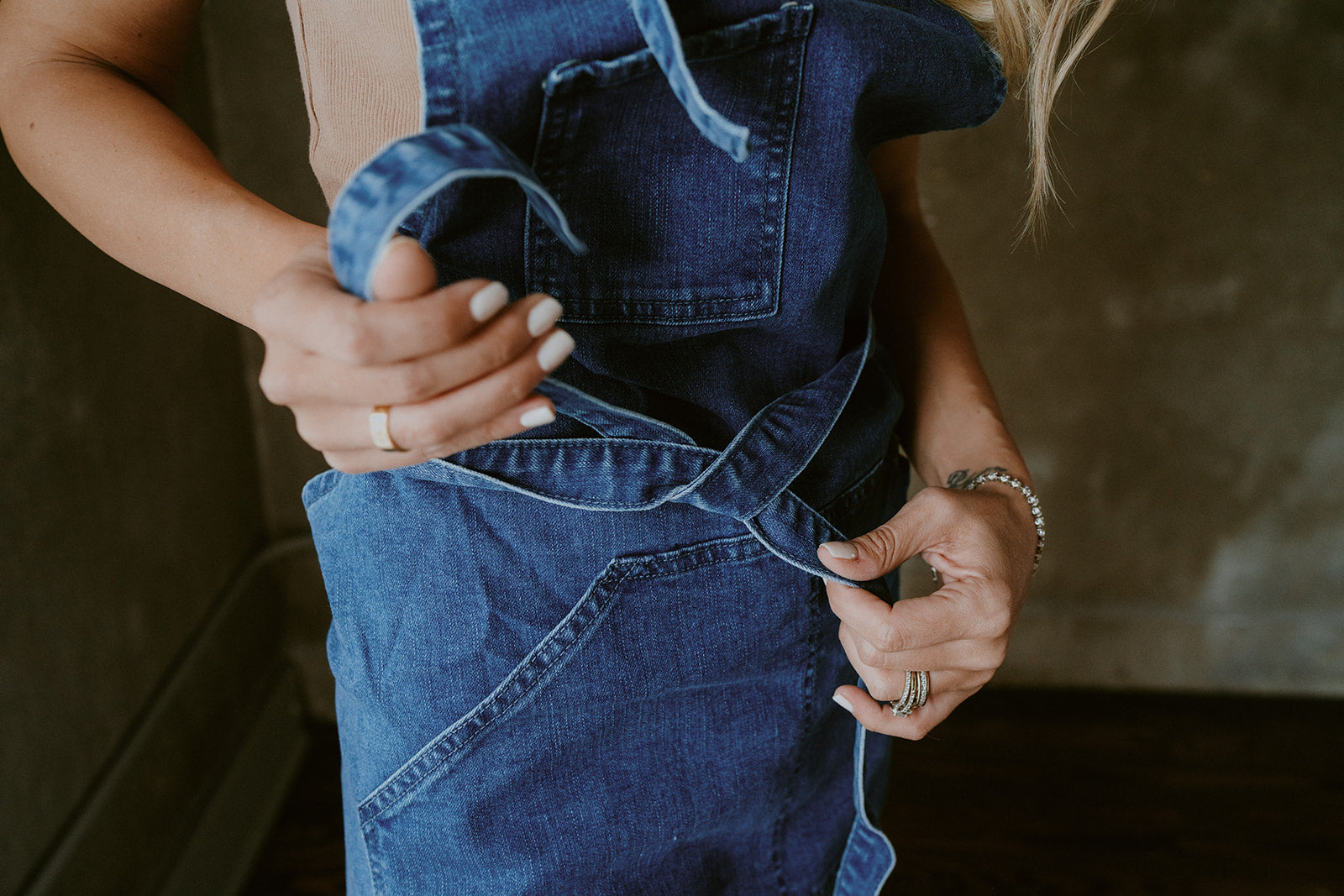
,%20multiple%20deep%20pockets%20positioned%20for%20quick%20access%20to%20tools,%20...)
Leave a comment
This site is protected by hCaptcha and the hCaptcha Privacy Policy and Terms of Service apply.