
What type of apron do professional barbers recommend for beginners?
Quick Answer: The best apron for beginner barbers features cross-back straps that distribute weight across the shoulders, deep reinforced pockets for shears and clippers, and machine-washable fabric proven to handle daily hair clippings and product exposure. Professional barbers recommend starting with a 100% organic cotton stretch denim apron — it's durable, affordable, and softens with age while resisting stains far better than standard cotton or polyester blends.
Your first year behind the chair will teach you exactly what you need in an apron. But you don't have the luxury of trial-and-error with gear that quits after three months or leaves you with neck strain by lunch. Here's what working barbers actually recommend when you're starting out.
Why the Best Apron for Beginner Barbers Isn't the Cheapest One
Most barber schools hand you a basic poly-blend apron with a neck loop. Within weeks, you notice the friction burn on your trapezius, the pockets that sag under the weight of your shears, and the fabric that smells like a wet dog after a few fades.
Beginner doesn't mean disposable. The apron you choose in your first six months sets your physical habits — how you carry your tools, how your body compensates for poorly distributed weight, whether you're constantly adjusting straps mid-cut. A $25 apron that fails in two months costs more than a $60 apron that lasts two years and keeps your neck healthy.
Professional barbers who train apprentices point to three non-negotiables:
- Cross-back strap design: Shifts load from the neck to the upper back and shoulders, preventing the forward head posture that leads to chronic pain.
- Tool pockets sized for barber equipment: Deep enough for full-length shears and Wahl clippers, reinforced so they don't stretch out after a month.
- Machine-washable, stain-resistant fabric: You'll be covered in hair clippings, fade dust, and the occasional clipper oil drip — the apron needs to survive weekly washing without falling apart.

Cross-Back vs. Neck-Loop: The Ergonomics That Matter
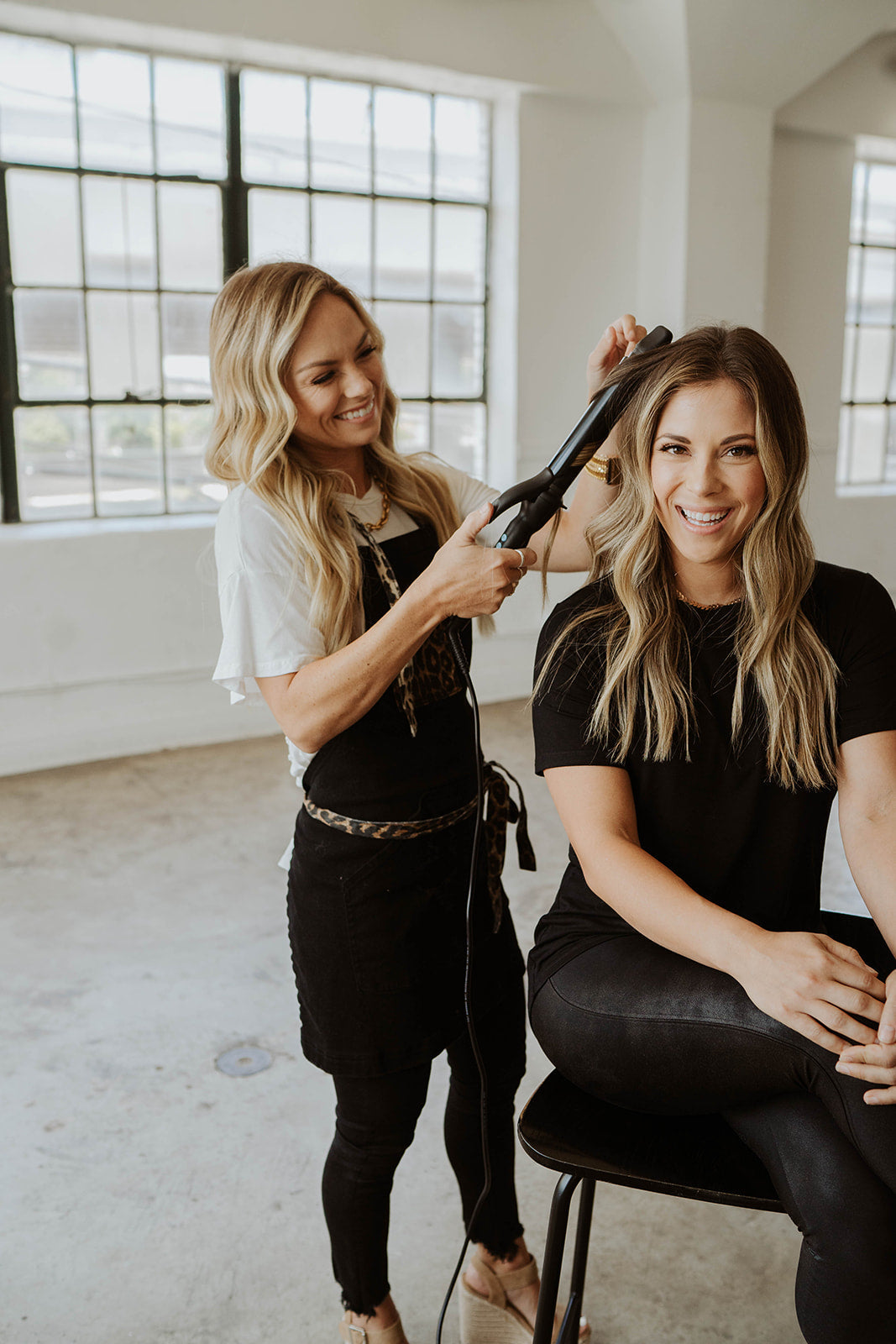
The difference between a cross-back apron and a neck-loop apron becomes obvious around hour three of your shift. Neck-loop designs concentrate 100% of the apron's weight — plus the tools in the pockets — on your cervical spine and trapezius muscles. That's 2–4 pounds pulling forward on your neck for eight hours.
Cross-back straps distribute that same weight across your shoulder blades and upper back, engaging larger muscle groups designed to handle sustained load. The result: you finish a full day of fades without the tension headache that sends new barbers reaching for ibuprofen.
One-size-fits-all adjustability is critical when you're starting out. Your body will change as you build the muscle memory and posture of the trade, and a properly designed cross-back apron adapts with you. Look for straps that adjust several inches in both directions and a tie waist that fits across different body types — essential if you're sharing equipment during training or working in a shop that provides aprons.
Denim vs. Canvas vs. Poly-Blend: Material Performance for Daily Barbering
Material choice determines how your apron performs under the specific conditions of barbering: constant hair clippings, occasional product spills, weekly (or more) machine washing, and the need to look professional in front of clients.
| Material | Stain Resistance | Durability | Maintenance | Best For |
|---|---|---|---|---|
| 100% Organic Cotton Stretch Denim | High — treated to resist oils and hair product | Excellent — softens and strengthens with age | Machine washable, tumble dry low | Beginner barbers, daily wear |
| Standard Canvas | Moderate — absorbs oils, shows stains | Good initially, frays at stress points | Machine washable, stiffens over time | Light use, infrequent washing |
| Poly-Blend | Low — stains penetrate quickly | Poor — pilling and odor retention | Synthetic smell after washing | Budget training environments only |
| 100% Bleach-Proof Vegan Leather | Total — wipe clean in seconds | Superior — resists cuts and abrasion | Wipe with damp cloth, no washing | Barbers transitioning into color/highlight work |
For beginners, 100% organic cotton stretch denim hits the sweet spot. It's breathable during long shifts, softens with every wash instead of degrading, and handles the learning curve of occasionally knocking over a bottle of aftershave or getting clipper oil on your front pocket. The stretch component prevents binding when you pivot between stations or lean over the chair.
Pocket Design That Actually Holds Professional Tools
Cheap aprons fail at pockets. They're either too shallow (your shears slide out when you bend over), too narrow (you can't fit full-size clippers), or they're placed so high on the chest that tools jab your ribs every time you move.
Professional-grade barber aprons feature deep, reinforced front pockets positioned at hip level. This placement keeps the weight low and centered, allowing you to carry:
- Full-length barber shears (6.5–7 inches): Seated securely without the tips poking through the bottom.
- Clippers and trimmers: Detachable blades, guards, and a backup trimmer if you run a busy chair.
- Combs, brushes, and sectioning clips: Quick access without digging.
- Your phone: For appointment confirmations, inspiration photos, and the occasional timer when you're learning fade timing.
Reinforcement matters. Look for double or triple stitching at the top edge of the pocket and bar-tack stitching at stress points. A pocket that stretches out after two weeks leaves you constantly hiking up your apron or losing tools on the floor mid-cut.

What Working Barbers Actually Recommend for Your First Apron
Ask ten barbers with five-plus years behind the chair, and you'll hear the same advice: start with a cross-back denim apron, take care of it, and upgrade to specialized materials (like bleach-proof vegan leather) only if your work demands it.
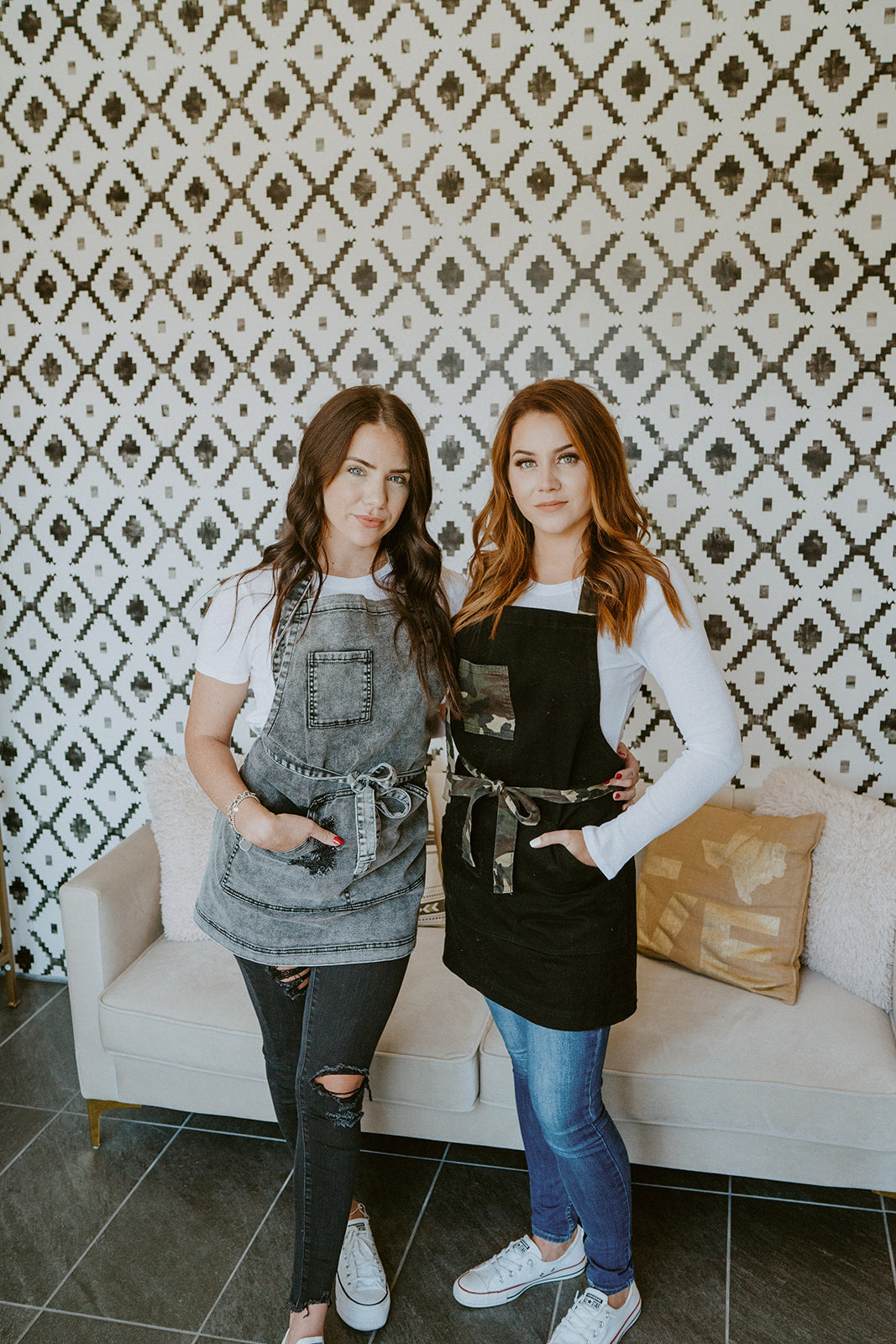
J. Clark Designed's denim line is specifically built for this recommendation. The 100% organic cotton stretch denim is stain-resistant, machine washable, and softens with age instead of breaking down. Cross-back straps distribute weight properly from day one, and the deep reinforced pockets are sized for actual barber tools — not the shallow decorative pockets you see on fashion aprons.
For Classic Barbering: Navy Pinstripe or Pure Black Distressed
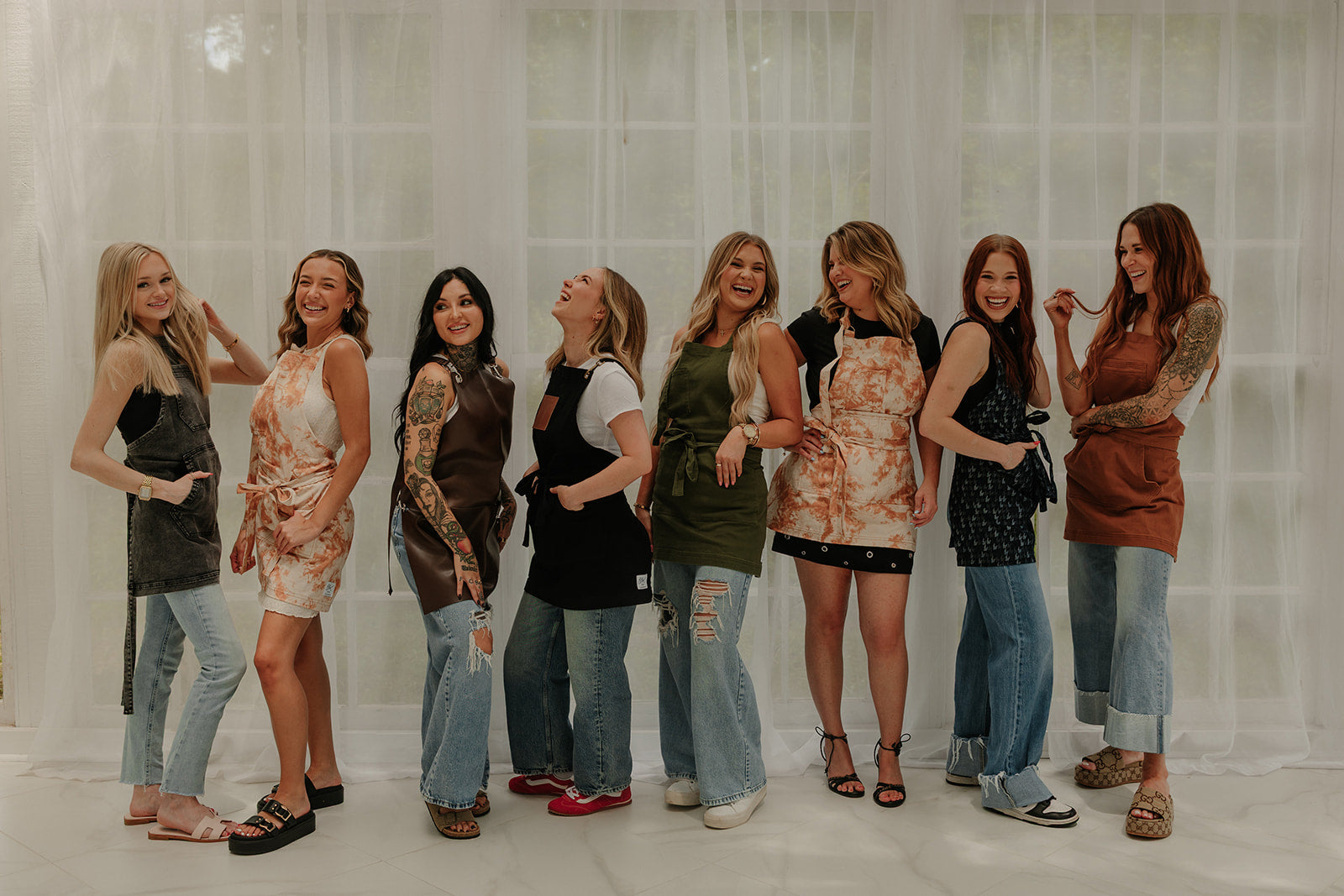
If you're working in a traditional barbershop or prefer a timeless look, the Navy Pinstripe gives you the professional aesthetic clients associate with precision cuts. The Pure Black Distressed offers a modern edge while hiding the inevitable wear of daily use. Both feature the same cross-back design and reinforced pockets. Price: $59–$79.
For Barbers Handling Color Work: Full Black Leather (100% Bleach-Proof)
Once you start offering highlights, balayage, or grey coverage, the chemistry changes. Bleach, toner, and permanent color literally wipe off the Full Black Leather apron in seconds — no staining, no ghost marks, no fabric degradation. It's 100% bleach-proof vegan leather, meaning you clean it with a damp cloth between clients instead of throwing it in the wash. Price: $99.

How to Know When You've Outgrown Your Beginner Apron
A properly chosen beginner apron should last you 18–24 months of full-time barbering. You'll know it's time to upgrade when your services expand beyond basic cuts — adding color, intricate design work, or specializing in a technique that demands different tool access or stain protection.
Signs you need a material upgrade: bleach spots appearing on your denim apron from occasional color work, or you're wiping down your apron multiple times per shift because lighter fabrics show every speck of product. At that point, switching to a bleach-proof vegan leather apron makes sense — the upfront cost ($99) pays for itself in the time you save on cleaning and replacement.
But if you're doing classic cuts, fades, and beard trims? The denim apron you started with is the same apron seasoned barbers still wear after a decade. Treat it well, and it improves with age.
The Bottom Line
The best apron for beginner barbers prioritizes ergonomics, durability, and tool storage over aesthetics or price. Cross-back straps prevent neck strain, deep reinforced pockets hold professional equipment securely, and stain-resistant denim survives the learning curve without falling apart. Starting with a quality apron — one designed by someone who understands the physical demands of the trade — sets the foundation for sustainable work habits and saves money in the long run.
J. Clark Designed aprons are trusted by over 10,000 salons and barbershops, with 4.8 stars from 1,444+ verified reviews. Every apron ships free, features one-size-fits-all adjustability, and is backed by real-world performance in high-volume professional environments. Whether you're in your first month of barber school or preparing to rent your first chair, the right apron supports the work from day one.
FAQ
What's the difference between a barber apron and a salon apron?
Barber aprons and salon aprons share the same core design — cross-back straps, reinforced pockets, durable fabric — but barbers prioritize pockets sized for clippers and shears, while colorists often need bleach-proof materials. If you're doing both cuts and color, a bleach-proof vegan leather apron covers all bases.
Do I need a bleach-proof apron if I'm only doing men's cuts?
No. If you're not using bleach, toner, or permanent color, a 100% organic cotton stretch denim apron is the smarter choice — it's breathable, machine washable, and costs less. Upgrade to bleach-proof leather only when your services require it.
How often should I replace my barber apron?
A quality denim apron lasts 18–24 months of daily professional use, often longer if you rotate between two. Bleach-proof vegan leather aprons can last several years because they don't absorb stains or require washing. Replace your apron when pockets lose their shape, straps fray, or the fabric shows irreversible staining.
Can I machine wash a professional barber apron?
Yes, if it's made from 100% organic cotton stretch denim. Wash cold, tumble dry low, and it will soften with age. Bleach-proof vegan leather aprons don't go in the washing machine — you wipe them clean with a damp cloth, which takes about ten seconds.
Explore the full collection at J. Clark Designed.
```

Leave a comment
This site is protected by hCaptcha and the hCaptcha Privacy Policy and Terms of Service apply.