

Are split-leg aprons better than full aprons for barbers who sit and stand frequently?
Quick Answer: Full aprons consistently outperform split-leg aprons for barbers who sit and stand frequently. The split-leg design creates a gap that exposes pants and thighs to clippings, product spray, and water—exactly the coverage you need during seated fades, beard trims, and low lineup work. Full aprons with cross-back straps eliminate neck strain during long shifts while keeping you completely protected through every position change.
The barber apron you choose shapes how your body feels at the end of a twelve-client Saturday and whether you leave the shop covered in hair or clean enough to grab dinner. The split-leg versus full-apron debate centers on a simple question: does the extra mobility justify the lost coverage?
Here's what two years of fitting barbers across 10,000+ shops taught us.
Why the Split Leg vs Full Apron Question Matters for Barbers
Barbering demands constant position changes. You drop into a low squat for a temple fade, lean forward for a beard line, stand upright for a scissor cut, then sit on a stool for detail work. Every movement shifts how fabric drapes and where gaps open.
Split-leg aprons—styles with a center opening from waist to hem—were designed for workers who needed to climb, kneel, or sit in vehicles. Barbers aren't doing any of those things. You're moving around a fixed hydraulic chair in a predictable radius, which means the "mobility advantage" of a split leg solves a problem you don't have.
What you do have: hair clippings migrating into every exposed surface, aerosol texturizer settling on fabric, and water from neck rinses running downward. A split leg creates a 10–16 inch vertical gap that funnels all of it straight onto your pants and shoes.

What Actually Happens During Seated Barber Work
Seated work—low fades, beard trims, edge-ups, lineup details—puts your torso and lap directly in the fall zone. Clippings don't vanish; they land on the nearest horizontal surface, which is your thighs when you're sitting on a stool.
A full apron covers your lap completely. A split-leg apron leaves a V-shaped opening exactly where you need coverage most. The result:
- Hair accumulation on pants: clippings stick to denim and chinos, requiring a lint roller between every client or a full change midday.
- Product transfer to seating: anything on your pants transfers to your car seat, your couch at home, everywhere you sit after work.
- Wasted time cleaning yourself: you're dusting off jeans instead of prepping the next station.
Full aprons eliminate all three problems. The continuous fabric plane from chest to knee captures clippings in one place—the apron itself, which you remove at the end of the shift.
The Cross-Back Advantage: Why Neck Strain Is the Real Enemy
The most common objection to full aprons has nothing to do with leg coverage. It's the neck strap. Traditional around-the-neck aprons create a pressure point that compounds over eight-hour shifts, especially when the apron carries the weight of tools in front pockets.
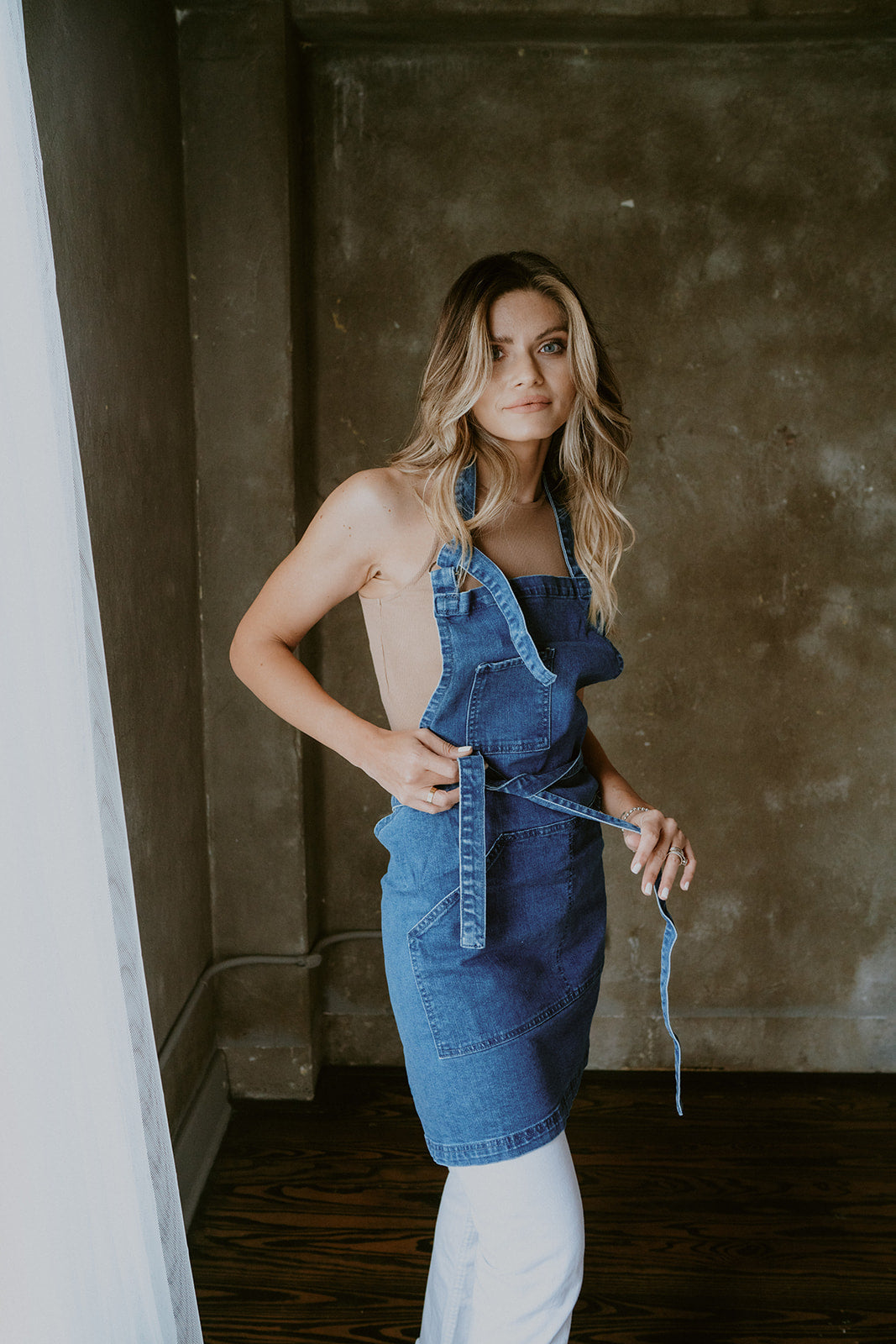
Cross-back aprons solve this by distributing weight across the shoulders and upper back—the same load-bearing structure that supports a backpack. The straps form an X between the shoulder blades, anchoring at the lower back and tying at the waist.

This is the design barbers actually need when comparing split leg vs full apron for barbers: a full-coverage apron built on a cross-back chassis. You keep complete protection and eliminate the neck fatigue that made the old around-the-neck styles unbearable.
J. Clark Designed aprons use adjustable cross-back straps as the signature feature. The straps fit across all body types—men and women, small frames and large—so you can outfit an entire barbershop with one size and skip the sizing headaches.
Material Choices: Denim vs Bleach-Proof Leather for Barber Aprons
Once you've settled on full coverage and cross-back straps, material becomes the defining variable. Barbers face different challenges than hairstylists—less chemical exposure, more texture product and oil-based pomades, constant friction from clippers and shears.
| Material | Best For | Cleaning | Durability |
|---|---|---|---|
| 100% Organic Cotton Stretch Denim | Traditional barbering, scissor cuts, clippers, pomades | Machine wash, tumble dry, softens with age | Stain-resistant, breathable, gets better over time |
| 100% Bleach-Proof Vegan Leather | Barbers who also do color, high-volume shops, multi-service | Wipe clean in seconds—bleach and toner slide off | Chemically inert, never stains, zero laundry |
The denim apron is the workhorse for pure barbering. It's breathable during long shifts, breaks in like raw denim jeans, and handles the wash-and-wear cycle shops demand. The stretch weave moves with you during squats and reaches without binding.
The leather apron is for barbers expanding into color services or working in hybrid barber-salon environments. Bleach, toner, and vivid color pigments wipe off with a damp towel—no washing machine, no staining, no multi-day turnaround. If you're doing gray blending, beard toning, or fashion color alongside traditional cuts, this is the material that keeps you in one apron all day.
Pocket Depth and Tool Access: What Barbers Actually Carry
Barbers carry different tools than hairstylists. Your front pockets need to fit:
- Clippers and trimmers: Wahl, Andis, Oster models with 6–8 inch bodies.
- Shears and thinning shears: 5.5–7 inch blades in protective sleeves.
- Combs and brushes: wide-tooth combs, barber combs, neck dusters.
- Phone: because clients text, you check appointments, and you document finished cuts for Instagram.
Shallow pockets—common on bistro and craft aprons repurposed for barbering—dump tools every time you bend forward. Deep, reinforced pockets keep everything secure through position changes and prevent the forward tumble when you crouch for a low fade.
J. Clark aprons use double-stitched pockets sized specifically for professional tools. The pocket depth is 9 inches, wide enough for clipper bodies and tall enough that shears don't peek out and snag on clients or chair arms.

Recommended Full Aprons for Barbers Who Sit and Stand All Day
If you're outfitting yourself or a barbershop, here's where to start based on the work you do most.
For Traditional Barbering: Black Acid Washed Denim
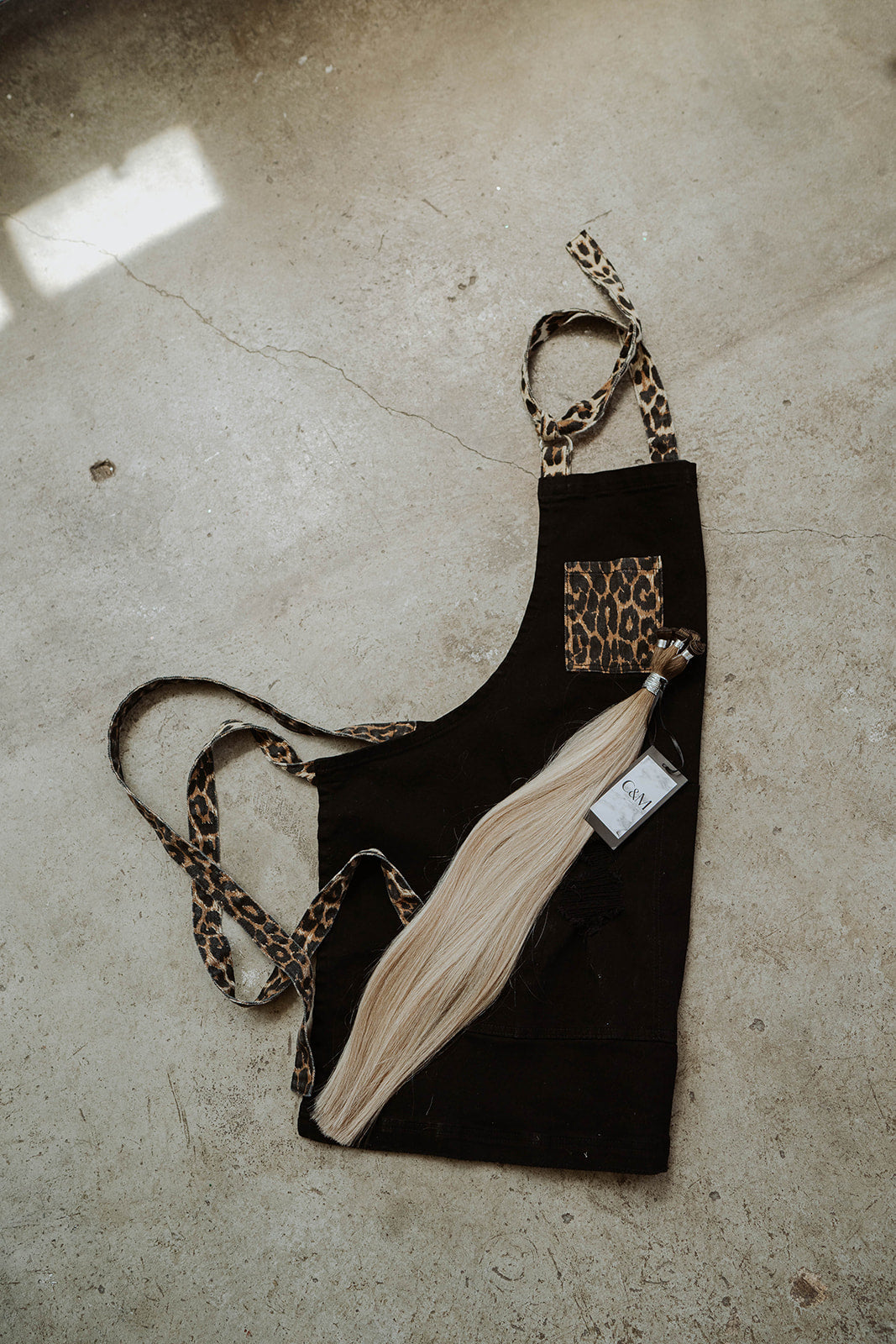
The Black Acid Washed Denim apron is the top-selling style among barbers. The distressed finish hides wear and gives the apron a broken-in look from day one. The 100% organic cotton stretch denim is stain-resistant and machine washable, so you throw it in with your shop towels at the end of the week.
Cross-back straps adjust across all body sizes, so you can order the same style for every barber in the shop—no sizing charts, no returns.
For Barbers Who Do Color: Full Black Leather
The Full Black Leather apron is 100% bleach-proof vegan leather. Bleach, toner, vivid color, and beard dye wipe off in seconds. This is the apron for barbers expanding into gray blending, fashion color, or beard toning—services that were impossible to keep clean in denim.
The wipe-clean surface also means zero laundry. You finish a color client, wipe the apron with a damp towel, and move directly to the next cut. No mid-shift apron changes, no stained backup aprons accumulating in the back room.
For High-Volume Shops: Olive Green or Navy Pinstripe
The Olive Green and Navy Pinstripe denim aprons give shops a unified, professional look without the clinical feel of all-black uniforms. Both are the same 100% organic cotton stretch denim with cross-back straps and reinforced pockets. They're ideal for teams that want a branded, cohesive appearance.
The Bottom Line
Full aprons with cross-back straps consistently outperform split-leg designs for barbers who sit and stand frequently. The continuous coverage protects your clothes during seated fades and detail work, while the cross-back design eliminates the neck strain that made old-style aprons unbearable during long shifts.
The split-leg opening solves a mobility problem barbers don't have and creates a coverage gap exactly where clippings and product land most. If you're comparing split leg vs full apron for barbers, the answer is clear: full coverage wins on both protection and comfort.
Choose 100% organic cotton stretch denim for traditional barbering and breathability, or 100% bleach-proof vegan leather if you're adding color services. Both materials come with deep, reinforced pockets, adjustable straps that fit everyone, and the durability to handle daily use in high-volume shops.
FAQ
Do full aprons restrict movement when you squat for low fades?
No. Full aprons made from stretch denim move with your body during squats, reaches, and seated work. The fabric drapes naturally and doesn't bind at the waist or thighs. The key is choosing an apron with stretch in the weave and adjustable tie waist—both features standard in professional barber aprons.
Can you machine wash a barber apron, or does it need special care?
100% organic cotton denim aprons are fully machine washable—throw them in with your shop towels, tumble dry, and they're ready for the next shift. The fabric is stain-resistant and softens with age. Bleach-proof vegan leather aprons require no washing at all—just wipe clean with a damp towel after each shift.
Will a cross-back apron fit barbers of different sizes in the same shop?
Yes. Cross-back aprons with adjustable straps and tie waist fit men and women across all body types. J. Clark Designed aprons are one-size-fits-all, so you can outfit an entire barbershop with the same style and skip the sizing complexity. The straps adjust from small frames to XXL builds.
What's the difference between a barber apron and a salon apron?
Barber aprons prioritize deep pockets for clippers and shears, durable materials that handle daily machine washing, and full coverage for seated work. Salon aprons often emphasize chemical resistance (for colorists) and may use lighter fabrics. Many professional aprons—like those from J. Clark Designed—work across both environments, especially the bleach-proof leather styles that handle cuts and color equally well.
Explore the full collection at J. Clark Designed.
```

Leave a comment
This site is protected by hCaptcha and the hCaptcha Privacy Policy and Terms of Service apply.