
How many pockets should a tattoo artist apron have?
Quick Answer: A professional tattoo artist apron needs at least two deep, reinforced pockets minimum—one for machines and grip tubes, one for barrier film, razors, and disposables. Most functional setups feature three to four divided compartments that keep tools sterile, accessible, and separated from contaminated materials during sessions that can run four to eight hours without breaks.
You don't rotate gear mid-session. You can't step away to grab a fresh razor or another cartridge when you're three hours into a sleeve. The pocket layout on your apron determines whether you work efficiently—or constantly interrupt your flow.
Here's what actually matters when evaluating tattoo artist apron pocket requirements, based on real studio workflow and cross-contamination protocol.
Why Generic Apron Pockets Fail Tattoo Artists
Most culinary or craft aprons feature shallow, single-layer pockets designed for pens, notepads, or lighter tools. Tattoo work demands something fundamentally different.
The problems with standard pockets:
- Insufficient depth: Machines, grip tubes, and bottles tip out when you lean over a client or adjust your stool.
- No compartmentalization: Clean barriers, fresh needles, and used disposables end up jumbled together—a contamination risk and a health code violation waiting to happen.
- Weak stitching at stress points: The weight of rotary machines, power supplies, and ink bottles tears through standard seams within months.
- Single-material construction: Cotton and canvas absorb ink, blood, and pigment—stains set permanently, and fabrics degrade under repeated bleach or disinfectant cycles.
You need pockets engineered for the actual load, depth, and separation your tools require. That's a design question, not a style preference.

The Minimum Pocket Count for Functional Tattoo Work
Two deep, reinforced front pockets is the baseline. Here's how most artists divide them during a session:
- Pocket one (dominant hand side): Active machines, grip tubes, and cartridges you're rotating through during the piece.
- Pocket two (non-dominant side): Clean supplies—barrier film sheets, fresh razors, transfer paper, stencil markers, gloves.
This layout keeps sterile materials separate from equipment that's touched ink and skin. It's the minimum configuration that respects cross-contamination protocols without forcing you to walk back to your tray every twelve minutes.
Three to four divided compartments is where serious efficiency starts. Additional internal divisions let you segment:
- Used disposables: A dedicated barrier-lined section for needles, razors, and single-use items headed for sharps disposal—isolated from everything else.
- Color bottles and caps: Pigment bottles stay upright and separated; caps don't roll into the bottom of the pocket.
- Personal tools: Phone, keys, and non-sterile items in a separate sleeve so they never touch client-contact surfaces.
The ROI is immediate: fewer breaks, faster tool access, cleaner workflow, and zero health code stress when inspectors show up unannounced.
Pocket Depth, Reinforcement, and Weight Distribution
Depth matters more than count. A shallow four-pocket apron is worse than a two-pocket design with eight-inch compartments. Rotary machines are six to seven inches long; coil machines with frames run longer. If your pocket doesn't accommodate the full length plus an inch of clearance, tools slide out when you move.
Reinforcement is non-negotiable. Standard single-stitched seams fail under the repetitive weight of machines, bottles, and metal tools. Look for:
- Double or triple-stitched stress points: Pocket corners and top edges where load concentrates during movement.
- Bartack reinforcement: Cross-stitched anchor points at the base of each pocket prevent tearing when you pull tools in and out hundreds of times per session.
- Reinforced bottom panels: Extra fabric layers at the pocket base distribute weight and prevent sagging or fabric fatigue.
Weight distribution starts at the straps, not the pockets. Traditional around-the-neck aprons dump all tool weight onto your cervical spine—four to six pounds of machines, ink, and accessories pulling forward on your neck across eight-hour days. That's the setup for chronic pain, not sustainable studio work.
Cross-back apron designs shift that load across your shoulders and upper back, spreading force over larger muscle groups. Same pocket capacity, radically different long-term ergonomics. It's the difference between finishing a full day booked with walk-ins and needing ibuprofen by client three.

Material Choice and the Ink-Stain Reality
Tattoo pigment doesn't rinse out of standard cotton, canvas, or poly-blend fabrics. One session with black shading ink, and your apron carries permanent splatter. Twenty sessions later, it looks like a Jackson Pollock reject—unprofessional in client-facing environments and impossible to sanitize convincingly.
Two material categories solve this:
| Material | Stain Resistance | Durability | Best For |
|---|---|---|---|
| Organic Cotton Stretch Denim | Stain-resistant finish; machine washable; softens with age | High—reinforced seams handle tool weight across years | Line work, fine detail sessions with minimal ink transfer |
| 100% Bleach-Proof Vegan Leather | Ink, blood, pigment wipe off in seconds; never absorbs stains | Extreme—resistant to chemicals, tearing, and repeated disinfection | High-volume color work, realism, heavy shading sessions |
If you're running black-and-grey realism or Japanese traditional with heavy ink saturation five days a week, 100% bleach-proof vegan leather is the only material that stays clean without constant replacement. Ink literally wipes off the surface—no staining, no absorption, no degradation under disinfectant wipes or bleach spray.
Stretch denim works for artists focused on fine line, script, or minimalist designs where ink exposure is lighter and less frequent. The stain-resistant finish holds up through regular washing, and the fabric breathes better during long sessions in non-air-conditioned studios.

Pocket Placement and Studio Movement Patterns
Pockets positioned too low force you to hunch or twist to access tools mid-session. Too high, and tools dig into your ribs when you lean over a client's back or shoulder. The functional zone sits between your natural hand-rest position (standing) and mid-thigh—roughly twelve to eighteen inches below your waistline.
Side-access pockets (angled slightly outward) are faster to reach than straight front-facing designs, especially when you're seated on a rolling stool and adjusting angles constantly. You grab tools without looking, without shifting your torso, without interrupting your line.
Internal dividers should be offset, not symmetrical. Machines go in the larger, deeper section; smaller tools (razors, barriers, caps) in shallower side compartments. Symmetrical pockets look clean in product photos but force you to cram everything into the same depth, which defeats the purpose of having multiple pockets in the first place.
What to Look for When Evaluating Tattoo Artist Apron Pocket Requirements
Run this checklist before you buy:
- Minimum two pockets, ideally three to four divided compartments: Enough separation to keep sterile supplies away from used tools and personal items.
- Eight-inch minimum pocket depth: Full-length machines and bottles fit without tipping out during movement.
- Reinforced stitching at stress points: Double or triple stitching at corners, bartack anchors at the base, reinforced bottom panels to handle weight.
- Wipe-clean or stain-resistant material: Either 100% bleach-proof vegan leather for maximum ink resistance, or stain-resistant denim that tolerates regular washing.
- Cross-back strap design: Distributes tool weight across shoulders and upper back instead of straining your neck.
- Adjustable fit (one size fits all): Works for every artist in your studio without ordering multiple sizes or dealing with returns.
If the apron doesn't check all six, it's a compromise—and compromises in professional gear compound into real costs over time.
For high-volume color and realism work: Full Black Leather
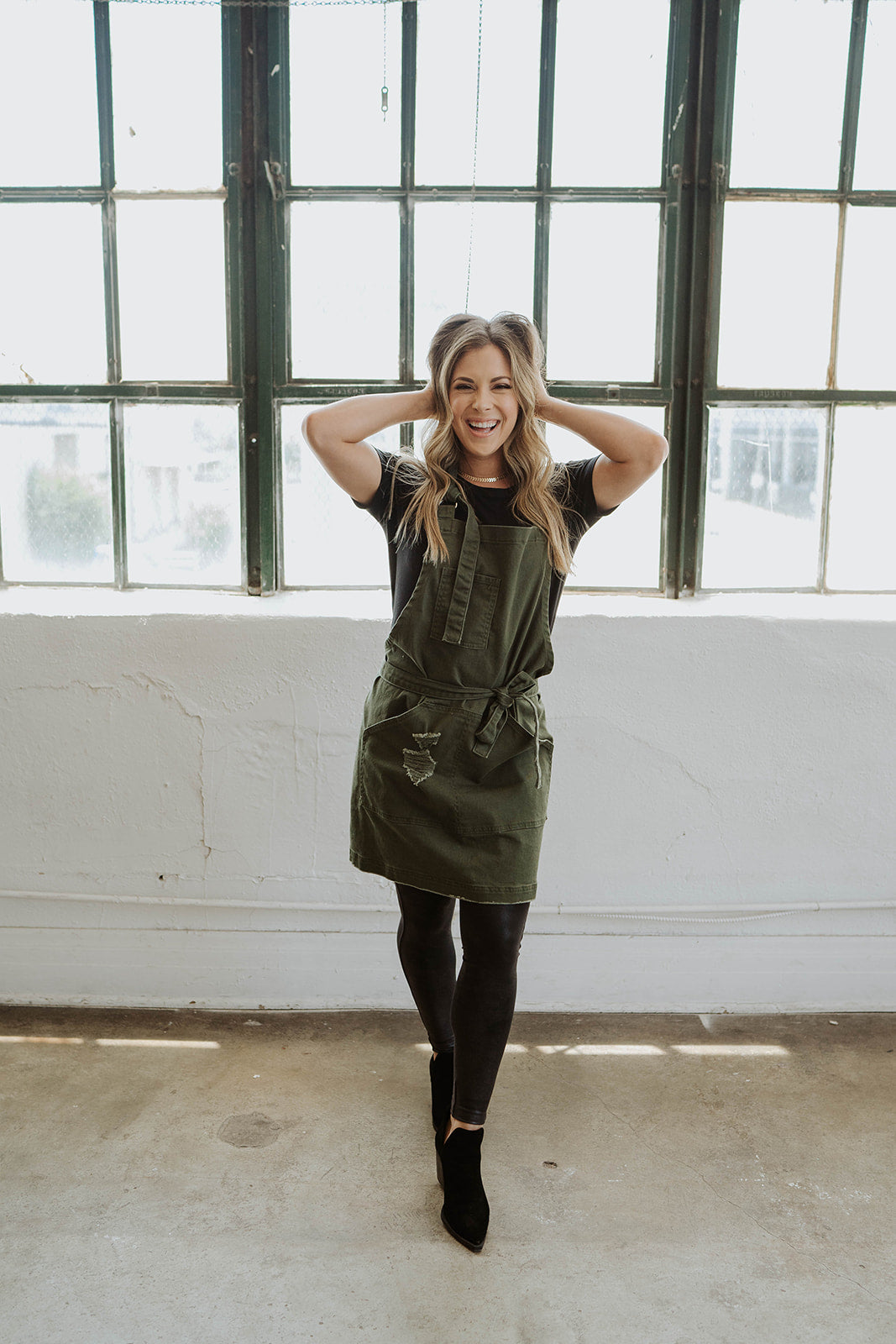
The Full Black Leather apron ($99) is 100% bleach-proof vegan leather with reinforced pockets deep enough for rotary machines, ink bottles, and grip tubes. Ink wipes off in seconds, cross-back straps eliminate neck strain, and the material never stains or degrades under repeated disinfection. Built for artists running eight-hour days with heavy pigment work.
For fine line and minimalist studios: Black Acid Washed Denim
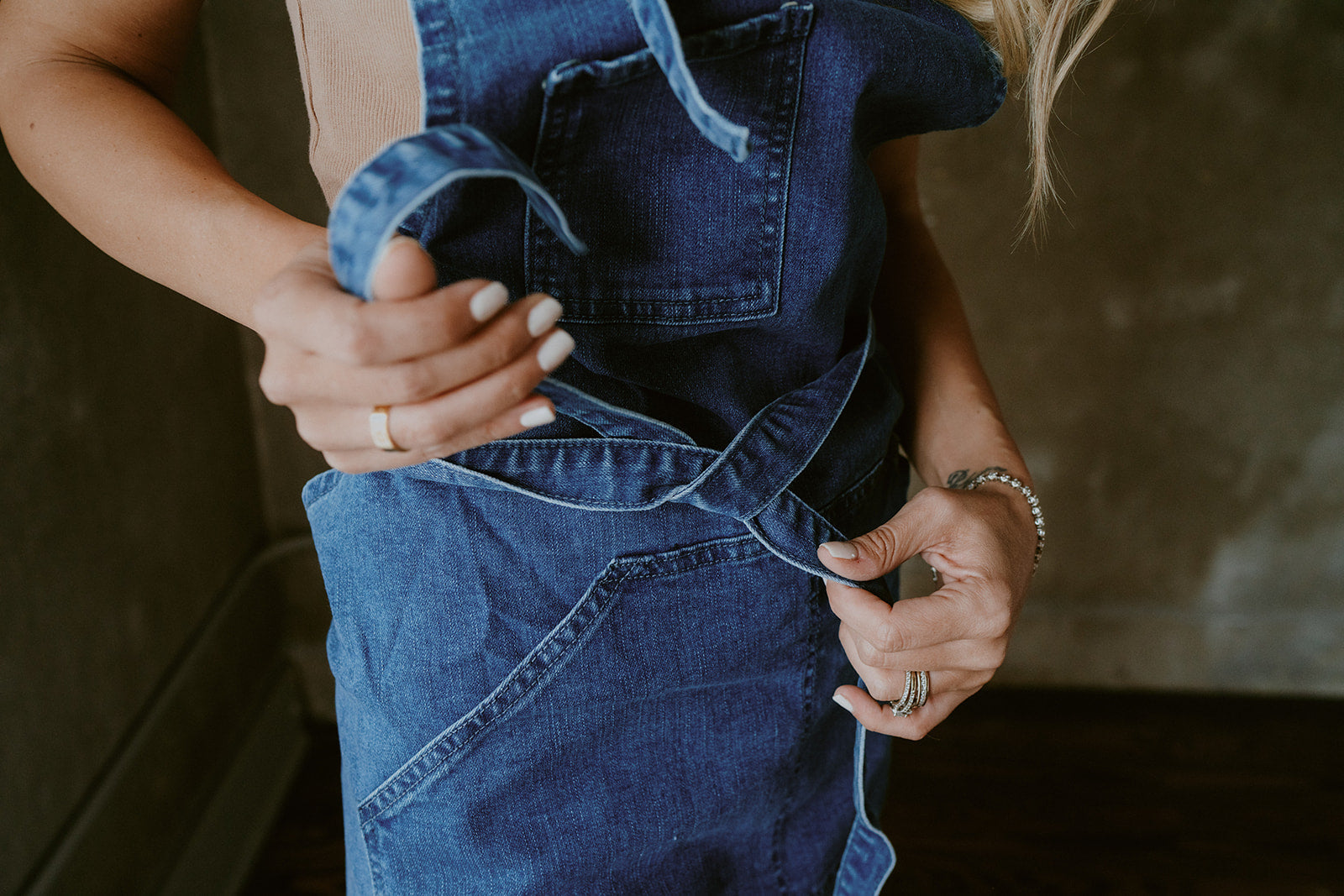
The Black Acid Washed Denim apron ($59–$79) uses organic cotton stretch denim with a stain-resistant finish and reinforced front pockets. Lighter, breathable, machine washable, and softer with age. Ideal for artists focused on script, fine line, or single-needle work where ink exposure is lower and comfort across long sessions matters more than extreme stain resistance.
The Bottom Line
A functional tattoo artist apron needs at least two deep, reinforced pockets minimum—but three to four divided compartments give you the separation, organization, and contamination control that serious studio work demands. Pocket depth, reinforced stitching, and material choice matter more than pocket count alone.
Stretch denim works for lower-ink-exposure styles; 100% bleach-proof vegan leather is the only material that survives high-volume color and realism work without permanent staining. Cross-back straps shift tool weight off your neck and onto your shoulders—critical for long-term ergonomics when you're carrying machines, bottles, and accessories all day.
Match the pocket layout and material to your actual session workflow, not to what looks good in a product photo. The right apron pays for itself in efficiency, comfort, and years of use.
FAQ
How many pockets do professional tattoo artists use?
Most professional tattoo artists use aprons with two to four pockets. Two pockets is the minimum for separating active machines from sterile supplies; three to four divided compartments allow better organization—one for machines, one for clean barriers and razors, one for used disposables, and one for personal items. High-volume studios typically prefer four-pocket designs for maximum workflow efficiency.
What material is best for a tattoo artist apron?
100% bleach-proof vegan leather is the best material for tattoo artists working with heavy color saturation, realism, or high-volume sessions—ink, blood, and pigment wipe off the surface in seconds and never stain. Stain-resistant organic cotton stretch denim works well for fine line, script, or minimalist artists where ink exposure is lighter and breathability matters more than extreme chemical resistance.
Why do cross-back aprons matter for tattoo artists?
Cross-back aprons distribute the weight of machines, ink bottles, and tools across your shoulders and upper back instead of hanging all the load from your neck. Traditional neck-strap aprons create chronic cervical strain during long sessions; cross-back designs eliminate that pressure and reduce long-term pain and fatigue, especially during eight-hour days with back-to-back clients.
Do I need separate pockets for used needles and fresh supplies?
Yes. Health codes and cross-contamination protocols require separating sterile supplies (fresh barriers, razors, gloves) from used disposables (needles, single-use tubes, contaminated materials). A dedicated pocket or internal divider for used sharps prevents accidental contact with clean tools and keeps your workspace compliant during health inspections.
Explore the full collection at J. Clark Designed.
```

Leave a comment
This site is protected by hCaptcha and the hCaptcha Privacy Policy and Terms of Service apply.