

What is the difference between a utility apron and a salon apron?
Quick Answer: The difference between a utility apron and a salon apron comes down to specialization. Utility aprons are general-purpose workwear—think gardening, woodworking, or kitchen prep—built for light-duty tasks with minimal exposure to chemicals. Salon aprons are engineered specifically for beauty professionals: bleach-proof or stain-resistant materials, ergonomic cross-back straps to prevent neck strain during 8+ hour shifts, and deep reinforced pockets sized for shears, clippers, and color brushes. If you work with hair color, toner, or bleach daily, a utility apron will stain and fail within weeks.
Why Material Science Matters When You Work with Bleach and Color
Most utility aprons use canvas, standard cotton, or polyester blends. These materials work fine for protecting your clothes from dirt or flour. They catastrophically fail the moment you splash 20-volume developer or purple toner.
Here's what happens: bleach and ammonia-based color oxidize natural fibers on contact. Canvas and cotton absorb the chemical, the color shifts or burns out, and the fabric weakens. Within six washes, you're left with a stiff, stained apron that smells faintly of old bleach. That's not durability—it's planned obsolescence.

Salon aprons use two materials specifically chosen for chemical resistance:
- 100% bleach-proof vegan leather: Bleach, toner, and color literally wipe off the surface. Zero absorption. You can work on a platinum-blonde balayage, drip lightener down the front, and clean it with a damp towel in under 30 seconds. The material never stains, never discolors, never smells.
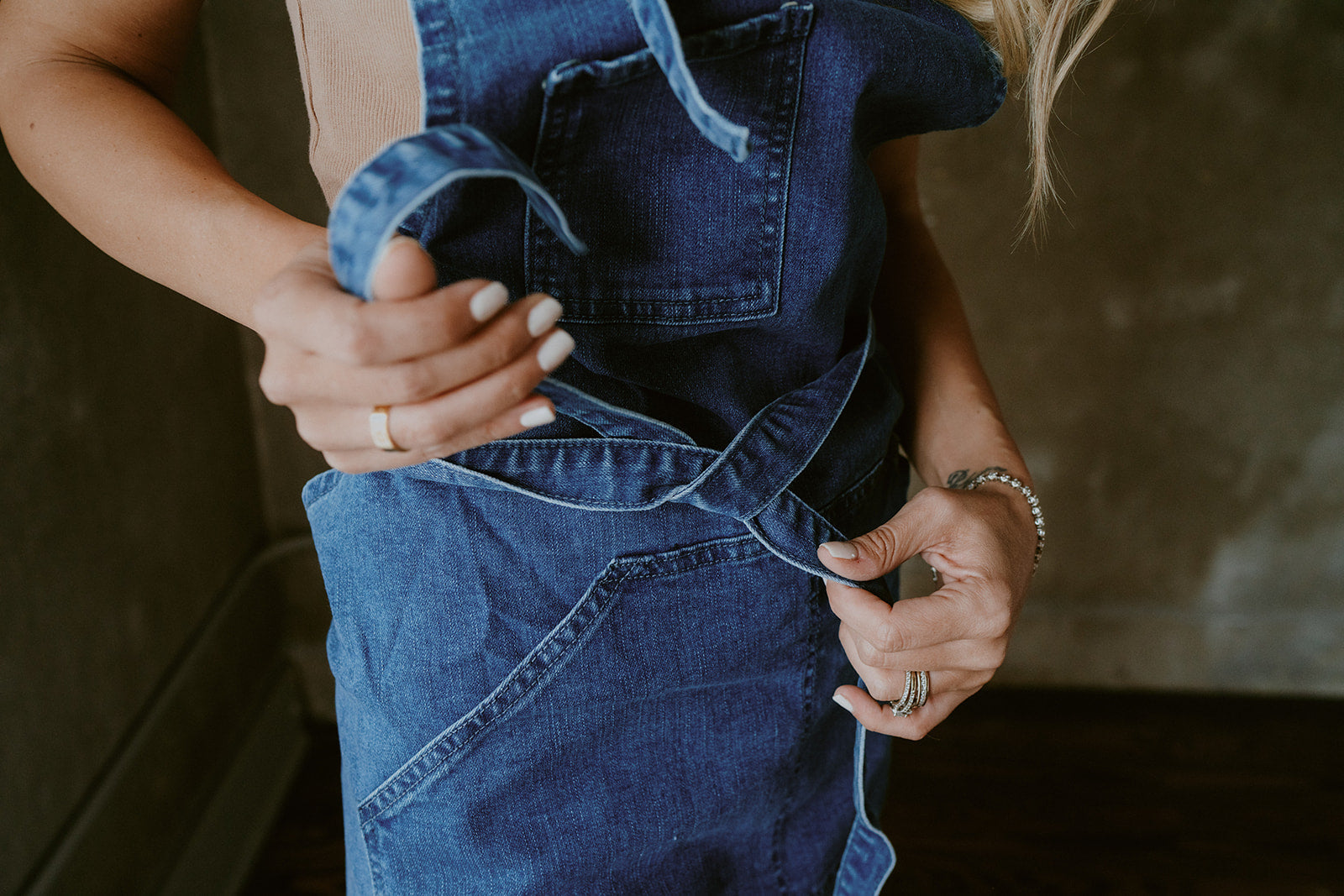
- 100% organic cotton stretch denim with stain-resistant treatment: Breathable enough for all-day wear, machine washable, and engineered to resist absorption. It won't repel bleach like leather, but it handles daily color work far better than any utility canvas and softens with age instead of stiffening.
If you're a colorist, balayage specialist, or barber doing frequent fades with cool-toned enhancements, the material isn't a luxury feature—it's the entire point of buying a professional apron.
The Cross-Back Advantage: Why Salon Professionals Need Different Ergonomics
Utility aprons almost universally use neck straps or H-back designs. You tie or clip them around your neck, and gravity does the rest. For two hours of weekend grilling, that's tolerable. For an eight-hour salon shift on your feet—cutting, coloring, blow-drying—it's a recipe for chronic neck and upper-back pain.
The biomechanics are straightforward: when weight hangs from your neck, your trapezius muscles and cervical spine compensate. Add the repetitive overhead motion of sectioning hair or holding a blow-dryer, and you're compressing the same muscle groups all day. Stylists, barbers, and colorists report tension headaches, shoulder knots, and nerve pain within months.
Salon aprons solve this with adjustable cross-back straps that distribute weight across the shoulders and upper back. The load spreads across your scapular stabilizers and lats—larger, stronger muscle groups designed to handle sustained tension. You can load the front pockets with shears, a phone, clips, and a comb without feeling the pull in your neck.
J. Clark Designed aprons feature this cross-back system as standard, with fully adjustable straps that fit men and women across all body types. One size genuinely fits all, which makes outfitting a salon or barbershop team simple—no sizing charts, no returns, no guesswork. (Around-the-neck styles are also available for professionals who prefer traditional strap placement.)
Pocket Design: Tool Access vs. General Storage
Utility aprons prioritize quantity: lots of small loops, clips, and shallow pockets for nails, pencils, or hand tools. Salon aprons prioritize depth and reinforcement for the specific tools beauty professionals carry every shift.
| Feature | Utility Apron | Salon Apron |
|---|---|---|
| Pocket depth | Shallow (3–5 inches) | Deep (6–8 inches), reinforced |
| Sized for | Screwdrivers, pens, small hand tools | Shears, clippers, brushes, combs, phone |
| Material exposure | Minimal chemicals | Bleach, color, toner, acetone (daily) |
| Strap system | Neck loop or H-back | Cross-back (weight distributed) |
| Durability focus | Abrasion, general wear | Chemical resistance, daily washing |
When you're moving between clients every 45–90 minutes, you need pockets you can access without looking—muscle memory. The reinforced front pockets on J. Clark aprons hold 6.5" shears without sagging, keep your phone secure when you bend forward over the shampoo bowl, and survive hundreds of wash cycles without fraying.

When a Utility Apron Actually Makes Sense
Utility aprons aren't inferior—they're designed for different work. If you're a florist, ceramicist, woodworker, or home cook, you don't need bleach-proof leather. You need durable canvas that resists tears, holds loppers or chisels, and costs $20–$40.
But the moment your work involves:
- Repeated chemical exposure: Hair color, bleach, toner, barbicide, acetone (for nail techs), or tattoo ink cleanup.
- All-day wear: 6+ hour shifts on your feet with tools in your pockets.
- Frequent washing: You need to throw it in the machine after every shift without worrying about shrinkage or color bleed.
…then a utility apron becomes a false economy. You'll replace it every 4–6 months, and your neck will hurt the entire time.
Real-World Longevity: What 1,444 Reviews Tell Us
J. Clark Designed aprons hold a 4.8/5-star average across 1,444+ verified reviews, with stylists, barbers, and colorists reporting 2+ years of daily use without material breakdown. The most common praise: "finally doesn't stain," "my neck doesn't hurt anymore," and "worth every penny."
Compare that to the utility apron lifecycle: buy for $25, stain it within two weeks, tolerate it for three months, replace. Repeat. Over two years, you've spent $200 on disposable aprons and gained nothing in comfort or functionality.
A $99 Full Black Leather apron—100% bleach-proof, wipe-clean in seconds—pays for itself in durability alone. A $79 stretch denim option gives you breathability and machine-wash convenience without sacrificing stain resistance.
Matching the Right Salon Apron to Your Specialty
Not all salon work demands the same apron. Here's how to choose based on your daily exposure:
For High-Volume Color Work: Full Black Leather
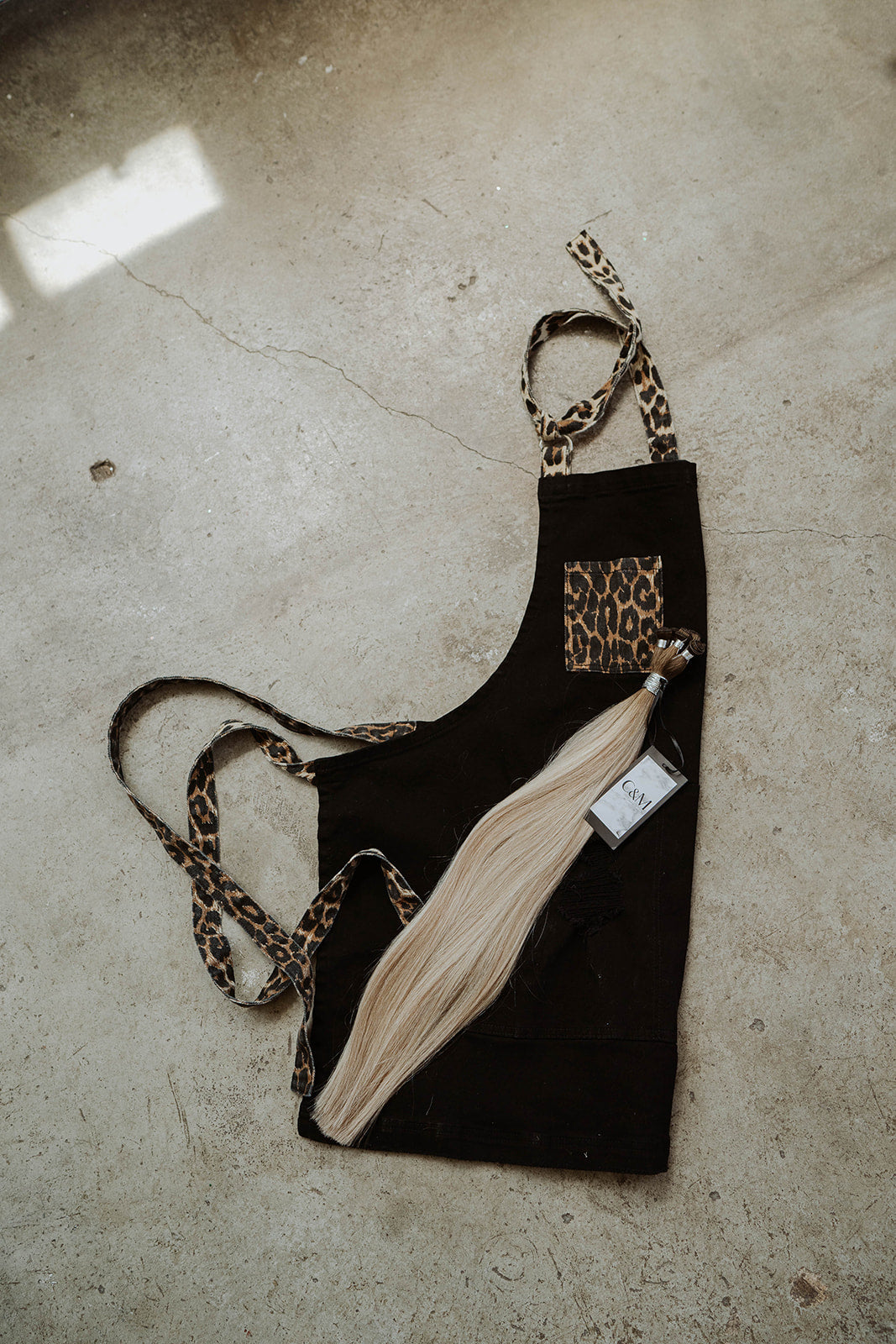
If you do balayage, platinum transformations, or corrective color back-to-back, the Full Black Leather apron is the only material that makes sense. Bleach and toner wipe off instantly. You never smell like old chemicals. The vegan leather is thick enough to protect your clothes but flexible enough to move naturally.
For All-Day Comfort: Stretch Denim Styles
Hairstylists and barbers who do more cutting than coloring benefit from breathable, machine-washable denim. The Navy Pinstripe, Black Acid Washed Denim, and Olive Green options all use 100% organic cotton stretch denim that softens with every wash and resists the staining that destroys canvas aprons.

For Barbershops and Team Uniformity: One Size Fits All
Because J. Clark aprons adjust via cross-back straps and a tie waist, you can outfit an entire barbershop or salon with one size. No measuring, no size exchanges, no "we ran out of mediums." This makes onboarding new stylists seamless and ensures a cohesive, professional look across your team.
The Bottom Line
The utility apron vs salon apron difference isn't subtle. Utility aprons are built for weekend projects and light-duty tasks with minimal chemical exposure. Salon aprons are engineered for professionals who work with bleach, color, and toner every shift—using materials that repel or resist stains, ergonomic cross-back straps that prevent neck pain, and pockets sized for professional tools.
If you're a hairstylist, barber, colorist, esthetician, or tattoo artist, buying a utility apron to save $30 is a bet that you'll replace it three times a year and tolerate discomfort the entire time. A salon apron—especially one designed with 100% bleach-proof leather or stain-resistant stretch denim—is the tool that lasts.
Over 10,000 salons, barbershops, and studios trust J. Clark Designed for a reason: the materials work, the ergonomics work, and the aprons survive years of professional use. That's not marketing—it's material science and honest construction.
FAQ
Can I use a salon apron for bartending or cooking?
Absolutely. The same chemical resistance and durability that protect against bleach also handle wine, cocktail bitters, and kitchen grease. Many bartenders and line cooks choose J. Clark aprons for the cross-back comfort and deep pockets. Check the Restaurant & Bar collection for styles suited to front- and back-of-house work.
How do I clean a bleach-proof leather apron?
Wipe it down with a damp cloth after each shift. For deeper cleaning, use mild soap and water—no machine needed. The vegan leather is engineered to repel absorption, so color and bleach sit on the surface instead of soaking in. Most professionals clean theirs in under a minute between clients.
Do salon aprons actually prevent neck pain, or is that just marketing?
Cross-back straps distribute weight across your shoulders and upper back instead of hanging from your neck. This is basic biomechanics, not a gimmick. Professionals who switch from neck-strap aprons to cross-back designs report immediate relief from tension headaches and trapezius pain. If you're on your feet for 8+ hours, the ergonomics matter as much as the material.
What's the difference between denim and leather salon aprons?
Denim (100% organic cotton stretch) is breathable, machine washable, and stain-resistant—ideal for stylists and barbers who do more cutting than heavy color work. Leather (100% bleach-proof vegan) is wipe-clean and completely impervious to bleach and toner—the best choice for colorists doing high-volume chemical services. Both use the same cross-back strap system and reinforced pockets.
Explore the full collection at J. Clark Designed.
```

Leave a comment
This site is protected by hCaptcha and the hCaptcha Privacy Policy and Terms of Service apply.