
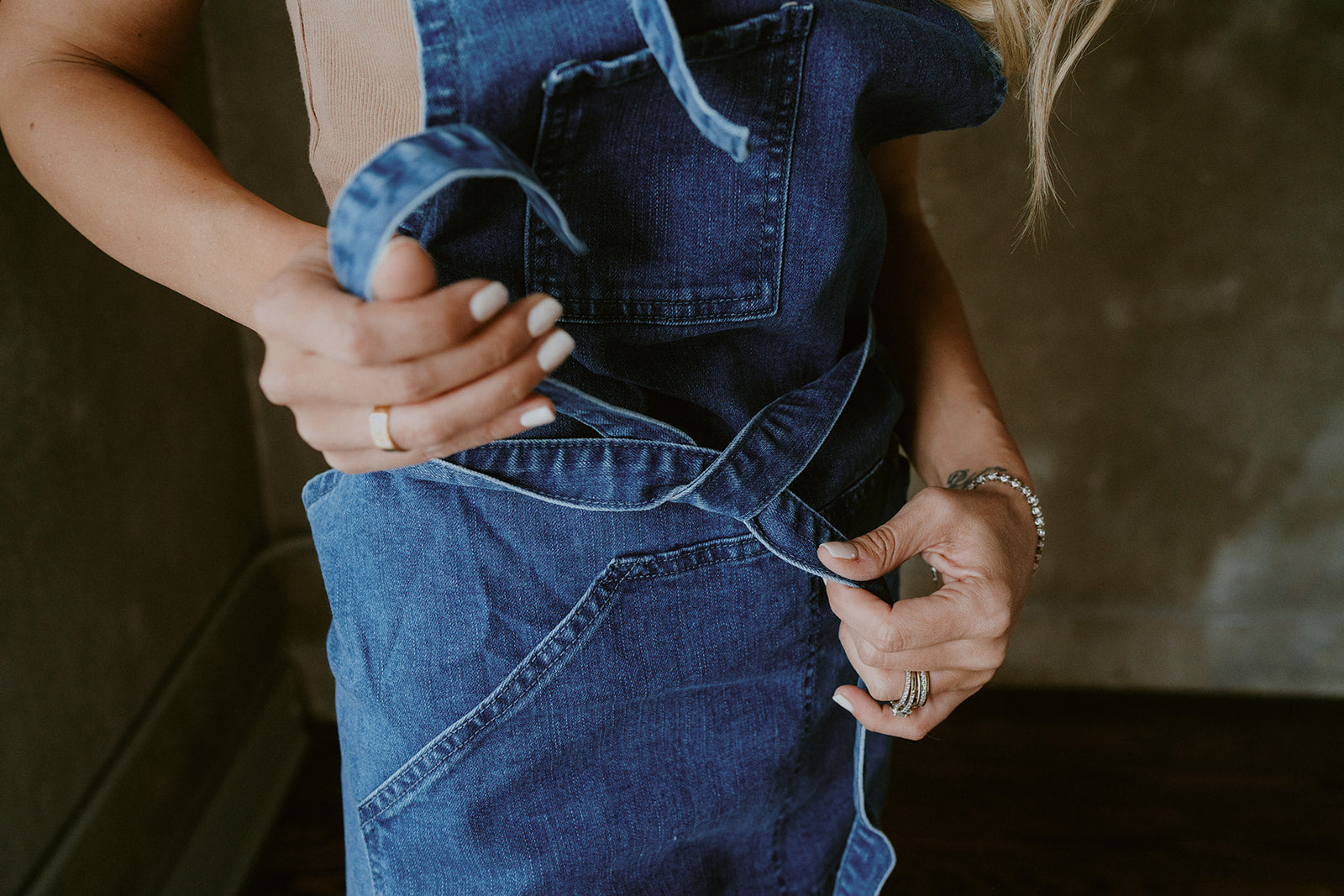
Are Japanese denim aprons worth it for professional salon use?
Quick Answer: Japanese denim aprons for salon professionals deliver superior durability and aesthetics, but most aren't engineered for the specific demands of color work, bleach exposure, or all-day wear. The fabric itself is excellent—the real question is whether the apron design solves the ergonomic and stain challenges hairstylists, colorists, and barbers face daily. Cross-back construction, bleach-resistant materials, and reinforced pockets matter more than country of origin.
Why Japanese Denim Appeals to Salon Professionals
Japanese selvedge denim carries a reputation for tight weave density, slow fade characteristics, and attention to construction detail. Hairstylists and barbers notice. The fabric photographs well, feels substantial, and signals craft—qualities that align with the professionalism many salon owners want to project.
But "Japanese denim" alone doesn't guarantee an apron will protect your clothes during a balayage appointment or stay comfortable through eight back-to-back cuts. The material is only one variable. Weight distribution, pocket depth, and chemical resistance determine whether an apron earns its place in your station or ends up in a drawer after two weeks.
The Real Test: How Japanese Denim Performs Under Salon Conditions
Most Japanese denim aprons use untreated raw denim or lightly processed fabric. That creates predictable problems:
- Bleach and toner stains are permanent. Traditional denim absorbs liquid. Once 20-volume developer or purple shampoo soaks into raw selvedge fibers, it's there for good. No amount of washing reverses chemical color change in untreated cotton.
- Indigo crocking transfers to client clothing. Raw denim sheds indigo dye—the vintage fade enthusiasts love. In a salon, that dye rubs off onto light-colored client shirts during shampooing or draping.
- Stiffness takes months to break in. Heavy-weight Japanese denim (13–16 oz) starts rigid. It needs 20–30 wash cycles to soften. Stylists need mobility on day one, not six months later.

The stretch-denim alternative—100% organic cotton with mechanical stretch—solves the break-in issue. It moves with you from the first shift, machine-washes without special care, and softens naturally without the crocking problem. Stain resistance comes from pre-treatment, not wishful thinking.
Comparing Japanese Denim Aprons to Purpose-Built Salon Materials
| Feature | Traditional Japanese Denim | Treated Stretch Denim | Bleach-Proof Vegan Leather |
|---|---|---|---|
| Bleach/Toner Resistance | Absorbs and stains permanently | Stain-resistant treatment; most washes out | Wipes clean in seconds; never stains |
| Break-In Period | 3–6 months of regular wear | Comfortable immediately | Soft from day one |
| Breathability | Excellent (heavy cotton) | Excellent (organic cotton) | Moderate (vegan leather) |
| Maintenance | Hand-wash or delicate cycle recommended | Machine-wash, tumble-dry | Wipe with damp cloth |
| Cost (typical range) | $85–$140 | $59–$79 | $99 |
For colorists working with bleach daily, the vegan leather category outperforms any denim. For barbers who prioritize breathability and classic aesthetics, stretch denim delivers the look without the maintenance burden.
The Cross-Back Design Factor Most Japanese Aprons Miss
Material quality means nothing if the apron's weight hangs from your neck for nine hours. Traditional around-the-neck straps—common in imported Japanese designs—create a pressure point at C7 (the base of your neck). By hour three, you feel the ache. By closing time, it's migraine territory.

Cross-back aprons distribute weight across the shoulders and upper back—the muscle groups designed to carry load. The straps form an X between your shoulder blades, eliminating neck strain entirely. This isn't a comfort upgrade. It's a structural solution to a biomechanical problem.
Most Japanese denim aprons sold online use neck-loop construction because it's simpler to manufacture and requires less precise sizing. Cross-back straps need adjustability to fit different torso lengths and shoulder widths. That's engineering, not just sewing.
Pocket Depth and Tool Access: Where Aesthetic Design Fails Professionals
Japanese workwear aesthetics favor shallow, patch-style pockets positioned high on the chest. Those work for carpenters carrying pencils. They don't work for hairstylists carrying 7-inch shears, a rattail comb, a phone, sectioning clips, and a Wahl clipper.
Professional-grade apron pockets need:
- Depth of 8–10 inches minimum so shears don't slide out when you bend to section hair at the nape
- Reinforced stitching at stress points where metal tool weight concentrates
- Width to accommodate clipper bodies (most are 1.5–2 inches across)
- Interior structure to keep tools separated and prevent tangling
Generic Japanese denim aprons imported through marketplace sellers rarely meet these specs. They're designed for visual appeal in product photography, not for the repetitive tool draw-and-replace cycle a barber performs 200+ times per shift.
When Japanese Denim Aprons Make Sense for Salon Professionals
If you run a classic barbershop with minimal chemical services, prioritize traditional aesthetics, and want a fabric that ages visibly over years, Japanese denim delivers. The patina development—the way the indigo fades at wear points—creates a one-of-a-kind garment that reflects your personal work history.

But for that to work, you need a design that accommodates professional use. Look for treated or pre-washed Japanese denim (not raw), cross-back strap options, and pockets engineered for tools, not styling.
The stretch denim category combines the visual appeal of classic indigo workwear with the functional upgrades colorists and stylists actually need—stain resistance, immediate comfort, machine washability, and true cross-back ergonomics.
Recommended Aprons for Salon Professionals Who Value Both Craft and Function
For colorists and high-volume chemical work: Full Black Leather or Cocoa Brown Leather
100% bleach-proof vegan leather means developer, toner, and permanent color wipe off with a damp cloth. No staining, no fabric degradation, no anxiety about splashes during foil work. The Full Black Leather apron ($99) pairs professional protection with a modern, tailored aesthetic. Cross-back straps keep you comfortable through double-booked balayage days.
For barbers and stylists who want breathable, classic denim: Navy Pinstripe or Black Acid Washed Denim
100% organic cotton stretch denim with stain-resistant treatment delivers the traditional look without the raw-denim drawbacks. The Navy Pinstripe ($69) softens with each wash, breathes during summer shifts, and handles machine washing without special care. Deep front pockets fit clippers, shears, and a phone securely.
For creative professionals who want statement style: The Bohemian or The Bloom
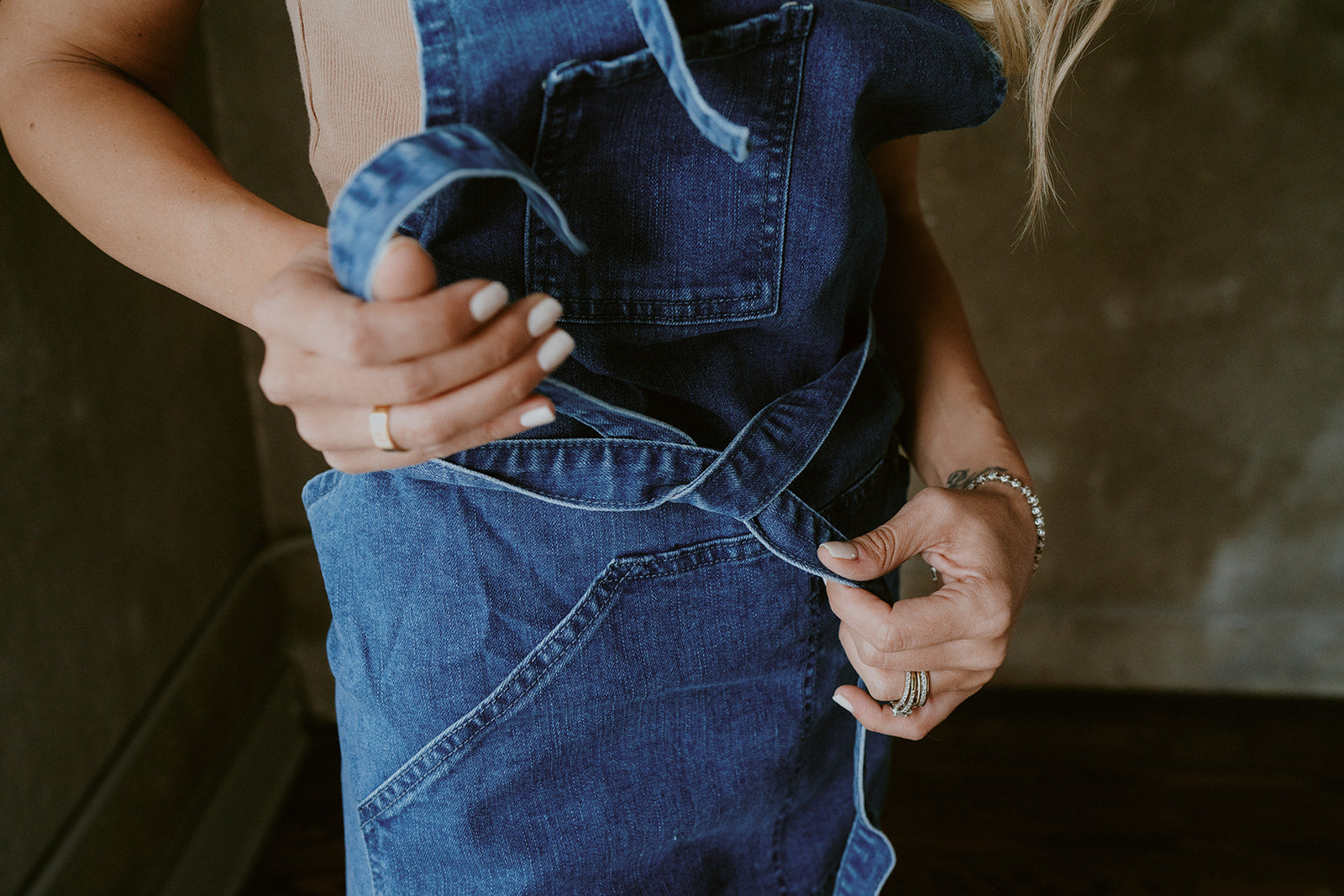
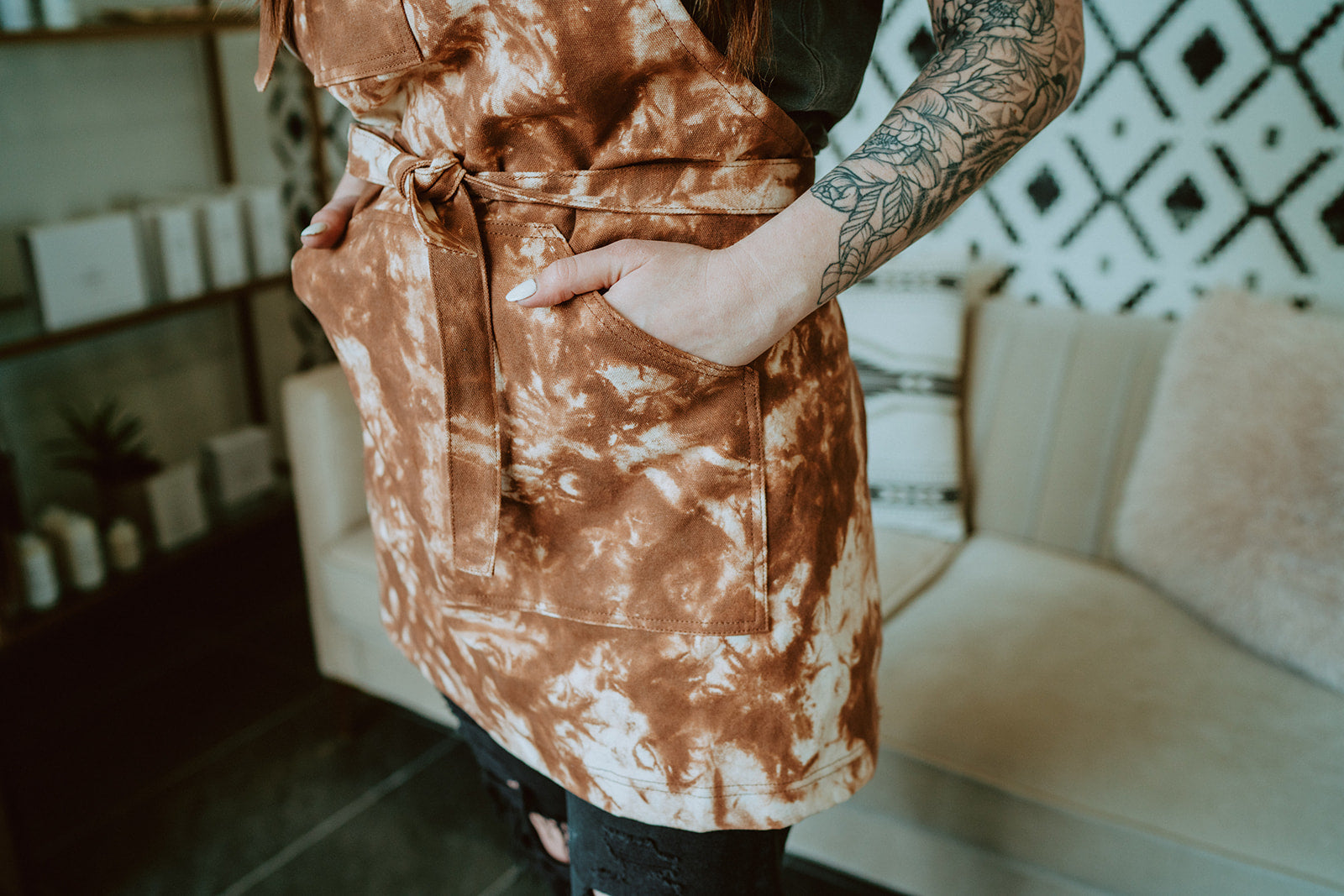
Patterned stretch denim combines function with visual interest. The Bohemian (paisley print) and The Bloom (floral) use the same stain-resistant, breathable cotton as solid colors, with designs that photograph well for social media and stand out in a busy salon environment. Both feature adjustable cross-back straps and reinforced tool pockets.
The Bottom Line
Japanese denim aprons for salon professionals are worth the investment only if the design solves the specific challenges of your work—not just the fabric origin story. Raw selvedge denim stains permanently under bleach exposure, requires months to break in, and typically uses neck-loop construction that creates ergonomic problems.
Stretch-denim aprons with stain-resistant treatment deliver the classic aesthetic without the maintenance burden. Cross-back straps and deep, reinforced pockets transform an apron from a fashion piece into a functional tool that supports your body and workflow.
For colorists who face daily chemical exposure, 100% bleach-proof vegan leather outperforms any denim—Japanese or domestic. The material science is simple: synthetic leather doesn't absorb liquid, so nothing stains. Over 10,000 salons, barbershops, and studios trust this approach because it works, shift after shift, for years.
FAQ
Do Japanese denim aprons hold up better than American-made aprons for salon use?
Fabric country of origin matters less than material treatment and construction quality. Japanese denim excels in raw-denim applications for aesthetic fade development, but untreated denim stains permanently when exposed to bleach, developer, or toner—common in salon work. American-made stretch denim with stain-resistant treatment and cross-back ergonomics typically outperforms imported raw denim for professional hairstylist and colorist use.
How do I clean a Japanese denim apron without ruining the fade?
If you're committed to preserving raw Japanese denim patina, hand-wash in cold water with mild detergent every 10–15 wears, air-dry flat, and never use bleach or hot water. That said, this maintenance routine isn't practical for salon professionals who need clean aprons daily. Stretch-denim aprons designed for professional use machine-wash and tumble-dry without special care, making them more sustainable for high-frequency cleaning.
Are cross-back aprons really more comfortable than neck-loop styles?
Yes—biomechanically, cross-back aprons distribute weight across the shoulders and upper back (trapezius and rhomboid muscles), eliminating the pressure point neck-loop styles create at the base of the skull. For professionals wearing aprons 6–10 hours daily, this prevents tension headaches, neck pain, and upper-back fatigue. The difference becomes obvious within the first full shift.
What apron material actually resists bleach and color stains?
100% bleach-proof vegan leather is the only material where bleach, developer, toner, and permanent color wipe off completely without staining. Treated denim resists stains better than untreated fabric, but absorption still occurs—most stains wash out, though some may set with repeated exposure. For colorists working with chemicals daily, vegan leather eliminates stain anxiety entirely.
Explore the full collection at J. Clark Designed.
```

Leave a comment
This site is protected by hCaptcha and the hCaptcha Privacy Policy and Terms of Service apply.