
Are leather aprons better than canvas for tattoo artists?
Quick Answer: Leather aprons outperform canvas for tattoo artists in every measurable way. Canvas absorbs ink, blood, and cleaning agents—creating permanent stains and bacterial breeding grounds—while 100% bleach-proof vegan leather wipes completely clean in seconds and never absorbs anything. For a profession where bodily fluids, color pigments, and disinfectants hit your apron daily, the wipe-clean surface of leather isn't a luxury—it's hygiene you can verify with your eyes.
Why canvas fails tattoo artists within months
Canvas aprons feel substantial when new. The weight suggests durability. Then the first ink spill happens.
Canvas is woven cotton fiber—essentially fabric—which means it absorbs rather than repels. When tattoo ink (especially black, which stains aggressively) contacts canvas, it migrates into the weave. Machine washing fades the stain but never removes it. After three months of client work, most canvas aprons carry a history of every pigment, antiseptic spray, and petroleum-based ointment they've touched. That visible residue isn't just cosmetic—organic material trapped in fabric fibers supports bacterial growth between cleanings.
The second structural problem: canvas aprons for tattoo artists typically use neck straps. An 8-hour day bent over a client's arm or ribcage—with tools, ink bottles, and the apron's own weight pulling from your cervical spine—creates measurable strain. Trapezius tightness and cervical headaches are occupational hazards tattoo artists accept as normal. They shouldn't be.

The material science: why leather vs canvas aprons for tattoo artists isn't even close
100% vegan leather (polyurethane bonded to a textile backing) is engineered to be non-porous. Liquids sit on the surface in beads rather than soaking in. When tattoo ink, blood, or Green Soap hits leather, you wipe it away with a disinfectant cloth—no trace remains.
The bleach-proof leather J. Clark Designed uses takes this further. Standard vegan leather can crack or discolor when exposed to bleach, acetone, or harsh salon disinfectants. Bleach-proof formulations are chemically stable even under repeated exposure to 10% sodium hypochlorite (standard tattoo shop disinfectant concentration). That means you can spray your apron with the same Cavicide or Barbicide solution you use on your stations, wipe it down, and the surface remains intact—no cracking, peeling, or color shift.
| Factor | Canvas | 100% Bleach-Proof Vegan Leather |
|---|---|---|
| Ink absorption | High—permanent staining after 2–3 spills | Zero—wipes clean instantly |
| Blood/fluid cleanup | Requires hot water wash; residue remains in fibers | Surface wipe with disinfectant—complete removal |
| Disinfectant compatibility | Fades color; fabric degrades with repeated bleach exposure | Bleach-proof—spray Cavicide/Barbicide directly on surface |
| Bacterial risk | Organic material trapped in weave between washes | Non-porous surface—no absorption, minimal bacterial harbor |
| Professional appearance | Visible staining after 3–6 months | Maintains clean appearance for years |
| Weight distribution | Typically neck-strap design—cervical strain | Cross-back straps available—load across shoulders/upper back |
Cross-back straps: solving the neck strain tattoo artists ignore
Tattoo work demands sustained forward head posture. You're already loading your cervical spine asymmetrically for hours. Adding a neck-strap apron—especially one heavy enough to hold tools—compounds that strain with a constant downward pull at C7.
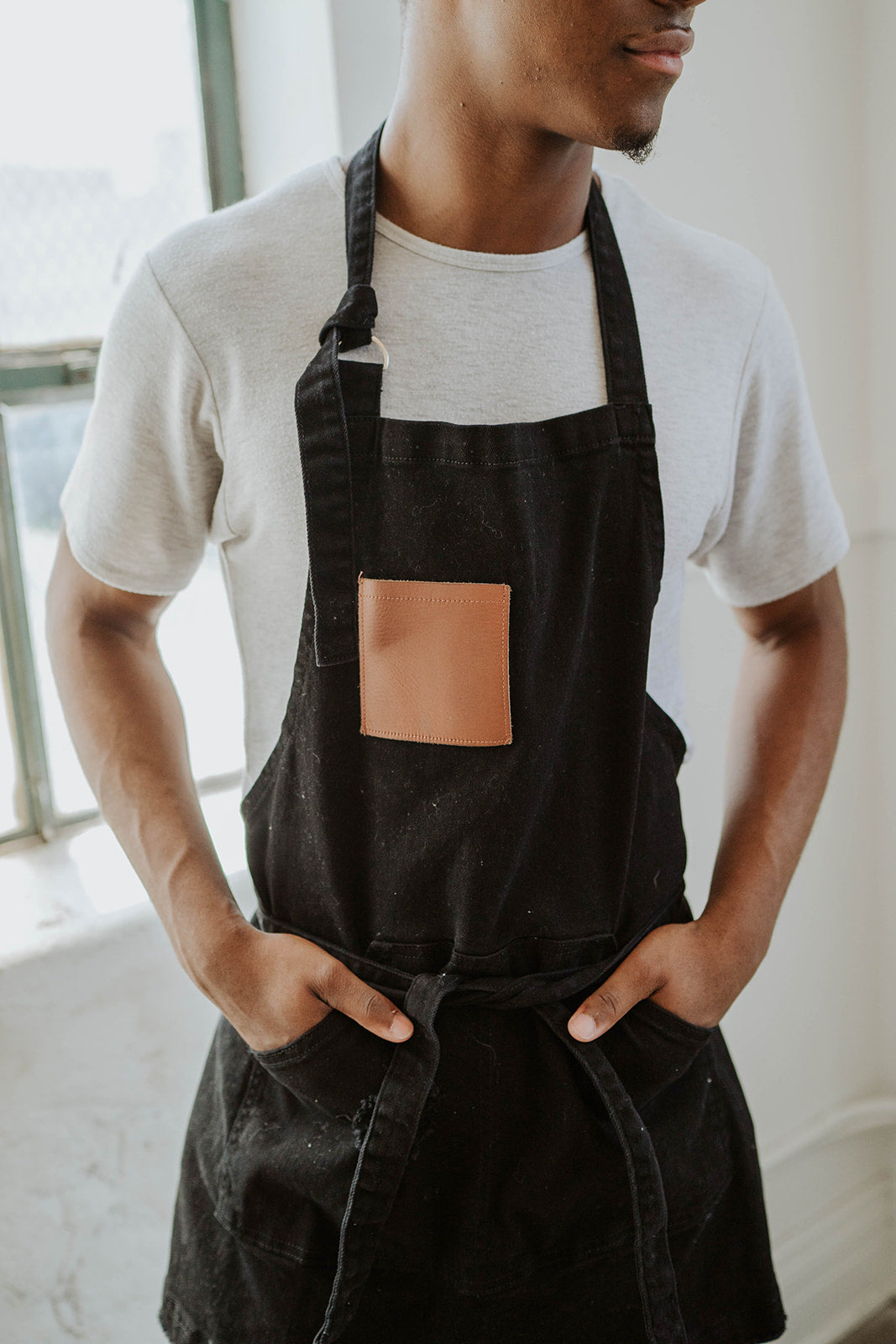
Cross-back apron designs route the straps over your shoulders and cross between your shoulder blades, distributing weight across the trapezius and rhomboids (muscle groups built to carry load) instead of hanging from your neck. The difference is immediate: your head stays in a more neutral position, and end-of-day neck tightness decreases noticeably within the first week.
J. Clark Designed's adjustable cross-back system uses reinforced straps that customize to your torso length and shoulder width. One size genuinely fits all—from a 5'2" artist to a 6'4" artist—because the geometry adjusts rather than relying on generic sizing. If you outfit a multi-artist shop, you buy one apron style and everyone adjusts their own fit.

Tool pockets that actually hold what tattoo artists carry
Cheap aprons treat pockets as an afterthought—shallow, unlined, placed wherever fabric was left over. Professional tool pockets are engineered with specific dimensions and reinforced stitching.
J. Clark Designed aprons feature deep front pockets sized for the tools tattoo artists actually use:
- Rotary and coil machines: Pocket depth (8+ inches) prevents your machine from tipping out when you bend forward over a client.
- Grip tubes and cartridge needles: Reinforced side pockets keep sterile packaged needles separated and accessible without fumbling.
- Phones and tablets: Modern artists reference stencil images and design photos constantly—internal zippered pockets protect devices from ink and disinfectant spray.
- Disposable gloves: Quick-access side pocket means you're not walking to the station every time you re-glove between clients.
The pocket backing on leather aprons is double-reinforced at stress points. Canvas pockets tear at the bottom corners after repeated heavy tool loading. Leather-backed pockets distribute weight across a broader surface area and don't degrade under the mechanical stress of pulling a machine in and out forty times a day.
Hygiene standards and client perception
Health departments don't regulate aprons the way they do autoclaves and needle disposal, but client perception of cleanliness is absolute. A visibly stained canvas apron—even if you washed it last night—signals poor hygiene to a client who's about to let you puncture their skin 3,000 times per minute.
Leather aprons for tattoo artists communicate professionalism because they look clean. No ghost stains, no discoloration, no frayed edges. When a client sits in your chair and sees a pristine work surface and a pristine apron, their confidence in your sterile protocol increases unconsciously. That confidence translates to better sitting behavior, more referrals, and higher tips.
Between clients, spray your leather apron with Madacide or your preferred EPA-registered disinfectant, wipe it down, and it's reset. The entire process takes fifteen seconds. Canvas requires you to either ignore the new stains until your laundry day or keep backup aprons in rotation—neither is sustainable in a high-volume shop.

Durability and cost-per-year: the real leather vs canvas comparison
Canvas aprons run $25–$45. Bleach-proof vegan leather aprons run $99. On first purchase, canvas looks like the budget choice.
Run the numbers over two years:
- Canvas: Stains permanently within 3–4 months. Most artists replace every 6–9 months (faster if client-facing appearance matters). That's 3 aprons over two years = $75–$135, plus laundry costs and the friction of remembering to wash them.
- Bleach-proof leather: Lasts 3–5+ years with daily professional use. One $99 purchase covers the same period, with zero laundry and zero replacement shopping.
Cost per year: canvas averages $37.50–$67.50. Leather averages $20–$33. Leather is cheaper—and you never spend a Saturday realizing your work apron is in the wash and you open in an hour.
Which leather apron for tattoo artists works best
For black-and-grey specialists: Full Black Leather
The Full Black Leather is 100% bleach-proof vegan leather—no fabric panels, no denim accents. Black ink beads on the surface and wipes away with zero absorption. The monochrome aesthetic matches the black-and-grey tattoo tradition, and the cross-back straps keep your neck free during long portrait sessions.
For color-heavy work: Cocoa Brown Leather
The Cocoa Brown Leather uses the same bleach-proof material as the black but shows even less visible residue from color pigments (reds, yellows, and greens sometimes leave faint temporary marks on black leather before wiping away—they're invisible on brown). If you run a lot of neo-traditional or new-school color work, the brown hides the momentary ghost marks better.
For shops outfitting multiple artists: Any J. Clark cross-back style
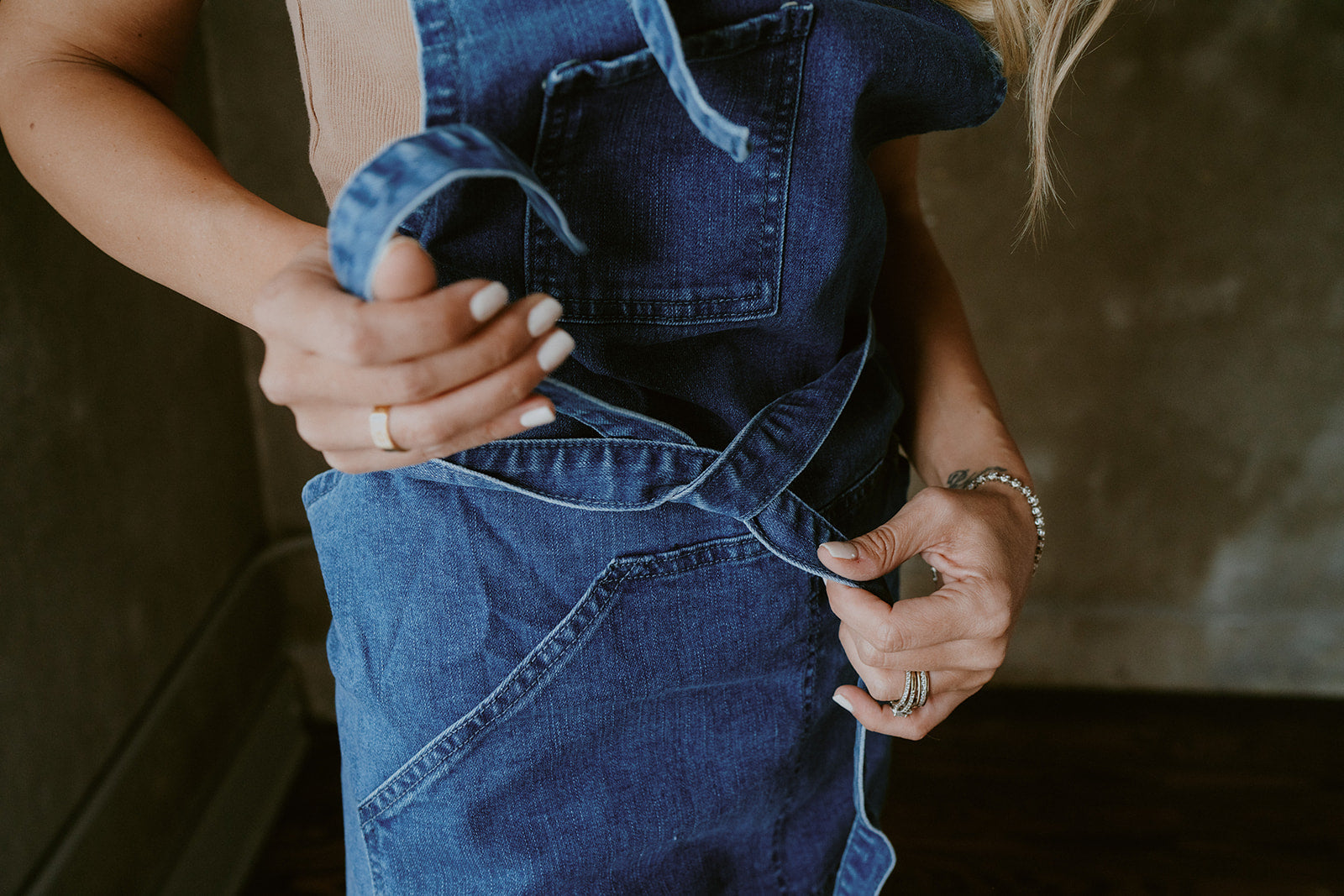
Every J. Clark Designed apron uses the same adjustable one-size-fits-all geometry. Whether you're ordering leather or stretch denim styles, you're not managing a size chart or asking artists their measurements. Order the style that fits your shop aesthetic, and each artist adjusts their own straps. This eliminates sizing errors and simplifies inventory.
The Bottom Line
Canvas aprons absorb ink and fluids, stain permanently, and hang from your neck—three problems that matter every single shift. Leather aprons wipe clean in seconds, never absorb anything, and distribute weight properly with cross-back straps. The material difference isn't subjective—it's surface chemistry. Leather is non-porous; canvas is woven fiber. One repels, one absorbs.
For tattoo artists working in environments where blood, ink, and disinfectants are daily realities, a bleach-proof vegan leather apron is the only material that maintains both hygiene and professional appearance long-term. The upfront cost is higher. The cost-per-year is lower. And you'll never stand in front of a client while wearing visible stains from last week's session.
FAQ
Do leather aprons get hot during long tattoo sessions?
No. Modern vegan leather is thermally neutral—it doesn't trap heat the way some people assume. Breathability isn't relevant because aprons don't cover large skin areas; they block your torso and thighs from splatter. Artists report zero temperature difference between leather and canvas during 6–8 hour sessions.
Can I put a leather tattoo apron in the washing machine?
You don't need to. Bleach-proof leather wipes clean with disinfectant spray and a cloth—no washing required. If you spill something particularly heavy, rinse the surface under a faucet and towel dry. Machine washing isn't recommended because agitation and heat can degrade the backing fabric over time, but surface cleaning is faster and more effective anyway.
Will tattoo ink permanently stain vegan leather like it stains canvas?
No. Tattoo ink sits on the surface of vegan leather as beads. Wipe it within a few minutes and there's zero residue. Even if ink dries on the surface, a damp cloth with isopropyl alcohol or disinfectant removes it completely. Canvas absorbs ink into the fiber weave, which is why canvas stains are permanent—leather's non-porous surface prevents that absorption entirely.
Are cross-back aprons better than neck-strap aprons for tattoo artists?
Yes, measurably. Cross-back designs distribute weight across your shoulders and upper back instead of hanging from your cervical spine. Tattoo artists already spend hours in forward head posture; adding neck-strap weight increases trapezius tension and end-of-day headaches. Cross-back straps eliminate that load from your neck entirely, which reduces fatigue and long-term postural strain.
Explore the full collection at J. Clark Designed.
```


Leave a comment
This site is protected by hCaptcha and the hCaptcha Privacy Policy and Terms of Service apply.