
Are waxed canvas aprons good for bartenders and mixologists?
Quick Answer: Waxed canvas aprons for bartenders offer excellent water resistance and a classic aesthetic, but they stain permanently from citrus oils, red wine, and sugar syrups, require frequent re-waxing, feel stiff in hot kitchens, and trap odors. For bartenders and mixologists who need true stain resistance and all-day comfort, 100% organic cotton stretch denim or 100% bleach-proof vegan leather aprons outperform waxed canvas in every practical measure—stains wipe off in seconds, they're machine washable, and cross-back straps eliminate neck strain during double shifts.
Why bartenders gravitate to waxed canvas—and why most regret it
Waxed canvas aprons look incredible. The matte finish, the heritage workwear vibe, the way water beads off during the first few weeks—it's easy to see the appeal, especially in craft cocktail bars where presentation matters.
But waxed canvas has a fatal flaw for bar work: the wax coating makes the fabric non-absorbent, so stains sit on the surface and set permanently. Citrus oils from muddled limes bond with the wax. Grenadine, red wine, and bitters soak into the weave beneath the coating. Within a month, most waxed canvas aprons look like a Jackson Pollock painting—and no amount of scrubbing brings them back.
You can't machine wash waxed canvas without stripping the coating. You can't bleach it. Re-waxing every 4–6 weeks is a messy, time-consuming ritual that never fully restores the original finish. And after six months of nightly service, the high-wear areas—waist ties, chest, pocket edges—look visibly worn and discolored.

The three hidden costs of waxed canvas for bar professionals
Beyond the staining issue, waxed canvas creates practical problems that compound over time:
- Heat retention: The wax coating creates a vapor barrier—your torso stays damp with sweat during Friday night rushes, and the fabric never breathes the way untreated cotton or leather does.
- Odor absorption: Because you can't machine wash it, waxed canvas traps the smell of spilled beer, citrus oils, and kitchen grease. After a few weeks, the apron carries yesterday's service into today's shift.
- Stiffness and bulk: Waxed canvas doesn't soften with age—it cracks at flex points and stays rigid, making it uncomfortable for bartenders who bend, reach, and move constantly. The thick material also adds weight, which matters during 10-hour shifts.
If you're paying $80–$120 for a waxed canvas apron and replacing it every 8–12 months because it looks trashed, you're spending more per year than you would on a single high-quality denim or leather apron that lasts 3+ years.
What actually works: materials bartenders trust for the long haul
The best apron for bartenders and mixologists does three things waxed canvas can't: resists stains at the molecular level, cleans in seconds between shifts, and stays comfortable during back-to-back doubles.
Here's how the materials compare:
| Material | Stain Resistance | Cleanability | Breathability | Durability |
|---|---|---|---|---|
| Waxed Canvas | Poor — permanent stains from oils, citrus, wine | Spot-clean only; no machine wash | Low — traps heat and moisture | Medium — cracks at flex points, requires re-waxing |
| 100% Organic Cotton Stretch Denim | Excellent — stain-resistant finish repels liquids | Machine washable, tumble dry low | High — natural cotton breathes, stretch moves with you | High — softens with age, reinforced stress points |
| 100% Bleach-Proof Vegan Leather | Superior — oils, wine, citrus wipe off instantly | Wipe clean in seconds; bleach and toner safe | Medium — non-porous but lightweight | Very High — near-indestructible, no fabric to stain or tear |
The data is clear: organic cotton stretch denim and bleach-proof vegan leather outperform waxed canvas in every category that matters for daily bar service. You get better stain resistance, easier cleaning, superior comfort, and longer lifespan—all at a comparable or lower cost per year of use.

Why cross-back straps matter more than material for bartenders
Material gets the attention, but strap design determines whether you finish your shift with a sore neck or fresh shoulders. Traditional neck-loop aprons hang all the weight—fabric, tools, the apron's own mass—from your cervical spine. After eight hours of shaking cocktails, cutting garnishes, and restocking, that pressure compounds into tension headaches and upper-back pain.
Cross-back aprons distribute weight across the shoulders and upper back, engaging larger muscle groups designed to carry load. Bartenders who switch from neck-loop to cross-back report noticeably less fatigue and neck strain, especially during weekend doubles and holiday rushes.
J. Clark Designed's signature cross-back system uses adjustable straps that fit men and women across all body types—one size genuinely fits all, which makes outfitting a full bar team simple. The straps stay put without digging in, and the apron moves with you when you're reaching for top-shelf bottles or bending to restock the beer cooler.
Apron recommendations for bartenders: match the material to your bar
The right apron depends on your bar's volume, aesthetic, and the kind of drinks you're making. Here's what works:
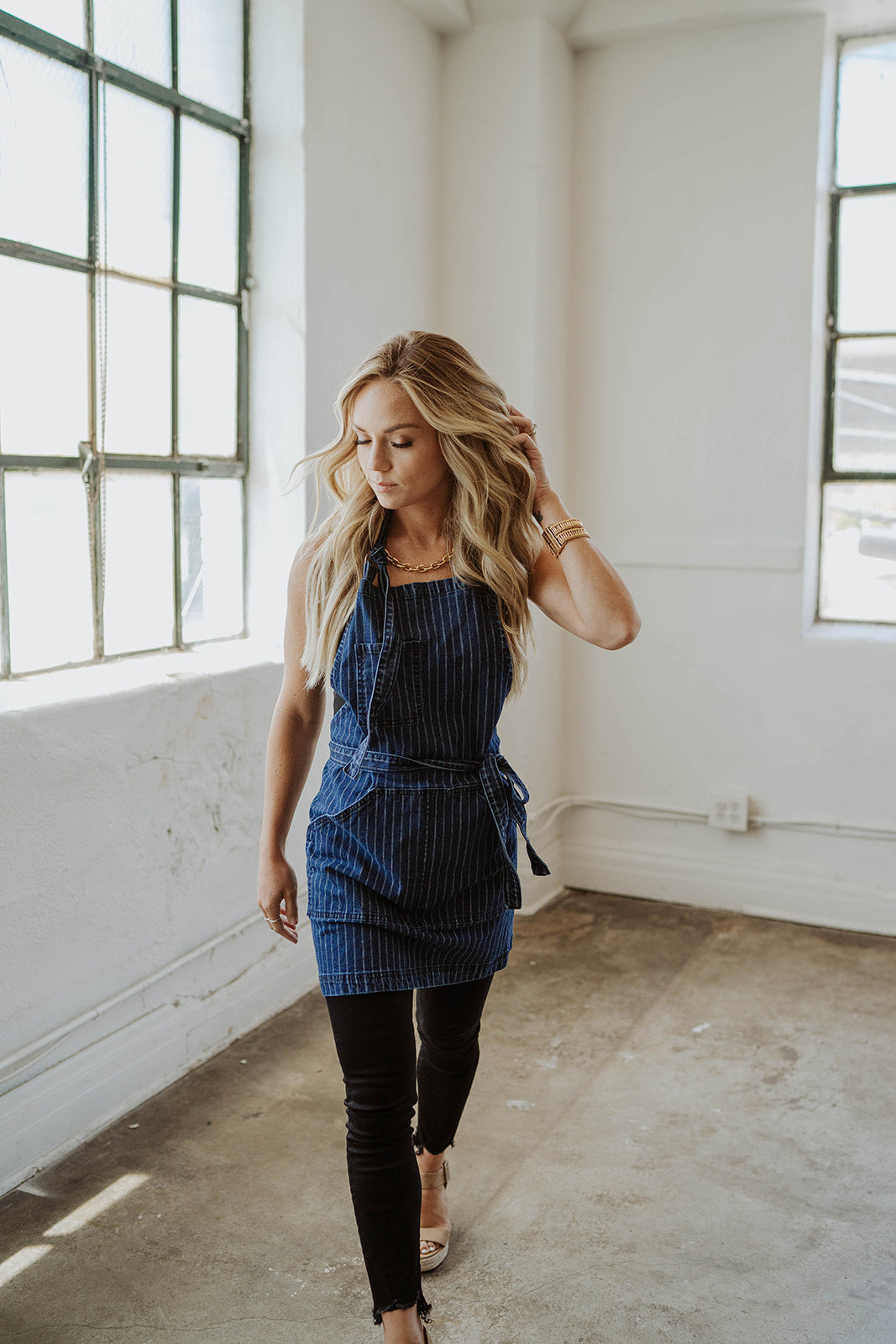
For craft cocktail bars and mixology-focused venues: Navy Pinstripe (stretch denim)
The Navy Pinstripe ($69) delivers a sharp, tailored look that fits upscale cocktail programs without sacrificing function. The 100% organic cotton stretch denim is stain-resistant, machine washable, and softens with every wash. Deep front pockets hold jiggers, bar spoons, a wine key, and your phone. The cross-back straps keep you comfortable through tasting menus and private events.
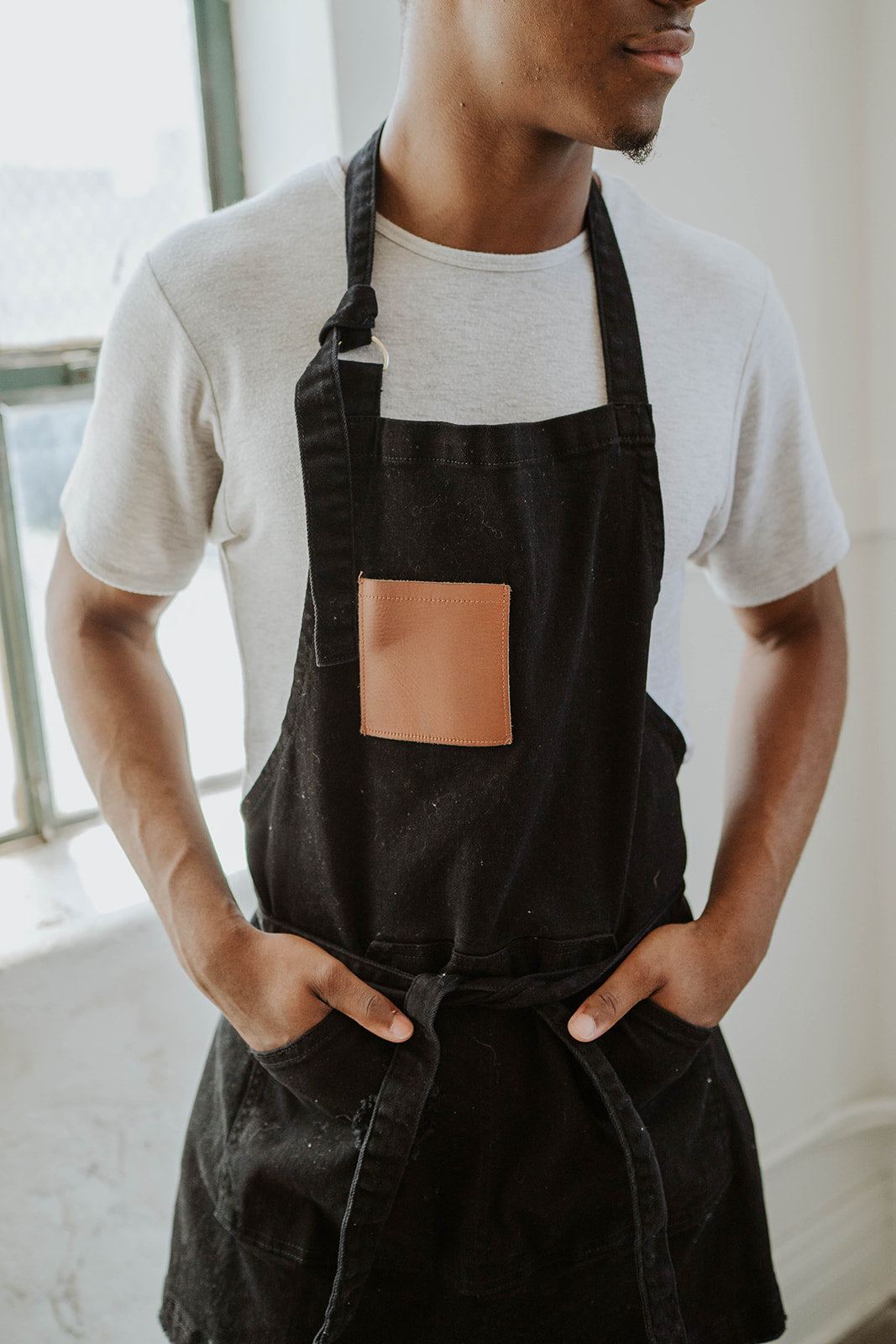
For high-volume bars and clubs: Full Black Leather (100% bleach-proof vegan leather)
The Full Black Leather ($99) is the tank of bar aprons. Spilled red wine, citrus juice, grenadine, bitters—everything wipes off in seconds with a damp bar towel. No stains, ever. The non-porous vegan leather won't absorb odors, and it looks identical on day 500 as it did on day one. If you're slinging 300+ drinks a night and don't have time for laundry between shifts, this is the material.
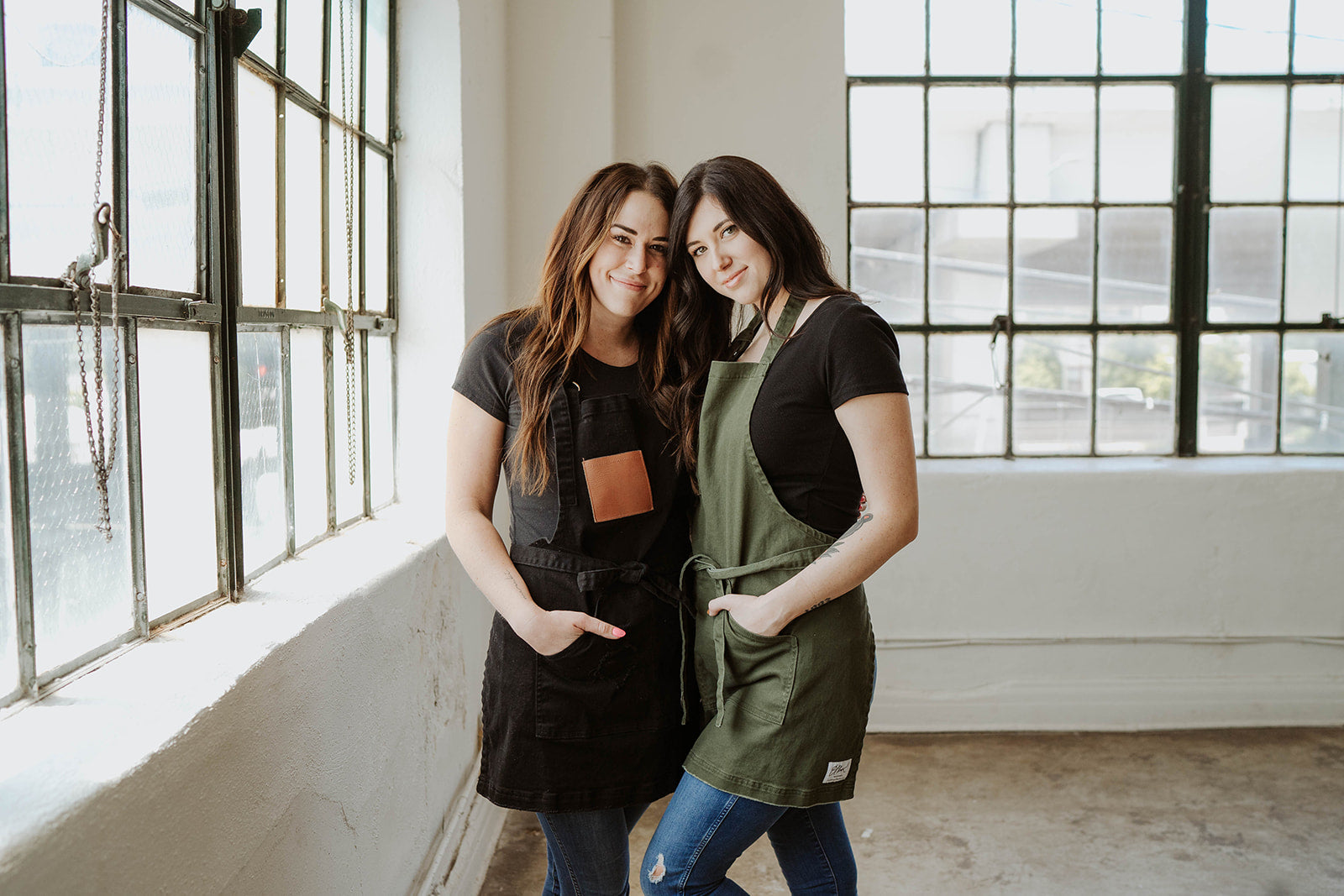
For casual brewpubs and taprooms: Olive Green or Black Acid Washed Denim
The Olive Green and Black Acid Washed Denim aprons ($59–$69) bring a relaxed, workwear-inspired vibe that fits brewpub culture. Both use the same stain-resistant organic cotton denim, reinforced pockets, and cross-back comfort. Machine wash after every shift, tumble dry low, and they're ready to go.

The real cost comparison: waxed canvas vs. denim vs. leather
Let's do the math on three years of bar service:
- Waxed canvas apron ($100): Needs replacement every 10–12 months due to permanent staining and wear. Three aprons over three years = $300. Add re-waxing supplies (~$15 every 6 weeks) = $390 total.
- Stretch denim apron ($69): Lasts 3+ years with proper care (machine wash, tumble dry low). One apron over three years = $69 total.
- Bleach-proof vegan leather apron ($99): Lasts 5+ years with minimal maintenance (wipe clean). One apron over three years = $99 total.
The "premium" waxed canvas option costs you 4–5× more over the same period—and delivers worse performance in every measurable category. Denim and leather aprons aren't just better for bartenders; they're smarter investments.
The Bottom Line
Waxed canvas aprons for bartenders look great in product photos but fail in real-world bar service. Permanent stains from citrus oils and wine, constant re-waxing, heat retention, and odor absorption make them impractical for professionals who work doubles and need gear that performs shift after shift.
100% organic cotton stretch denim and 100% bleach-proof vegan leather aprons solve every problem waxed canvas creates: true stain resistance, machine washability or wipe-clean convenience, all-day breathability, and cross-back ergonomics that eliminate neck strain. You'll spend less per year, look more polished, and finish your shifts more comfortable.
The professionals who've made the switch—10,000+ bartenders, baristas, and restaurant teams—report the same thing: they wish they'd skipped waxed canvas from the start.
FAQ
Can you machine wash a waxed canvas apron?
No—machine washing strips the wax coating, leaving you with plain canvas that stains immediately and loses all water resistance. Waxed canvas requires spot-cleaning with a damp cloth and periodic re-waxing, which makes it impractical for bartenders who need clean aprons for every shift. Organic cotton stretch denim aprons are fully machine washable and tumble-dry safe, and 100% bleach-proof vegan leather aprons wipe clean in seconds.
What apron material is best for bartenders who work with citrus and red wine?
100% bleach-proof vegan leather is the gold standard for bartenders working with high-stain ingredients—citrus oils, red wine, grenadine, and bitters wipe off instantly without leaving marks. Stain-resistant organic cotton stretch denim is the next-best option, offering excellent repellency and machine washability. Waxed canvas permanently absorbs oils and pigments, making it the worst choice for these ingredients.
Do cross-back aprons really reduce neck pain for bartenders?
Yes. Cross-back aprons distribute weight across the shoulders and upper back instead of hanging it from the neck, which eliminates the cervical spine pressure that causes tension headaches and upper-back pain during long shifts. Bartenders who switch from traditional neck-loop aprons to cross-back designs report measurably less fatigue, especially during doubles and high-volume service.
How long does a good bartender apron last?
A well-constructed organic cotton stretch denim apron lasts 3+ years with regular machine washing. A 100% bleach-proof vegan leather apron lasts 5+ years with minimal maintenance (wipe-clean only). Waxed canvas aprons typically need replacement every 10–12 months due to permanent staining, wax degradation, and fabric wear at flex points—making them the most expensive option over time despite the premium price tag.
Explore the full collection at J. Clark Designed.
```

Leave a comment
This site is protected by hCaptcha and the hCaptcha Privacy Policy and Terms of Service apply.