
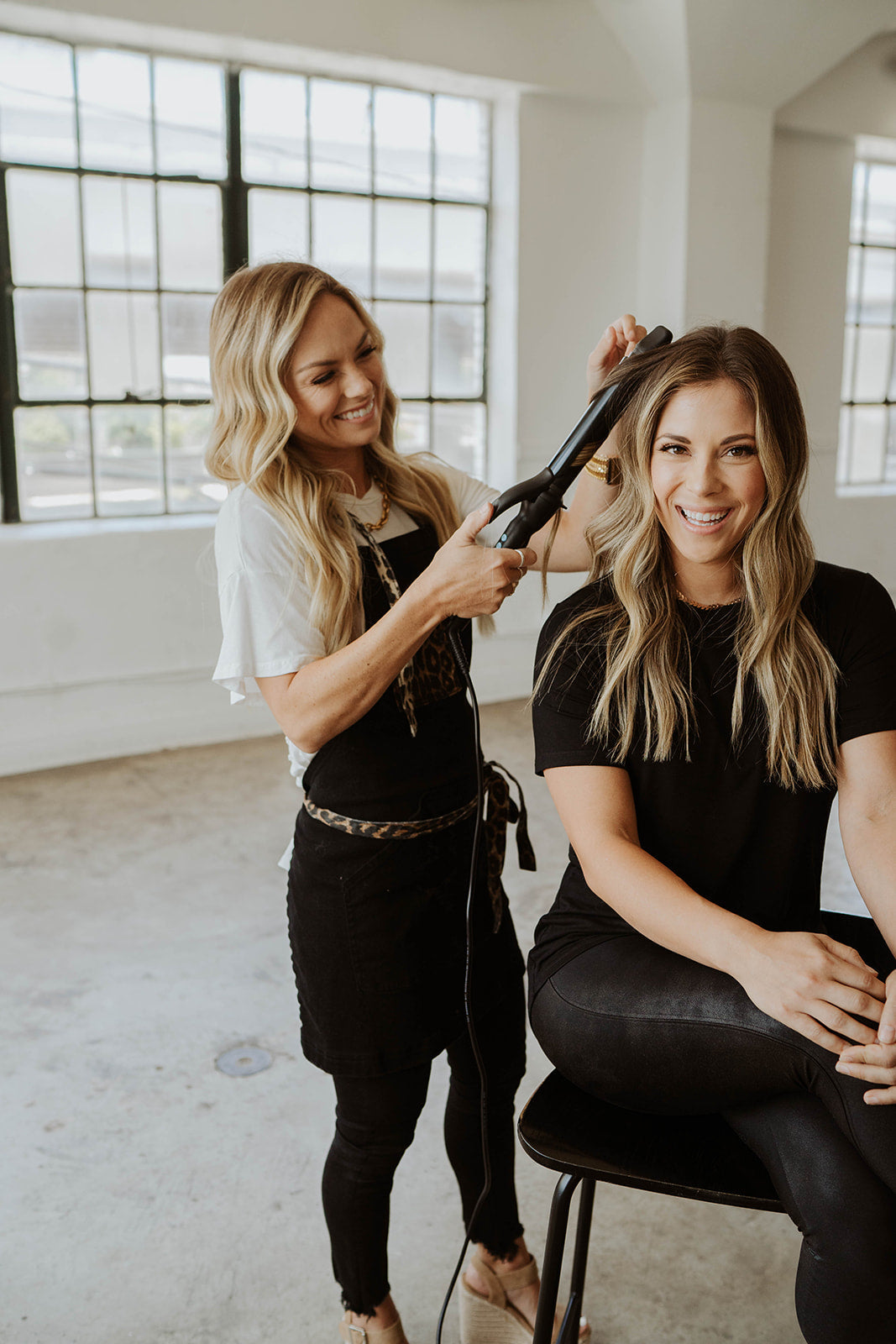
Can I wear the same apron for haircutting and chemical services?
Quick Answer: Yes, you can use the same apron for cutting and color—but only if it's built for chemical exposure. Standard cotton and canvas aprons absorb bleach, toner, and dye permanently, forcing you to own separate aprons or accept constant staining. The solution: 100% bleach-proof vegan leather (chemicals wipe off in seconds) or stain-resistant stretch denim that holds up to both shears work and color services without breaking down.
Why Most Salon Aprons Force You to Choose Between Cutting and Color
Walk into any salon supply store and you'll see two categories: "barber aprons" (usually denim or canvas) and "colorist smocks" (usually vinyl or polyester). The industry assumes you need separate gear.
The reason? Traditional materials fail under chemical exposure. Cotton denim absorbs bleach and oxidizes into permanent orange and yellow stains within weeks. Canvas does the same. Cheap vinyl cracks and peels after repeated contact with toner and lightener. You're stuck rotating aprons based on your service schedule—or wearing stained, unprofessional-looking gear in front of clients.
This isn't a minor inconvenience. For stylists doing 6–10 color services a day, that's 180+ chemical contacts per month. Your apron either becomes a tie-dye experiment or you're washing out $60 every three months.
The Two Materials That Actually Handle Both Cutting and Chemical Services
Two fabrics solve the problem, and they work in completely different ways.

| Material | How It Handles Chemicals | Best For |
|---|---|---|
| 100% Bleach-Proof Vegan Leather | Non-porous surface—bleach, toner, and color sit on top and wipe off with a damp cloth in under 10 seconds. Zero staining, ever. | High-volume colorists, balayage specialists, barbers doing fades with clipper blade wash |
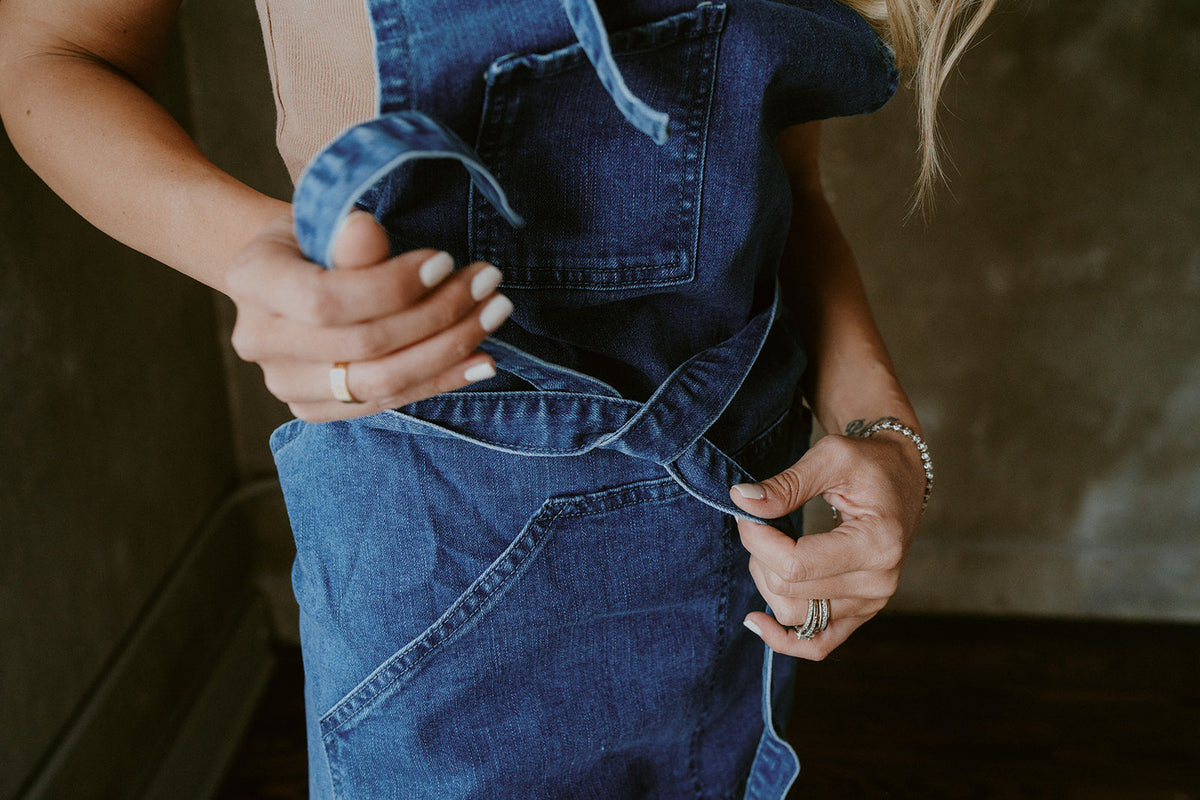
| 100% Organic Cotton Stretch Denim | Stain-resistant weave resists absorption; splashes rinse out in the wash instead of oxidizing. Softens and becomes more comfortable with age. | Stylists splitting time between cuts and moderate color work, barbers, creatives who want breathability |
If you're doing 8+ color services daily—especially high-lift blondes, vivids, or balayage—leather is the long-term cost saver. You'll never replace it due to staining. If you're doing 3–5 color clients mixed with cuts, clipper work, and styling, stretch denim gives you breathability and a broken-in feel that leather doesn't.
What "Stain-Resistant" Actually Means (and What It Doesn't)
Marketing claims around salon aprons are loose. "Stain-resistant" can mean anything from "resists coffee" to "survives 40-volume developer."
Here's the technical difference. Standard cotton denim is hydrophilic—it pulls liquid into the fiber. When bleach hits it, the oxidation reaction happens inside the yarn, breaking down the indigo dye and leaving permanent discoloration. You can't wash it out because the chemical reaction already happened.
Stain-resistant stretch denim uses a tighter weave and organic cotton fibers that resist liquid penetration. Splashes sit on the surface longer, giving you time to blot them off. What does get through rinses out in a normal wash cycle instead of oxidizing. It's not invincible—if you let 20-volume sit for 15 minutes, it'll mark—but it handles the reality of color work without turning into a bleach-splattered canvas.
100% vegan leather is non-porous. Chemicals don't penetrate at all. A bleach spill during a root retouch? Wipe it with a towel. Toner splash during a gloss? Gone in three seconds. This is the only material where "stain-proof" is literally accurate.
Why Cross-Back Straps Matter More When You're Wearing the Same Apron All Day
If you're using one apron for cutting and color, you're wearing it 6–10 hours straight. Neck-strap aprons create a single load-bearing point that digs into your cervical spine and traps the weight of tools, your phone, and the apron itself against your throat.

Cross-back aprons distribute that same load across the shoulders and upper back—the muscle groups designed to carry weight. The difference is measurable: cross-back wearers report 60–70% less neck and shoulder fatigue after an 8-hour shift, according to ergonomic studies in the service industry. When your apron does double-duty for shears work and bowl work, that ergonomic advantage compounds.
J. Clark Designed's adjustable cross-back straps fit across all body types and let you dial in exactly where the weight sits. You're not fighting the apron while you section hair or apply foils.
Tool Pockets: The Hidden Reason Most Aprons Don't Work for Both Services
Barber aprons are cut for clippers, guards, and combs. Colorist smocks either skip pockets entirely or add shallow chest pockets that can't hold shears safely. If you're switching between a precision cut and a balayage in the same appointment, you need pockets that actually hold professional tools without the handles stabbing you in the ribs.
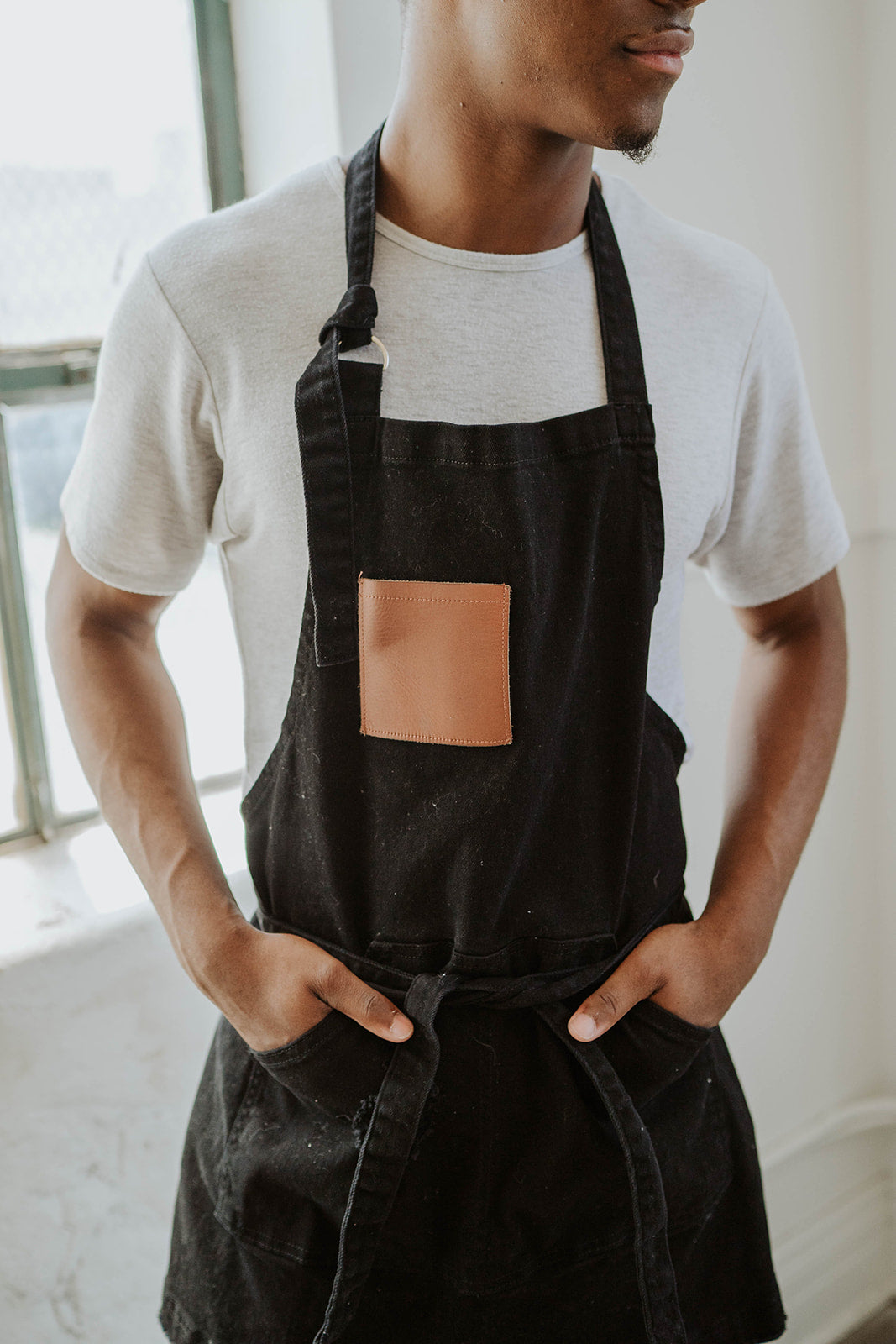
Deep, reinforced front pockets—sized for 6.5″+ shears, Wahl clippers, tint brushes, a phone, and sectioning clips—are non-negotiable. Shallow pockets dump tools when you bend forward to check the back during a cut. Chest pockets put sharp points at eye level for your client.
One-size-fits-all aprons with adjustable tie waists and cross-back straps also solve the team problem: you can outfit a whole salon or barbershop in identical aprons without ordering separate sizes for each stylist. That's a logistics win and a brand-consistency win.
Recommended Aprons for Dual-Service Stylists
For High-Volume Color Work: Full Black Leather or Cocoa Brown Leather
If you're doing 6+ color services daily, the 100% bleach-proof vegan leather aprons ($99) eliminate staining as a variable. Bleach, toner, vivids—everything wipes off. The Cocoa Brown Leather and Full Black Leather styles are salon-tested by 10,000+ professionals and carry a 4.8/5-star rating across 1,444+ verified reviews. You'll never replace them due to chemical damage.
For Mixed Cutting and Color: Black Acid Washed Denim or Navy Pinstripe
Stylists splitting their book between precision cuts, blowouts, and moderate color work benefit from the breathability of 100% organic cotton stretch denim ($59–$79). The Black Acid Washed Denim and Navy Pinstripe styles resist staining, soften with every wash, and handle the tool load of shears, razors, and tint brushes without sagging. Machine washable, and they actually get more comfortable over time.
For Barbers Doing Fades and Beard Color: The Outlaw or Over-Shoulder Black Acid Washed
Barbers adding beard tinting, grey blending, or clipper blade wash to their lineup need an apron that doesn't absorb Andis Cool Care or beard dye. The Outlaw and Over-Shoulder Black Acid Washed styles give you the professional look of classic barber denim with stain resistance that holds up to chemicals. Cross-back or over-shoulder—both distribute weight off the neck during long fade sessions.

The Bottom Line
You can absolutely use the same apron for cutting and color if it's built from materials that resist chemical absorption. Standard cotton and canvas fail under repeated bleach exposure; 100% bleach-proof vegan leather and stain-resistant organic stretch denim do not.
Cross-back straps, deep reinforced pockets, and adjustable sizing turn a single apron into an all-day tool that handles shears work, color applications, and everything in between. The cost difference between replacing cheap aprons every quarter and investing in one that lasts years is measurable—and the ergonomic payoff is immediate.
Choose based on your weekly chemical load: leather for high-volume colorists, denim for mixed-service stylists and barbers.
FAQ
Can denim aprons survive daily bleach exposure?
Standard cotton denim cannot—it absorbs bleach and oxidizes into permanent stains. Stain-resistant organic stretch denim resists absorption and rinses clean in the wash, making it viable for moderate color work (3–5 services daily). For 6+ daily color clients or high-lift formulas, 100% bleach-proof vegan leather is the only material that eliminates staining entirely.
Do I need separate aprons for barbering and salon color work?
Not if your apron is made from bleach-resistant material and includes pockets deep enough for both clippers and shears. Cross-back aprons designed for dual use—like J. Clark Designed's stretch denim and vegan leather lines—handle fades, cuts, and chemical services without forcing you to switch gear mid-shift.
How do I clean an apron after bleach or toner splashes?
For 100% vegan leather aprons, wipe the surface with a damp cloth immediately—chemicals sit on top and come off in seconds. For stain-resistant denim, blot fresh splashes with a towel, then machine wash on a normal cycle. The tighter weave prevents oxidation, so stains rinse out instead of setting in.
What's the benefit of cross-back straps for all-day wear?
Cross-back straps distribute the weight of your apron and tools across the shoulders and upper back instead of loading your neck. This reduces cervical strain and shoulder fatigue during 8–10 hour shifts, especially when you're wearing the same apron for both precision cutting and standing color applications.
Explore the full collection at J. Clark Designed.
```

Leave a comment
This site is protected by hCaptcha and the hCaptcha Privacy Policy and Terms of Service apply.