

Denim vs leather vs canvas aprons — a complete care and material guide
Understanding Professional Apron Materials
Your apron isn't just protective gear — it's a tool-carrying system that directly impacts your posture, efficiency, and how you move through your workspace. The material you choose determines everything from pocket integrity after 500+ washes to whether your leather shears cause premature wear on fabric fibers.
Most salon professionals cycle through 3-4 inferior aprons before understanding this: the upfront material choice matters more than price. A $35 canvas apron that sags after two months costs more than a $98 denim workhorse that performs flawlessly for three years. Let's break down what actually happens when these materials meet real salon conditions.
Organic Cotton Denim: The Daily Workhorse
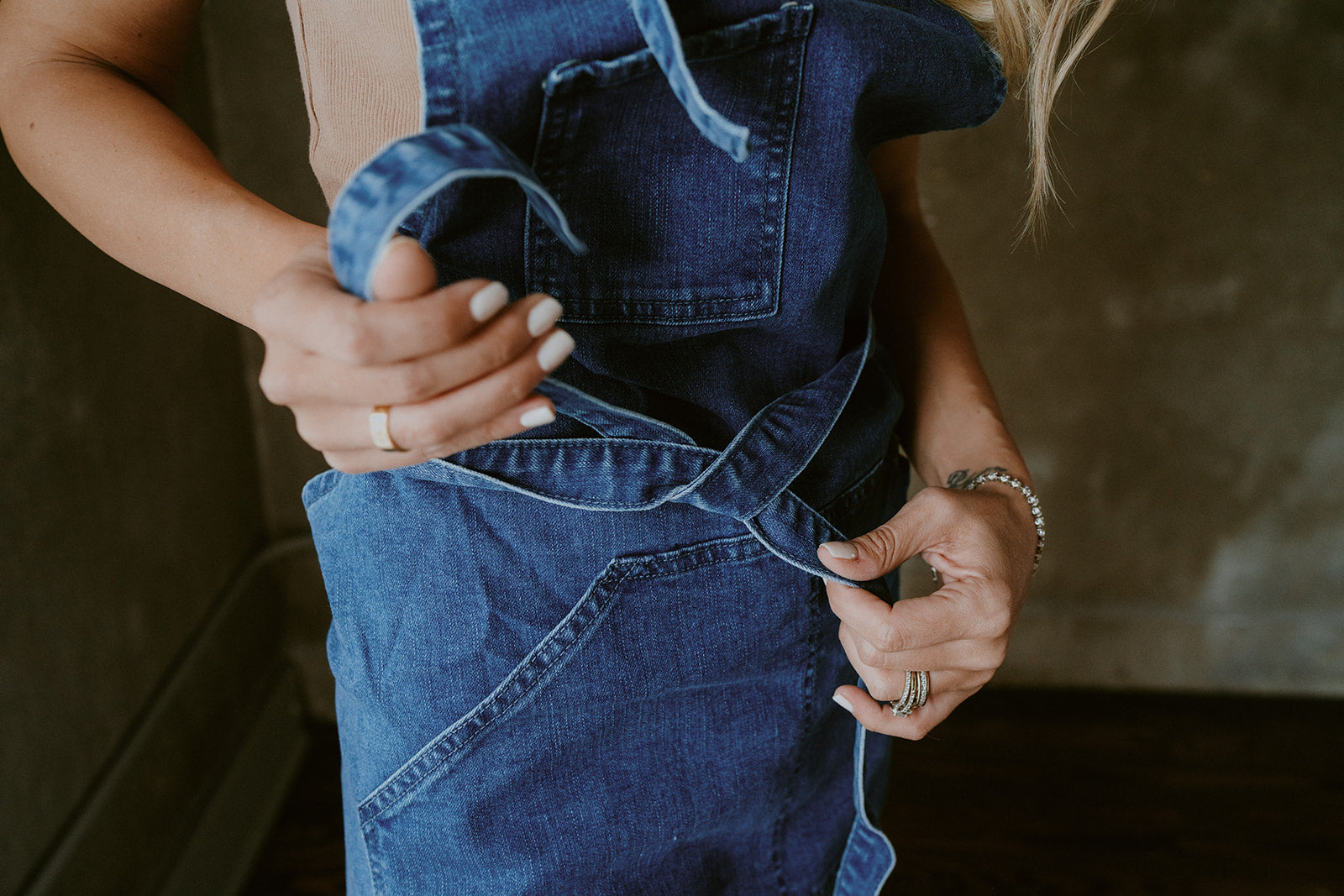
Organic cotton denim operates differently than the lightweight denim in your jeans. Professional-grade denim (10-12 oz weight) creates a tight twill weave that supports tool weight without stretching. Here's what that means practically:
- Pocket integrity: The diagonal weave structure distributes stress across multiple yarn intersections. When you pocket heavy shears or a full brush roll, the fabric flexes without creating permanent sag points.
- Breathability: Cotton fibers wick moisture away from your body. In a 90-degree salon with five blow-dryers running, this isn't luxury — it's survivable working conditions.
- Break-in period: New denim feels stiff for the first 3-5 wears. This isn't a flaw. The stiffness is structural sizing that washes out gradually, leaving softened fabric that still maintains its shape.

Washing Denim Aprons: What Actually Works
The Internet is full of precious laundry advice written by people who don't wear aprons 40 hours weekly. Here's what holds up under actual use:
Standard wash protocol: Cold water, gentle cycle, mild detergent. The cold water prevents indigo dye migration and fiber shrinkage. Avoid fabric softener — it coats fibers and reduces absorbency, which defeats the breathability advantage you're paying for.
Frequency: Wash after every 2-3 full workdays. Hair clippings, product residue, and skin oils accumulate in fabric weave. Letting this build up for a week creates bacterial growth and permanent odor that no amount of washing eliminates.
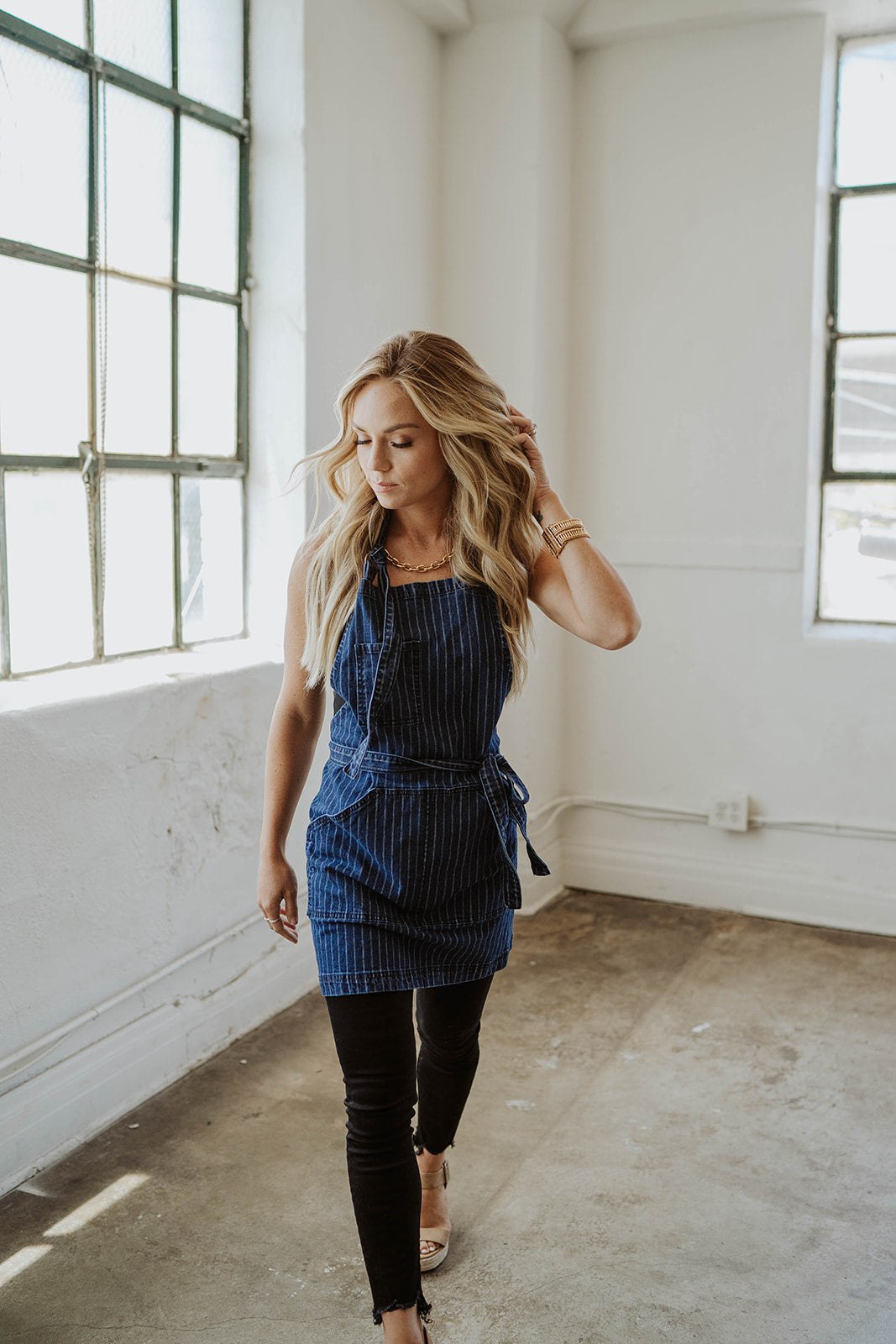
Drying method: Line dry or tumble on low. High heat sets wrinkles and accelerates fiber breakdown. The J. Clark Designed denim styles (Black & Leather, Navy Pinstripe, Denim) are pre-shrunk, but aggressive drying still causes incremental size changes over time.
Stain reality check: Bleach formulas, semi-permanent color, and some toners create oxidation stains that don't wash out. This is chemistry, not poor fabric quality. Pre-treat immediately with cold water and dish soap (which breaks down oil-based products better than laundry detergent).
Denim Lifespan Expectations
Professional-grade organic cotton denim maintains structural integrity for 500-800 wash cycles when properly cared for. Translation: 3-4 years of daily salon use. You'll see gradual softening and slight color fade, but pockets stay functional and straps remain secure. The fabric literally gets better — broken-in denim moves with your body without the board-stiff feel of month one.
Genuine Leather: Chemical-Resistant Durability
Leather aprons serve a different function than denim. The material choice isn't about aesthetics — it's about chemical resistance and structural rigidity that supports heavier tool loads without pocket deformation.

Full-grain leather (the outer layer of the hide with natural grain intact) develops a patina over 6-12 months of use. This isn't wear — it's character development from natural oils in your hands and atmospheric exposure. The leather actually becomes more supple while maintaining its structure.
Leather Care: Skip the Myths
Forget the elaborate conditioning routines suggested by leather goods forums. Professional apron leather doesn't need monthly spa treatments. Here's the actual maintenance schedule:
Daily cleaning: Wipe down with a barely damp cloth after your shift. This removes surface debris and product residue before it penetrates the leather. Don't saturate — leather swells when wet and can crack during drying.
Deep cleaning (monthly): Use saddle soap and a soft brush for stubborn buildup. Work in small circles, wipe away soap residue with a clean damp cloth, then air dry completely before next use. This typically takes 4-6 hours.
Conditioning (quarterly): Apply leather conditioner sparingly with a soft cloth. Let it absorb for 30 minutes, then buff away excess. Over-conditioning makes leather floppy and reduces its ability to hold shape under tool weight.
Chemical exposure: Leather resists most salon chemicals better than fabric. Barbicide, bleach formulas, and alcohol-based products bead on the surface rather than soaking through. Acetone and highly alkaline relaxers can damage the finish — wipe these immediately if splashed.
When Leather Makes Sense
Leather aprons excel in environments where chemical exposure is constant (barbershops using multiple disinfectants, bars with citrus and bitters, tattoo studios with ink cleanup). The material also suits professionals who carry heavier tool loads — leather pockets don't sag under the weight of clipper sets, full brush collections, or bartending jiggers.
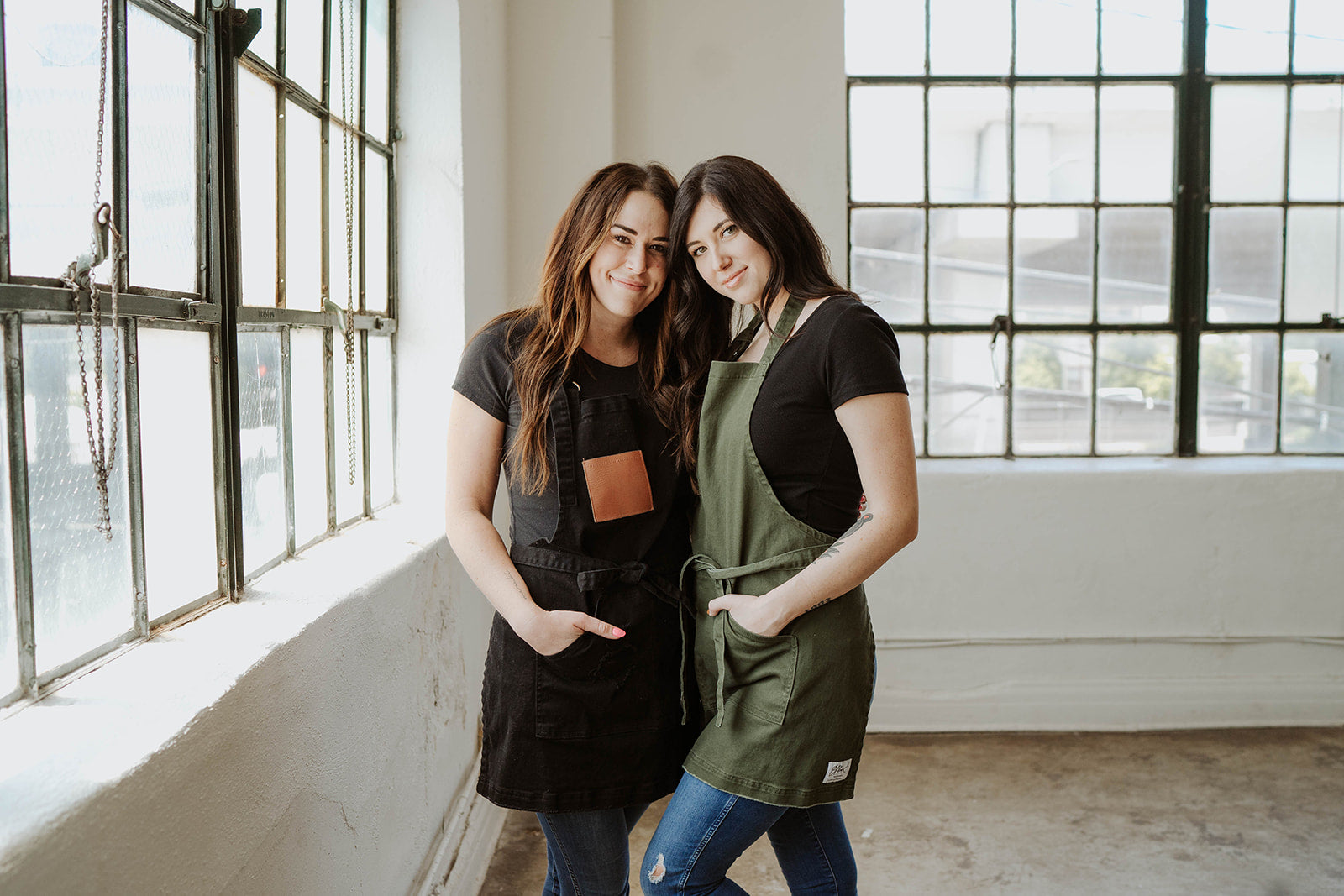
The J. Clark Designed Black & Leather style combines organic cotton denim as the main body with genuine leather accent pockets and straps. This hybrid approach gives you machine-washable breathability for the torso coverage while providing leather's durability exactly where tools create the most stress.

Canvas Aprons: Understanding the Limitations
Canvas (typically cotton duck cloth or synthetic blends) appears in most budget apron categories. The material costs less to produce, weighs less on the hanger, and allows for easy printing and embroidery. These advantages matter for catering events or cooking classes. They don't translate to professional salon environments.
Where Canvas Falls Short
Pocket structure: Canvas lacks the diagonal weave tension of denim. Pockets stretch out permanently after 30-60 days of heavy tool use. You'll notice shears sliding lower, combs migrating sideways, and the entire pocket bag sagging away from the apron body.
Durability under stress: The looser weave means individual threads bear more load at stress points (pocket corners, strap attachment points). Canvas aprons develop fraying and small tears at these locations much faster than denim alternatives.
Chemical absorption: Canvas is more porous than tight-weave denim. Hair color, bleach formulas, and styling products soak deeper into the fibers, creating permanent staining and odor retention that survives washing.
Professional appearance: Canvas wrinkles easily and maintains a casual, almost utilitarian look even when new. In client-facing roles where your appearance communicates attention to detail, this matters more than price savings.
When Canvas Works
Canvas makes sense for light-duty applications: florists who primarily need protection from water and soil, artists working with dry media, or educators who wear aprons intermittently. If you're carrying professional shears, working with chemicals daily, or wearing your apron 8+ hours consecutively, canvas won't provide adequate support or longevity.
The Weight Distribution Factor
Material choice directly impacts how your apron distributes tool weight across your body. This gets ignored in most apron discussions, but it's critical for long-term comfort and posture health.
Neck strain reality: Traditional apron designs hang weight from a neck loop. With 2-3 pounds of tools in your pockets, that's constant downward pressure on your cervical spine. Over years, this contributes to the chronic neck and shoulder pain endemic to salon professionals.
Cross-back advantage: Adjustable cross-back strap systems (like those used in J. Clark Designed aprons) distribute weight across both shoulders and upper back. The brass hardware allows micro-adjustments so the apron sits at your natural waist height without riding up during movement. This isn't a comfort feature — it's injury prevention.
Material weight affects this equation. A heavy leather apron on a neck-loop system creates 4-5 pounds of constant pull. The same leather on cross-back straps distributes that weight so you barely notice it after the first week of adjustment.
Real Cost Analysis Over Three Years
The apron industry thrives on repeat purchases from professionals who don't do the math. Here's what three years of actual use costs:
Budget canvas apron ($25-35): Requires replacement every 4-6 months due to pocket failure and general wear. Total three-year cost: $150-250 plus the hassle of constant reordering and break-in periods.
Mid-grade denim ($58-88): Lasts the full three years with proper care. Total cost: $58-88 as a one-time investment. The fabric improves with age rather than deteriorating.
Premium leather or leather-accent ($98-128): Exceeds three years easily, often lasting 5-7 years with minimal maintenance. Total cost: $98-128 with superior chemical resistance and professional appearance throughout its lifespan.
The actual price difference over three years: roughly $60-150. For a tool you wear 2,000+ hours annually, the premium material investment costs about $0.03 per hour of use.
Making Your Material Decision
Choose based on your specific work conditions, not generic advice:
Choose denim if: You work in high-heat environments (salons with constant blow-dryer use), need machine-washable convenience, prefer fabric that softens over time, and carry standard tool loads (shears, combs, 2-3 brushes).
Choose leather or leather-accent if: You handle chemicals daily, carry heavier or more extensive tool collections, work in environments where wipeable surfaces are essential (barbershops, bars, tattoo studios), or want an apron that develops character and looks better with age.
Skip canvas if: You're a working professional who wears an apron daily. The short-term price savings don't justify the replacement cycle and diminished functionality.
FAQ
How often should I replace a professional-grade denim apron?
With proper care (cold water washing, line drying, washing every 2-3 days), expect 3-4 years from quality organic cotton denim before structural integrity declines. You'll know it's time when pocket bags lose their shape permanently or strap attachment points show fraying despite repairs.
Can I machine wash an apron with leather accents?
Hybrid aprons with leather pockets or trim should not go in the washing machine. The leather components require hand-cleaning with saddle soap while the denim body can be spot-cleaned or hand-washed separately. This is why full-denim styles like the Navy Pinstripe or Denim from J. Clark Designed offer maximum convenience for professionals who prioritize easy care.
Do leather aprons really resist chemical stains better than fabric?
Yes, significantly. Leather's dense structure and natural oils cause most salon chemicals to bead on the surface rather than penetrate. Hair color, toner, and bleach formulas wipe away from leather but permanently stain porous fabrics. The exception: highly alkaline relaxers and pure acetone can damage leather finish if not wiped immediately.
Why does my canvas apron lose its shape so quickly?
Canvas uses a looser plain weave compared to denim's tight twill structure. When you load pockets with tools, each thread bears more individual stress. This causes faster stretching at stress points (pocket openings, corners, strap attachments). The material isn't defective — it's structurally unsuited for sustained heavy tool loads.
The Bottom Line
Material choice determines whether your apron becomes a trusted daily tool or a recurring expense. Denim offers the best balance of durability, breathability, and care convenience for most salon professionals. Leather provides superior chemical resistance and longevity when maintenance requirements don't deter you. Canvas serves temporary or light-duty needs but fails under professional-grade demands.
The professionals who consistently rate their aprons 4.8+ stars (across 1,444+ reviews for J. Clark Designed styles) aren't just satisfied customers — they're people who chose materials aligned with their actual work conditions. Your apron should get better with age, not worse. That only happens when the base material can handle what you throw at it daily.
Explore the full collection at J. Clark Designed

Leave a comment
This site is protected by hCaptcha and the hCaptcha Privacy Policy and Terms of Service apply.