How do I clean hair clippings off my apron between clients quickly?
Quick Answer: To clean hair clippings off your apron quickly between clients, use a lint roller for fabric aprons (10–15 seconds), a damp microfiber cloth for stubborn spots, or wipe-clean bleach-proof leather aprons in one pass. Choose materials that shed hair naturally—100% organic cotton stretch denim releases clippings better than synthetic blends, while vegan leather wipes completely clean without any clinging.
Between a full book of balayage appointments or back-to-back fades, the last thing you need is five minutes scrubbing hair off your apron. The wrong material turns every scissor cut into a velcro mess. The right setup? You're client-ready in under 20 seconds.
Why Hair Clings to Some Aprons and Not Others
Hair clippings stick because of static electricity and fabric texture. Polyester and poly-cotton blends trap hair in their weave—those synthetic fibers create static that pulls clippings deep into the grain. Cheap canvas does the same. You'll spend more time brushing off your apron than sanitizing your station.
Natural fibers behave differently. 100% organic cotton stretch denim has a tighter, smoother weave that lets hair slide off with minimal friction. The fabric doesn't generate static, so clippings sit on the surface instead of embedding. A quick shake or lint roller pass, and you're done.
Vegan leather takes it further—there's no weave at all. Hair literally has nothing to grab onto. One wipe with a damp cloth, and every clipping is gone. This is why colorists who work with bleach, toner, and fine blonde hair prefer bleach-proof leather: zero cleanup between foil sessions.
The Fastest Method to Clean Hair Clippings Off Your Apron Quickly
Speed depends on your material. Here's the breakdown by apron type:
| Apron Material | Cleanup Method | Time |
|---|---|---|
| 100% Organic Cotton Denim | Lint roller (sticky or reusable silicone type) | 10–15 seconds |
| 100% Bleach-Proof Vegan Leather | Damp microfiber cloth or paper towel wipe | 5–8 seconds |
| Poly-Cotton or Canvas | Lint brush + multiple passes | 60+ seconds |
For denim salon aprons, keep a reusable silicone lint roller at your station. Roll downward from chest to waist in three passes—front, left side, right side. Tap the roller on your trash can to release the hair. Reusable rollers outlast adhesive rolls and don't leave sticky residue on your apron.

For stubborn clippings stuck in pocket seams or the tie waist, a damp microfiber cloth works better than brushing. Wipe once across the area—the slight moisture grabs hair without soaking the fabric. The stain-resistant finish on J. Clark organic cotton denim sheds water instantly, so you're not walking around damp.
Why Bleach-Proof Leather Aprons Are the Zero-Maintenance Standard
If you're a colorist, balayage specialist, or work daily with toner and lightener, 100% bleach-proof vegan leather eliminates the cleanup step entirely. Hair clippings don't cling—they sit on the surface. One wipe with a damp cloth or barbicide-soaked paper towel, and you're spotless.
The material is engineered for chemical resistance. Bleach, 40-volume developer, and vivid fashion colors wipe off without staining. You can sanitize the apron between every client without damaging the finish. After a full day of highlights, there's zero discoloration or texture change.

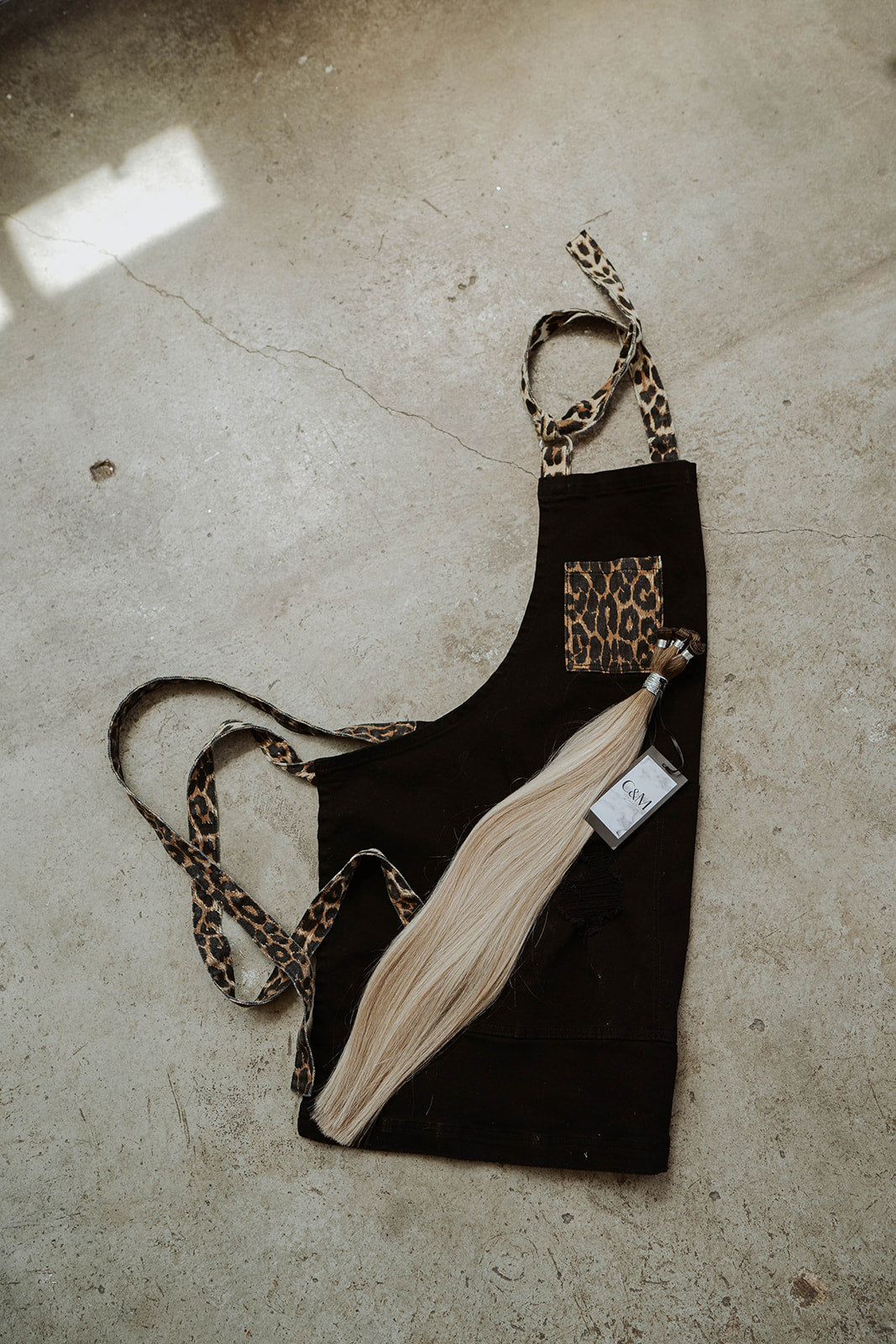
J. Clark's Full Black Leather apron and Cocoa Brown Leather option are both 100% bleach-proof vegan leather with cross-back straps. The adjustable fit and reinforced tool pockets stay functional through years of daily wipes—no cracking, peeling, or stiffness.
Cross-Back Straps Keep You Moving While You Clean
Traditional around-the-neck aprons force you to bend forward or twist awkwardly to reach your waist and pockets when cleaning off clippings. That neck strap digs in every time you lean. After eight clients, your traps are screaming.
Cross-back aprons distribute weight across your shoulders and upper back. You can rotate, bend, and reach every part of your apron without the strap shifting or choking. When you're rolling a lint brush down your front, the straps stay put. No readjusting between cleanup and your next cut.
This matters during high-volume days. Barbers running twelve fades back-to-back don't have time to fuss with a slipping neckline or sore shoulders. Cross-back construction means the apron works with your body mechanics, not against them.
Station Setup: Keep Cleanup Tools Within Arm's Reach
The fastest way to clean hair clippings off your apron quickly is to eliminate the search. If your lint roller is two drawers away or your microfiber cloths are in the back room, you'll skip it. Set up your station so cleanup is automatic:
- Lint roller: Mount a reusable silicone roller on a magnetic strip next to your mirror or keep it in your apron's front pocket (J. Clark aprons fit a standard roller plus shears).
- Microfiber cloths: Stack three to four in your top drawer. Dampen one at the start of your shift and keep it in a sealed bag for quick wipes.
- Trash can placement: Position your waste bin directly under your station edge so you can tap your roller or shake your apron without walking.
- Barbicide jar: If you're sanitizing between clients anyway, use a barbicide-dampened paper towel to wipe your apron at the same time—two tasks, one motion.
Stylists who treat apron cleanup as part of their station reset—not a separate chore—cut their between-client turnover time by 30%. It becomes muscle memory: sweep the cape, wipe the chair, roll the apron, next guest.

When to Wash vs. When to Wipe
You don't need to machine-wash your salon apron after every shift. Organic cotton denim aprons are machine washable, but over-washing fades color and wears down fibers faster than necessary. Wash when you see visible product buildup, oil stains, or odor—typically once a week for full-time stylists.
Between washes, spot-clean with a damp cloth and mild soap if you get toner or color on the fabric. The stain-resistant finish prevents most chemicals from setting, so a quick wipe within ten minutes keeps the apron looking fresh. Hang it to air out overnight instead of stuffing it in a locker.
Bleach-proof leather aprons rarely need a full wash. Wipe them down daily with a damp cloth or sanitizing wipe, and they stay pristine. If you spill coffee or lunch on the apron, use a drop of dish soap on a wet cloth—rinse and dry immediately. The vegan leather doesn't absorb liquids, so nothing penetrates the surface.
Material Choices That Save Time Over the Long Run
Choosing the right hairstylist apron upfront eliminates the daily frustration of clinging hair. Stylists who switch from poly-blend aprons to 100% organic cotton or vegan leather report cutting cleanup time in half within the first week.
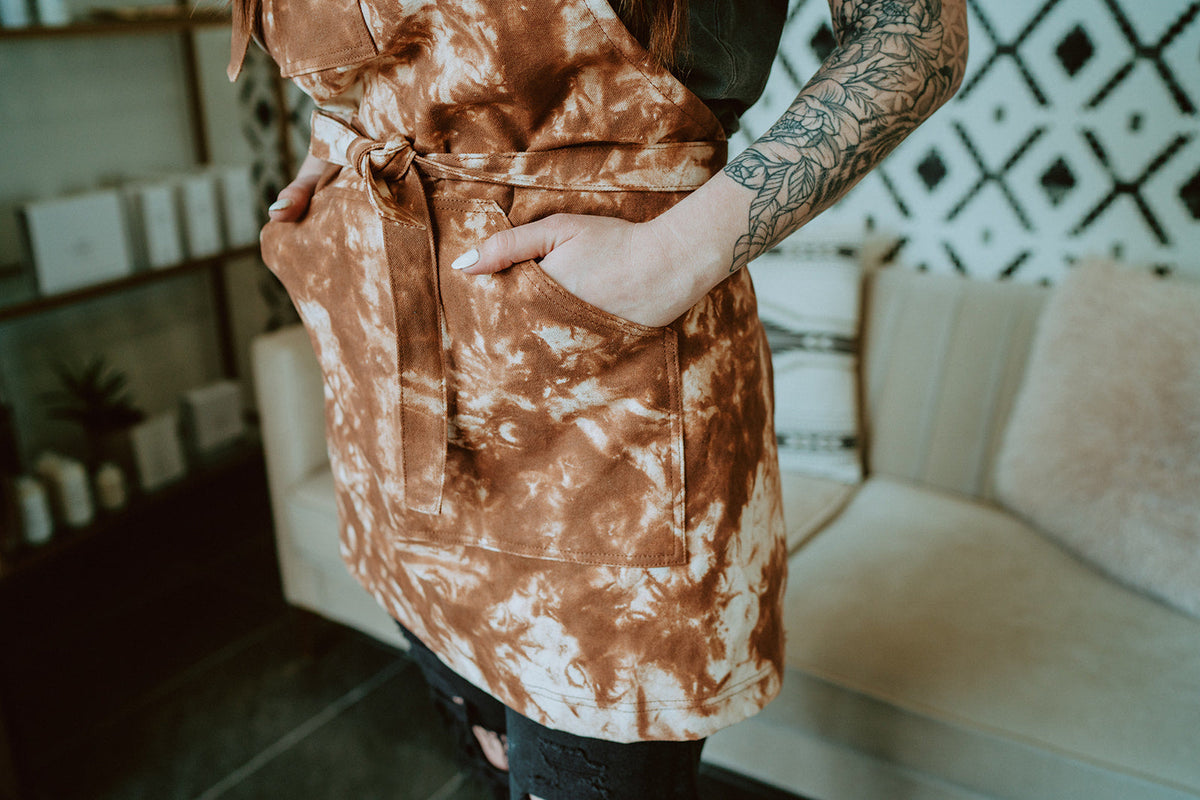
J. Clark Designed offers both material lines with the same cross-back strap system and reinforced pockets. The denim aprons—like the Navy Pinstripe, Black Acid Washed Denim, and Olive Green—are breathable, soften with every wash, and resist stains while shedding hair easily. They're ideal for barbers, stylists doing dry cuts, and estheticians who want all-day comfort.
The 100% bleach-proof leather aprons—Full Black Leather and Cocoa Brown Leather—handle the heaviest chemical exposure without discoloration. Colorists working with lightener, toner, and vivid dyes trust them because there's zero maintenance beyond a daily wipe. Both lines fit all body types with adjustable straps and tie waists, so outfitting an entire team is simple.
The Bottom Line
Cleaning hair clippings off your apron quickly comes down to material choice and station setup. Use a lint roller for organic cotton denim aprons (10–15 seconds) or a damp cloth for bleach-proof vegan leather (5–8 seconds). Keep cleanup tools within arm's reach, and treat it as part of your station reset routine.
Cross-back aprons let you move freely while cleaning without neck strain or strap shifting. Choose 100% natural fibers or vegan leather over synthetic blends—they shed hair instead of trapping it. Wash your apron weekly, spot-clean as needed, and you'll stay professional between every client without the hassle.
- Fastest method: Reusable silicone lint roller for denim, damp microfiber wipe for leather.
- Best material: 100% organic cotton stretch denim or 100% bleach-proof vegan leather.
- Station setup: Keep your lint roller in your apron pocket or mounted next to your mirror.
FAQ
How do I remove fine blonde hair clippings from a black apron?
Fine blonde hair shows up starkly on dark fabric but comes off easily with a reusable silicone lint roller. Roll in downward strokes from chest to waist—three passes is usually enough. For stubborn pieces, lightly dampen a microfiber cloth and wipe once. The contrast makes cleanup easier to see, so you won't miss spots.
Can I use a regular lint brush instead of a roller on my salon apron?
Yes, but rollers are faster and more effective. Lint brushes require multiple back-and-forth strokes and can push hair deeper into woven fabrics. Reusable silicone rollers lift hair in one downward pass and rinse clean under water. If you prefer brushes, choose one with firm bristles and brush in a single direction only.
Do barber aprons and salon aprons clean the same way?
Yes—the cleanup method depends on material, not profession. Barbers cutting short fades and hairdressers doing long layers both deal with clinging clippings. The same lint roller or wipe technique works for both. Barbers often prefer cross-back denim aprons for mobility during clipper work, while colorists lean toward bleach-proof leather for chemical resistance.
How often should I wash my apron if I clean it between clients?
Once a week for full-time use, or when you see visible product buildup. Daily wipes and lint rolling handle loose hair and surface dust. Machine-wash organic cotton denim aprons in cold water when you notice oil stains, color residue, or odor. Bleach-proof leather aprons rarely need washing—consistent wipe-downs keep them sanitized and looking new.
Explore the full collection at J. Clark Designed.
```
,%20a%20damp%20microfiber%20cloth%20for%20stubborn%20spots,%20or%20wipe-clean...)
Leave a comment
This site is protected by hCaptcha and the hCaptcha Privacy Policy and Terms of Service apply.