
How do I know if an apron is made with quality construction before buying?
Quick Answer: To tell if an apron is quality made, inspect the stitching at stress points (shoulder straps, pocket corners, waist ties), check material weight and hand-feel, verify adjustable hardware won't slip under tension, and confirm pocket reinforcement can support your actual tools. A quality salon or barber apron will show double or triple stitching where you carry weight, use breathable fabrics that resist fading, and feature ergonomic strap systems—not just a basic neck loop that strains your cervical spine after eight hours.
Why Most Salon Aprons Fall Apart Within Six Months
The average hairstylist or barber wears an apron 40+ hours a week. That apron holds shears, clippers, combs, color brushes, a phone, sometimes product bottles. It gets yanked, saturated with bleach or toner, machine-washed weekly, and flexed thousands of times at the pocket opening.
Cheap aprons fail at predictable points: neck straps fray and dig into your skin, pocket corners rip when you pull out heavy shears, waist ties unravel in the wash, and thin cotton fades to a mottled gray after a dozen color sessions. If the construction isn't engineered for repetitive professional use, you're replacing it every season—and dealing with neck and shoulder pain in between.

The Four Non-Negotiables of Quality Apron Construction
When you're evaluating whether an apron is quality made, focus on the elements that bear load and endure friction every single shift.
- Reinforced stress-point stitching: Look for double or triple rows of bartack stitching at the top of pockets, where straps attach to the bib, and at waist-tie anchor points. Single-needle straight stitching will pop under tension.
- Material weight and weave: Professional-grade denim should weigh 10–12 oz per square yard (you'll feel the heft). Stretch denim blends add comfort without sacrificing durability. Vegan leather used in salon aprons must be thick enough (1.2–1.5 mm) to resist tearing when tools press against it, yet flexible enough not to crack at the waist fold.
- Hardware that locks under load: Adjustable buckles and D-rings should be metal (brass, nickel-plated steel) or high-impact resin—never flimsy plastic that warps in a hot car or snaps when you bend over a shampoo bowl. Test the adjuster: slide it, pull hard, release. If it slips back, it will fail mid-shift.
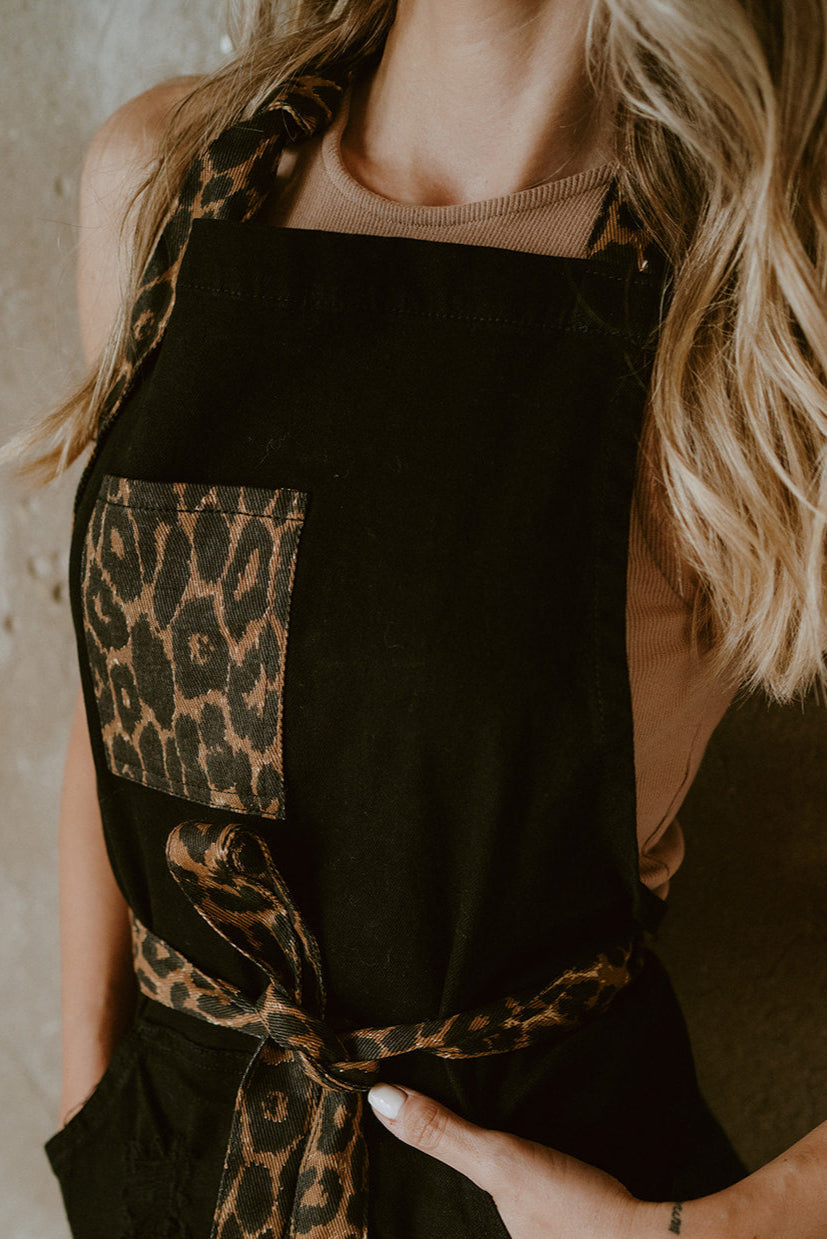
- Pocket depth and structure: A quality hairstylist apron has pockets deep enough that your shears don't peek out when you crouch (7–9 inches minimum) and wide enough for your hand plus tools. The pocket opening should have a reinforced facing or bias tape to prevent stretching.
Cross-Back Versus Neck-Loop: Ergonomics Matter in Quality Design
Here's a construction detail most people overlook until their trapezius muscles are screaming: strap design dictates whether an apron causes pain or prevents it.
Traditional neck-loop aprons concentrate the entire weight—fabric, tools, product—on your cervical spine and the narrow band of muscle at the base of your skull. After a few hours, that pressure causes headaches, neck stiffness, and referred pain into the shoulders. It's not a comfort issue; it's a biomechanical flaw.
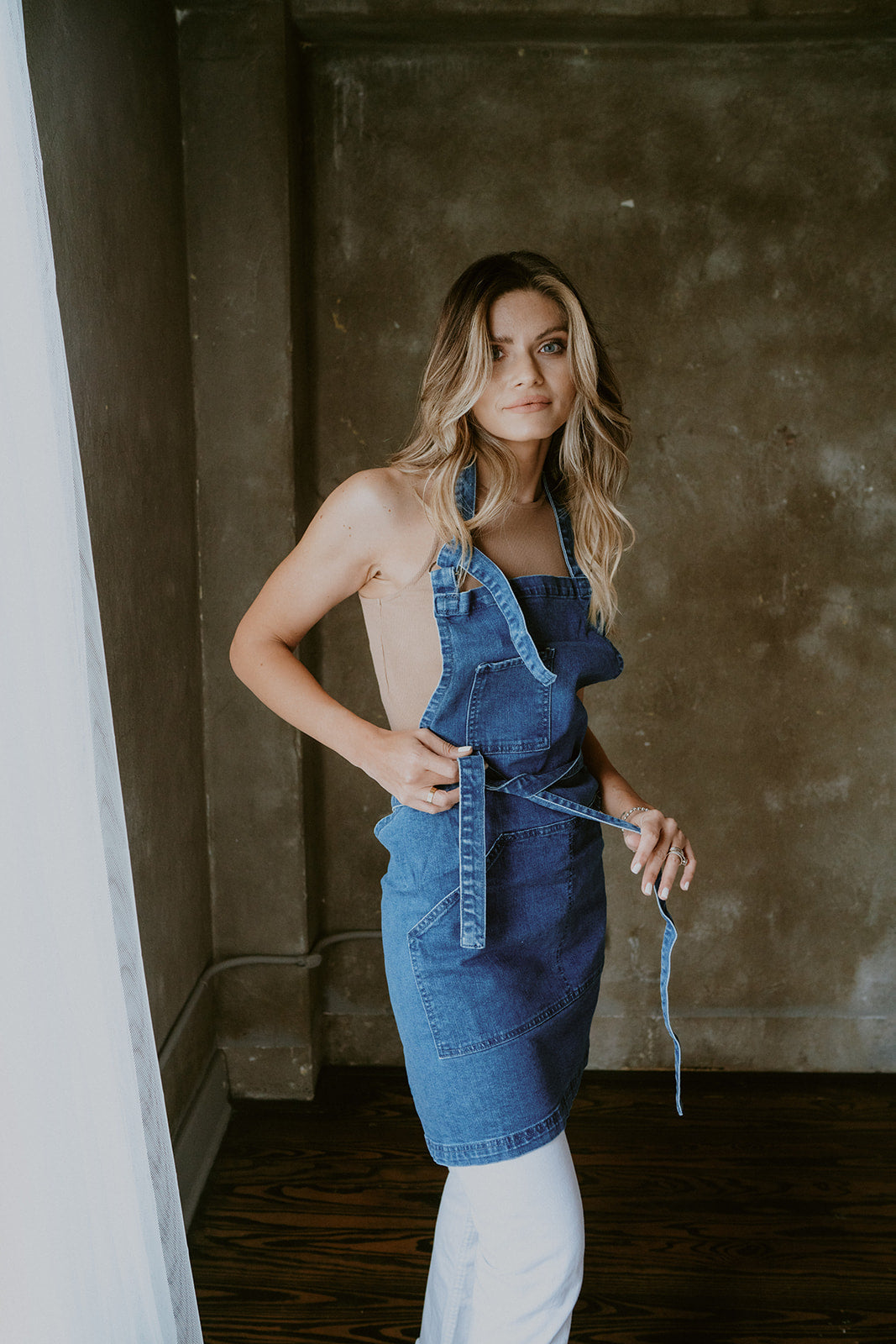
Cross-back aprons distribute weight across the shoulders and upper back using wider straps that form an X between the shoulder blades. The load spreads over the trapezius and rhomboid muscles, which are built to carry weight. Adjustable cross-back straps also let you dial in the exact fit for your torso length, so the apron sits at your natural waist instead of riding up or sagging.
This is why J. Clark Designed uses adjustable cross-back straps as the signature feature across the salon and barber collections. The straps are cut from the same material as the apron body (denim or vegan leather), reinforced at the attachment points, and threaded through metal hardware that won't slip once you've set your fit. One size genuinely fits all body types—male, female, petite, tall—because the adjustment range is wide and the tie waist cinches independently.

How to Tell if Denim or Leather Will Hold Up to Bleach and Color
Colorists, hairstylists, and barbers work in a chemical environment. Bleach, toner, permanent color, and lightener will destroy standard fabrics—and most apron manufacturers don't engineer around that reality.
Standard cotton denim absorbs liquids. Once bleach or color penetrates the weave, it oxidizes the dye and weakens the fiber structure. You'll see permanent stains, faded splotches, and eventually thin spots that tear. "Stain-resistant" treatments wear off after a few washes.
Quality salon aprons use one of two material strategies:
| Material | How It Resists Chemicals | Best For |
|---|---|---|
| Organic Cotton Stretch Denim | Tight weave + stain-resistant finish allows surface wiping before absorption; machine washable, softens with age, breathable for all-day wear | Barbers, hairstylists doing cuts and low-bleach color, bartenders, florists |
| 100% Bleach-Proof Vegan Leather | Non-porous surface—bleach, toner, and color sit on top and wipe off in seconds; never stains, never absorbs | High-volume colorists, balayage specialists, estheticians, tattoo artists working with ink |
J. Clark Designed offers both. The denim line—styles like Olive Green, Navy Pinstripe, Black Acid Washed Denim, Terracotta, and The Bohemian—uses 100% organic cotton stretch denim that's stain-resistant, breathable, and machine washable. It softens with wear but holds its structure through years of daily use.
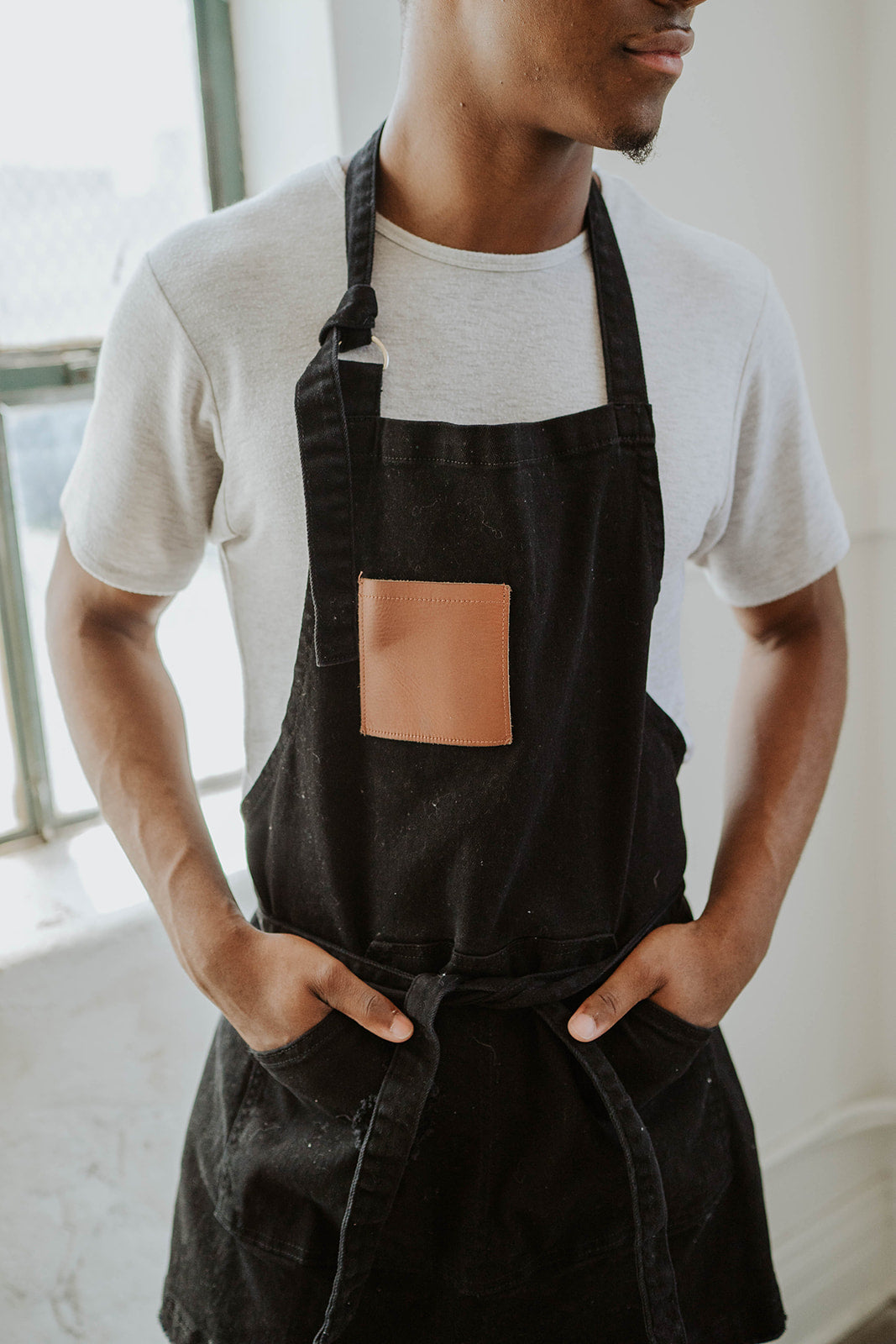
The vegan leather line—Cocoa Brown Leather and Full Black Leather—is 100% bleach-proof. Bleach literally wipes off with a damp towel. There's no staining, no fading, no absorption. Colorists working with high-lift blondes and heavy toner can clean the apron between clients in under ten seconds.
Pocket Construction Reveals Whether an Apron Was Designed by Someone Who Actually Works
This is the tell: poorly made aprons have shallow, narrow pockets added as an afterthought. Quality aprons have pockets engineered for the specific tools professionals carry.
A barber needs room for clippers (heavy, boxy), shears, multiple combs, and a phone. A hairstylist needs space for shears, tail combs, sectioning clips, color brushes, and potentially a spray bottle. A colorist working balayage carries brushes, bowls, foils, and gloves.
Professional-grade apron pockets are:
- Deep enough to prevent tool loss: 7–9 inches minimum, so shears don't slide out when you bend or squat
- Wide enough for a full hand plus tools: You should be able to reach in without scraping knuckles on the pocket edge
- Reinforced at the corners: Bartack stitching or metal rivets at the bottom corners and top opening prevent tearing when you yank out heavy clippers
- Divided or structured: Internal dividers or dual-pocket layouts keep shears separate from phones and prevent tools from tangling
Every J. Clark Designed apron features deep, reinforced front pockets sized for professional tools. The pocket openings are finished with reinforced stitching, and the corners are bartacked to handle the repetitive stress of grabbing shears fifty times a shift.

What 10,000+ Salons and Barbershops Look for When Outfitting a Team
Salon and barbershop owners buying aprons for an entire team prioritize three things: durability (so they're not replacing stock every quarter), fit across diverse body types (so one size genuinely works for everyone), and ease of care (so staff actually wear them instead of leaving them in a locker).
That's why cross-back aprons with adjustable straps and a tie waist are the industry standard for bulk orders. One size fits men and women from XS to 3XL, which simplifies inventory and ensures consistent branding across your floor.
Machine-washable materials—whether organic cotton denim or wipe-clean vegan leather—mean your team can maintain their aprons without special care. The aprons that get worn daily are the ones that don't require hand-washing or dry cleaning.
J. Clark Designed has outfitted 10,000+ salons, barbershops, and studios. The one-size-fits-all adjustable design and choice between denim (breathable, softens with age) and 100% bleach-proof vegan leather (wipe-clean, never stains) make it simple to equip a team of five or fifty with aprons that will last years, not months.
How to Verify Quality Before You Buy
If you're shopping online, you can't physically inspect stitching or feel material weight. Use these proxies to assess whether an apron is quality made:
- Verified customer reviews from professionals: Look for reviews from hairstylists, barbers, colorists, or bartenders who mention durability after months of use. Generic "great apron!" reviews don't tell you anything.
- Detailed material specs: Quality brands specify fabric weight (e.g., "10 oz stretch denim"), fiber content (e.g., "100% organic cotton"), and treatment details (e.g., "stain-resistant finish" or "100% bleach-proof vegan leather"). Vague descriptions like "premium fabric" are red flags.
- Close-up construction photos: Zoom in on product images. Can you see the stitching at pocket corners? Are the straps attached with visible reinforcement? Are the adjustment buckles metal or plastic?
- Return policy and warranty: Brands confident in their construction offer hassle-free returns and will stand behind their aprons if stitching fails or hardware breaks under normal use.
J. Clark Designed has earned a 4.8/5-star rating from 1,444+ verified reviews, with free shipping on every order and transparent material details on every product page. The brand was founded by Justin Clark and designed in the USA specifically for professionals who wear aprons 40+ hours a week.
For everyday cuts and styling: Black Acid Washed Denim
The Black Acid Washed Denim is a workhorse apron for barbers and hairstylists doing primarily dry work—cuts, fades, blowouts, styling. The organic cotton stretch denim is breathable, machine washable, and softens with age while holding its structure. Cross-back straps and deep reinforced pockets make it comfortable and functional through long shifts. $59–$79.
For high-volume color work: Full Black Leather
Colorists working balayage, highlights, or platinum blondes need the Full Black Leather apron. It's 100% bleach-proof vegan leather—bleach, toner, and color wipe off in seconds and never stain. The non-porous surface means you can clean it between clients with a damp towel. Cross-back straps distribute the weight of brushes, bowls, and foils without neck strain. $99.
The Bottom Line
You can tell if an apron is quality made by inspecting stress-point stitching, verifying material weight and chemical resistance, checking that adjustable hardware locks under load, and confirming pockets are deep and reinforced for professional tools. Ergonomic strap design—especially cross-back systems—separates aprons built for all-day wear from those that cause neck and shoulder pain after a few hours.
Quality construction isn't about premium branding or aesthetic details. It's about engineering that accounts for repetitive professional use: thousands of tool draws, weekly washing, daily exposure to bleach or color, and 40+ hours a week on your body. An apron that lasts years will show reinforced stitching at every stress point, use materials designed for your specific work environment, and fit comfortably across diverse body types.
The aprons that earn loyalty from hairstylists, barbers, colorists, and other creative professionals are the ones that solve real problems—strain-free wear, stain resistance that actually works, pockets that hold your full kit, and construction that survives the job.
FAQ
How can I tell if an apron will last through daily professional use?
Check for double or triple stitching at pocket corners, where straps attach, and at waist ties. Verify the material weight (denim should be 10+ oz, vegan leather 1.2+ mm thick) and look for verified reviews from professionals mentioning durability after six months or more of daily wear. Quality aprons use metal or high-impact hardware that won't slip or break under tension.
What's the difference between stain-resistant denim and bleach-proof leather for salon aprons?
Stain-resistant denim has a tight weave and surface treatment that lets you wipe off most spills before they absorb; it's breathable, machine washable, and softens with age, ideal for barbers and hairstylists doing cuts and low-chemical work. Bleach-proof vegan leather is non-porous—bleach, toner, and color sit on the surface and wipe off completely with no staining, making it essential for high-volume colorists and balayage specialists.
Why do cross-back aprons prevent neck pain better than neck-loop styles?
Cross-back straps distribute the weight of the apron and your tools across your shoulders and upper back, engaging the trapezius and rhomboid muscles designed to carry load. Neck-loop aprons concentrate all weight on your cervical spine and the narrow muscle band at the base of your skull, causing headaches, stiffness, and referred shoulder pain after several hours of wear.
Do one-size-fits-all aprons actually fit different body types?
Yes, if the apron uses adjustable cross-back straps and an independent tie waist. The strap adjustment allows you to set the torso length for your height, and the waist tie cinches to your natural waist regardless of body shape. Quality one-size designs fit men and women from XS to 3XL, which is why they're the standard for salon and barbershop teams.
Explore the full collection at J. Clark Designed.
```
,%20check%20material%20weight%20and%20hand-feel,%20verify%20adjusta...)
Leave a comment
This site is protected by hCaptcha and the hCaptcha Privacy Policy and Terms of Service apply.