
How do I store my professional apron when not in use to keep it looking new?
Quick Answer: To store your professional apron properly and maintain its shape, hang it on a wide-shoulder hanger or sturdy hook immediately after cleaning—never crumple it into a locker or leave it damp in a bag. Cross-back aprons with adjustable straps should be stored with straps untwisted and fully extended, while denim and leather aprons both benefit from air circulation to prevent musty odors and material breakdown.
Most salon, barber, and hospitality professionals destroy a $60–$100 apron within months—not from overuse, but from bad storage habits. Tossing a damp apron into a gym bag, hanging it by a single loop that stretches the fabric, or folding it while still wet creates permanent creases, mildew, and strap distortion that no amount of washing will fix.
Here's how to store each type of professional apron so it performs—and looks—like new for years.
Why How You Store Your Professional Apron Matters More Than How Often You Wash It
Material science is clear: deformation happens during storage, not during wear. When you hang a wet organic cotton apron by a single neck loop, gravity pulls the water-logged fabric downward, stretching fibers unevenly. When you crumple a vegan leather apron into a drawer, you create stress points that crack the surface coating over time.
The two materials used in premium salon and barber aprons—100% organic cotton stretch denim and 100% bleach-proof vegan leather—each require specific storage conditions:
- Organic cotton denim: Breathable, machine washable, softens with age—but holds moisture if stored damp, leading to mildew and odor that becomes permanent in the weave.
- Bleach-proof vegan leather: Wipe-clean in seconds, chemical-resistant—but prolonged creasing or exposure to heat sources (like radiators or direct sunlight) can stiffen the material and reduce flexibility.
Both materials last exponentially longer when stored flat or hung properly in a ventilated space.

The Right Way to Hang a Cross-Back Apron (Without Stretching the Straps)
Cross-back aprons—the ergonomic standard for hairstylists, colorists, and barbers who work 8+ hour shifts—distribute weight across the shoulders and upper back instead of the neck. But that adjustable strap system only works if the straps maintain their original tension and shape.
Here's the proper method:
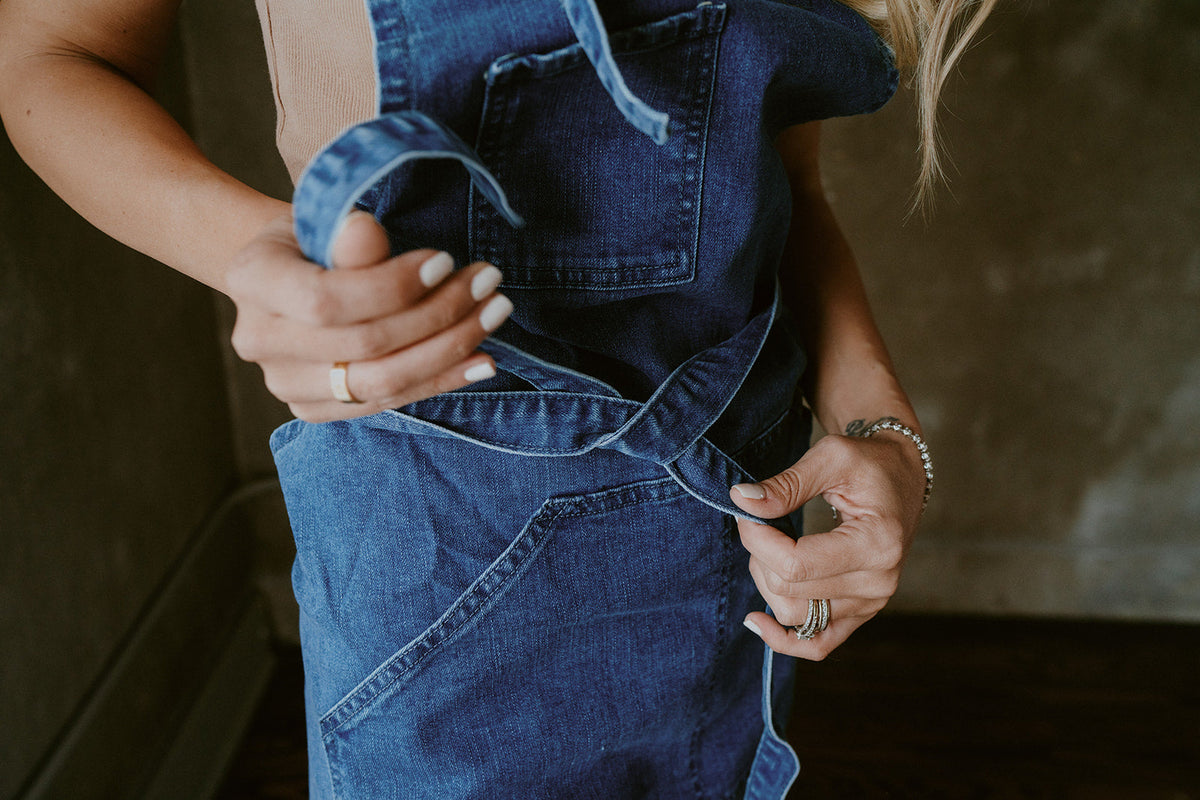
- Use a wide-shoulder hanger: Slip the apron body onto a wooden or padded hanger (coat hangers work well). This supports the full width of the bib and prevents shoulder dimples.
- Drape straps over the hanger bar: Lay both cross-back straps flat over the top of the hanger, untwisted and fully extended. Never hang the apron by the straps themselves—this stretches the adjustment points.
- Let the waist ties hang freely: Don't knot or wrap them—let them air out to prevent mildew in the fabric folds.
- Hang in open air: A locker with ventilation slots works; a sealed plastic bag does not. Air circulation prevents bacterial growth and keeps denim aprons smelling fresh between shifts.
If you're storing multiple aprons (common in salons and barbershops outfitting a full team), dedicate one hook or hanger per apron. Stacking five wet aprons on a single peg traps moisture and creates a breeding ground for odor.
Storing Bleach-Proof Leather Aprons: Heat, Creases, and Chemical Residue
Vegan leather aprons—like the Full Black Leather and Cocoa Brown Leather styles—are built for colorists, barbers using Barbicide, and bartenders handling citrus and spirits. Bleach, toner, and hair color literally wipe off the surface without staining. But the material has three storage enemies:
- Heat sources: Storing a leather apron near a heater, in a hot car, or in direct sunlight stiffens the material and can cause surface cracking. Room temperature or cooler is ideal.
- Sharp creases: Folding a leather apron into tight quarters for long-term storage creates permanent crease lines. If you must fold it (e.g., packing for a trade show), fold along the natural waist seam and store flat—never crumpled.
- Residual chemical contact: Even though the material is bleach-proof, leaving a leather apron in a drawer alongside open bottles of acetone or bleach can degrade the backing fabric over time. Store in a ventilated area, away from open chemicals.
Best practice: wipe the apron with a damp microfiber cloth after your shift (takes 10 seconds), then hang it on a hook or hanger in open air. The material dries in minutes and requires zero additional care.

What Not to Do: The Storage Mistakes That Ruin Salon Aprons Fast
These are the four most common ways professionals wreck an apron during storage—not wear:
- Leaving it damp in a closed bag: Gym bags, backpacks, and car trunks are mold incubators. If you must transport a damp apron, hang it within 2 hours or drape it over a chair to air-dry.
- Hanging by a single neck loop: This stretches the fabric asymmetrically and warps the neckline. Always hang from the body or shoulders, not a strap.
- Storing in plastic: Plastic garment bags trap moisture. Use breathable fabric garment bags if you need dust protection, or hang in open air.
- Piling aprons in a drawer: Creases become permanent. If drawer storage is your only option, roll the apron loosely (like a yoga mat) instead of folding flat.
One exception: if you're traveling to a competition or guest-spotting at another shop, pack your apron in a hard-shell suitcase laid flat between clothing layers. This prevents compression creases.
Storage Solutions for Teams: Outfitting a Salon, Barbershop, or Bar
When you're managing aprons for a full staff, individual hangers aren't always practical. Here's what works at scale:
| Storage Method | Best For | Pros | Cons |
|---|---|---|---|
| Wall-mounted coat hooks (spaced 12" apart) | Barbershops, small salons | Cheap, easy install, keeps aprons visible and accessible | Requires wall space; aprons can overlap if hooks are too close |
| Rolling garment rack with hangers | Mid-size salons, event teams | Mobile, fits 15–20 aprons, easy to wheel into a back room | Takes floor space; requires individual hangers |
| Locker system (ventilated metal) | High-volume barbershops, spas | Personal storage, lockable, keeps aprons separate from street clothes | Expensive upfront; poor ventilation models trap odor |
| Mesh laundry bins (clean aprons only) | Quick-service bars, food trucks | Breathable, stackable, cheap | Causes creases; only works for short-term storage (same-day use) |
Pro tip: label hooks or hangers with names or stations ("Chair 1", "Chair 2") so each stylist or barber knows where their apron lives. This prevents cross-contamination and makes end-of-day cleanup faster.
Seasonal Storage: Long-Term Care for Aprons You're Not Using Daily
If you're rotating aprons seasonally (e.g., switching from denim to leather for summer color season, or storing a patterned apron like The Bohemian for special events), follow these long-term storage rules:
- Wash and dry completely before storing: Even invisible oils and product residue attract pests and cause yellowing over months.
- Store flat or rolled in a breathable cotton garment bag: Avoid plastic. Cedar balls or lavender sachets help repel moths without chemical odor.
- Check every 3–4 months: Refold along different lines to prevent permanent creases, and air out the apron for 24 hours if it smells musty.
- Keep away from UV light: Sunlight fades denim and can yellow light-colored aprons (like Terracotta or The Whitmore). Store in a closet or drawer, not on an open shelf near a window.
For aprons you wear daily—like the Navy Pinstripe or Black Acid Washed Denim in a high-volume barbershop—seasonal storage isn't relevant. But if you invested in a premium style for competitions or photoshoots, proper off-season care extends its lifespan indefinitely.

Material-Specific Storage Cheat Sheet
Here's a quick reference for how to store each material type:
- 100% organic cotton stretch denim (Olive Green, Navy Pinstripe, Black Acid Washed, Terracotta, Cabernet, The Bohemian, The Outlaw, The Bloom): Hang on a wide hanger or hook in open air. Machine wash when needed, air-dry or tumble low, store completely dry. Never leave damp.
- 100% bleach-proof vegan leather (Full Black Leather, Cocoa Brown Leather): Wipe clean after each shift, hang in room-temperature ventilated space. Avoid heat, sharp creases, and prolonged chemical exposure. No washing required.
- Mixed-material aprons (Black & Leather Over-Shoulder): Treat as denim for washing, treat as leather for drying—wipe the leather panels, hang to air-dry the denim components, store on a hanger.
One-size-fits-all aprons with adjustable straps and tie waists (standard across J. Clark Designed styles) store the same way regardless of who wore them last—no need for separate storage protocols by body type.
The Bottom Line
Storing your professional apron properly extends its lifespan by years and keeps it looking sharp shift after shift. The method is simple: hang it on a wide-shoulder hanger or sturdy hook, untwisted and fully dry, in a ventilated space away from heat and UV light. For denim aprons, prioritize air circulation to prevent odor; for bleach-proof leather aprons, avoid sharp creases and wipe residue before storing.
Bad storage—damp bags, single-loop hanging, plastic wrapping—causes more damage than a year of hard use. Whether you're a solo colorist managing one apron or a shop owner outfitting a team, treating storage as part of your apron's care routine protects your investment and keeps your look professional.
The right apron, stored the right way, becomes a reliable tool that outlasts trends and stays ready for whatever your craft demands.
FAQ
Can I store my salon apron in my car between shifts?
Only if it's completely dry and the car isn't parked in extreme heat or cold. Damp aprons stored in hot cars develop mildew fast, and freezing temperatures can stiffen vegan leather. If you commute, bring the apron inside overnight and hang it in open air.
How do I prevent my cross-back apron straps from tangling in storage?
Drape both straps flat over the top of a hanger or hook, untwisted and fully extended. Never tie them in a knot or wrap them around the apron body—this creates kinks that affect adjustability and comfort when you wear it next.
Do I need to store denim and leather aprons differently?
Yes. Denim aprons need ventilation to dry completely and prevent odor; leather aprons should be wiped clean and stored away from heat sources to avoid stiffness. Both should hang on a hanger or hook—never crumpled or folded long-term.
What's the best way to store a professional apron long-term if I'm not using it for months?
Wash and dry it completely, then store it flat or loosely rolled in a breathable cotton garment bag in a cool, dark closet. Check every few months to refold along different lines and air it out if needed. Avoid plastic bags and direct sunlight.
Explore the full collection at J. Clark Designed.
```

Leave a comment
This site is protected by hCaptcha and the hCaptcha Privacy Policy and Terms of Service apply.