

How do professional aprons hold up in a busy barbershop environment?
Quick Answer: A durable apron for a busy barbershop must survive 8–12 hour days of constant movement, resist stains from hair color and toner, protect pockets from sharp tools, and distribute weight ergonomically. Most aprons fail within six months because they use flimsy strap hardware, thin fabric that tears at stress points, or neck-only designs that strain the cervical spine. Cross-back aprons in stretch denim or bleach-proof vegan leather—designed specifically for the abuse of high-volume barbershops—routinely last two to three years under daily professional use.
Why Most Barber Aprons Fail After Six Months in Heavy Use
Walk into any barber supply shop and you'll find dozens of aprons. Most look identical: thin cotton canvas, around-the-neck straps, shallow pockets. Within six months, they show the same pattern of failure.
The neck strap frays first. Eight hours of weight—tools, a phone, constant movement—concentrates all tension on a single seam around the back of the neck. The stitching pulls, the fabric thins, and eventually the strap tears. Barbers develop chronic neck pain, then replace the apron.
The pockets tear next. Standard canvas isn't reinforced at stress points. When you bend to grab clippers from a low shelf or lean over a client, the pocket corners rip. A single torn pocket makes the apron useless—you can't trust it to hold your shears.
Stains become permanent. Basic cotton absorbs hair color, toner, and beard dye. After a few months, the apron looks filthy even after washing. You replace it out of embarrassment, not because it's structurally failed.
Material Science: What Actually Survives a Barbershop
A durable apron for a busy barbershop needs fabric engineered for the specific abuse it faces: friction, repeated stress, chemical exposure, and daily washing.

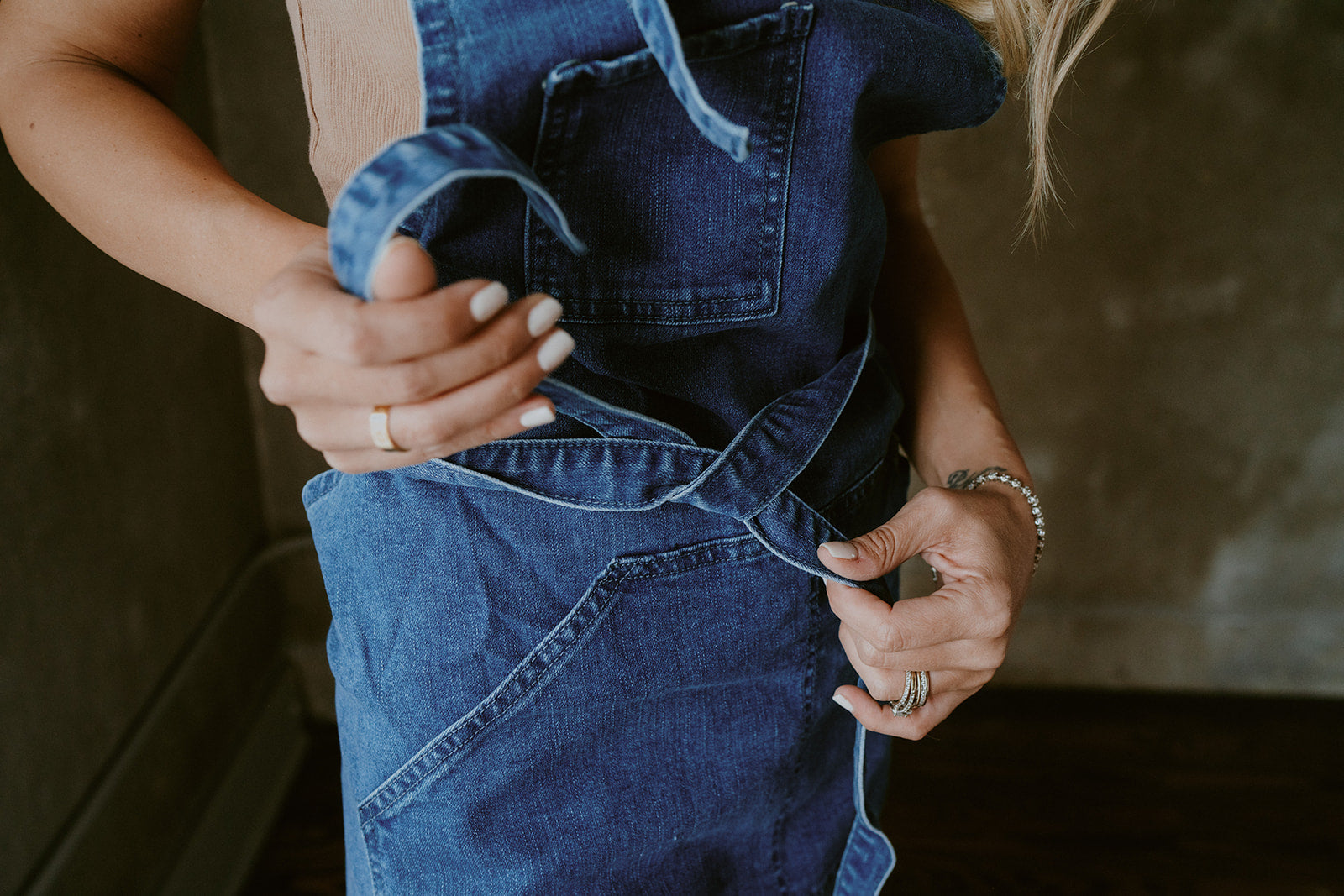
100% organic cotton stretch denim solves durability through structure. The tight twill weave resists tearing at stress points. The stretch component—usually 2–3% elastane—allows the fabric to move with you during cuts and fades without pulling at the seams. It's stain-resistant (not stain-proof), breathes during summer heat, and machine-washes without shrinking. Most importantly, it softens with age instead of falling apart. A well-made stretch denim apron in a busy barbershop lasts two to three years of daily use.
100% bleach-proof vegan leather is the only material that truly solves the chemical problem. Hair color, toner, bleach, and beard dye literally wipe off the surface in seconds—they can't penetrate the material. For barbers who do color work or share a shop with colorists, this eliminates permanent staining entirely. The leather is surprisingly breathable (it's not plastic-coated polyester), wipes clean with a damp cloth, and never needs machine washing. It handles ten years of professional abuse.
| Material | Best For | Stain Resistance | Expected Lifespan |
|---|---|---|---|
| Standard cotton canvas | Light-duty barbering (cuts only) | Poor—absorbs everything | 6–12 months |
| Stretch denim (organic cotton) | Full-service barbershops, daily use | High—resists most stains, machine washable | 2–3 years |
| Bleach-proof vegan leather | Color work, high-chemical environments | Total—chemicals wipe off immediately | 5–10 years |
The Cross-Back Advantage in a Durable Apron for Busy Barbershop Use
The single most important durability feature isn't material—it's strap design. Around-the-neck straps concentrate weight on the cervical spine, which causes two problems: chronic pain and accelerated wear.
Cross-back straps distribute weight across the shoulders and upper back, the way a hiking backpack does. This eliminates neck strain during 10-hour days and removes the single point of tension that causes neck straps to fray and tear. Because the load spreads across four attachment points (two shoulders, two sides of the waist tie), no single seam takes catastrophic stress.
Adjustable cross-back straps also let you dial in the exact fit. A too-loose apron shifts during fades and tapers, getting in your way. A too-tight apron restricts shoulder movement during scissor work. Adjustability means the apron fits barbers of all heights and body types—critical if you're outfitting a whole shop or want an apron that works whether you gain or lose 20 pounds.

Pocket Durability: Why Most Aprons Rip at the Pockets First
Pockets fail at three predictable points: the top corners, the bottom seam, and the side attachment. Cheap aprons use a single line of stitching and no reinforcement. The first time you bend over with clippers and a phone in your pocket, the corner tears.
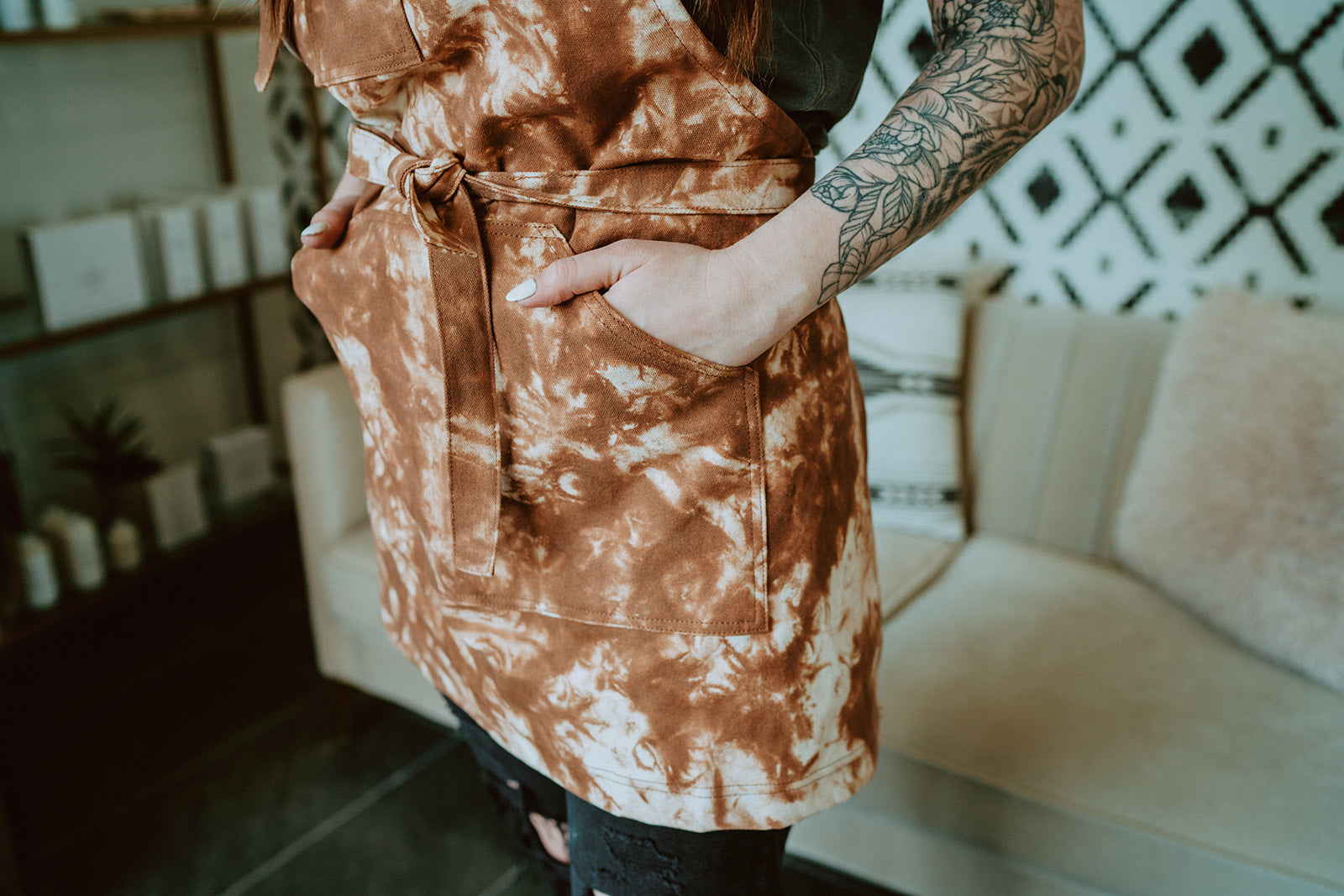
Professional-grade pockets solve this with bar-tack reinforcement at stress points, double-needle stitching along seams, and sizing that actually fits the tools barbers carry. A shallow pocket forces you to jam tools in at an angle, which puts sideways stress on the seams. A properly sized pocket—deep enough for full-length shears, wide enough for clippers—lets tools sit vertically, eliminating that stress.
For a busy barbershop, pocket size matters as much as pocket durability. You need room for:
- Shears and trimmers: full-length without protruding
- Combs and brushes: multiple sizes, easily accessible
- A phone: because clients show you reference photos constantly
- Clips or sectioning tools: if you do fades or designs
If an apron forces you to carry tools elsewhere—on a cart, in a belt pouch—it's not durable, it's incomplete.
How Often Should You Replace a Professional Barber Apron?
In a busy barbershop with daily use, replacement timing depends entirely on material and construction quality. Standard cotton aprons last 6–12 months before the neck strap frays, pockets tear, or stains become permanent. That's 50–100 washes and 1,500–2,500 hours of wear.
A stretch denim cross-back apron lasts 2–3 years under the same conditions—600–800 washes, 5,000–7,500 hours. The fabric softens and develops character (like raw denim jeans) but doesn't structurally degrade. Pockets stay intact, straps don't fray, and the apron continues protecting your clothes.
Bleach-proof vegan leather aprons routinely last 5–10 years. Because they wipe clean instead of requiring machine washing, the material never degrades from detergent or heat. Barbers report the same apron looking nearly new after a decade of daily use.
The cost math is straightforward. A $25 cotton apron replaced twice a year costs $250 over five years. A $79 stretch denim cross-back apron replaced once every three years costs $132 over the same period. A $99 bleach-proof leather apron lasts the entire five years. Durability is cheaper.
Real-World Recommendations for a Durable Apron in a Busy Barbershop
These recommendations come from 10,000+ barbershops and salons using J. Clark Designed aprons daily, backed by 1,444+ verified reviews at 4.8/5 stars.
For classic barbering (cuts, fades, shaves): Navy Pinstripe or Black Acid Washed Denim
Both are 100% organic cotton stretch denim with cross-back straps and reinforced pockets. The Navy Pinstripe fits traditional barbershop aesthetics; the Black Acid Washed has a modern, distressed look. Both machine-wash without fading and soften with age. $59–$79. Shop barber aprons here.
For barbers who do color work: Full Black Leather or Cocoa Brown Leather
100% bleach-proof vegan leather. Toner, bleach, and hair dye wipe off in seconds—they never stain. Cross-back straps, deep tool pockets, and a professional appearance that works in high-end shops. If you share space with colorists or do beard tinting, this is the only material that eliminates permanent staining. $99. Shop leather aprons here.

For outfitting a whole shop: consider one-size-fits-all adjustability
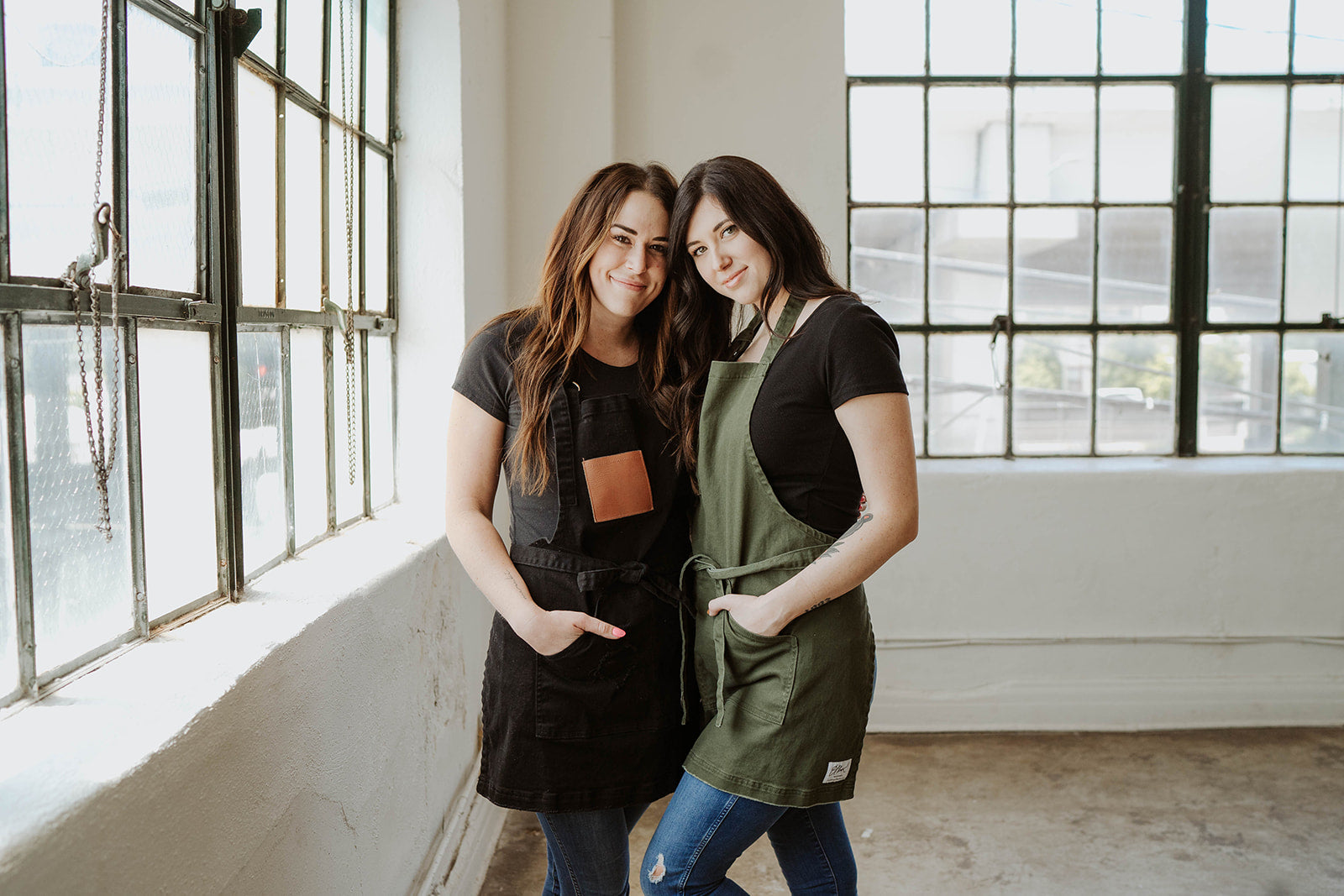
Every J. Clark apron uses adjustable cross-back straps and a tie waist, fitting men and women across all body types. This is critical for multi-barber shops—you can standardize on one style without measuring each person. It also future-proofs your purchase if you hire new barbers or your team changes.
The Bottom Line
A durable apron for a busy barbershop survives through material engineering, ergonomic strap design, and reinforced construction at stress points. Most aprons fail because they use flimsy fabrics, neck-only straps that fray under load, and shallow pockets that rip at the corners. Stretch denim handles 2–3 years of daily abuse; bleach-proof vegan leather lasts a decade.
Cross-back straps eliminate neck strain and distribute weight ergonomically, which not only protects your body but prevents the single point of failure that kills most aprons. Reinforced pockets sized for professional tools—shears, clippers, combs, a phone—complete the package.
The math is simple: a $79 apron that lasts three years costs less than replacing cheap aprons twice a year. Durability isn't a luxury feature—it's the baseline for professionals who work 40–60 hours a week. Choose materials and construction that match the abuse your barbershop actually delivers.
FAQ
What's the most durable material for a barber apron that gets daily use?
Stretch denim (100% organic cotton with 2–3% elastane) offers the best balance of durability, breathability, and stain resistance for general barbering. It lasts 2–3 years under daily professional use, machine-washes without shrinking, and softens with age. For barbers who do color work or face heavy chemical exposure, 100% bleach-proof vegan leather is more durable—it lasts 5–10 years and chemicals wipe off in seconds without staining.
Do cross-back aprons last longer than neck-strap aprons?
Yes. Cross-back straps distribute weight across the shoulders and upper back instead of concentrating tension on a single seam around the neck. This eliminates the most common failure point—neck strap fraying and tearing—and extends apron lifespan by 2–3x. Cross-back designs also prevent chronic neck pain during long shifts, which is a durability issue for your body, not just the apron.
How do I keep a barber apron from staining permanently?
Choose stain-resistant materials from the start. Stretch denim resists most stains and cleans well in the washing machine. For color work—toner, bleach, beard dye—only bleach-proof vegan leather eliminates staining entirely. Chemicals literally wipe off the surface and can't penetrate the material. Standard cotton canvas absorbs everything and develops permanent stains within weeks of professional use.
How long should a professional barber apron last in a busy shop?
With daily use in a high-volume barbershop, expect 6–12 months from standard cotton aprons, 2–3 years from stretch denim cross-back aprons, and 5–10 years from bleach-proof vegan leather. Lifespan depends on material quality, strap design, and pocket reinforcement. Cheap aprons fail at predictable stress points—neck straps, pocket corners—long before the main fabric wears out.
Explore the full collection at J. Clark Designed.
```

Leave a comment
This site is protected by hCaptcha and the hCaptcha Privacy Policy and Terms of Service apply.