

How long do handcrafted aprons typically last compared to mass-produced ones?
Quick Answer: Handcrafted aprons last 3–7 years with daily professional use, while mass-produced aprons typically fail within 6–18 months. The difference comes down to material weight, reinforced stitching at stress points, and construction methods that prioritize durability over speed. For salon and barber professionals processing color and bleach daily, material choice—organic stretch denim or bleach-proof vegan leather—determines whether an apron survives or becomes a liability.
Why Most Salon Aprons Fail After Six Months
Mass-produced aprons are designed for cost, not longevity. Manufacturers use lightweight cotton blends (often 4–6 oz per square yard) that tear easily under the mechanical stress of leaning over a chair, reaching for tools, and moving through a packed salon floor. Seams are single-stitched on high-speed industrial machines, creating weak points at the pockets, neckline, and waist ties—exactly where professional wear concentrates.
The real killer for hairstylist aprons and colorist aprons is chemical exposure. Standard cotton absorbs bleach, toner, and permanent color on contact. Once those chemicals settle into the fiber, the fabric breaks down at the molecular level. You'll see it as fading, brittleness, and eventually holes where you wipe your hands most often. A $20 apron might seem economical until you're replacing it every few months.
Around-the-neck straps accelerate failure in a different way: they concentrate the apron's weight—plus the weight of shears, clippers, combs, color brushes, and your phone—on your cervical spine. The constant tug degrades both the strap material and your posture, leading to neck and shoulder pain that shortens the hours you can work comfortably.
How Long Handcrafted Aprons Last: Material Science Matters
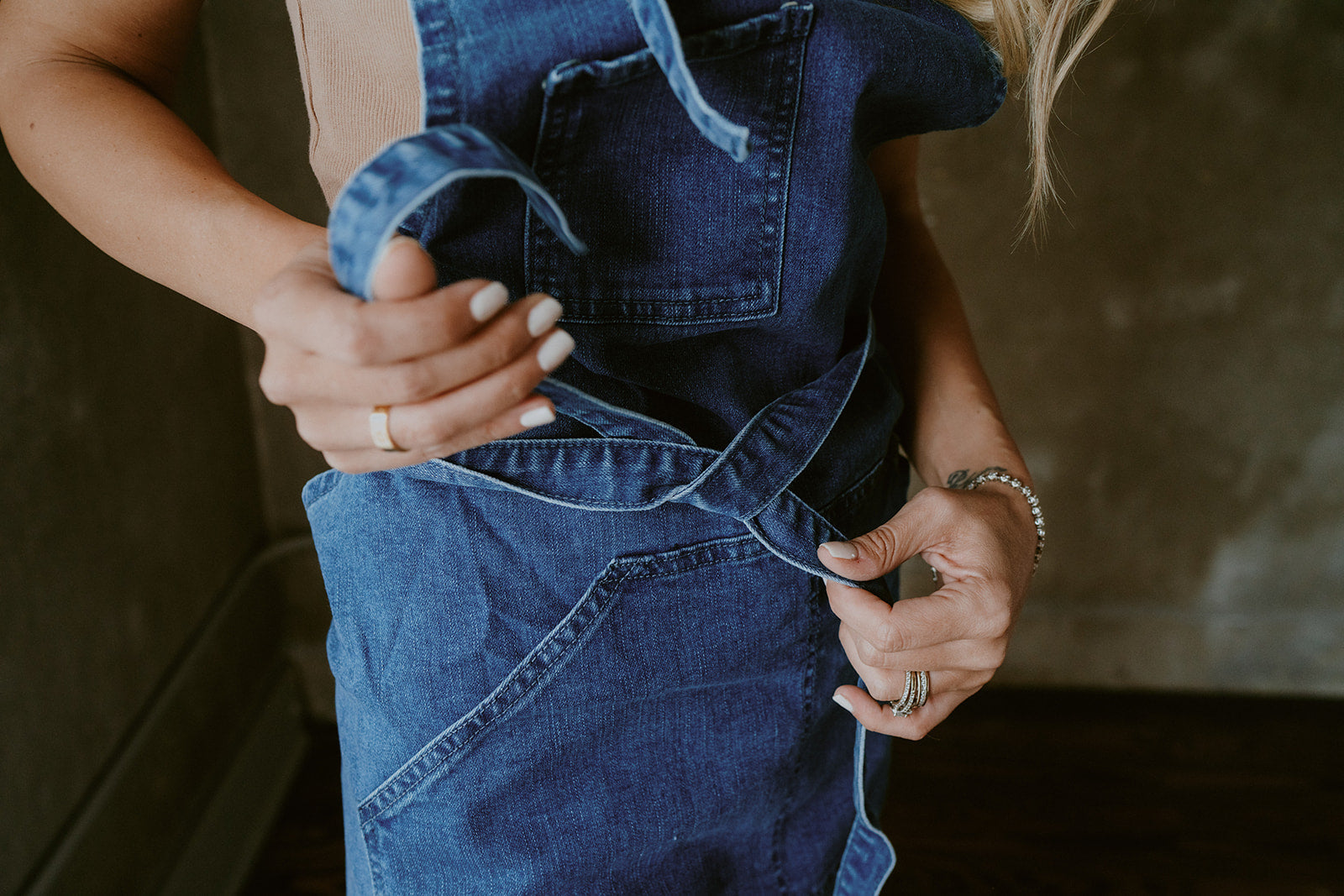
Handcrafted aprons built for professional use start with heavier, tighter-weave fabrics. 100% organic stretch denim at 10–12 oz per square yard resists tearing and maintains structure through thousands of wash cycles. The stretch component (typically 2–4% elastane) allows movement without stressing seams—critical when you're pivoting between clients or reaching across a station.

Bleach-proof vegan leather takes a different approach. This material is engineered with a non-porous surface layer that repels liquids rather than absorbing them. Bleach, toner, vivid color—all wipe off in seconds without penetrating the material. For barbers and colorists working with aggressive chemicals daily, this extends apron life from months to years because the material never degrades from the inside out.
Reinforcement is the second variable. Handcrafted construction allows for double- or triple-stitching at stress points: pocket corners, where straps attach, along the waistband. Bartacked reinforcements (dense zigzag stitching) at these junctions distribute load and prevent the "rip-and-run" failure common in mass-produced designs. These details add minutes to production time per apron but years to functional life.
The Cross-Back Advantage: Ergonomics That Extend Longevity
Cross-back straps are a design feature that directly impacts how long a hairdresser apron or barber apron lasts—because they change how weight is carried. Instead of hanging from the neck, cross-back straps distribute load across the shoulders and upper back, engaging larger muscle groups and reducing concentrated stress on any single seam or attachment point.
This matters for two reasons:
- Reduced strap fatigue: Straps under less tension stretch and fray more slowly, especially when loaded with professional tools.
- Better posture: Even weight distribution means you're not unconsciously compensating with forward head posture, which pulls harder on the apron fabric and accelerates wear at the neckline.
For professionals working 8–12 hour days, the cumulative effect is significant. An apron that sits comfortably and moves with you experiences less mechanical stress per shift, which translates directly into a longer usable lifespan.
Real-World Lifespan: What 10,000+ Professionals Report
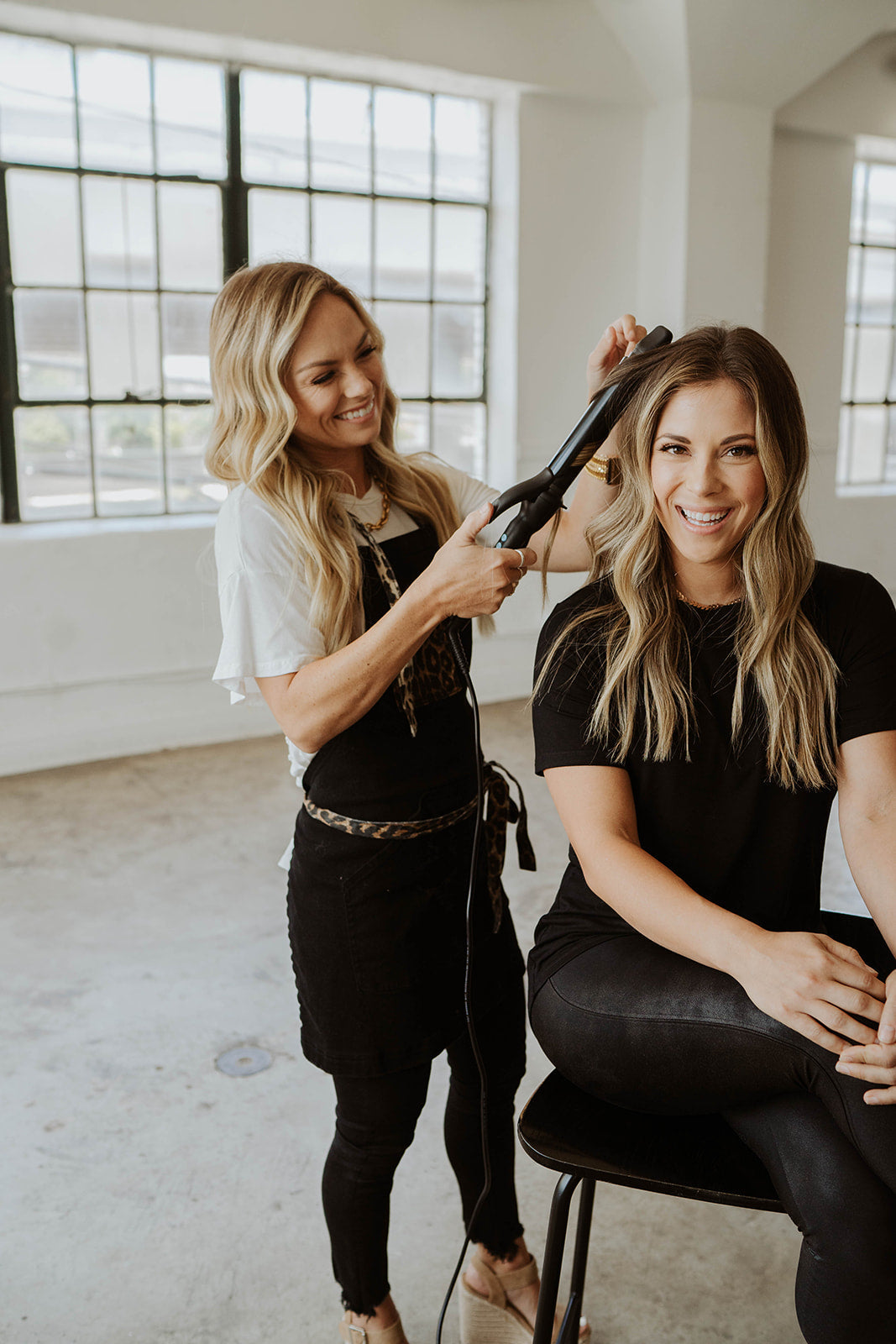
J. Clark Designed aprons average 4.8 stars across 1,444+ verified reviews, with durability cited as the most common reason for loyalty. Salon owners report outfitting entire teams with the same aprons and seeing consistent performance across 3–5 years of daily use. Barbers mention shears pockets that hold shape after thousands of insertions. Colorists highlight bleach-proof leather that looks nearly new after two years of toner spills.

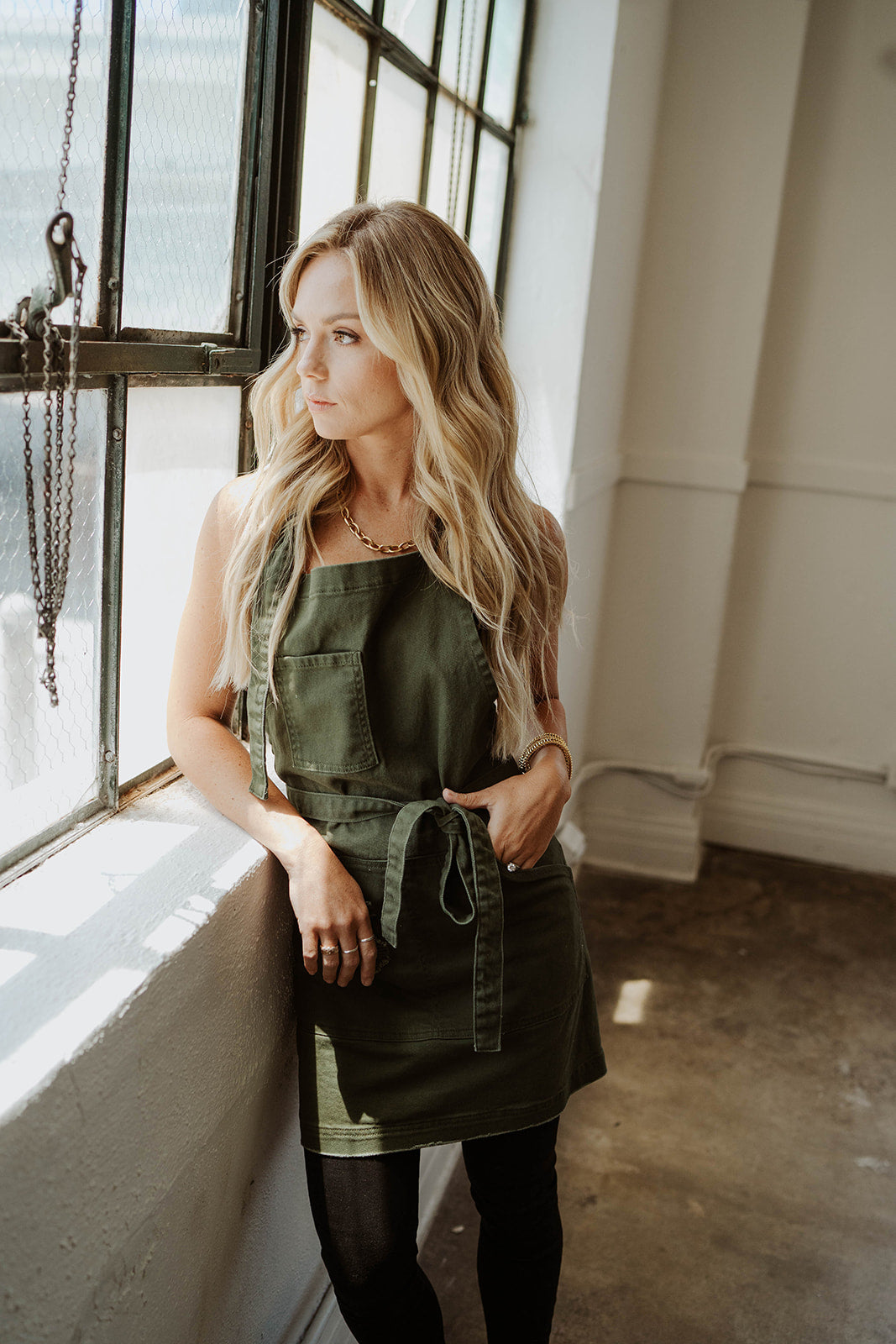
The organic stretch denim styles—Navy Pinstripe, Olive Green, Black Acid Washed Denim—soften with age rather than weakening, a characteristic of natural fiber construction. Machine washing doesn't degrade the fabric; it actually improves hand feel while maintaining stain resistance. This is the opposite of mass-produced blends, which pill, fade, and lose structural integrity after 20–30 washes.
One-size-fits-all adjustability contributes to longevity in a practical way: these aprons fit men and women across all body types, so a salon or barbershop can standardize on a single inventory. When staff turnover happens, the apron moves to the next team member without issue. That's 3–7 years of use across multiple wearers, which is unheard of with sized garments.
Denim vs. Bleach-Proof Leather: Which Lasts Longer?
| Material | Lifespan (Daily Use) | Best For | Maintenance |
|---|---|---|---|
| 100% Organic Stretch Denim | 4–7 years | Barbers, general salon work, bartenders, tattoo artists, florists | Machine wash, tumble dry; softens over time |
| 100% Bleach-Proof Vegan Leather | 5–7+ years | Colorists, high-volume bleach/toner work, estheticians | Wipe clean in seconds; no washing needed |
Denim excels in breathability and comfort across long shifts. It's stain-resistant but not stain-proof, so colorists working with vivid fashion shades will see some marking over time—though this doesn't affect function. Bleach-proof leather is the choice for professionals who need zero chemical absorption. It's slightly less breathable but eliminates the "stained apron" look entirely, which matters in client-facing environments where presentation counts.
Both materials outlast mass-produced alternatives by 3–5x, but the decision comes down to your daily chemical exposure. If you're mixing bleach bowls every hour, leather pays for itself in months. If you're cutting, trimming, and doing occasional color, denim delivers years of reliable performance at a lower price point.
Design Features That Add Years to Your Apron
Pockets are where cheap aprons fail first. Thin, unlined pockets stretch and tear when loaded with metal tools. J. Clark Designed aprons use deep, reinforced pockets sized specifically for professional shears, clippers, combs, and color brushes. The pocket structure is built into the apron body with double-stitched seams, not tacked on as an afterthought, so they hold shape and bear weight for years.

Adjustable tie waists and strap systems matter more than most professionals realize. Fixed sizing means the apron pulls at odd angles depending on your body, concentrating wear. Fully adjustable designs let you dial in fit, which distributes tension evenly and reduces stress on attachment points. This is why one-size-fits-all construction, when done correctly with quality hardware, actually extends apron life compared to S/M/L sizing with cheaper components.
What to Expect: Break-In, Maintenance, and When to Replace
Organic stretch denim aprons have a 2–4 week break-in period where the fabric molds to your body and movement patterns. The material softens, stretch increases slightly, and the apron starts to feel custom-fitted. This is normal and desirable—it means the fibers are relaxing without losing structural integrity. After break-in, expect consistent performance for years.
Bleach-proof leather requires no break-in. It's ready to perform from day one and maintains the same wipe-clean characteristics throughout its lifespan. The only maintenance is occasional wiping with a damp cloth. No oils, no conditioners—the material is engineered to resist degradation from both chemicals and cleaning products.
You'll know it's time to replace an apron when:
- Seams separate: If stitching fails at major stress points (shoulder straps, pocket corners) and re-stitching isn't practical.
- Material thins visibly: Hold the apron up to light—if you see light through the fabric where you didn't before, the fibers are breaking down.
- Chemical damage: For denim, if bleach has created brittle spots or holes. For leather, if the surface loses its non-porous quality and starts absorbing liquids.
With handcrafted aprons built from professional-grade materials, replacement is typically driven by style preference or career changes, not failure. That's the difference between an investment and a consumable.
Recommended Styles by Professional Need
For colorists processing bleach daily: Full Black Leather or Cocoa Brown Leather
Both are 100% bleach-proof vegan leather. Bleach, toner, and vivid color wipe off in seconds without staining. These aprons maintain a clean, professional appearance even in high-volume color environments where denim would show wear. Price: $99. Shop salon aprons.
For barbers and general cutting work: Navy Pinstripe, Olive Green, or Black Acid Washed Denim
100% organic stretch denim with stain resistance and breathability. Deep pockets hold clippers, guards, combs, and shears. Cross-back straps distribute weight across long shifts. Machine washable. Price: $59–$79. Shop barber aprons.
For bartenders and restaurant professionals: Terracotta, The Envy, or Pure Black Distressed
Durable denim that resists spills and wipes clean. Professional appearance that transitions from prep to service. Pockets sized for bar tools, bottle openers, and order pads. Shop restaurant aprons.
The Bottom Line
Handcrafted aprons last 3–7 years with daily professional use because they're built from heavier materials, reinforced at stress points, and designed with ergonomics that reduce wear. Mass-produced alternatives fail in 6–18 months due to lightweight fabric, single-stitch construction, and poor weight distribution. For professionals whose livelihood depends on tools, comfort, and presentation, the choice is straightforward math: a $99 bleach-proof apron that lasts five years costs $20 per year. A $20 apron replaced every six months costs $40 per year—and delivers neck pain and stained fabric in the process.
Material choice matters most. Organic stretch denim offers breathability and softens with age while maintaining structure. Bleach-proof vegan leather eliminates chemical staining entirely and wipes clean in seconds. Both outlast mass-produced cotton blends by years, not months. Cross-back straps extend both apron life and your career by distributing weight properly and reducing postural strain.
J. Clark Designed aprons are trusted by 10,000+ salons, barbershops, and studios because they're built for the realities of professional work: chemical exposure, long shifts, heavy tool loads, and the need to look sharp in front of clients. That's not marketing—it's 1,444+ verified reviews averaging 4.8 stars, with durability as the most cited reason for repeat purchases.
FAQ
How long do denim salon aprons last compared to leather aprons?
Organic stretch denim aprons last 4–7 years with daily use, while 100% bleach-proof vegan leather aprons last 5–7+ years. Denim is breathable and softens over time but may show some staining from vivid colors. Leather is completely stain-proof and wipes clean but less breathable. Both significantly outlast mass-produced cotton blends, which typically fail within 6–18 months.
What makes handcrafted aprons more durable than store-bought aprons?
Handcrafted aprons use heavier-weight fabrics (10–12 oz denim vs. 4–6 oz cotton blends), reinforced stitching at stress points, and construction methods that prioritize load distribution. Pockets are built into the apron body with double stitching, not tacked on. Cross-back straps reduce concentrated stress on the neck and shoulders. These features add years to functional lifespan compared to single-stitch, cost-optimized mass production.
How often should I replace a professional salon or barber apron?
With a quality handcrafted apron, replacement is driven by preference, not failure. Expect 3–7 years of daily professional use. Replace when seams separate at major stress points, material thins visibly, or chemical damage compromises function. Mass-produced aprons typically require replacement every 6–18 months due to degraded fabric, torn pockets, or broken neck straps.
Are bleach-proof aprons really stain-proof, and how long does that last?
Yes. 100% bleach-proof vegan leather aprons have a non-porous surface layer that repels bleach, toner, and permanent color. Liquids sit on the surface and wipe off in seconds without penetrating the material. This performance lasts the entire lifespan of the apron (5–7+ years) because the material itself doesn't absorb chemicals. Unlike treated fabrics, where coatings degrade over time, the stain-proof property is built into the material structure.
Explore the full collection at J. Clark Designed.
```

Leave a comment
This site is protected by hCaptcha and the hCaptcha Privacy Policy and Terms of Service apply.