
What is the best apron for a barber who works in a vintage-themed shop?
Quick Answer: The best apron for a vintage-themed barbershop is a Navy Pinstripe or Over-Shoulder Black Acid Washed style in stretch denim—both offer the heritage aesthetic of classic barber tools while delivering cross-back ergonomics and reinforced pockets built for clippers, shears, and combs. Materials and construction matter more than surface design: choose 100% organic cotton denim that softens with age, paired with adjustable straps that distribute weight across your shoulders instead of strangling your neck during twelve-hour shifts.
Why vintage barbershop aprons demand more than just a nostalgic look
Vintage-themed barbershops trade on authenticity—leather chairs, straight razors, hot-towel service. Your apron is the one piece of workwear customers see for the entire appointment. A flimsy cotton tie-waist or a polyester costume apron signals theater, not craftsmanship.
You need an apron that looks period-appropriate but performs like modern professional gear. That means breathable natural fibers that soften over time (not stiffen), cross-back straps that eliminate neck fatigue, and pockets deep enough for a full set of clippers and guards. Most heritage-style aprons fail on function—too thin, straps slip, pockets too shallow for wireless tools.

Material science: why stretch denim beats canvas and polyester for vintage barbershop aprons
Canvas looks rugged but locks in heat and stains permanently. Polyester blends are cheap and photograph well—until the first hair clipping session, when static cling turns you into a walking lint roller. 100% organic cotton stretch denim solves both problems.
Here's why denim works for vintage-themed barbers:
- Breathability: Cotton fibers wick moisture during back-to-back fades in a shop with no AC and vintage ceiling fans.
- Stain resistance built into the weave: Oil-based pomades and tonic wipe off before they set; machine-wash cold and hang dry.
- Softens with age: New denim is structured; after twenty washes it molds to your body like a broken-in barber jacket.
- Visual weight: Denim reads as workwear heritage—it anchors pinstripes, acid washes, and distressed finishes without looking costume-y.
J. Clark Designed's stretch denim aprons use this exact fabric: structured enough to hold pocket shape when loaded with tools, flexible enough to move through a taper without binding at the waist.
Cross-back straps vs. neck-loop styles: the ergonomics vintage barbers actually need
Traditional barber aprons loop around the neck and tie at the waist. That design looked fine in 1920 when the average barber worked six-hour days. Modern barbers work ten- to twelve-hour shifts, often standing the entire time.
Neck-loop aprons create three problems:
- Neck and trapezius strain: All the weight—fabric, tools, the pull of your arms—concentrates on cervical vertebrae.
- Restricted breathing: Tie it loose and the apron sags; tie it snug and you're fighting the loop every time you lean forward for a lineup.
- Poor weight distribution: Clippers in the pocket pull the apron forward, creating a pendulum effect that tugs your head down.
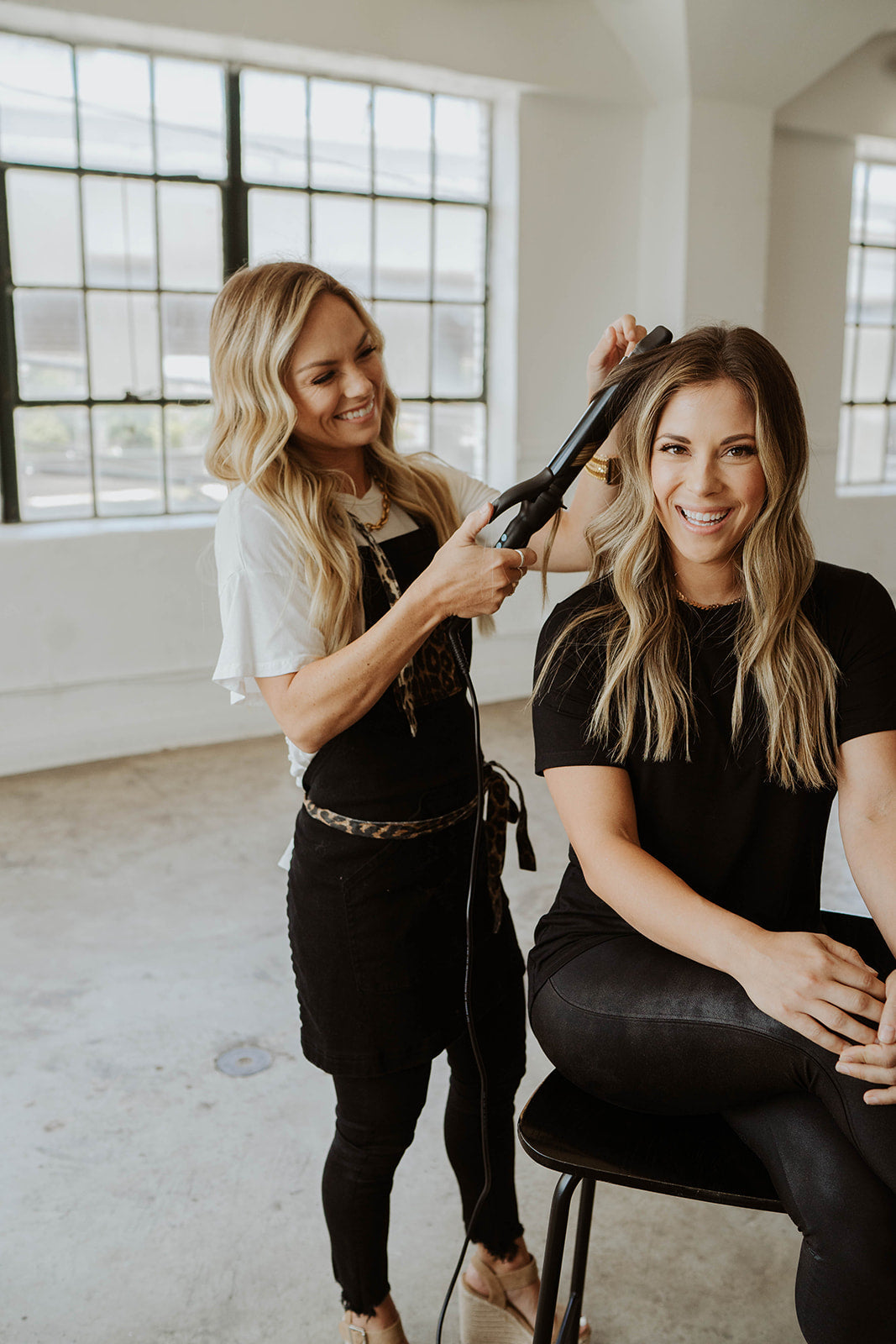
Cross-back aprons route straps across the shoulders and upper back, spreading load across the scapular region—the same biomechanics as a hiking backpack. You can load both pockets with a trimmer, guards, shears, and a phone without feeling the pull in your neck.
If you're committed to an around-the-neck aesthetic for vintage authenticity, look for an over-shoulder style—the strap sits wider and higher than a classic neck loop, reducing strain while maintaining the front-tie silhouette.

Best apron styles for vintage-themed barbershops: matching era aesthetics to modern function
Not every "vintage" barbershop is going for the same era. A 1920s speakeasy vibe demands different visual cues than a 1950s Americana shop or a 1970s rock-and-roll barber lounge. Here's how to match apron design to your specific aesthetic without sacrificing performance.
For 1920s–1940s speakeasy/classic barber aesthetic: Navy Pinstripe
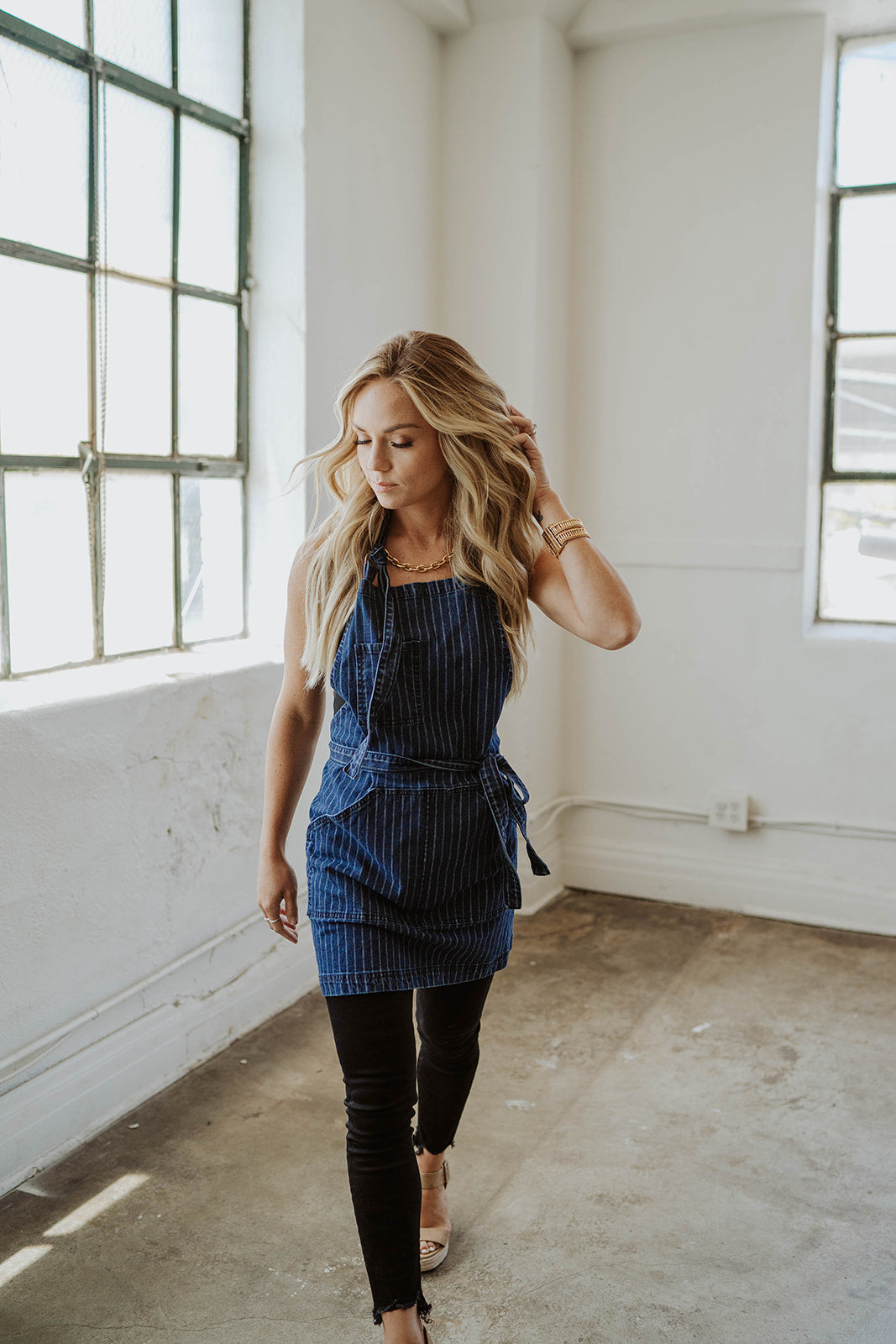
Pinstripes reference the tailored vests and shirtsleeves of early-20th-century barbers. The Navy Pinstripe in stretch denim delivers that Prohibition-era formality while keeping you cool during hot-towel shaves. Cross-back straps, reinforced pockets for straight razors and shears, machine washable. $59.
For 1950s Americana/mid-century modern shops: Olive Green or Terracotta
Olive and terracotta are the colors of vintage service-industry uniforms—gas station attendants, soda jerks, diner staff. Both aprons use the same stain-resistant stretch denim and cross-back construction. The earth tones pair well with checkerboard tile, chrome fixtures, and neon signage. Shop both styles at $59–$69.
For 1970s rock-and-roll or outlaw barber themes: Black Acid Washed Denim or The Outlaw
Acid wash and distressed black denim evoke vintage denim jackets and biker gear. The Black Acid Washed Denim and The Outlaw both feature faded, broken-in finishes that look lived-in from day one. Same breathable cotton, same cross-back straps, same reinforced pockets. If you want an over-shoulder option (strap across the front of the neck instead of crossing the back), the Over-Shoulder Black Acid Washed maintains the aesthetic with a slightly more traditional silhouette. $69–$79.
For shops that mix vintage fixtures with modern minimalism: Pure Black Distressed
All-black aprons are the safest bet when your decor mixes eras—Edison bulbs, reclaimed wood, black barber chairs, industrial metal. The Pure Black Distressed is subtly textured, never flat-black polyester. Denim base, cross-back straps, deep pockets. $69.
When to choose 100% bleach-proof vegan leather over denim for a vintage barbershop
Most vintage barbershops stick to cuts, fades, shaves, and beard trims—services that don't involve chemical color or bleach. But if you offer gray blending, color correction, or fashion color (increasingly common in high-end barber/salon hybrids), denim isn't enough.
100% bleach-proof vegan leather aprons let you wipe toner and color off in real time. The surface is non-porous—bleach, 40-volume developer, and semi-permanent dye literally bead up and wipe away with a damp towel. No staining, no ghost marks, no pre-treating before the wash.
Two leather options work for vintage aesthetics:
- Cocoa Brown Leather: Rich tobacco brown that references vintage leather aprons from butcher shops and watchmakers. $99.
- Full Black Leather: Matte black with the same bleach-proof finish. Pairs with any vintage color palette. $99.
Both use the same cross-back strap system and reinforced pocket design as the denim line. The leather is heavier than denim but distributes weight identically—no neck strain.

Pocket depth, tool weight, and why "one size fits all" matters for vintage shop aesthetics
Vintage barbershops often outfit the entire team in matching aprons for photos, social media, and brand cohesion. Ordering different sizes for different barbers breaks the visual uniformity—and creates inventory headaches when you hire someone new.
J. Clark Designed aprons are one size fits all: adjustable cross-back straps and a tie waist accommodate men and women across all body types. You can order six Navy Pinstripe aprons for your whole crew without measuring anyone. The adjustability also means the apron fits the same way whether you're wearing a T-shirt in July or a flannel and hoodie in December.
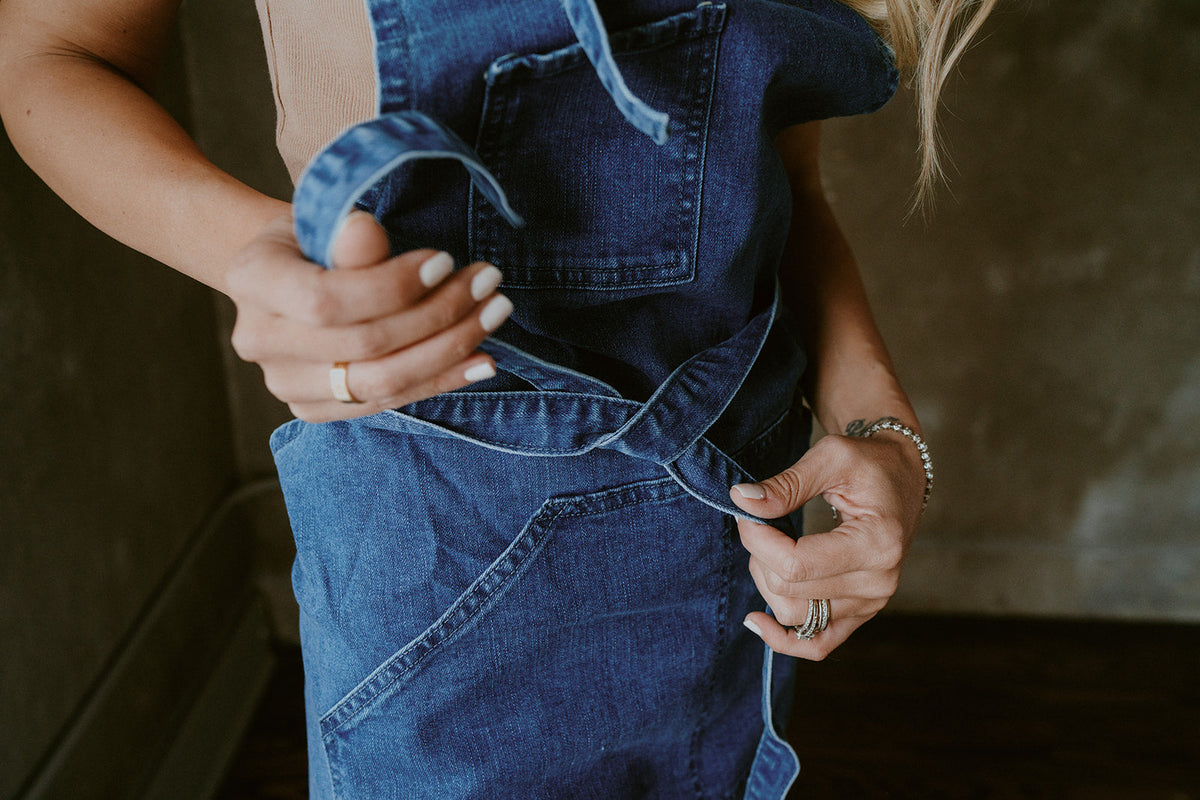
Pocket depth is standardized at 9 inches front-to-back, 7 inches wide—deep enough for:
- Full-size cordless clippers (Wahl Senior, Andis Master)
- Guard sets in a magnetic case
- Shears and thinning shears (up to 7-inch blades)
- Straight razor, comb, phone, and texture powder
The pockets are reinforced at the top edge and bottom corner—the two failure points on most aprons. Even after two years of daily clipper weight, the pocket holds its shape.
Durability comparison: how long should a vintage barbershop apron last?
Most barbers replace aprons every six to eight months—not because the fabric wears out, but because pockets sag, straps fray, or stains become permanent. Here's how different materials hold up under real shop conditions:
| Material | Lifespan | Common Failure Point |
|---|---|---|
| Polyester blend | 4–6 months | Static cling, permanent oil stains, strap fraying |
| Waxed canvas | 8–12 months | Wax coating cracks, pockets sag under tool weight, hot and non-breathable |
| 100% cotton (non-stretch) | 10–14 months | Shrinks after repeated washing, binds at waist, pockets lose shape |
| 100% organic cotton stretch denim | 24+ months | Minimal—softens with age, retains pocket structure, machine washable |
| 100% bleach-proof vegan leather | 36+ months | Surface scratches (cosmetic only), never stains or absorbs chemicals |
J. Clark Designed aprons carry a 4.8/5-star rating from 1,444+ verified reviews, with durability cited most often. Barbers report two-year lifespans on denim aprons even with daily use, five washes per week, and full tool loads. The cross-back straps don't stretch out—they're double-stitched with bar tacks at stress points.
The Bottom Line
The best apron for a vintage-themed barbershop balances period-appropriate aesthetics with modern ergonomics and material science. Navy Pinstripe, Black Acid Washed Denim, and Over-Shoulder styles deliver the visual weight of heritage barber gear while using 100% organic cotton stretch denim that breathes, resists stains, and softens over years of use. Cross-back straps eliminate neck strain during twelve-hour shifts, and reinforced pockets hold clippers, shears, and combs without sagging.
If your shop offers color services alongside cuts and shaves, 100% bleach-proof vegan leather in Cocoa Brown or Full Black keeps you stain-free while maintaining the vintage workwear look. One-size-fits-all construction lets you outfit your entire crew in matching aprons without measuring—critical for shops that prioritize visual cohesion.
Choose your apron based on the era you're referencing, the services you offer, and the hours you work. Surface design matters, but construction and materials determine whether you're replacing it in six months or still wearing it in three years.
FAQ
What apron material works best for barbers who don't use color or bleach?
100% organic cotton stretch denim is ideal for traditional barbering—cuts, fades, shaves, beard trims. It's breathable during long shifts, resists pomade and tonic stains, and softens with age instead of stiffening. Machine wash cold, hang dry, and it holds up for two-plus years of daily use.
Do cross-back aprons look too modern for a vintage barbershop aesthetic?
No—the straps cross behind your back, invisible to customers. From the front, a Navy Pinstripe or Black Acid Washed apron reads as classic barber workwear. The ergonomic benefit (no neck strain) is invisible but critical during ten-hour days. If you want a more traditional front silhouette, over-shoulder styles keep the strap visible across the chest while still distributing weight better than a neck loop.
Can I outfit my whole barbershop team in the same apron without ordering different sizes?
Yes. J. Clark Designed aprons are one-size-fits-all: adjustable cross-back straps and a tie waist fit men and women across all body types. Order the same style for everyone—no size charts, no inventory headaches, and perfect visual cohesion for team photos and branding.
How do I clean a denim barber apron without fading the color?
Machine wash cold on gentle cycle, hang dry or tumble low. The stretch denim is pre-washed and colorfast—it won't bleed or fade with normal laundering. Skip fabric softener (it coats fibers and reduces breathability) and avoid bleach on denim styles. For leather aprons, wipe with a damp cloth after each shift; no machine washing needed.
Explore the full collection at J. Clark Designed.
```

Leave a comment
This site is protected by hCaptcha and the hCaptcha Privacy Policy and Terms of Service apply.