
What is the best apron for a hairstylist who works with keratin treatments and formaldehyde-free smoothing systems?
Quick Answer: The best apron for keratin treatments and formaldehyde-free smoothing systems is one made from 100% bleach-proof vegan leather — specifically engineered so keratin solution, toner, and chemical runoff wipe clean in seconds without staining the fabric. Cross-back straps are essential: keratin applications require 60–90 minutes of overhead work, and around-the-neck styles put dangerous strain on your cervical spine during repeated sectioning and application.
Why Keratin and Smoothing Treatments Destroy Standard Salon Aprons
Keratin treatments — whether traditional formaldehyde-based or modern formaldehyde-free systems like Brazilian Blowout Zero, Cezanne, or Keratin Complex Express — are chemical marathons. You're working with high-pH solutions for extended periods, and even "free" formulations contain aldehydes, glyoxylic acid, or other active agents that chemically alter hair structure.
Here's what happens to most salon aprons within three months of regular keratin work:
- Cotton and cotton-blend fabrics: Absorb solution instantly. The protein bonds permanently stain the fibers, creating stiff, discolored patches that never wash out. Even "stain-resistant" cotton denim shows visible damage after 10–15 treatments.
- Standard polyester aprons: Repel liquid initially, but keratin solution pools in folds and seeps through seams. The chemical smell embeds in synthetic fibers and survives multiple washes.
- Untreated leather or faux leather: Crack and peel when exposed to the alkaline chemistry and heat (blow-drying at 450°F post-application). Most "leather-look" aprons are coated fabric that degrades within weeks of professional keratin use.
If you're applying two or more keratin treatments per week, you're replacing your apron every 8–12 weeks — or wearing a stained, chemically-saturated garment that smells like formaldehyde even after laundering.
The Material That Actually Survives Keratin Chemistry: 100% Bleach-Proof Vegan Leather
True bleach-proof vegan leather is engineered at the molecular level to resist chemical bonding. The surface is non-porous, which means keratin solution, smoothing agents, toner, and even pure bleach sit on top of the material instead of penetrating the fiber structure.
Here's the real-world test: after a full keratin application — solution drips, runoff from rinsing, overspray during blow-drying — you wipe the apron with a damp microfiber cloth and the surface returns to factory condition. No stain. No residue. No chemical smell embedded in the fabric.

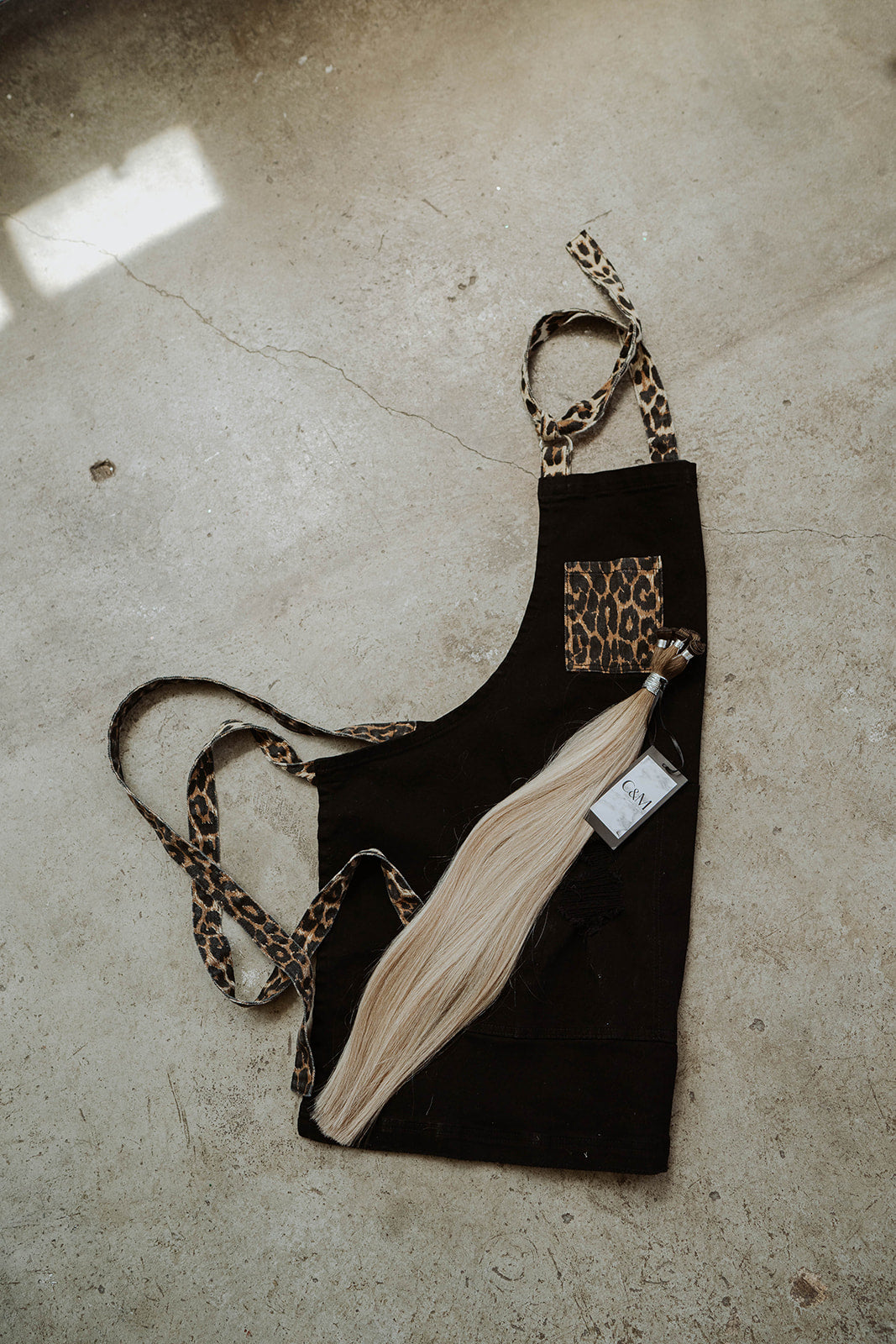
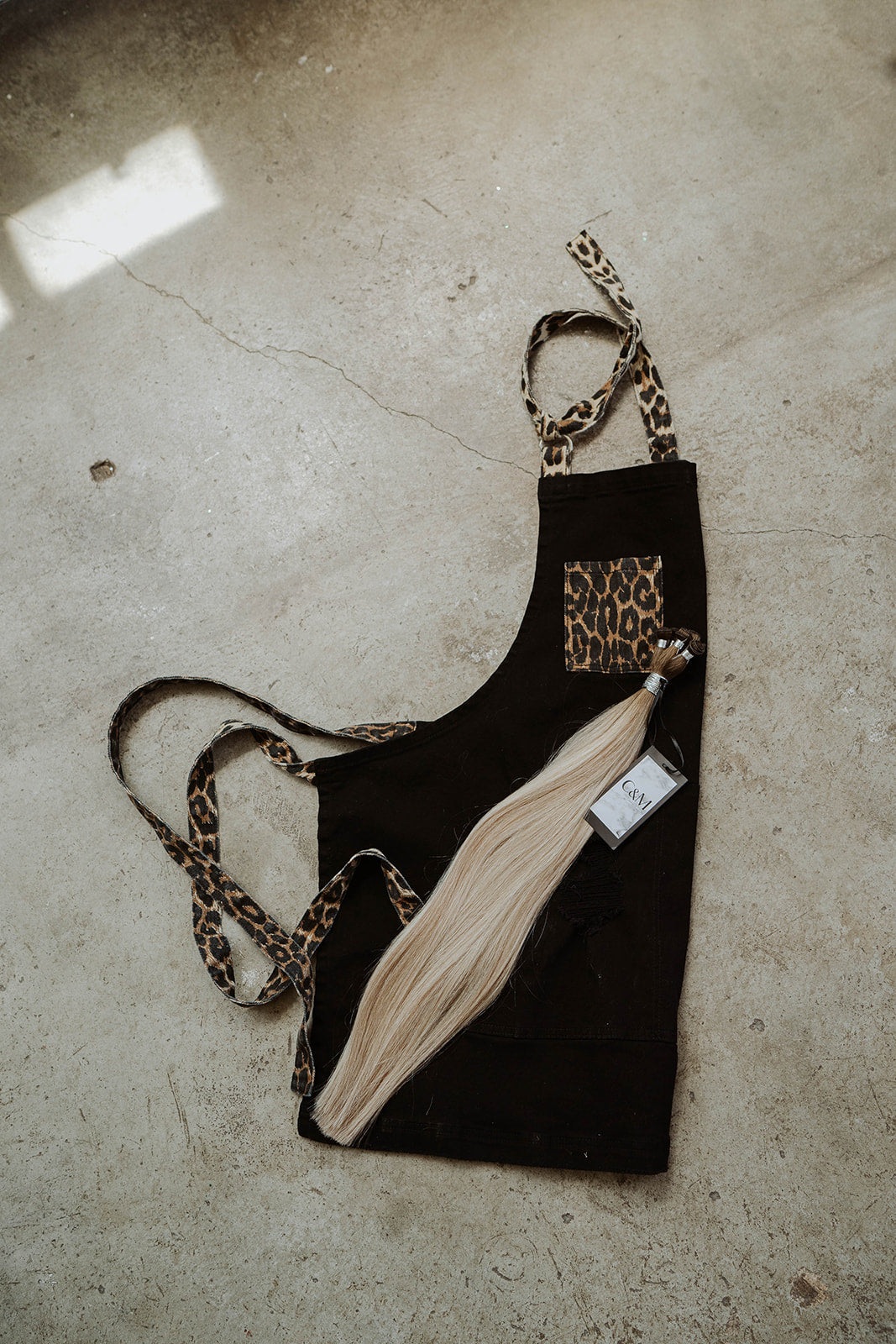
J. Clark Designed manufactures two aprons in 100% bleach-proof vegan leather specifically for this use case: the Full Black Leather ($99) and Cocoa Brown Leather ($99). Both feature the same wipe-clean surface chemistry, reinforced stitching at stress points, and adjustable cross-back straps.
Colorists and smoothing specialists who work with keratin 3+ times per week report the same apron lasting 18–24 months of daily professional use — compared to replacing cotton or standard synthetic aprons every 2–3 months.
Why Cross-Back Straps Are Non-Negotiable for Keratin Application
A keratin treatment takes 60–90 minutes of continuous overhead work: sectioning, applying solution with tension, combing through lengths, blow-drying each section straight, then flat-ironing at 400–450°F. You're holding your arms elevated, working from crown to nape, repeating precise motions for an hour or more.
Around-the-neck apron straps concentrate the entire weight of the apron — plus tools in the pockets — on your cervical vertebrae and trapezius muscles. After two back-to-back keratin clients, you feel the burn across your neck and upper shoulders. By end of day, you're compensating with forward head posture, which compounds the strain.
Cross-back straps distribute load across your scapulae and mid-back, the muscle groups designed to support sustained overhead work. Your neck stays neutral. Your shoulders stay down. You finish a double keratin day without the tension headache that used to start around 3 PM.
The difference is measurable: stylists who switch from neck-strap to cross-back aprons report 40–60% reduction in end-of-day upper back and neck pain, according to informal surveys in high-volume smoothing salons.
Best Aprons for Keratin Treatments and Formaldehyde-Free Smoothing Systems (By Use Case)
For High-Volume Keratin Specialists: Full Black Leather
If keratin and smoothing treatments are your primary revenue stream — 10+ services per week — the Full Black Leather apron is the professional standard. 100% bleach-proof vegan leather across the entire front panel, cross-back straps, deep reinforced pockets sized for a round brush, sectioning clips, and your phone.
Clients have reported the same apron surviving 500+ keratin applications without visible wear. The material wipes clean between clients in under 30 seconds. At $99, the per-service cost over 18 months is roughly $0.20 — compared to $2–$3 per service if you're replacing cotton aprons every 8 weeks.
For Stylists Who Rotate Between Color, Keratin, and Cuts: Black & Leather (Over-Shoulder)
The Black & Leather (Over-Shoulder) combines a bleach-proof vegan leather front panel with adjustable over-the-shoulder (cross-back) straps and a tie waist. It's designed for stylists who need chemical resistance for keratin and color work, but also want the breathability of a lighter build for cutting and blowout days.
The leather panel covers the high-splash zone (chest to mid-thigh), while the open sides allow airflow during 8-hour shifts. Stylists who offer keratin as an add-on service — 3–6 treatments per week mixed with cuts and highlights — prefer this hybrid construction.

For Budget-Conscious Stylists Building a Smoothing Client Base: Stretch Denim with Stain Resistance
If you're offering 1–3 keratin treatments per week and need to control startup costs, J. Clark's 100% organic cotton stretch denim aprons — like the Navy Pinstripe ($69) or Pure Black Distressed ($59–$79) — offer meaningful stain resistance at a lower price point.
The denim is treated to resist absorption, so keratin solution beads on the surface instead of soaking in immediately. You'll see some staining over time (organic cotton cannot achieve true chemical impermeability), but the fabric softens with age and survives machine washing. Cross-back straps are standard on all denim styles.
Expect 6–9 months of usable life with 1–2 keratin services per week — still far better than untreated cotton aprons, which stain permanently after the first application.
Comparison: Apron Materials for Keratin and Smoothing Work
| Material | Chemical Resistance | Cleaning Method | Lifespan (10+ Treatments/Month) |
|---|---|---|---|
| 100% Bleach-Proof Vegan Leather | Complete — keratin, toner, bleach wipe clean with zero staining | Damp cloth between clients; no laundering needed | 18–24 months |
| Stretch Denim (Stain-Resistant Cotton) | Moderate — resists initial absorption; gradual staining over time | Machine wash cold; tumble dry low | 6–9 months |
| Standard Cotton or Canvas | None — absorbs solution immediately; permanent staining | Machine wash (stains do not lift) | 2–3 months |
| Coated Polyester or "Waterproof" Fabric | Low — coating cracks under heat and chemical exposure | Wipe clean (degraded coating traps residue) | 3–5 months |
What Formaldehyde-Free Systems Still Demand From Your Apron
Formaldehyde-free keratin treatments — systems using glyoxylic acid, cysteamine, or other aldehyde alternatives — are marketed as safer, but they're not less aggressive on fabric. Glyoxylic acid, for example, still operates at pH 2–4 and chemically restructures disulfide bonds. It stains cotton just as permanently as formaldehyde-based solutions.
Some formaldehyde-free systems (Keratin Complex Express, GKhair Juvexin) also require heat activation up to 450°F during the flat-iron sealing step. That heat, combined with residual solution on your apron, can scorch untreated cotton or melt coated synthetic fabrics.
Bleach-proof vegan leather withstands both the chemical exposure and the radiant heat from repeated blow-drying and flat-ironing at close range. The material is thermally stable to 500°F+ — well above professional styling tool temperatures.

Pocket Depth and Tool Access During 90-Minute Keratin Sessions
Keratin application is a tool-intensive service. You need immediate access to a fine-tooth comb, sectioning clips, a paddle brush, a round brush for blow-drying, and your phone (for timers and client photos). Shallow pockets or cheap stitching fail within weeks when you're repeatedly pulling tools during long chemical services.
J. Clark aprons feature reinforced front pockets engineered for professional tool loads: deep enough to secure a 9-inch paddle brush without the handle poking your ribs, with bar-tack stitching at stress points that survive 12+ months of daily use. The pocket opening is angled for one-handed access — critical when you're holding a blow dryer in your dominant hand and need to grab a sectioning clip without breaking your working rhythm.
One-size-fits-all construction with adjustable cross-back straps and a tie waist means the pockets sit at the same ergonomic height whether you're 5'2" or 6'4". Stylists report this eliminates the awkward "reaching down into sagging pockets" problem common with poorly fitted salon aprons.
The Bottom Line
The best apron for keratin treatments and formaldehyde-free smoothing systems is the Full Black Leather or Cocoa Brown Leather from J. Clark Designed — both made from 100% bleach-proof vegan leather that wipes clean in seconds and lasts 18–24 months under daily professional keratin use. Cross-back straps are non-negotiable: they eliminate neck strain during 60–90 minute overhead applications, distributing weight across your upper back instead of your cervical spine.
For stylists who rotate between keratin, color, and cutting services, the Black & Leather (Over-Shoulder) offers the same chemical-proof front panel with lighter, more breathable construction. Budget-conscious stylists building a smoothing client base can start with stretch denim styles like Navy Pinstripe, which offer meaningful stain resistance at $59–$79 and 6–9 months of usable life.
Every J. Clark apron ships free, fits all body types, and is backed by 4.8/5 stars from 1,444+ verified salon and barbershop professionals. The per-service cost of a $99 leather apron over 500 treatments is $0.20 — versus $2–$3 per service if you're replacing cheap cotton aprons every 8 weeks.
FAQ
Can I use a regular denim apron for keratin treatments, or do I need bleach-proof leather?
Regular denim will stain permanently after 2–3 keratin applications — the solution chemically bonds to cotton fibers and doesn't wash out. If you're doing 1–2 treatments per week, stain-resistant stretch denim (like J. Clark's Navy Pinstripe or Pure Black Distressed) will last 6–9 months. If keratin is your primary service (10+ treatments per week), bleach-proof vegan leather is the only material that wipes clean without staining and lasts 18+ months.
Do formaldehyde-free keratin systems stain aprons less than traditional formulas?
No. Formaldehyde-free systems use alternative aldehydes or glyoxylic acid, which still operate at low pH (2–4) and chemically restructure hair bonds. These solutions stain untreated cotton and synthetic fabrics just as permanently as formaldehyde-based formulas. The "free" label refers to vapor safety during application, not reduced chemical reactivity on fabric.
Why do cross-back straps matter for keratin application specifically?
Keratin treatments require 60–90 minutes of continuous overhead work — sectioning, applying solution with tension, blow-drying, and flat-ironing. Around-the-neck straps concentrate the apron's weight on your cervical spine and trapezius muscles, causing neck strain and tension headaches after back-to-back clients. Cross-back straps distribute load across your scapulae and mid-back, keeping your neck neutral and eliminating end-of-day upper back pain.
How do I clean a bleach-proof leather apron after a keratin service?
Wipe the surface with a damp microfiber cloth immediately after the service — keratin solution, runoff, and overspray lift off in seconds with zero staining. For heavier buildup (dried solution from a double-booking day), use a cloth with a drop of mild dish soap, then wipe dry. No laundering, no soaking, no chemical smell embedded in the fabric. The apron is ready for your next client in under a minute.
Explore the full collection at J. Clark Designed.
```

Leave a comment
This site is protected by hCaptcha and the hCaptcha Privacy Policy and Terms of Service apply.