
How to style your work apron and still look professional
**Quick Answer:** Style your work apron professionally by choosing patterns that complement (not clash with) your outfit, keeping the apron properly adjusted to sit at mid-thigh length, and selecting materials that elevate rather than cheapen your overall appearance. The secret isn't hiding your apron—it's treating it as intentional workwear that signals expertise, much like a chef's whites or a jeweler's loupe.
## Why Your Apron Is Part of Your Professional Image
Your apron isn't just protection—it's the first thing clients notice when you greet them. In service industries where trust is everything, looking polished while wearing functional gear communicates competence. A hairstylist in a stained cotton smock sends a different message than one wearing a tailored denim apron with leather accents.
The difference comes down to three factors: material quality, fit, and how you incorporate the apron into your overall presentation. Professional-grade aprons made from organic cotton denim with genuine leather details (like those handcrafted by J. Clark Designed) naturally elevate your look because the materials themselves have visual weight and structure. Cheap polyester blends do the opposite—they wrinkle, shine artificially under salon lighting, and read as disposable rather than professional.
 ## The Foundation: Proper Fit Changes Everything
Before you think about color or pattern, get the fit right. An apron that's too long drags your silhouette down and makes you look shorter. Too short, and it stops protecting your clothes where you actually need coverage.
**The ideal length:** Your apron should end at mid-thigh, roughly where your fingertips fall when your arms hang naturally at your sides. This length protects your torso and upper legs while maintaining proportion. If you're under 5'4", look for aprons with adjustable hem options or choose styles that run slightly shorter by design.
**Strap adjustment matters more than you think:** Cross-back straps should distribute weight across your shoulders without pulling fabric tight across your chest or creating gaps at the sides. The front bib should lie flat without bunching. When properly adjusted, you shouldn't feel the apron's weight on your neck at all—that's the advantage of well-engineered cross-back designs that understand ergonomics.
Brass hardware isn't just aesthetic—it allows micro-adjustments throughout your shift as you move. Cheap plastic buckles lock into fixed positions, forcing you to tolerate poor fit.
## Color and Pattern Strategy for Different Professional Settings
**Solid neutrals (black, navy, olive, cranberry)** work in conservative environments—high-end salons, hotel spas, upscale barbershops where clients expect refined aesthetics. Black denim with leather accents is the universal professional choice because it reads serious without being boring. Navy pinstripe adds subtle visual interest while maintaining formality.
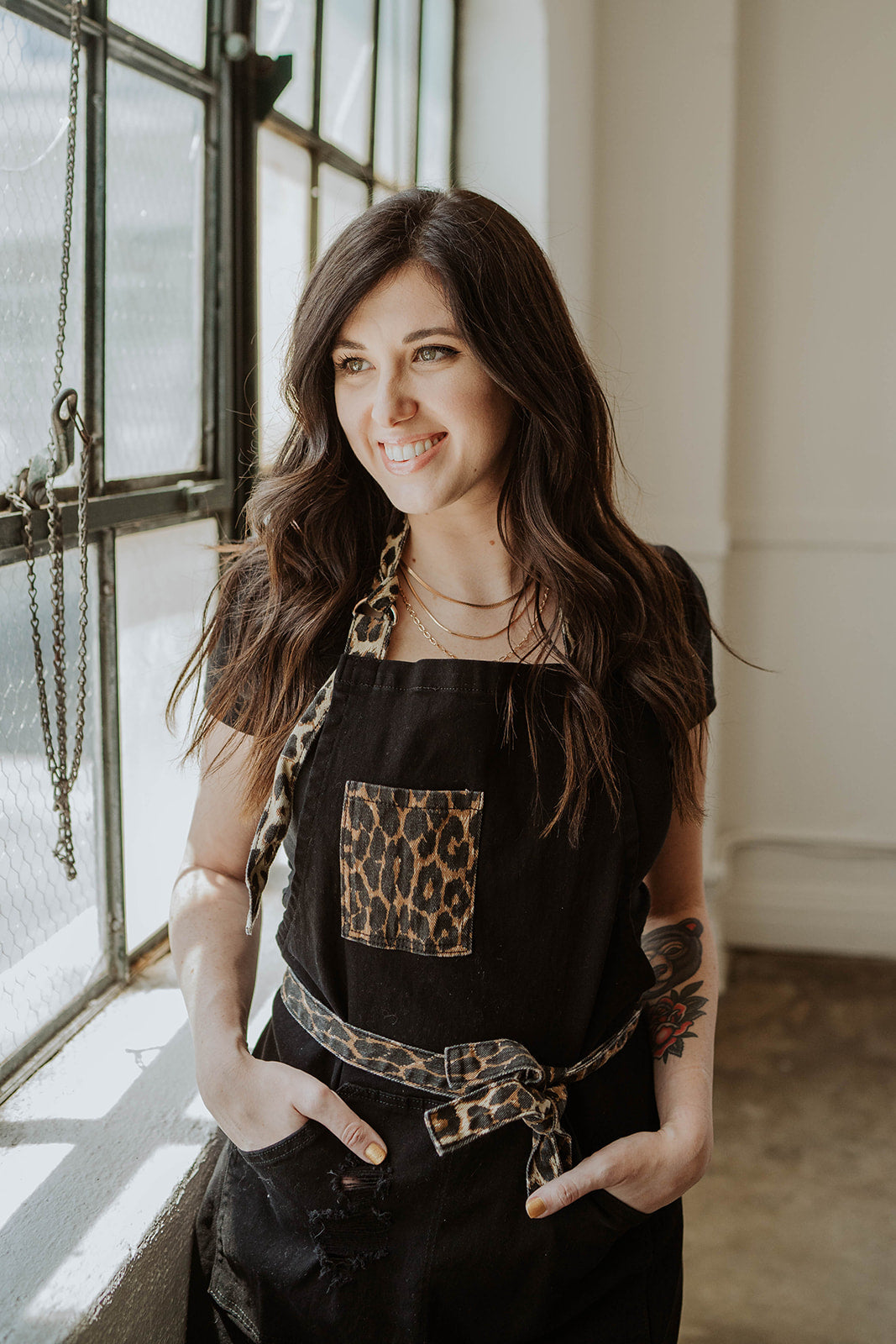
**Pattern with purpose (leopard, camo, floral)** works when your brand personality is creative, bold, or approachable. A leopard two-tone apron signals confidence—you're not hiding in the background. Black camo patterns offer edge without overwhelming, ideal for barbers and tattoo artists whose clients expect artistic sensibility.
The test: Does the pattern compete with or complement your client's focus? In hair color consultations where you're showing swatches, busy patterns distract. During cuts where technique is the show, patterns add personality without interference.
## The Foundation: Proper Fit Changes Everything
Before you think about color or pattern, get the fit right. An apron that's too long drags your silhouette down and makes you look shorter. Too short, and it stops protecting your clothes where you actually need coverage.
**The ideal length:** Your apron should end at mid-thigh, roughly where your fingertips fall when your arms hang naturally at your sides. This length protects your torso and upper legs while maintaining proportion. If you're under 5'4", look for aprons with adjustable hem options or choose styles that run slightly shorter by design.
**Strap adjustment matters more than you think:** Cross-back straps should distribute weight across your shoulders without pulling fabric tight across your chest or creating gaps at the sides. The front bib should lie flat without bunching. When properly adjusted, you shouldn't feel the apron's weight on your neck at all—that's the advantage of well-engineered cross-back designs that understand ergonomics.
Brass hardware isn't just aesthetic—it allows micro-adjustments throughout your shift as you move. Cheap plastic buckles lock into fixed positions, forcing you to tolerate poor fit.
## Color and Pattern Strategy for Different Professional Settings
**Solid neutrals (black, navy, olive, cranberry)** work in conservative environments—high-end salons, hotel spas, upscale barbershops where clients expect refined aesthetics. Black denim with leather accents is the universal professional choice because it reads serious without being boring. Navy pinstripe adds subtle visual interest while maintaining formality.
**Pattern with purpose (leopard, camo, floral)** works when your brand personality is creative, bold, or approachable. A leopard two-tone apron signals confidence—you're not hiding in the background. Black camo patterns offer edge without overwhelming, ideal for barbers and tattoo artists whose clients expect artistic sensibility.
The test: Does the pattern compete with or complement your client's focus? In hair color consultations where you're showing swatches, busy patterns distract. During cuts where technique is the show, patterns add personality without interference.
 **Seasonal adjustments:** Lighter colors (peach, cranberry) feel fresh in spring and summer without sacrificing professionalism. Deeper tones (olive, rustic browns) anchor fall and winter looks. This isn't fashion trend-chasing—it's visual harmony with your environment's lighting and mood.
## Coordinating Your Apron with Your Outfit
The biggest styling mistake is treating your apron as separate from your clothes. They're one unified outfit.
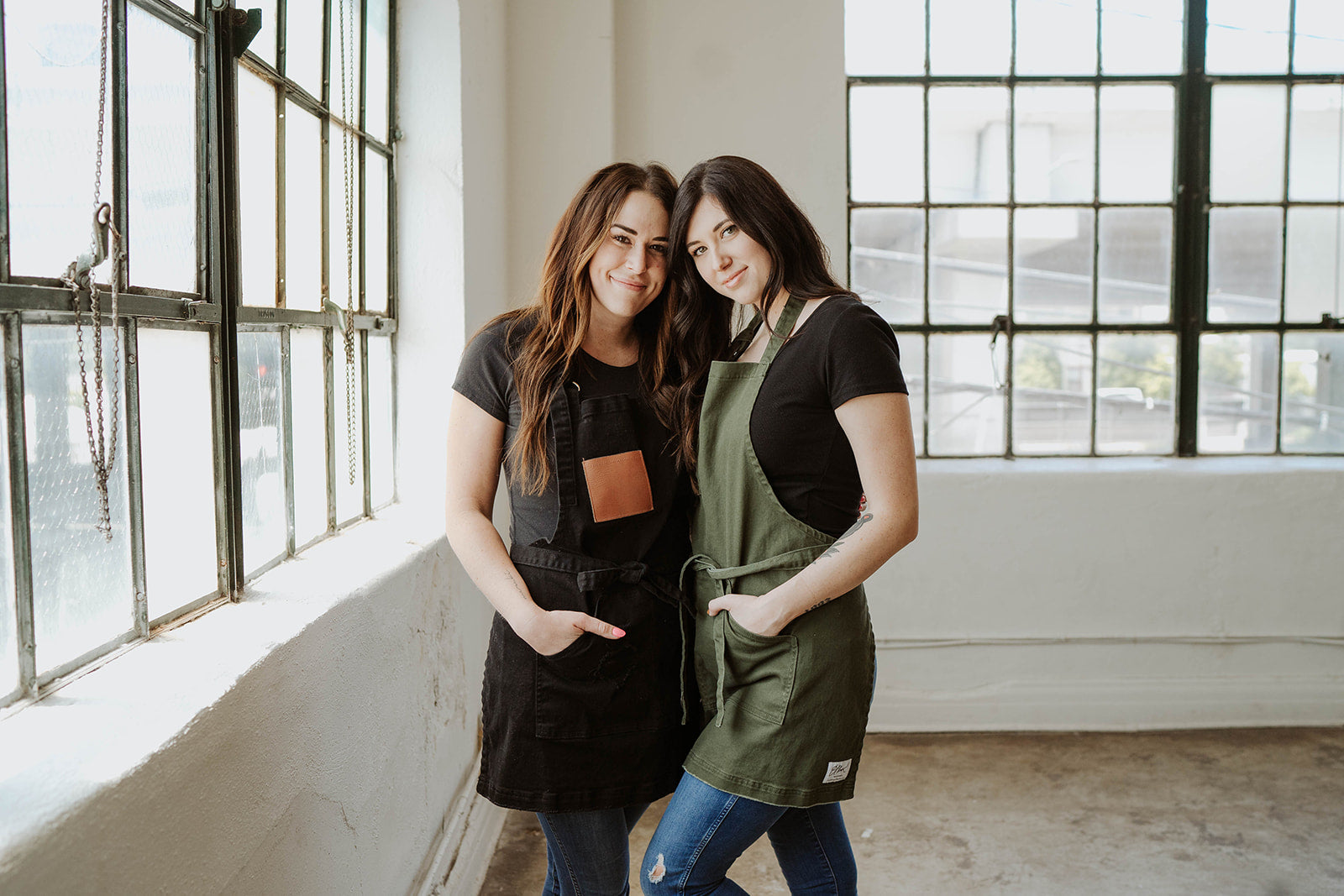
**Match your bottoms to your apron's undertone:** Black aprons pair naturally with black jeans or trousers. Navy aprons look intentional with dark indigo denim. Olive aprons work beautifully with khaki or tan pants. This creates a visual column that elongates your silhouette rather than chopping it into competing sections.
**Keep your top simpler than your apron:** If you're wearing a patterned apron, choose solid tops in colors pulled from the apron pattern. A leopard apron pairs with black, cream, or cognac brown tops. Solid aprons give you freedom to wear textured or printed shirts underneath.
**Necklines matter:** Crew necks and V-necks work best because they don't compete with the apron's neckline. Avoid turtlenecks unless you're going for a specific architect-at-the-drafting-table aesthetic (which can work in design-forward salons). Button-downs look polished under aprons, especially when you leave the top button undone for a relaxed-but-intentional vibe.
**Sleeve length changes the professionalism level:** Long sleeves under your apron read more polished and finished. Short sleeves or tanks work fine in casual settings but can look less put-together in upscale environments. Three-quarter sleeves offer a middle ground—professional but practical for handwork.
## Material Quality You Can See and Feel
Clients subconsciously register material quality. Organic cotton denim has visible texture—a subtle grain that catches light naturally. It softens with wear rather than degrading, developing character like quality leather shoes. Synthetic blends look uniform and plasticky under any scrutiny.
Genuine leather accents (straps, pocket reinforcements, utility loops) signal craftsmanship. Leather develops patina over time, showing your apron has history and durability. Vegan leather or vinyl alternatives crack, peel, and look cheap after a few months—undoing any professional image you're trying to project.
**Seasonal adjustments:** Lighter colors (peach, cranberry) feel fresh in spring and summer without sacrificing professionalism. Deeper tones (olive, rustic browns) anchor fall and winter looks. This isn't fashion trend-chasing—it's visual harmony with your environment's lighting and mood.
## Coordinating Your Apron with Your Outfit
The biggest styling mistake is treating your apron as separate from your clothes. They're one unified outfit.
**Match your bottoms to your apron's undertone:** Black aprons pair naturally with black jeans or trousers. Navy aprons look intentional with dark indigo denim. Olive aprons work beautifully with khaki or tan pants. This creates a visual column that elongates your silhouette rather than chopping it into competing sections.
**Keep your top simpler than your apron:** If you're wearing a patterned apron, choose solid tops in colors pulled from the apron pattern. A leopard apron pairs with black, cream, or cognac brown tops. Solid aprons give you freedom to wear textured or printed shirts underneath.
**Necklines matter:** Crew necks and V-necks work best because they don't compete with the apron's neckline. Avoid turtlenecks unless you're going for a specific architect-at-the-drafting-table aesthetic (which can work in design-forward salons). Button-downs look polished under aprons, especially when you leave the top button undone for a relaxed-but-intentional vibe.
**Sleeve length changes the professionalism level:** Long sleeves under your apron read more polished and finished. Short sleeves or tanks work fine in casual settings but can look less put-together in upscale environments. Three-quarter sleeves offer a middle ground—professional but practical for handwork.
## Material Quality You Can See and Feel
Clients subconsciously register material quality. Organic cotton denim has visible texture—a subtle grain that catches light naturally. It softens with wear rather than degrading, developing character like quality leather shoes. Synthetic blends look uniform and plasticky under any scrutiny.
Genuine leather accents (straps, pocket reinforcements, utility loops) signal craftsmanship. Leather develops patina over time, showing your apron has history and durability. Vegan leather or vinyl alternatives crack, peel, and look cheap after a few months—undoing any professional image you're trying to project.
 Brass hardware (buckles, rivets, D-rings) ages gracefully, developing warmth and depth. Nickel-plated steel tarnishes. These details matter because they're at eye level when you're working face-to-face with clients.
## Pocket Styling: Function That Looks Intentional
Deep, well-placed pockets keep tools accessible without bulging awkwardly. The professional move is organizing your pockets by weight and frequency of use:
- **Heaviest items** (shears, clippers) in lower pockets centered on your thighs—this keeps weight balanced
- **Medium-weight tools** (combs, brushes, sectioning clips) in chest or upper hip pockets
- **Lightweight items** (pens, product samples, business cards) in smaller utility pockets
When pockets are stuffed randomly, your apron looks lumpy and pulls asymmetrically. Organized pockets create clean lines even when fully loaded. Professional-grade aprons designed with deep pockets (like J. Clark Designed's signature styles) accommodate full-size professional shears without fabric strain or sagging.
## Details That Elevate Your Professional Presence
**Keep your apron clean, but not sterile:** Light fading and softening on denim aprons shows they're well-used professional tools. Obvious stains, fraying, or holes signal neglect. Machine-washable aprons (check care labels—most denim styles handle washing well) maintain freshness without dry cleaning costs.
**Adjust throughout the day:** Retighten straps after lunch when clothes have shifted. Straighten your apron before greeting new clients. These micro-adjustments take five seconds and maintain that crisp presentation.
**Coordinate your shoes:** Your apron's aesthetic should flow to your footwear. Black leather aprons pair naturally with black leather shoes or boots. Canvas aprons work with clean sneakers. The goal is visual coherence from shoulders to floor.
**Consider your tools' finish:** If you're wearing brass-accented aprons, brass-finished shears look intentional. Matte black aprons pair well with black-handled tools. This level of coordination is subtle but registers with clients who appreciate attention to detail.
## When to Remove Your Apron (And When Not To)
**Keep it on:** During consultations where you'll transition directly into work. When greeting clients you'll be serving immediately. During the entire service appointment—removing it mid-service looks unfinished.
**Take it off:** For front-desk transactions unrelated to service. During breaks in your personal space. When attending professional events or meetings where you're not actively working. Your apron signals "I'm working mode"—removing it signals transition to other contexts.
Never drape your apron over a chair back or leave it wadded on a counter where clients can see. Either wear it properly or hang it out of sight. Half-wearing protective gear looks sloppy regardless of quality.
## Building Your Apron Wardrobe
Most professionals need two to three aprons minimum:
1. **Your primary workhorse:** The apron you wear 60-70% of the time in your dominant color (black, navy, or denim)
2. **Your personality piece:** A patterned or colored apron that reflects your brand and refreshes your look
3. **Your backup:** A duplicate of your primary or a complementary neutral for rotation while one is being cleaned
This rotation prevents wear-out and keeps you looking fresh. Premium aprons last 3-5 years with proper care (some stylists report 7+ years from handcrafted denim aprons), making the per-wear cost remarkably low compared to disposable alternatives.
## The Bottom Line
Professional apron styling isn't about hiding your functional workwear—it's about choosing quality materials, maintaining proper fit, and coordinating your apron with your overall presentation. When your apron looks intentional rather than incidental, it reinforces rather than undermines your expertise. The professionals who look most polished in their aprons treat them as essential workwear that deserves the same consideration as any other element of their professional wardrobe.
## FAQ
**Can you wear an apron with a dress or skirt professionally?**
Yes, absolutely—choose an apron length that hits just below your hem or at mid-thigh, whichever is longer. Solid, structured aprons in neutral tones work best to avoid competing visual elements. Ensure your dress or skirt has enough room for comfortable movement since aprons add a layer at the waist.
**How do you prevent your apron from looking too casual in upscale settings?**
Material quality makes the difference. Organic cotton denim with genuine leather accents and brass hardware reads as intentional professional gear rather than casual kitchen wear. Keep the fit tailored (not loose or baggy), maintain clean lines, and coordinate colors with your outfit rather than letting the apron be an afterthought.
**Should your apron match your salon or studio's aesthetic?**
It should complement without being identical to everyone else's unless you're part of a team with uniform requirements. Your apron can reflect your personal brand within the studio's overall vibe—choose colors and patterns that harmonize with the space while maintaining your individual style signature.
**How often should you replace a professional work apron?**
Quality matters more than timeline. Handcrafted aprons in durable materials like organic cotton denim last 3-7 years with regular use and proper care. Replace when you see structural issues (weak strap stitching, torn pockets, excessive thinning in high-wear areas) rather than normal softening and patina development, which actually improve the apron's appearance and comfort.
Explore the full collection at [J. Clark Designed](https://www.jclarkdesigned.com/collections/all)
Brass hardware (buckles, rivets, D-rings) ages gracefully, developing warmth and depth. Nickel-plated steel tarnishes. These details matter because they're at eye level when you're working face-to-face with clients.
## Pocket Styling: Function That Looks Intentional
Deep, well-placed pockets keep tools accessible without bulging awkwardly. The professional move is organizing your pockets by weight and frequency of use:
- **Heaviest items** (shears, clippers) in lower pockets centered on your thighs—this keeps weight balanced
- **Medium-weight tools** (combs, brushes, sectioning clips) in chest or upper hip pockets
- **Lightweight items** (pens, product samples, business cards) in smaller utility pockets
When pockets are stuffed randomly, your apron looks lumpy and pulls asymmetrically. Organized pockets create clean lines even when fully loaded. Professional-grade aprons designed with deep pockets (like J. Clark Designed's signature styles) accommodate full-size professional shears without fabric strain or sagging.
## Details That Elevate Your Professional Presence
**Keep your apron clean, but not sterile:** Light fading and softening on denim aprons shows they're well-used professional tools. Obvious stains, fraying, or holes signal neglect. Machine-washable aprons (check care labels—most denim styles handle washing well) maintain freshness without dry cleaning costs.
**Adjust throughout the day:** Retighten straps after lunch when clothes have shifted. Straighten your apron before greeting new clients. These micro-adjustments take five seconds and maintain that crisp presentation.
**Coordinate your shoes:** Your apron's aesthetic should flow to your footwear. Black leather aprons pair naturally with black leather shoes or boots. Canvas aprons work with clean sneakers. The goal is visual coherence from shoulders to floor.
**Consider your tools' finish:** If you're wearing brass-accented aprons, brass-finished shears look intentional. Matte black aprons pair well with black-handled tools. This level of coordination is subtle but registers with clients who appreciate attention to detail.
## When to Remove Your Apron (And When Not To)
**Keep it on:** During consultations where you'll transition directly into work. When greeting clients you'll be serving immediately. During the entire service appointment—removing it mid-service looks unfinished.
**Take it off:** For front-desk transactions unrelated to service. During breaks in your personal space. When attending professional events or meetings where you're not actively working. Your apron signals "I'm working mode"—removing it signals transition to other contexts.
Never drape your apron over a chair back or leave it wadded on a counter where clients can see. Either wear it properly or hang it out of sight. Half-wearing protective gear looks sloppy regardless of quality.
## Building Your Apron Wardrobe
Most professionals need two to three aprons minimum:
1. **Your primary workhorse:** The apron you wear 60-70% of the time in your dominant color (black, navy, or denim)
2. **Your personality piece:** A patterned or colored apron that reflects your brand and refreshes your look
3. **Your backup:** A duplicate of your primary or a complementary neutral for rotation while one is being cleaned
This rotation prevents wear-out and keeps you looking fresh. Premium aprons last 3-5 years with proper care (some stylists report 7+ years from handcrafted denim aprons), making the per-wear cost remarkably low compared to disposable alternatives.
## The Bottom Line
Professional apron styling isn't about hiding your functional workwear—it's about choosing quality materials, maintaining proper fit, and coordinating your apron with your overall presentation. When your apron looks intentional rather than incidental, it reinforces rather than undermines your expertise. The professionals who look most polished in their aprons treat them as essential workwear that deserves the same consideration as any other element of their professional wardrobe.
## FAQ
**Can you wear an apron with a dress or skirt professionally?**
Yes, absolutely—choose an apron length that hits just below your hem or at mid-thigh, whichever is longer. Solid, structured aprons in neutral tones work best to avoid competing visual elements. Ensure your dress or skirt has enough room for comfortable movement since aprons add a layer at the waist.
**How do you prevent your apron from looking too casual in upscale settings?**
Material quality makes the difference. Organic cotton denim with genuine leather accents and brass hardware reads as intentional professional gear rather than casual kitchen wear. Keep the fit tailored (not loose or baggy), maintain clean lines, and coordinate colors with your outfit rather than letting the apron be an afterthought.
**Should your apron match your salon or studio's aesthetic?**
It should complement without being identical to everyone else's unless you're part of a team with uniform requirements. Your apron can reflect your personal brand within the studio's overall vibe—choose colors and patterns that harmonize with the space while maintaining your individual style signature.
**How often should you replace a professional work apron?**
Quality matters more than timeline. Handcrafted aprons in durable materials like organic cotton denim last 3-7 years with regular use and proper care. Replace when you see structural issues (weak strap stitching, torn pockets, excessive thinning in high-wear areas) rather than normal softening and patina development, which actually improve the apron's appearance and comfort.
Explore the full collection at [J. Clark Designed](https://www.jclarkdesigned.com/collections/all)
## The Foundation: Proper Fit Changes Everything
Before you think about color or pattern, get the fit right. An apron that's too long drags your silhouette down and makes you look shorter. Too short, and it stops protecting your clothes where you actually need coverage.
**The ideal length:** Your apron should end at mid-thigh, roughly where your fingertips fall when your arms hang naturally at your sides. This length protects your torso and upper legs while maintaining proportion. If you're under 5'4", look for aprons with adjustable hem options or choose styles that run slightly shorter by design.
**Strap adjustment matters more than you think:** Cross-back straps should distribute weight across your shoulders without pulling fabric tight across your chest or creating gaps at the sides. The front bib should lie flat without bunching. When properly adjusted, you shouldn't feel the apron's weight on your neck at all—that's the advantage of well-engineered cross-back designs that understand ergonomics.
Brass hardware isn't just aesthetic—it allows micro-adjustments throughout your shift as you move. Cheap plastic buckles lock into fixed positions, forcing you to tolerate poor fit.
## Color and Pattern Strategy for Different Professional Settings
**Solid neutrals (black, navy, olive, cranberry)** work in conservative environments—high-end salons, hotel spas, upscale barbershops where clients expect refined aesthetics. Black denim with leather accents is the universal professional choice because it reads serious without being boring. Navy pinstripe adds subtle visual interest while maintaining formality.
**Pattern with purpose (leopard, camo, floral)** works when your brand personality is creative, bold, or approachable. A leopard two-tone apron signals confidence—you're not hiding in the background. Black camo patterns offer edge without overwhelming, ideal for barbers and tattoo artists whose clients expect artistic sensibility.
The test: Does the pattern compete with or complement your client's focus? In hair color consultations where you're showing swatches, busy patterns distract. During cuts where technique is the show, patterns add personality without interference.
**Seasonal adjustments:** Lighter colors (peach, cranberry) feel fresh in spring and summer without sacrificing professionalism. Deeper tones (olive, rustic browns) anchor fall and winter looks. This isn't fashion trend-chasing—it's visual harmony with your environment's lighting and mood.
## Coordinating Your Apron with Your Outfit
The biggest styling mistake is treating your apron as separate from your clothes. They're one unified outfit.
**Match your bottoms to your apron's undertone:** Black aprons pair naturally with black jeans or trousers. Navy aprons look intentional with dark indigo denim. Olive aprons work beautifully with khaki or tan pants. This creates a visual column that elongates your silhouette rather than chopping it into competing sections.
**Keep your top simpler than your apron:** If you're wearing a patterned apron, choose solid tops in colors pulled from the apron pattern. A leopard apron pairs with black, cream, or cognac brown tops. Solid aprons give you freedom to wear textured or printed shirts underneath.
**Necklines matter:** Crew necks and V-necks work best because they don't compete with the apron's neckline. Avoid turtlenecks unless you're going for a specific architect-at-the-drafting-table aesthetic (which can work in design-forward salons). Button-downs look polished under aprons, especially when you leave the top button undone for a relaxed-but-intentional vibe.
**Sleeve length changes the professionalism level:** Long sleeves under your apron read more polished and finished. Short sleeves or tanks work fine in casual settings but can look less put-together in upscale environments. Three-quarter sleeves offer a middle ground—professional but practical for handwork.
## Material Quality You Can See and Feel
Clients subconsciously register material quality. Organic cotton denim has visible texture—a subtle grain that catches light naturally. It softens with wear rather than degrading, developing character like quality leather shoes. Synthetic blends look uniform and plasticky under any scrutiny.
Genuine leather accents (straps, pocket reinforcements, utility loops) signal craftsmanship. Leather develops patina over time, showing your apron has history and durability. Vegan leather or vinyl alternatives crack, peel, and look cheap after a few months—undoing any professional image you're trying to project.
Brass hardware (buckles, rivets, D-rings) ages gracefully, developing warmth and depth. Nickel-plated steel tarnishes. These details matter because they're at eye level when you're working face-to-face with clients.
## Pocket Styling: Function That Looks Intentional
Deep, well-placed pockets keep tools accessible without bulging awkwardly. The professional move is organizing your pockets by weight and frequency of use:
- **Heaviest items** (shears, clippers) in lower pockets centered on your thighs—this keeps weight balanced
- **Medium-weight tools** (combs, brushes, sectioning clips) in chest or upper hip pockets
- **Lightweight items** (pens, product samples, business cards) in smaller utility pockets
When pockets are stuffed randomly, your apron looks lumpy and pulls asymmetrically. Organized pockets create clean lines even when fully loaded. Professional-grade aprons designed with deep pockets (like J. Clark Designed's signature styles) accommodate full-size professional shears without fabric strain or sagging.
## Details That Elevate Your Professional Presence
**Keep your apron clean, but not sterile:** Light fading and softening on denim aprons shows they're well-used professional tools. Obvious stains, fraying, or holes signal neglect. Machine-washable aprons (check care labels—most denim styles handle washing well) maintain freshness without dry cleaning costs.
**Adjust throughout the day:** Retighten straps after lunch when clothes have shifted. Straighten your apron before greeting new clients. These micro-adjustments take five seconds and maintain that crisp presentation.
**Coordinate your shoes:** Your apron's aesthetic should flow to your footwear. Black leather aprons pair naturally with black leather shoes or boots. Canvas aprons work with clean sneakers. The goal is visual coherence from shoulders to floor.
**Consider your tools' finish:** If you're wearing brass-accented aprons, brass-finished shears look intentional. Matte black aprons pair well with black-handled tools. This level of coordination is subtle but registers with clients who appreciate attention to detail.
## When to Remove Your Apron (And When Not To)
**Keep it on:** During consultations where you'll transition directly into work. When greeting clients you'll be serving immediately. During the entire service appointment—removing it mid-service looks unfinished.
**Take it off:** For front-desk transactions unrelated to service. During breaks in your personal space. When attending professional events or meetings where you're not actively working. Your apron signals "I'm working mode"—removing it signals transition to other contexts.
Never drape your apron over a chair back or leave it wadded on a counter where clients can see. Either wear it properly or hang it out of sight. Half-wearing protective gear looks sloppy regardless of quality.
## Building Your Apron Wardrobe
Most professionals need two to three aprons minimum:
1. **Your primary workhorse:** The apron you wear 60-70% of the time in your dominant color (black, navy, or denim)
2. **Your personality piece:** A patterned or colored apron that reflects your brand and refreshes your look
3. **Your backup:** A duplicate of your primary or a complementary neutral for rotation while one is being cleaned
This rotation prevents wear-out and keeps you looking fresh. Premium aprons last 3-5 years with proper care (some stylists report 7+ years from handcrafted denim aprons), making the per-wear cost remarkably low compared to disposable alternatives.
## The Bottom Line
Professional apron styling isn't about hiding your functional workwear—it's about choosing quality materials, maintaining proper fit, and coordinating your apron with your overall presentation. When your apron looks intentional rather than incidental, it reinforces rather than undermines your expertise. The professionals who look most polished in their aprons treat them as essential workwear that deserves the same consideration as any other element of their professional wardrobe.
## FAQ
**Can you wear an apron with a dress or skirt professionally?**
Yes, absolutely—choose an apron length that hits just below your hem or at mid-thigh, whichever is longer. Solid, structured aprons in neutral tones work best to avoid competing visual elements. Ensure your dress or skirt has enough room for comfortable movement since aprons add a layer at the waist.
**How do you prevent your apron from looking too casual in upscale settings?**
Material quality makes the difference. Organic cotton denim with genuine leather accents and brass hardware reads as intentional professional gear rather than casual kitchen wear. Keep the fit tailored (not loose or baggy), maintain clean lines, and coordinate colors with your outfit rather than letting the apron be an afterthought.
**Should your apron match your salon or studio's aesthetic?**
It should complement without being identical to everyone else's unless you're part of a team with uniform requirements. Your apron can reflect your personal brand within the studio's overall vibe—choose colors and patterns that harmonize with the space while maintaining your individual style signature.
**How often should you replace a professional work apron?**
Quality matters more than timeline. Handcrafted aprons in durable materials like organic cotton denim last 3-7 years with regular use and proper care. Replace when you see structural issues (weak strap stitching, torn pockets, excessive thinning in high-wear areas) rather than normal softening and patina development, which actually improve the apron's appearance and comfort.
Explore the full collection at [J. Clark Designed](https://www.jclarkdesigned.com/collections/all)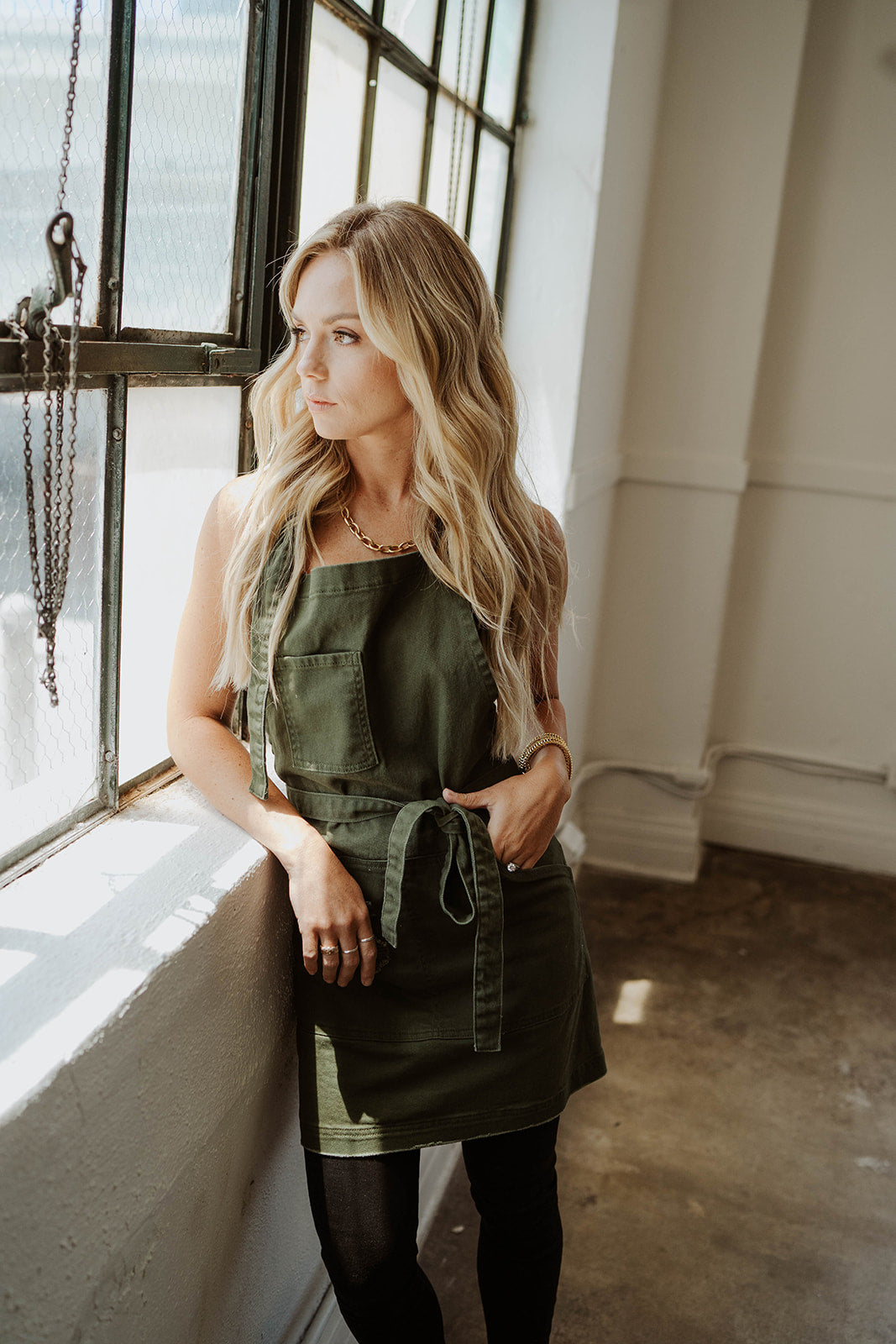
%20your%20outfit,%20keeping%20the%20apron%20properly%20adjusted%20to%20sit%20at%20mid-thigh%20length,%20and%20selecti...)
Leave a comment
This site is protected by hCaptcha and the hCaptcha Privacy Policy and Terms of Service apply.