
Best aprons for florists, ceramicists, and creative studio work
**Quick Answer:** The best aprons for florists, ceramicists, and creative studio work combine water-resistant or easy-clean materials (like waxed canvas or treated denim), deep pockets positioned for quick tool access, and cross-back strap designs that distribute weight across your shoulders during 8+ hour workdays. Look for aprons made from durable natural fibers like organic cotton denim with genuine leather accents—materials that actually improve with age and repeated cleaning cycles, not synthetic fabrics that degrade after a few months of exposure to water, clay dust, or plant debris.
## Why Creative Professionals Need Different Aprons Than Restaurant Workers
Walk into any pottery studio or flower shop, and you'll notice something immediately: the mess is different. Not just different in volume, but in *type*. Clay dust settles into every fiber. Flower stems leave tannin stains. Paint splatters dry into permanent marks. Wire cutters, trimming shears, and sculpting tools need homes that won't dull their edges against metal grommets.
Restaurant aprons are designed for spills and heat. Creative work aprons need to handle abrasion, moisture, sharp tools, and the physical demands of bending over workbenches for hours. The weight distribution matters more when you're leaning forward over a pottery wheel or reaching across a design table fifty times an hour.
**Material science matters here.** Cotton denim breathes and softens with each wash cycle, developing a patina that tells the story of your work. Waxed canvas sheds water initially but requires re-treatment. Polyester blends pill and trap odors. For creative work that involves both wet and dry materials, organic cotton denim with a tight weave performs better than almost anything else—it's why J. Clark Designed builds their aprons from it. The material absorbs minor splashes while remaining breathable during physical work.
 ## The Cross-Back Strap Design: Why It Actually Matters
Here's what nobody tells you until your neck is screaming after a 10-hour workshop day: traditional neck-loop aprons create a pressure point at your C7 vertebra. Every ounce of apron weight plus the tools in your pockets hangs from that single point.
Cross-back straps distribute load across your trapezius muscles and shoulder girdle. This isn't marketing language—it's basic ergonomics. When you're spending hours at a pottery wheel or arranging dozens of floral installations, that weight distribution prevents the headaches and shoulder tension that come from neck strain.
J. Clark Designed's adjustable cross-back system uses brass hardware that won't corrode from repeated exposure to water and plant materials. The straps adjust to different torso lengths, which matters more than you'd think—a strap position that works perfectly when you're standing upright needs to adjust when you're bending over a workbench.
**The practical test:** Fill your apron pockets with your actual tools. Wear it for three hours. If your neck hurts, the design failed. If your shoulders feel fine, the engineering worked.
## Deep Pockets Positioned for Quick Access
Florists need pruning shears accessible in under two seconds. Ceramicists need ribbon tools and needle tools within reach while their hands are covered in slip. Painters need brushes sorted by size without looking down.
Generic aprons put pockets wherever the pattern was easiest to cut. Professional-grade aprons engineer pocket placement based on hand position during actual work. Front pockets should hit at hip level—high enough that tools don't fall out when you bend, low enough that you don't have to reach up to grab them.
**Pocket depth matters as much as position.** Shallow pockets drop tools. Overly deep pockets bury them. The ideal depth for professional scissors and shears: 7-8 inches. For smaller hand tools: 5-6 inches. For pens and pencils: 4-5 inches with a reinforced edge that prevents fabric wear.
The best aprons include at least one utility pocket without dividers—this is where you store that weird specialty tool, the measuring tape, the roll of floral wire, the sponge you're currently using. One divided section for organized tools, one open pocket for everything else.
## The Cross-Back Strap Design: Why It Actually Matters
Here's what nobody tells you until your neck is screaming after a 10-hour workshop day: traditional neck-loop aprons create a pressure point at your C7 vertebra. Every ounce of apron weight plus the tools in your pockets hangs from that single point.
Cross-back straps distribute load across your trapezius muscles and shoulder girdle. This isn't marketing language—it's basic ergonomics. When you're spending hours at a pottery wheel or arranging dozens of floral installations, that weight distribution prevents the headaches and shoulder tension that come from neck strain.
J. Clark Designed's adjustable cross-back system uses brass hardware that won't corrode from repeated exposure to water and plant materials. The straps adjust to different torso lengths, which matters more than you'd think—a strap position that works perfectly when you're standing upright needs to adjust when you're bending over a workbench.
**The practical test:** Fill your apron pockets with your actual tools. Wear it for three hours. If your neck hurts, the design failed. If your shoulders feel fine, the engineering worked.
## Deep Pockets Positioned for Quick Access
Florists need pruning shears accessible in under two seconds. Ceramicists need ribbon tools and needle tools within reach while their hands are covered in slip. Painters need brushes sorted by size without looking down.
Generic aprons put pockets wherever the pattern was easiest to cut. Professional-grade aprons engineer pocket placement based on hand position during actual work. Front pockets should hit at hip level—high enough that tools don't fall out when you bend, low enough that you don't have to reach up to grab them.
**Pocket depth matters as much as position.** Shallow pockets drop tools. Overly deep pockets bury them. The ideal depth for professional scissors and shears: 7-8 inches. For smaller hand tools: 5-6 inches. For pens and pencils: 4-5 inches with a reinforced edge that prevents fabric wear.
The best aprons include at least one utility pocket without dividers—this is where you store that weird specialty tool, the measuring tape, the roll of floral wire, the sponge you're currently using. One divided section for organized tools, one open pocket for everything else.
 ## Material Choices: What Actually Holds Up to Creative Work
**Organic cotton denim (10-12 oz weight):** The gold standard for studio work. Softens with age, breathes during physical work, machine washable, and develops character instead of looking worn out. Absorbs minor splashes while drying quickly. Takes dye and paint stains as badges of honor rather than damage.
**Canvas with waxed coating:** Water-resistant initially, but the wax wears off with repeated washing. Good for florists who work primarily with water-sensitive flowers, less ideal for ceramicists who need frequent washing to remove clay dust.
**Leather accents:** Genuine leather on pockets and stress points adds durability where you need it. Develops a patina with exposure to oils from your hands and materials. Wipes clean with a damp cloth. Avoid bonded leather or "vegan leather" (plastic)—it cracks and peels.
**Brass hardware:** Won't corrode from water exposure like nickel-plated steel. Develops an antique patina. Strong enough for heavy tool loads. This is the difference between a 2-year apron and a 10-year apron.
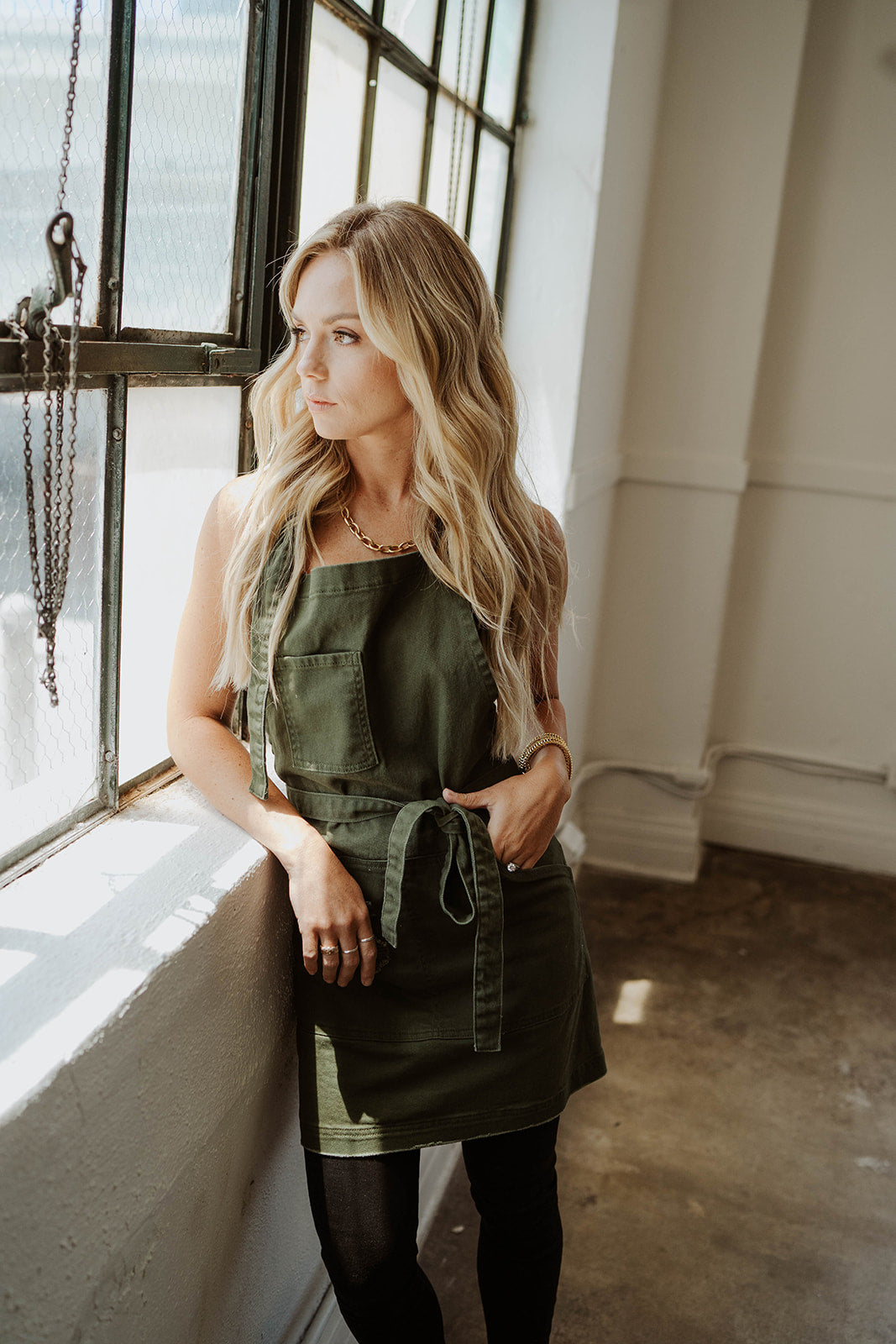
The J. Clark Designed collection uses this exact material combination: organic cotton denim bodies with genuine leather pocket reinforcements and brass adjustment hardware. Their Olive Green and Rustic Blast styles are particularly popular with florists and ceramicists because the natural earth tones hide the inevitable patina of creative work.
## Length and Coverage: Protecting What Matters
Full-length aprons (ankle-length) protect your legs when you're working with pottery wheels that throw slip everywhere or when you're carrying armfuls of cut branches. They're also hot and restrictive when you need to move quickly.
Mid-length aprons (knee-length) offer the best balance for most creative work. They protect your lap when you're sitting at a workbench, cover your thighs when you're standing, and don't tangle around your ankles when you're moving between stations.
**Coverage width matters too.** Narrow aprons (16-18 inches) leave your sides exposed. Full-coverage designs (24+ inches) wrap around your torso enough to protect when you're reaching across tables or turning at the wheel.
For florists specifically: consider whether you're doing primarily design work (sitting at a bench assembling arrangements) or installation work (carrying vessels and climbing ladders). Design work needs deep pockets and knee coverage. Installation work needs lighter weight and maximum mobility.
For ceramicists: throwing on a wheel requires full frontal coverage and side protection from slip throw. Hand-building needs less coverage but more pocket space for tools.
## Material Choices: What Actually Holds Up to Creative Work
**Organic cotton denim (10-12 oz weight):** The gold standard for studio work. Softens with age, breathes during physical work, machine washable, and develops character instead of looking worn out. Absorbs minor splashes while drying quickly. Takes dye and paint stains as badges of honor rather than damage.
**Canvas with waxed coating:** Water-resistant initially, but the wax wears off with repeated washing. Good for florists who work primarily with water-sensitive flowers, less ideal for ceramicists who need frequent washing to remove clay dust.
**Leather accents:** Genuine leather on pockets and stress points adds durability where you need it. Develops a patina with exposure to oils from your hands and materials. Wipes clean with a damp cloth. Avoid bonded leather or "vegan leather" (plastic)—it cracks and peels.
**Brass hardware:** Won't corrode from water exposure like nickel-plated steel. Develops an antique patina. Strong enough for heavy tool loads. This is the difference between a 2-year apron and a 10-year apron.
The J. Clark Designed collection uses this exact material combination: organic cotton denim bodies with genuine leather pocket reinforcements and brass adjustment hardware. Their Olive Green and Rustic Blast styles are particularly popular with florists and ceramicists because the natural earth tones hide the inevitable patina of creative work.
## Length and Coverage: Protecting What Matters
Full-length aprons (ankle-length) protect your legs when you're working with pottery wheels that throw slip everywhere or when you're carrying armfuls of cut branches. They're also hot and restrictive when you need to move quickly.
Mid-length aprons (knee-length) offer the best balance for most creative work. They protect your lap when you're sitting at a workbench, cover your thighs when you're standing, and don't tangle around your ankles when you're moving between stations.
**Coverage width matters too.** Narrow aprons (16-18 inches) leave your sides exposed. Full-coverage designs (24+ inches) wrap around your torso enough to protect when you're reaching across tables or turning at the wheel.
For florists specifically: consider whether you're doing primarily design work (sitting at a bench assembling arrangements) or installation work (carrying vessels and climbing ladders). Design work needs deep pockets and knee coverage. Installation work needs lighter weight and maximum mobility.
For ceramicists: throwing on a wheel requires full frontal coverage and side protection from slip throw. Hand-building needs less coverage but more pocket space for tools.
 ## Specific Recommendations by Craft
**For Florists:** Look for aprons with at least 3-4 pockets including one large enough for pruning shears and floral tape. Water resistance matters less than easy cleaning—you'll wash this weekly. Cross-back straps are non-negotiable if you're doing events or installations. The J. Clark Designed Olive Green or Navy Pinstripe styles work particularly well because the colors hide stem stains and the organic cotton denim handles repeated washing without degrading.
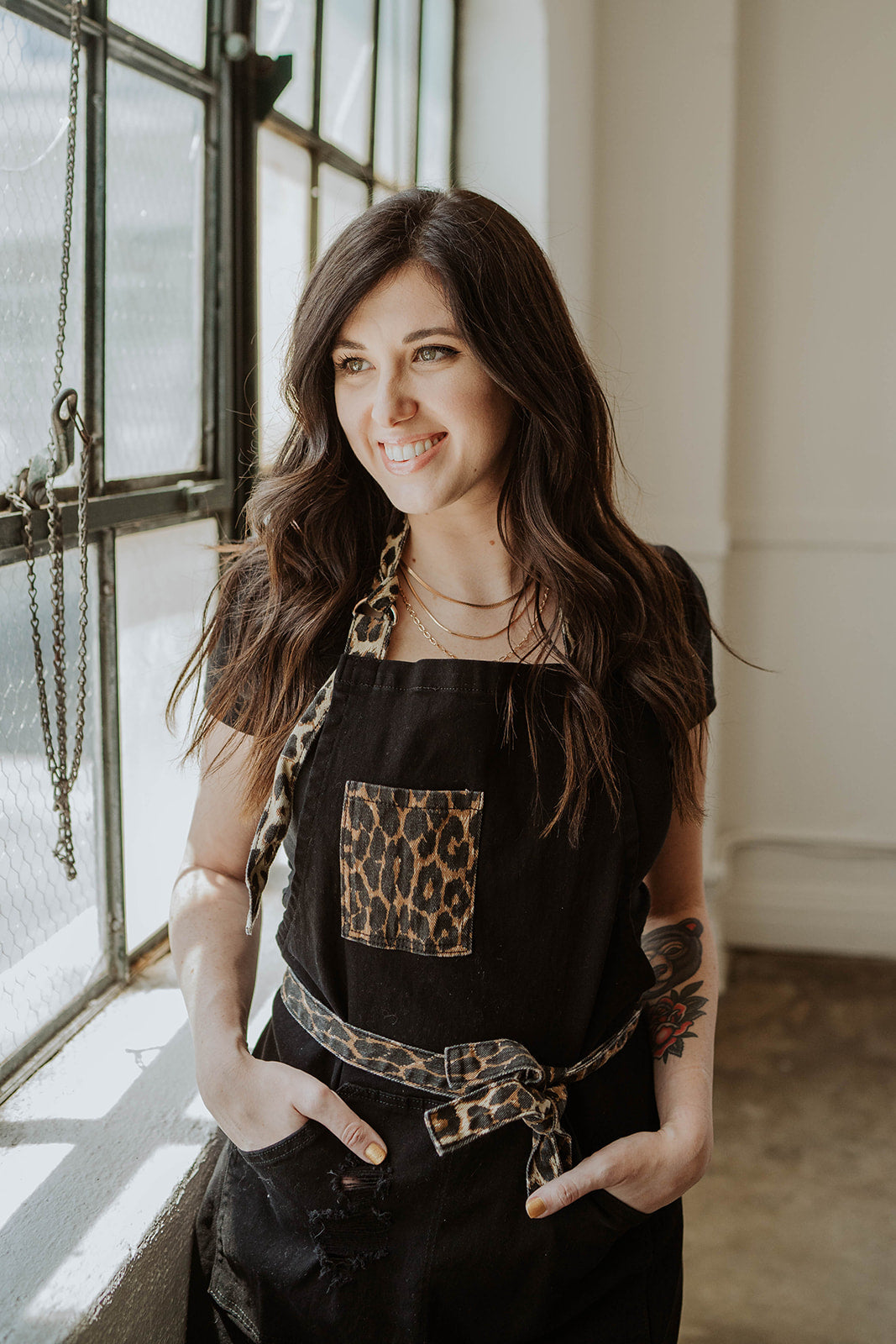
**For Ceramicists:** Prioritize full coverage (clay throws everywhere) and easy cleaning. Avoid aprons with excessive decorative elements that trap clay dust. Leather accents should be minimal—mostly at stress points. The Denim or Black & Leather styles from J. Clark Designed are studio favorites because the denim softens with repeated washing (you'll be washing this 2-3 times per week) and the simple design doesn't create dust traps.
**For Painters and Mixed Media Artists:** Deep pockets for brushes, palette knives, and color mixing tools. The apron will become a record of your work—choose colors and materials that look better with paint stains, not worse. Natural denim or darker colors age gracefully. Lighter colors show every mark (which some artists prefer as a living portfolio).
**For General Studio Work:** Versatility matters. Cross-back design, 4+ pockets, mid-length coverage, machine washable materials. The Black Camo or Rustic Blast styles offer the durability and pocket configuration that adapts to multiple creative disciplines.
## Care and Longevity: What to Expect
Quality aprons improve with age if you maintain them properly. Here's what works:
**Denim aprons:** Machine wash cold with similar colors. Tumble dry low or hang dry. The fabric will soften with each wash while maintaining structure. Expect 3-5 years of daily use before considering replacement, longer with rotation.
**Leather accents:** Wipe clean with damp cloth. Condition 2-3 times per year with leather balm if you work with drying materials. The leather will darken and develop patina—this is normal and desirable.
**Brass hardware:** Will develop antique patina. If you prefer bright brass, polish with brass cleaner. Otherwise, let it age naturally.
**Stain removal:** For denim, treat stains immediately with cold water. For set stains, use oxygen bleach (not chlorine). Most creative work stains become part of the apron's character rather than damage.
A well-constructed apron from quality materials costs $80-$130 but lasts 4-6 years of professional use. A cheap apron costs $25-$40 and lasts 6-12 months before the pockets tear, straps fray, and fabric pills. The lifetime cost calculation favors quality by a significant margin.
## The Bottom Line
The best aprons for creative studio work aren't the cheapest or the trendiest—they're the ones built from materials that improve with age, designed with ergonomics that prevent injury during long work sessions, and constructed with pocket configurations that match how you actually work. Organic cotton denim with leather accents and brass hardware, cross-back weight distribution, and mid-length coverage hits the sweet spot for florists, ceramicists, and studio artists who need gear that performs as hard as they do.
Your apron becomes an extension of your workspace. Choose materials and construction that honor your craft rather than just covering your clothes.
Explore the full collection at [J. Clark Designed](https://www.jclarkdesigned.com/collections/all)
## FAQ
**What's the difference between a cooking apron and a studio apron?**
Studio aprons need deeper pockets for professional tools, more durable materials that withstand abrasion and repeated washing, and better weight distribution for all-day wear. Cooking aprons prioritize heat resistance and easy cleaning from food spills. Studio work involves sharper tools, heavier loads, and longer wearing periods that require different ergonomic design.
**How often should I wash my work apron?**
For ceramicists working with clay: 2-3 times per week to prevent dust buildup. For florists: once weekly or after particularly messy installations. For painters: when pockets become stiff with dried paint or when the apron starts affecting your clothes underneath. Quality denim aprons actually perform better after the first 10-15 wash cycles as the fabric softens and conforms to your body.
**Do I really need genuine leather accents or is synthetic fine?**
Genuine leather develops patina and becomes more supple with age while maintaining strength. Synthetic leather (polyurethane) cracks and peels after 6-12 months of exposure to water, oils, and repeated flexing. For professional use, genuine leather lasts 5-10x longer at the stress points where aprons typically fail first—pocket corners and strap attachment points.
**What apron length works best if I do multiple types of creative work?**
Mid-length (knee-length) aprons offer the best versatility. They provide adequate coverage for sitting work like pottery or jewelry making while allowing mobility for standing work like floral installation or canvas painting. Full-length aprons are better for dedicated pottery studios. Short bistro-style aprons work only for very light studio work with minimal mess.
## Specific Recommendations by Craft
**For Florists:** Look for aprons with at least 3-4 pockets including one large enough for pruning shears and floral tape. Water resistance matters less than easy cleaning—you'll wash this weekly. Cross-back straps are non-negotiable if you're doing events or installations. The J. Clark Designed Olive Green or Navy Pinstripe styles work particularly well because the colors hide stem stains and the organic cotton denim handles repeated washing without degrading.
**For Ceramicists:** Prioritize full coverage (clay throws everywhere) and easy cleaning. Avoid aprons with excessive decorative elements that trap clay dust. Leather accents should be minimal—mostly at stress points. The Denim or Black & Leather styles from J. Clark Designed are studio favorites because the denim softens with repeated washing (you'll be washing this 2-3 times per week) and the simple design doesn't create dust traps.
**For Painters and Mixed Media Artists:** Deep pockets for brushes, palette knives, and color mixing tools. The apron will become a record of your work—choose colors and materials that look better with paint stains, not worse. Natural denim or darker colors age gracefully. Lighter colors show every mark (which some artists prefer as a living portfolio).
**For General Studio Work:** Versatility matters. Cross-back design, 4+ pockets, mid-length coverage, machine washable materials. The Black Camo or Rustic Blast styles offer the durability and pocket configuration that adapts to multiple creative disciplines.
## Care and Longevity: What to Expect
Quality aprons improve with age if you maintain them properly. Here's what works:
**Denim aprons:** Machine wash cold with similar colors. Tumble dry low or hang dry. The fabric will soften with each wash while maintaining structure. Expect 3-5 years of daily use before considering replacement, longer with rotation.
**Leather accents:** Wipe clean with damp cloth. Condition 2-3 times per year with leather balm if you work with drying materials. The leather will darken and develop patina—this is normal and desirable.
**Brass hardware:** Will develop antique patina. If you prefer bright brass, polish with brass cleaner. Otherwise, let it age naturally.
**Stain removal:** For denim, treat stains immediately with cold water. For set stains, use oxygen bleach (not chlorine). Most creative work stains become part of the apron's character rather than damage.
A well-constructed apron from quality materials costs $80-$130 but lasts 4-6 years of professional use. A cheap apron costs $25-$40 and lasts 6-12 months before the pockets tear, straps fray, and fabric pills. The lifetime cost calculation favors quality by a significant margin.
## The Bottom Line
The best aprons for creative studio work aren't the cheapest or the trendiest—they're the ones built from materials that improve with age, designed with ergonomics that prevent injury during long work sessions, and constructed with pocket configurations that match how you actually work. Organic cotton denim with leather accents and brass hardware, cross-back weight distribution, and mid-length coverage hits the sweet spot for florists, ceramicists, and studio artists who need gear that performs as hard as they do.
Your apron becomes an extension of your workspace. Choose materials and construction that honor your craft rather than just covering your clothes.
Explore the full collection at [J. Clark Designed](https://www.jclarkdesigned.com/collections/all)
## FAQ
**What's the difference between a cooking apron and a studio apron?**
Studio aprons need deeper pockets for professional tools, more durable materials that withstand abrasion and repeated washing, and better weight distribution for all-day wear. Cooking aprons prioritize heat resistance and easy cleaning from food spills. Studio work involves sharper tools, heavier loads, and longer wearing periods that require different ergonomic design.
**How often should I wash my work apron?**
For ceramicists working with clay: 2-3 times per week to prevent dust buildup. For florists: once weekly or after particularly messy installations. For painters: when pockets become stiff with dried paint or when the apron starts affecting your clothes underneath. Quality denim aprons actually perform better after the first 10-15 wash cycles as the fabric softens and conforms to your body.
**Do I really need genuine leather accents or is synthetic fine?**
Genuine leather develops patina and becomes more supple with age while maintaining strength. Synthetic leather (polyurethane) cracks and peels after 6-12 months of exposure to water, oils, and repeated flexing. For professional use, genuine leather lasts 5-10x longer at the stress points where aprons typically fail first—pocket corners and strap attachment points.
**What apron length works best if I do multiple types of creative work?**
Mid-length (knee-length) aprons offer the best versatility. They provide adequate coverage for sitting work like pottery or jewelry making while allowing mobility for standing work like floral installation or canvas painting. Full-length aprons are better for dedicated pottery studios. Short bistro-style aprons work only for very light studio work with minimal mess.
## The Cross-Back Strap Design: Why It Actually Matters
Here's what nobody tells you until your neck is screaming after a 10-hour workshop day: traditional neck-loop aprons create a pressure point at your C7 vertebra. Every ounce of apron weight plus the tools in your pockets hangs from that single point.
Cross-back straps distribute load across your trapezius muscles and shoulder girdle. This isn't marketing language—it's basic ergonomics. When you're spending hours at a pottery wheel or arranging dozens of floral installations, that weight distribution prevents the headaches and shoulder tension that come from neck strain.
J. Clark Designed's adjustable cross-back system uses brass hardware that won't corrode from repeated exposure to water and plant materials. The straps adjust to different torso lengths, which matters more than you'd think—a strap position that works perfectly when you're standing upright needs to adjust when you're bending over a workbench.
**The practical test:** Fill your apron pockets with your actual tools. Wear it for three hours. If your neck hurts, the design failed. If your shoulders feel fine, the engineering worked.
## Deep Pockets Positioned for Quick Access
Florists need pruning shears accessible in under two seconds. Ceramicists need ribbon tools and needle tools within reach while their hands are covered in slip. Painters need brushes sorted by size without looking down.
Generic aprons put pockets wherever the pattern was easiest to cut. Professional-grade aprons engineer pocket placement based on hand position during actual work. Front pockets should hit at hip level—high enough that tools don't fall out when you bend, low enough that you don't have to reach up to grab them.
**Pocket depth matters as much as position.** Shallow pockets drop tools. Overly deep pockets bury them. The ideal depth for professional scissors and shears: 7-8 inches. For smaller hand tools: 5-6 inches. For pens and pencils: 4-5 inches with a reinforced edge that prevents fabric wear.
The best aprons include at least one utility pocket without dividers—this is where you store that weird specialty tool, the measuring tape, the roll of floral wire, the sponge you're currently using. One divided section for organized tools, one open pocket for everything else.
## Material Choices: What Actually Holds Up to Creative Work
**Organic cotton denim (10-12 oz weight):** The gold standard for studio work. Softens with age, breathes during physical work, machine washable, and develops character instead of looking worn out. Absorbs minor splashes while drying quickly. Takes dye and paint stains as badges of honor rather than damage.
**Canvas with waxed coating:** Water-resistant initially, but the wax wears off with repeated washing. Good for florists who work primarily with water-sensitive flowers, less ideal for ceramicists who need frequent washing to remove clay dust.
**Leather accents:** Genuine leather on pockets and stress points adds durability where you need it. Develops a patina with exposure to oils from your hands and materials. Wipes clean with a damp cloth. Avoid bonded leather or "vegan leather" (plastic)—it cracks and peels.
**Brass hardware:** Won't corrode from water exposure like nickel-plated steel. Develops an antique patina. Strong enough for heavy tool loads. This is the difference between a 2-year apron and a 10-year apron.
The J. Clark Designed collection uses this exact material combination: organic cotton denim bodies with genuine leather pocket reinforcements and brass adjustment hardware. Their Olive Green and Rustic Blast styles are particularly popular with florists and ceramicists because the natural earth tones hide the inevitable patina of creative work.
## Length and Coverage: Protecting What Matters
Full-length aprons (ankle-length) protect your legs when you're working with pottery wheels that throw slip everywhere or when you're carrying armfuls of cut branches. They're also hot and restrictive when you need to move quickly.
Mid-length aprons (knee-length) offer the best balance for most creative work. They protect your lap when you're sitting at a workbench, cover your thighs when you're standing, and don't tangle around your ankles when you're moving between stations.
**Coverage width matters too.** Narrow aprons (16-18 inches) leave your sides exposed. Full-coverage designs (24+ inches) wrap around your torso enough to protect when you're reaching across tables or turning at the wheel.
For florists specifically: consider whether you're doing primarily design work (sitting at a bench assembling arrangements) or installation work (carrying vessels and climbing ladders). Design work needs deep pockets and knee coverage. Installation work needs lighter weight and maximum mobility.
For ceramicists: throwing on a wheel requires full frontal coverage and side protection from slip throw. Hand-building needs less coverage but more pocket space for tools.
## Specific Recommendations by Craft
**For Florists:** Look for aprons with at least 3-4 pockets including one large enough for pruning shears and floral tape. Water resistance matters less than easy cleaning—you'll wash this weekly. Cross-back straps are non-negotiable if you're doing events or installations. The J. Clark Designed Olive Green or Navy Pinstripe styles work particularly well because the colors hide stem stains and the organic cotton denim handles repeated washing without degrading.
**For Ceramicists:** Prioritize full coverage (clay throws everywhere) and easy cleaning. Avoid aprons with excessive decorative elements that trap clay dust. Leather accents should be minimal—mostly at stress points. The Denim or Black & Leather styles from J. Clark Designed are studio favorites because the denim softens with repeated washing (you'll be washing this 2-3 times per week) and the simple design doesn't create dust traps.
**For Painters and Mixed Media Artists:** Deep pockets for brushes, palette knives, and color mixing tools. The apron will become a record of your work—choose colors and materials that look better with paint stains, not worse. Natural denim or darker colors age gracefully. Lighter colors show every mark (which some artists prefer as a living portfolio).
**For General Studio Work:** Versatility matters. Cross-back design, 4+ pockets, mid-length coverage, machine washable materials. The Black Camo or Rustic Blast styles offer the durability and pocket configuration that adapts to multiple creative disciplines.
## Care and Longevity: What to Expect
Quality aprons improve with age if you maintain them properly. Here's what works:
**Denim aprons:** Machine wash cold with similar colors. Tumble dry low or hang dry. The fabric will soften with each wash while maintaining structure. Expect 3-5 years of daily use before considering replacement, longer with rotation.
**Leather accents:** Wipe clean with damp cloth. Condition 2-3 times per year with leather balm if you work with drying materials. The leather will darken and develop patina—this is normal and desirable.
**Brass hardware:** Will develop antique patina. If you prefer bright brass, polish with brass cleaner. Otherwise, let it age naturally.
**Stain removal:** For denim, treat stains immediately with cold water. For set stains, use oxygen bleach (not chlorine). Most creative work stains become part of the apron's character rather than damage.
A well-constructed apron from quality materials costs $80-$130 but lasts 4-6 years of professional use. A cheap apron costs $25-$40 and lasts 6-12 months before the pockets tear, straps fray, and fabric pills. The lifetime cost calculation favors quality by a significant margin.
## The Bottom Line
The best aprons for creative studio work aren't the cheapest or the trendiest—they're the ones built from materials that improve with age, designed with ergonomics that prevent injury during long work sessions, and constructed with pocket configurations that match how you actually work. Organic cotton denim with leather accents and brass hardware, cross-back weight distribution, and mid-length coverage hits the sweet spot for florists, ceramicists, and studio artists who need gear that performs as hard as they do.
Your apron becomes an extension of your workspace. Choose materials and construction that honor your craft rather than just covering your clothes.
Explore the full collection at [J. Clark Designed](https://www.jclarkdesigned.com/collections/all)
## FAQ
**What's the difference between a cooking apron and a studio apron?**
Studio aprons need deeper pockets for professional tools, more durable materials that withstand abrasion and repeated washing, and better weight distribution for all-day wear. Cooking aprons prioritize heat resistance and easy cleaning from food spills. Studio work involves sharper tools, heavier loads, and longer wearing periods that require different ergonomic design.
**How often should I wash my work apron?**
For ceramicists working with clay: 2-3 times per week to prevent dust buildup. For florists: once weekly or after particularly messy installations. For painters: when pockets become stiff with dried paint or when the apron starts affecting your clothes underneath. Quality denim aprons actually perform better after the first 10-15 wash cycles as the fabric softens and conforms to your body.
**Do I really need genuine leather accents or is synthetic fine?**
Genuine leather develops patina and becomes more supple with age while maintaining strength. Synthetic leather (polyurethane) cracks and peels after 6-12 months of exposure to water, oils, and repeated flexing. For professional use, genuine leather lasts 5-10x longer at the stress points where aprons typically fail first—pocket corners and strap attachment points.
**What apron length works best if I do multiple types of creative work?**
Mid-length (knee-length) aprons offer the best versatility. They provide adequate coverage for sitting work like pottery or jewelry making while allowing mobility for standing work like floral installation or canvas painting. Full-length aprons are better for dedicated pottery studios. Short bistro-style aprons work only for very light studio work with minimal mess.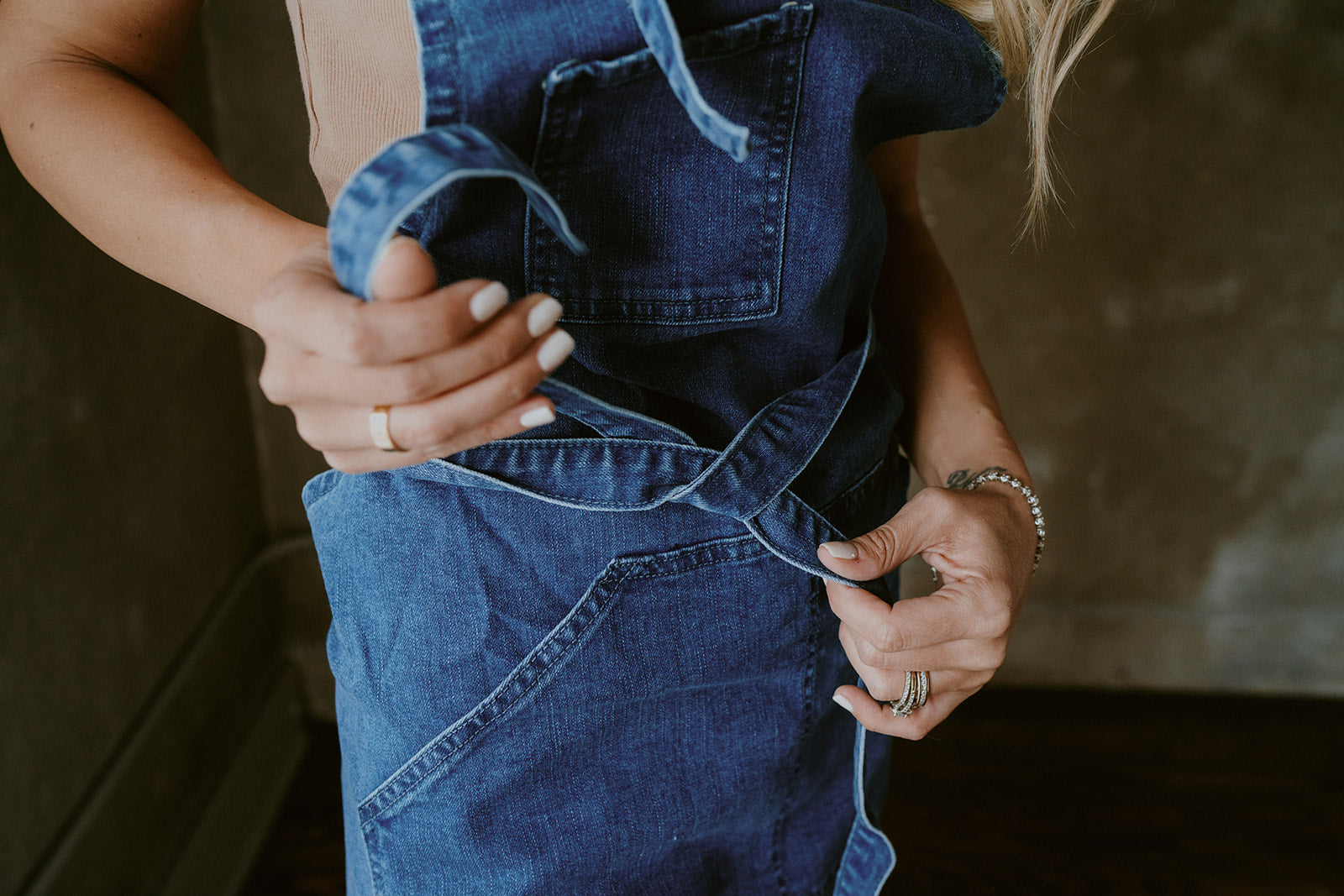
,%20deep%20pockets%20positioned%20f...)
Leave a comment
This site is protected by hCaptcha and the hCaptcha Privacy Policy and Terms of Service apply.