

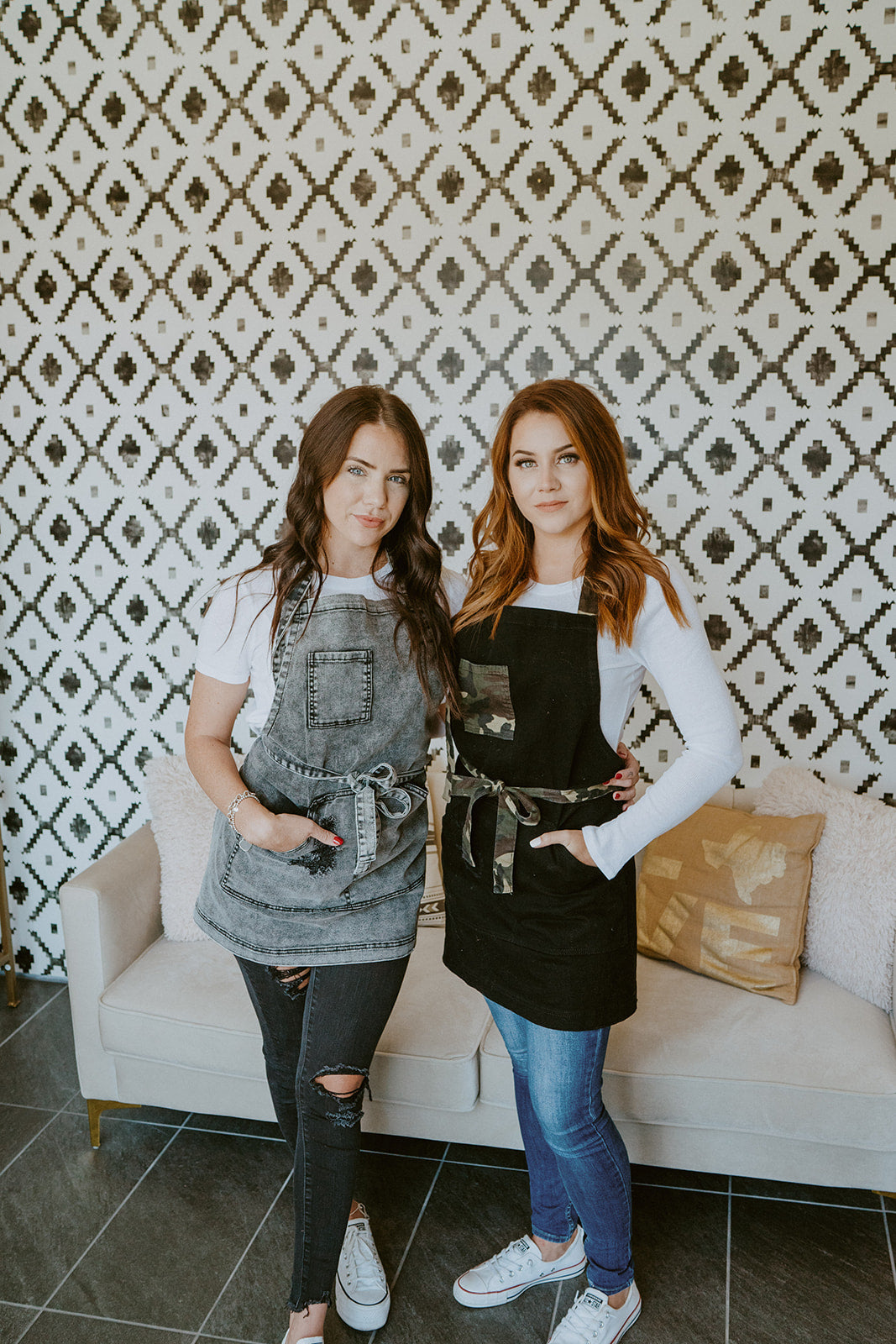
Salon apron vs barber apron — what is the difference?
Quick Answer: The main difference is pocket placement and design emphasis. Salon aprons prioritize front chest pockets for shears, combs, and sectioning clips where stylists can reach them while moving around clients, while barber aprons traditionally feature lower waist pockets optimized for clippers, guards, and straight razors used in stationary cutting positions. However, the best modern professional aprons blur these lines, offering hybrid designs that serve both trades equally well.
The Historical Split That No Longer Makes Sense
Decades ago, salon and barber aprons evolved separately because the trades themselves were legally separated. Barbershops served men with clippers and straight razors. Salons served women with shears and chemical services. The tools dictated the apron design.
Barber aprons featured large lower pockets—sometimes even kangaroo-style pouches—because barbers needed quick access to clipper guards, multiple guards for fades, straight razors, and neck dusters. They worked standing in one position, reaching down to their waist felt natural.
Salon aprons developed higher chest pockets because stylists moved constantly around the chair, bending and rotating. Reaching to the waist while holding wet hair at shoulder level was inefficient. Chest pockets kept shears, tail combs, and clips within instant reach without breaking flow.
Today? Most professionals do both. Barbers texturize with shears. Stylists fade with clippers. The rigid distinction is outdated, yet manufacturers still market "barber aprons" and "salon aprons" as if they're fundamentally different products.

What Actually Matters: Pocket Ergonomics
Forget the label—focus on where you need your tools.
High chest pockets work best when you're:
- Moving around the client frequently (color application, detailed cutting)
- Bending forward to section hair at various angles
- Working with shears as your primary tool (constant in-and-out access)
- Doing precision work where tool retrieval needs to be unconscious
Lower waist pockets excel when you're:
- Standing in one position for extended periods (clipper fades, beard trims)
- Working with heavier tools that pull on chest pockets (full-size clippers, multiple guards)
- Alternating between electric tools and hand tools frequently
- Needing deeper storage for bulkier items (spray bottles, larger combs)
The reality? You probably need both. That's why the best professional aprons—like the J. Clark Designed collection—incorporate multiple pocket heights and depths. The Black & Leather style, for example, features reinforced chest pockets for shears plus side waist access for larger tools.
Material Differences: Another Myth
You'll read online that "barber aprons use canvas while salon aprons use softer fabrics." This is marketing fiction.
Professional aprons need three material qualities regardless of trade:
1. Chemical resistance — Whether it's barbicide, clipper spray, or hair color, your apron faces corrosive substances daily. Organic cotton denim (like J. Clark uses) handles this better than synthetic blends because natural fibers don't trap chemical odors and can be washed at higher temperatures without breaking down.
2. Durability at stress points — Pocket openings, neck straps, and waist ties take repetitive strain. Genuine leather reinforcements at these points (not bonded leather or synthetic) distribute stress and actually improve with age rather than cracking.
3. Comfort over 8-12 hour shifts — This is where weight distribution matters more than material softness. An apron made from stiff canvas but featuring cross-back straps will feel better at hour ten than a soft cotton apron with neck-only support. J. Clark's adjustable cross-back design transfers weight to your shoulders and upper back, preventing the neck strain that ends careers.

The Length Question: Coverage vs Mobility
Traditional barber aprons ran shorter (mid-thigh) because barbers weren't protecting against color stains running down to the knee. Salon aprons went longer (just above knee) for full coverage during foil work and color application.
But length is a personal preference tied to your height and movement style, not your trade.
Longer aprons (24-28 inches from neck):
- Protect pants completely during messy chemical services
- Create a more polished, formal appearance
- Work better for taller professionals (6'0" and above)
- Can feel restrictive when kneeling or sitting on rolling stools
Shorter aprons (20-24 inches from neck):
- Allow easier movement—bending, kneeling, sitting
- Feel less restrictive in tight booth spaces
- Better for petite professionals (under 5'6")
- Require more frequent pant changes if you do heavy color work
Most professional-grade aprons land around 26 inches—long enough for protection, short enough for mobility. More important than absolute length is adjustability. An apron with both neck and waist adjustment (standard in J. Clark designs) can be customized to your exact torso length, eliminating the awkward bunching or riding-up that plagues one-size-fits-all options.
Style Considerations: Your Apron Is Your Brand
Here's something rarely discussed in "salon vs barber" comparisons: your apron communicates your brand identity before you say a word.
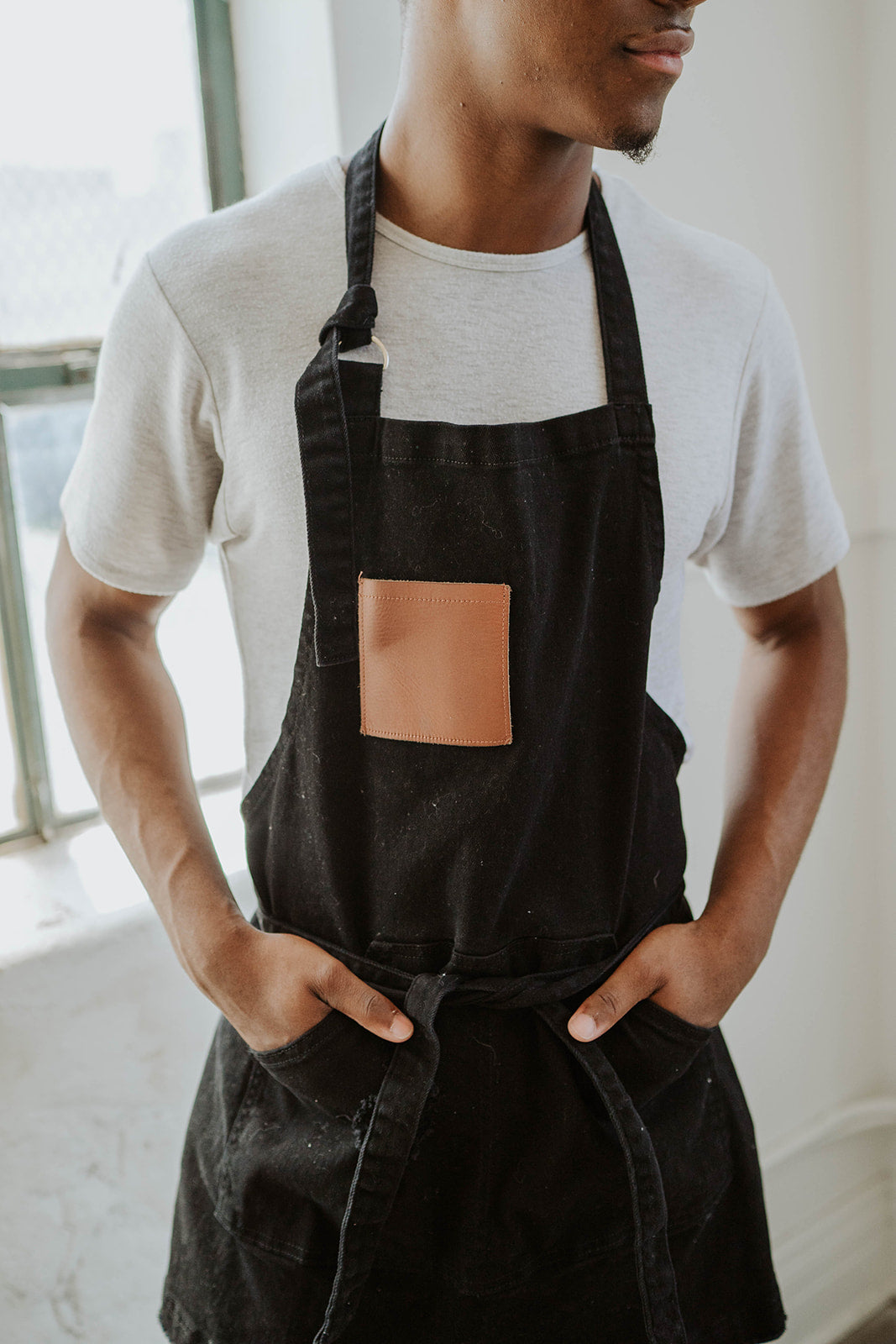
Classic black denim with leather accents projects timeless craftsmanship—it works equally well in a heritage barbershop or an upscale salon. This is why J. Clark's Black & Leather remains their bestseller across both markets.
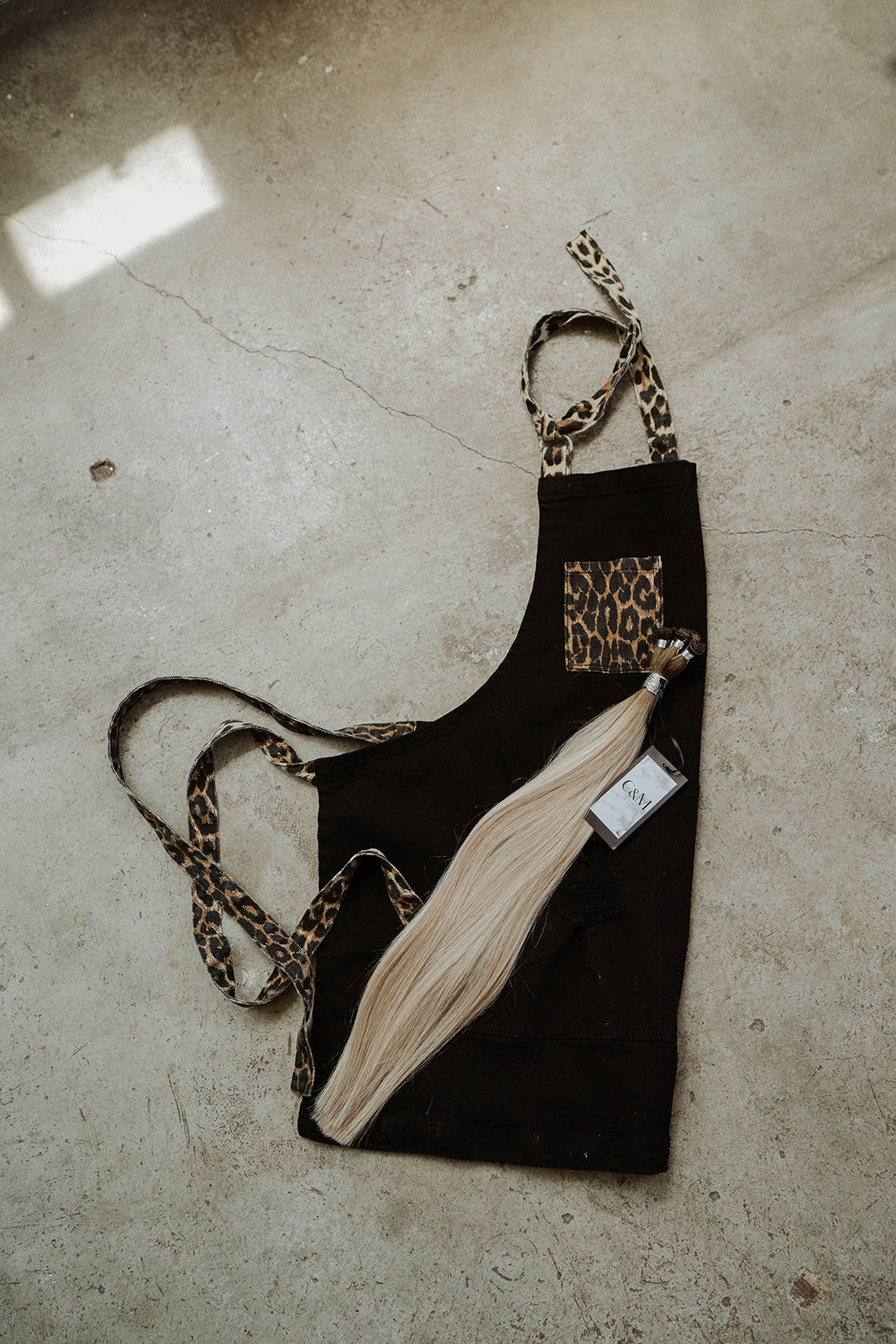
Bold patterns (like the Leopard Two Tone or Black Camo) signal creative confidence and work especially well for stylists building a distinctive personal brand on social media. Barbers in traditional shops might feel these styles clash with their space's aesthetic, but in modern unisex shops, they're increasingly popular.
Neutral earth tones (Olive Green, Navy Pinstripe) offer versatility—they photograph well, hide minor stains between washes, and complement any shop interior. If you work in multiple locations or do education where you want the focus on your technique rather than your outfit, these are your safe choices.

What to Actually Look For (Forget the Labels)
When choosing your professional apron, ignore whether it's marketed as "salon" or "barber" and evaluate these concrete factors:
Strap design — Cross-back straps are non-negotiable for all-day comfort. Neck-only straps will cause pain by year two of full-time work, regardless of your trade. Look for wide straps (at least 1 inch) with adjustable brass or stainless hardware, not plastic clips.
Pocket depth and accessibility — Reach into the pocket while wearing the apron. Can you extract your shears without looking? Do the pockets sit at a natural hand-fall position for your height? Pockets should be reinforced with double stitching and, ideally, lined with a different material to prevent tool tips from wearing through.
Waist tie length and strength — Standard ties should be at least 36 inches each side to wrap and tie comfortably without being so long they drag or catch on chair hydraulics. The apron should stay secure when you bend, reach, and rotate without constant retying. Canvas ties outlast grosgrain ribbon, and leather ties outlast everything but require more maintenance.
Machine washability — Unless you're committed to dry cleaning after every shift (you're not), verify the apron is machine washable. Organic cotton denim washes clean without shrinking. Leather accents should be removable or positioned where they wipe clean rather than needing full immersion.
Hardware quality — Brass hardware develops a warm patina. Stainless steel stays bright. Zinc alloy (cheap option) corrodes within months of exposure to hair chemicals. Check rivets at pocket corners—these take maximum stress and will pop on low-quality aprons.
The Hybrid Approach: Why One Apron Can Do Both
The modern professional apron has evolved past false distinctions. A well-designed apron accommodates the full spectrum of salon and barbering work.
J. Clark Designed proves this with their universal approach—over 10,000 salons and barbershops use the same core styles because the design priorities (comfort, durability, tool accessibility) transcend trade labels. A stylist doing men's fades and a barber doing texture cuts need the exact same features.
The 4.8-star rating across 1,444+ verified reviews comes from this versatility. You're not buying a "salon apron" or a "barber apron"—you're buying a professional-grade work garment engineered for anyone who takes pride in their craft.
FAQ
Can I use a salon apron for barbering (or vice versa)?
Absolutely. The "salon vs barber" distinction is largely marketing. What matters is pocket placement for your specific tools and comfort during your longest shifts. If you primarily use clippers, ensure the apron has lower pockets deep enough for guards. If you work with shears constantly, prioritize chest pocket access. Most modern professional aprons accommodate both.
Do barbers need shorter aprons than hairstylists?
No—apron length should match your height and movement preferences, not your job title. Taller professionals (regardless of trade) often prefer longer coverage, while those who kneel frequently or work in tight spaces prefer shorter, more mobile options. The ideal length is adjustable through both neck and waist ties.
Are leather accents on aprons just decorative?
Genuine leather reinforcements serve functional purposes: they protect high-stress areas (pocket openings, strap connection points), resist chemical staining better than fabric, and develop a patina that improves appearance with age. Avoid bonded leather or synthetic "leather"—these crack and peel. If an apron uses leather, it should be full-grain and positioned where it adds durability, not just decoration.
How many pockets do I actually need on a professional apron?
Most professionals work efficiently with 2-3 well-designed pockets rather than 5-6 poorly placed ones. You need immediate access to your primary tool (shears or clippers), plus storage for 2-3 secondary items (combs, clips, or guards). More pockets often means less pocket depth and more bulk. Focus on pocket quality and placement over quantity.
The Bottom Line
The "salon apron vs barber apron" debate is a solution to a problem that no longer exists. Modern professionals cross trade boundaries constantly, and the best aprons reflect that reality with hybrid designs that serve both disciplines.
Focus on what actually impacts your workday: cross-back weight distribution, pocket accessibility for your specific tools, material durability against chemicals, and adjustability for your body. Whether the manufacturer labels it as a salon or barber apron is irrelevant—how it performs during a twelve-hour Saturday is everything.
The apron that earns a spot in your daily rotation will be the one that disappears from your awareness while protecting your clothes, organizing your tools, and looking professional enough that clients notice the craft, not the apron.
Explore the full collection at J. Clark Designed
```

Leave a comment
This site is protected by hCaptcha and the hCaptcha Privacy Policy and Terms of Service apply.