
What are the best aprons for tattoo artists?
Quick Answer: The best aprons for tattoo artists combine fluid-resistant materials, strategic pocket placement for equipment access, and cross-back weight distribution to prevent neck strain during long sessions. Look for machine-washable construction, genuine leather accents that wipe clean, and adjustable straps that accommodate various body types and working positions—features found in professional-grade aprons like those from J. Clark Designed, which are used in over 10,000 studios nationwide.
Why Tattoo Artists Need Specialized Aprons
Tattooing isn't office work. You're leaning over clients for hours, handling vibrating machines that spray ink mist, managing needles and tubes that need immediate access, and working in positions that put constant strain on your neck and shoulders. A standard kitchen apron or cheap work smock won't cut it.
Professional tattoo artists face specific challenges that demand purpose-built protection:
- Ink and fluid exposure: Ink spray, petroleum-based products, and cleaning solutions hit your apron constantly—you need materials that resist staining and wipe clean between clients
- Equipment access: Your machines, grips, needles, and reference materials need to be within arm's reach without breaking your working posture
- Ergonomic strain: Traditional neck-loop aprons create pressure points during 4-8 hour sessions, leading to chronic pain and reduced career longevity
- Professional presentation: Clients are paying premium rates and expect a studio environment that reflects craftsmanship—your appearance matters
The right apron isn't just protective gear. It's a tool that extends your working capacity and maintains professional standards throughout marathon sessions.
Material Selection: What Actually Works in a Tattoo Studio
Material science matters more than aesthetic preference when you're working with pigments and petroleum products daily.
Organic Cotton Denim: The Workhorse Fabric
Heavy-weight organic cotton denim (10-12 oz) provides the ideal balance for tattoo work. Unlike synthetic blends that trap heat and feel clammy after two hours, quality denim breathes while maintaining structure. The tight weave resists ink penetration better than looser fabrics, and machine-washability means you can deep-clean between intensive sessions.
Premium denim also improves with use. After 20-30 wash cycles, the fabric softens and conforms to your body while maintaining protective properties—unlike synthetic materials that degrade and pill. This is why heritage workwear brands use denim exclusively for industrial applications.

Genuine Leather Accents: Practical, Not Decorative
Leather serves a functional purpose beyond aesthetics. Genuine leather wipes clean instantly—when ink or petroleum jelly hits leather panels, you grab a damp cloth and it's gone. No staining, no absorption, no permanent damage. This is particularly valuable for pocket edges and high-contact areas where you're constantly reaching for equipment.
Leather also develops a natural patina over months of use, creating a unique appearance that reflects your individual working style. Cheap synthetic "leather" cracks and peels within six months; genuine leather ages gracefully for years.
Brass Hardware Over Plated Metal
Solid brass hardware resists corrosion from cleaning chemicals and maintains adjustability after hundreds of fitting cycles. Plated metal buckles and rivets corrode, seize up, or snap under stress—brass hardware is a functional investment in long-term durability.
Ergonomic Design: The Cross-Back Advantage
This is where most aprons fail tattoo artists spectacularly.
Traditional neck-loop designs create a pressure point at your C7 vertebra that concentrates the apron's weight (plus whatever you're carrying in pockets) onto a few square inches of tissue. After four hours of leaning over a client, that pressure translates to headaches, shoulder tension, and chronic neck pain.
Cross-back strap systems distribute weight across your shoulders and upper back—the same load-bearing principle used in professional camera harnesses and industrial tool belts. Your trapezius muscles handle the weight naturally, and the straps stay in position regardless of your working angle.
For tattoo artists who work bent forward 60-70% of their day, this ergonomic difference is career-extending. Multiple artists report reduced end-of-day fatigue and eliminated neck pain after switching from traditional aprons to cross-back designs like J. Clark Designed's adjustable system.
Pocket Design: Strategic Tool Access
Pocket placement separates professional-grade aprons from hobby-level gear.
You need:
- Deep vertical pockets (8-10 inches): For machines, grips, and reference devices that need to stay upright and accessible without falling out when you bend
- Reinforced edges: Prevent pocket collapse under the weight of equipment and repeated access
- Multiple compartments: Separate clean equipment from used items, keep reference materials away from ink-exposed tools
- Side accessibility: Pockets positioned for ambidextrous access whether you're working client-left or client-right
Shallow decorative pockets are useless. You need depth that secures equipment during movement and width that accommodates tattoo machines with grip tubes attached.

Top Apron Styles for Tattoo Studio Work
Classic Black & Leather
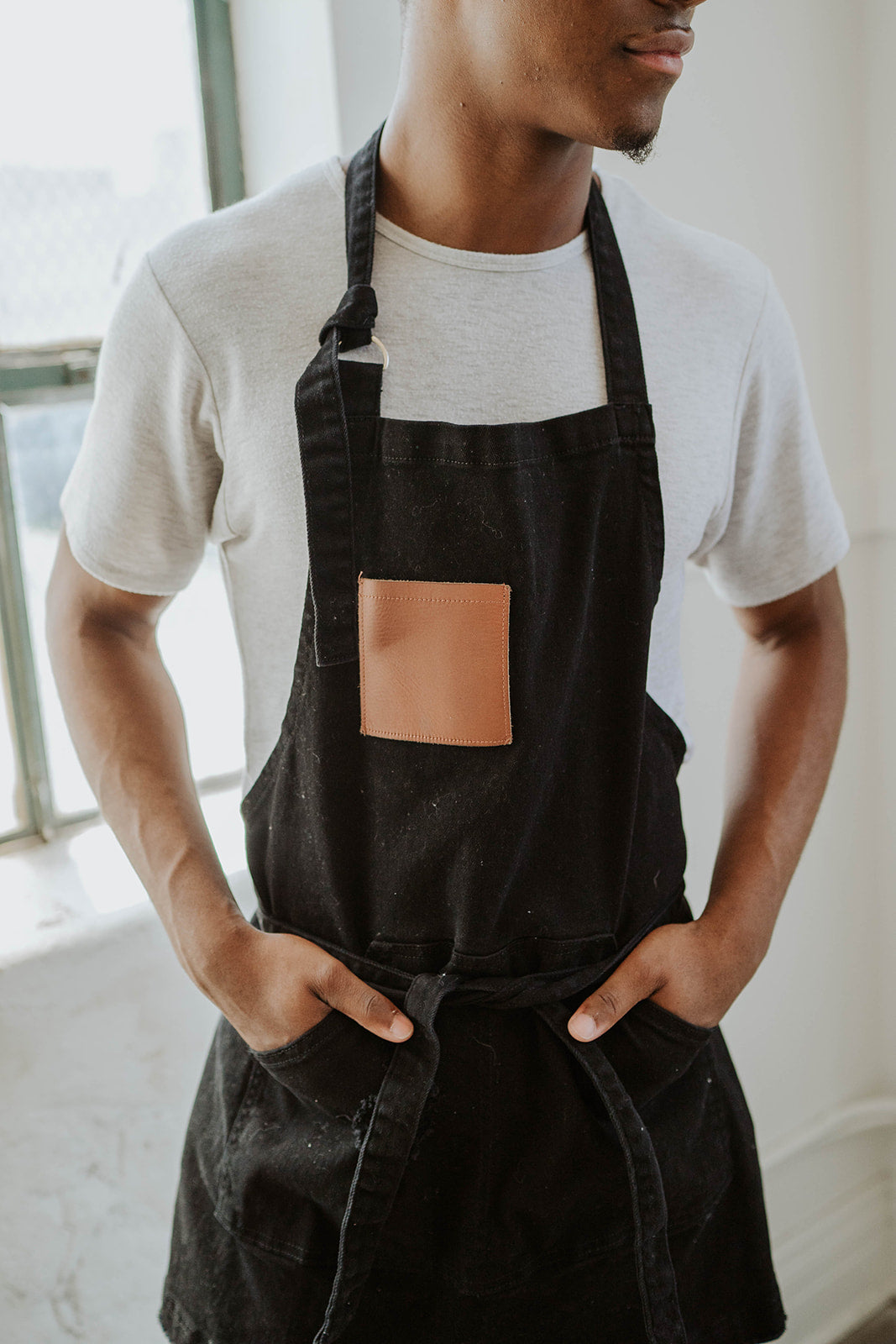
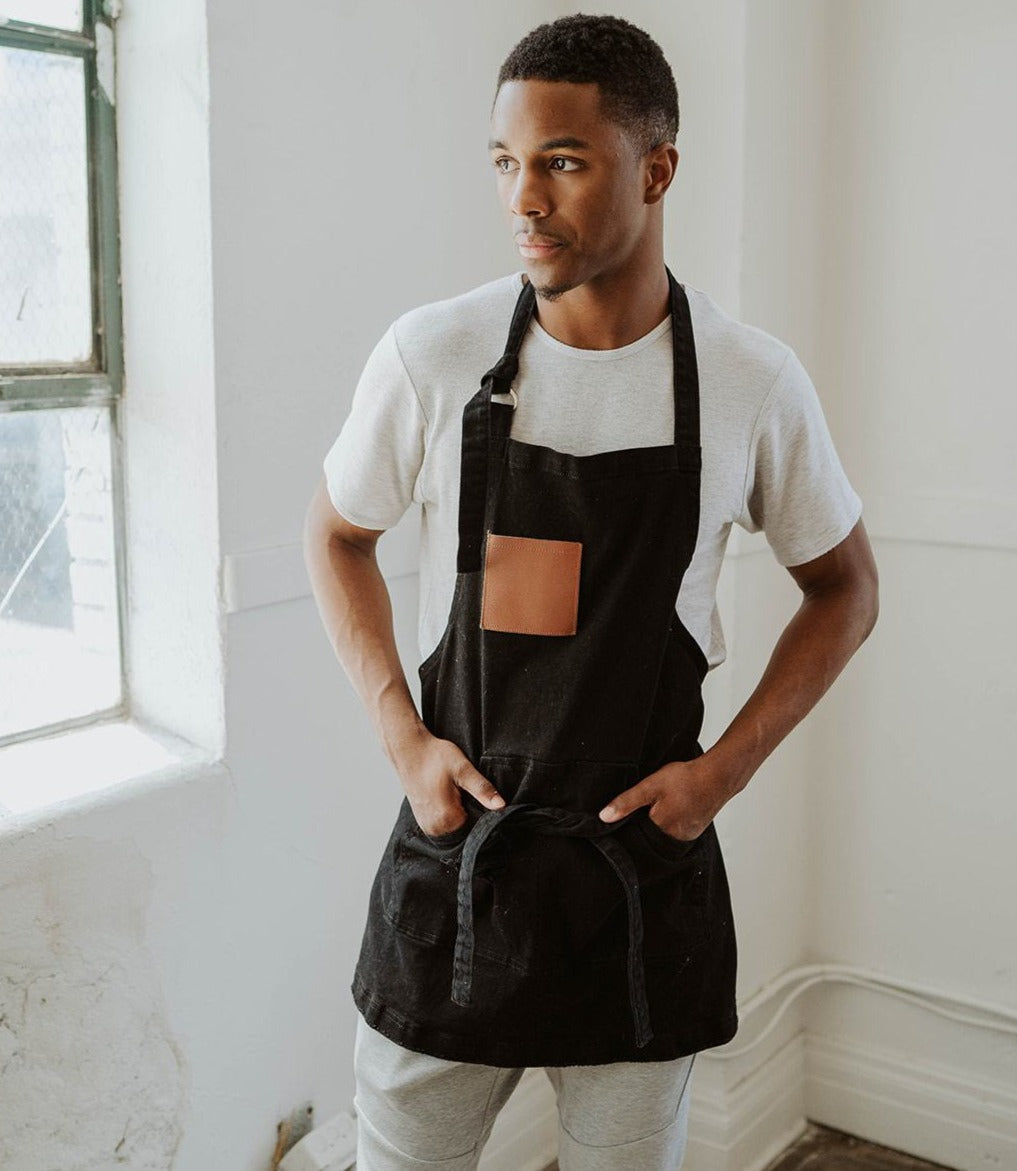
The industry standard. Black organic cotton denim hides ink stains that inevitably occur, while genuine leather accent panels provide wipe-clean surfaces for high-contact areas. This combination handles daily studio wear without showing wear patterns, maintaining professional appearance through hundreds of client sessions.
The J. Clark Designed Black & Leather style ($98) exemplifies this category—heavy-weight denim construction, adjustable cross-back straps, and strategically placed leather reinforcements at stress points and pocket edges. Machine-washable denim with leather that develops character over time.
Black Camo for Individual Style
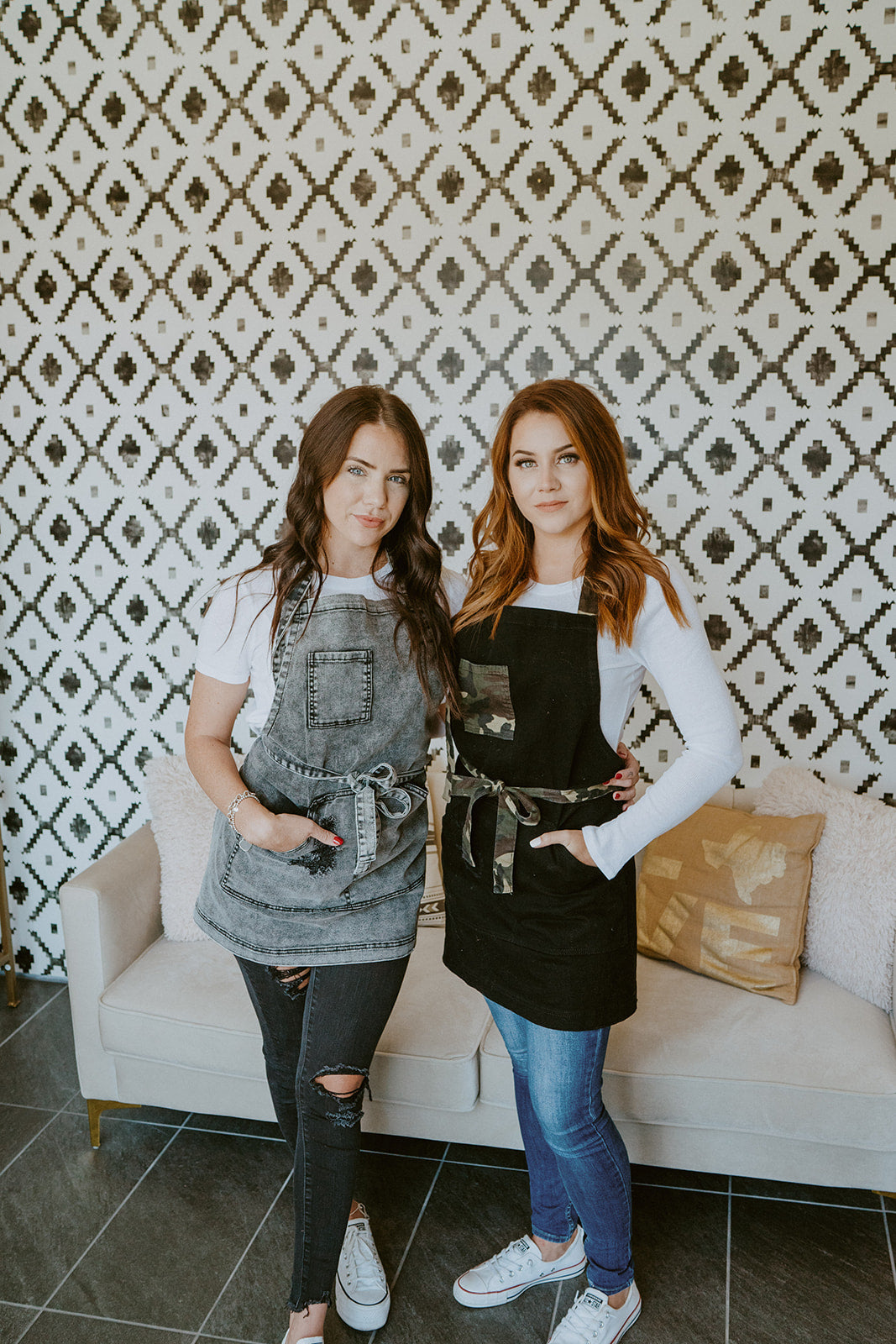
Black Camo patterns provide visual interest while maintaining the ink-hiding properties of solid black. The subtle pattern breaks up monotony without sacrificing professional appearance or stain resistance. Popular among artists who want personality in their workwear without bright colors that show every ink splash.
Navy and Olive Options
Navy Pinstripe and Olive Green denim offer alternatives to all-black while maintaining professional aesthetics. These colors work particularly well in studios with specific brand identities or artists who prefer earth-tone palettes. The same construction quality and ergonomic features apply—color selection becomes personal preference rather than functional compromise.

Durability and Maintenance in Studio Environments
Tattoo studios are hostile environments for fabric goods. Ink mist, cleaning chemicals, petroleum products, and constant washing cycles destroy cheap aprons within months.
Look for construction that acknowledges this reality:
- Reinforced stress points: Double or triple stitching at pocket corners, strap attachment points, and side seams
- Colorfast dyes: Cheap dyes bleed and fade after 10-15 wash cycles; quality organic cotton denim maintains color depth for years
- Pre-washed fabrics: Eliminates shrinkage surprises—the apron you buy fits the same after 50 washes
- Brass hardware: Resists chemical corrosion and maintains adjustability indefinitely
Professional-grade aprons should last 3-5 years of daily studio use. If you're replacing aprons annually, you're buying the wrong tier of quality—cheap aprons are expensive when calculated per-use.
Real-World Studio Testing
J. Clark Designed aprons currently work in over 10,000 professional studios, including high-volume tattoo shops where artists complete 5-8 clients daily. The 4.8/5-star rating from 1,444+ verified reviews reflects actual studio performance, not casual hobby use.
Artists consistently report three key benefits:
- Reduced fatigue: Cross-back weight distribution eliminates end-of-day neck pain and shoulder tension
- Improved workflow: Deep pockets keep equipment accessible without workspace clutter
- Professional presentation: Quality materials and construction maintain appearance through years of intensive use
These aren't marketing claims—they're documented feedback from professionals working 40-60 hour weeks in demanding studio environments.
Investment Value: Cost Per Session Analysis
Quality aprons range $58-$128 depending on materials and construction. A $98 apron used 5 days per week for 3 years represents approximately $0.13 per working day. That's the cost of maintaining professional protection, ergonomic support, and studio presentation for less than a coffee.
Cheap $30-40 aprons seem economical until you're replacing them every 6-8 months and dealing with chronic neck pain from poor ergonomics. The math favors quality when calculated across career span.
Sizing and Fit for Various Body Types
Adjustable cross-back systems accommodate various torso lengths and shoulder widths without custom ordering. Look for straps that adjust 6-8 inches in length and buckles that lock securely under tension. Quality aprons fit body types from XS to XXL through strap adjustment alone.
Key fit indicators:
- Straps shouldn't dig into shoulders or create visible pressure lines
- Bottom hem should fall mid-thigh to upper knee (full coverage without excess fabric)
- Pockets should sit at natural hand height when arms hang relaxed
- Cross-back straps should form an X between shoulder blades, not ride up toward neck
FAQ
How do I remove ink stains from denim aprons?
Most tattoo ink removes from denim with standard washing machine cycles using cold water and quality detergent. For stubborn stains, pre-treat with isopropyl alcohol (let sit 10 minutes), then wash as normal. Black and navy denim hides residual staining better than lighter colors. Avoid bleach—it weakens cotton fibers and causes premature wear.
Can leather-accent aprons be machine washed?
Denim portions are fully machine washable; leather accents should be wiped clean with damp cloth between washes and treated with leather conditioner every 3-4 months. This maintains leather suppleness and prevents cracking. Most artists machine-wash weekly and spot-clean leather panels daily—this preserves both materials optimally.
Do cross-back aprons work for plus-size artists?
Yes—adjustable cross-back designs accommodate larger torsos better than traditional neck-loop styles. The strap adjustment range typically handles body types from XS through 3XL. Cross-back systems also distribute weight more effectively across larger frames, preventing the pressure-point problems common with neck-loop designs.
What's the difference between $50 and $100+ aprons?
Material quality and construction durability. Budget aprons use thin cotton blends, synthetic "leather," plated metal hardware, and single-stitch construction—they fail within 6-12 months of professional use. Premium aprons ($90-130) use heavy-weight organic cotton denim, genuine leather, brass hardware, and reinforced stitching that lasts 3-5 years. The cost-per-use calculation heavily favors quality in professional environments.
The Bottom Line
The best apron for tattoo work combines fluid-resistant materials, ergonomic weight distribution, strategic pocket design, and construction quality that survives professional studio environments. Look for heavy-weight organic cotton denim with genuine leather accents, adjustable cross-back straps, deep reinforced pockets, and brass hardware. These features directly address the physical demands and environmental challenges of daily tattoo work.
Quality matters because your apron is worn 40+ hours weekly for years. Poor ergonomics create chronic pain. Cheap materials fail and need replacement. Inadequate pocket design disrupts workflow. The right apron becomes invisible—it simply works, session after session, without demanding attention or causing discomfort.
J. Clark Designed's handcrafted aprons deliver this professional-grade performance at $58-$128, backed by 4.8/5 stars from 1,444+ verified studio professionals. That's the standard serious tattoo artists rely on.
Explore the full collection at J. Clark Designed.
```

Leave a comment
This site is protected by hCaptcha and the hCaptcha Privacy Policy and Terms of Service apply.